

Last Updated: April 15, 2026
Testosterone prescriptions in the U.S. jumped from 7.3 million in 2019 to over 11 million by 2024 (Levels, February 2026), and the search for the best TRT clinics near me has never been more competitive. The Ascend Vitality team analyzed the top providers in 2026 to help men cut through the noise and find care that’s actually worth their time and money. This guide covers six clinics in detail, including pricing, delivery methods, monitoring standards, and the honest tradeoffs most reviews skip. The TRT market is projected to reach $2.57 billion by 2031 (Mordor Intelligence, January 2026), which means more options than ever, and more room for confusion.
How We Evaluated the Best TRT Clinics Near Me
Finding the best TRT clinics near me isn’t just about who has the slickest website or the lowest headline price. The evaluation framework here is built around four factors that actually determine whether treatment works and stays safe over time.
Key Criteria: Safety, Monitoring, Cost, and Access
Safety and monitoring sit at the top of the list for good reason. Testosterone replacement therapy is a medical intervention, not a supplement. Clinics that skip comprehensive lab work or skip follow-up monitoring create real risk for patients. The minimum standard for any reputable clinic includes baseline blood tests, hematocrit monitoring, PSA screening, and regular hormone level checks.
Cost transparency is the second filter. Many clinics advertise low entry prices but charge separately for labs, consultations, and medications. The true monthly cost often looks very different from the headline number.
Access model matters depending on your lifestyle. Telehealth-only clinics offer convenience and privacy. In-person clinics offer hands-on care and same-day testing. Hybrid models split the difference. None of these is universally better; the right answer depends on your location, schedule, and comfort level.
Treatment variety rounds out the criteria. Clinics that offer only one delivery method (usually injections) limit your options. The best providers offer injections, creams, and pellets, and adjust the plan based on your response to treatment.
Pro Tip
Before contacting any clinic, pull together any recent testosterone lab results you have. Some clinics like TRT Nation accept outside lab work, which can cut your initial cost significantly and speed up your first consultation.
Quick Comparison: Top TRT Clinics at a Glance
| Clinic | Starting Price | Delivery Methods | In-Person Option | Insurance Accepted |
|---|---|---|---|---|
| Ascend Vitality | Contact for pricing | Multiple options | No (online) | Contact for details |
| TRT Nation | $99/month | Injections | No (online) | No |
| Hone Health | Contact for pricing | Injections, creams | No (online) | HSA/FSA accepted |
| Defy Medical | Contact for pricing | Multiple options | No (online) | No |
| Low T Center | Contact for pricing | Multiple options | Yes (hybrid) | Most major insurance |
| PeakPerforMAX | Contact for pricing | Multiple options | No (online) | Contact for details |
1. Ascend Vitality, Best for Discreet Online TRT Delivery
The strongest case for Ascend Vitality is how it handles the full care pathway, not just the prescription. Ascend Vitality connects patients with specialized care pathways that cover hormones, weight loss, and general men’s health, with medically-supported programs and prescriptions delivered directly to your door. That end-to-end model matters more than most reviews acknowledge.

What sets Ascend Vitality apart from generic telehealth platforms is the focus on targeted, condition-specific care rather than a one-size-fits-all hormone protocol. Men dealing with symptoms of low testosterone, including fatigue, reduced libido, mood changes, and declining muscle mass, get a care pathway built around their specific profile rather than a generic starting dose.
The discreet delivery model is a genuine differentiator for men who want privacy around their treatment. No clinic visits, no waiting rooms, no awkward conversations. The prescription arrives at your address, and consultations happen online.
What works: Specialized care pathways for hormones and men’s vitality, direct prescription delivery, and a model that covers both male and female wellness needs under one platform.
What to watch: As an online-only provider, Ascend Vitality suits men who are comfortable managing their care remotely. If you prefer in-person blood draws or face-to-face provider visits, a hybrid clinic like Low T Center may be a better fit.
Best For
Men who want discreet, online-managed TRT with prescription delivery and a provider team focused specifically on hormones and men’s vitality concerns.
2. TRT Nation, Best Budget-Friendly TRT Clinic
At $99 per month flat, TRT Nation is the most straightforward pricing model in this comparison. That subscription includes unlimited physician consultations and ongoing support, which means you’re not paying per appointment every time you have a question about your dosage or side effects.
The budget case gets even stronger if you already have recent testosterone labs. TRT Nation accepts outside lab work, which eliminates the upfront testing cost that most clinics bundle into their onboarding fee. For men who’ve already confirmed low testosterone through a primary care physician or endocrinologist, this is a meaningful saving.
The honest limitation: the $99/month model works because it keeps the service lean. You won’t get the same depth of personalized monitoring as clinics that charge more and conduct quarterly comprehensive panels. If you have complex comorbidities or need close management of hematocrit and PSA levels, TRT Nation may not offer the oversight your situation requires.
Best for: Men seeking a low-cost entry point into medically supervised TRT who already have recent lab results and don’t need intensive monitoring.
3. Hone Health, Best for Variety of Treatment Options
Most TRT clinics default to injections because they’re the most cost-effective delivery method. Hone Health takes a different approach, offering individualized care plans based on goals, comfort level, and blood test results, with access to both injections and creams depending on what fits the patient’s lifestyle.
The telemedicine model is clean. Virtual consultations with experienced HRT providers, easy pharmacy ordering, and medication delivery make the logistics manageable. Hone Health also accepts HSA and FSA cards, which is a practical consideration for men who want to use pre-tax dollars for treatment.
The cost structure requires attention. Testing and medical appointment costs are typically separate from medication costs at Hone Health, which means the true monthly spend can vary significantly depending on how frequently you’re being monitored. Get a clear breakdown of all costs before committing.
The real difference between Hone Health and budget alternatives comes down to treatment flexibility. If you’ve tried injections and found them inconvenient, or if you want to explore creams before committing to a protocol, Hone Health’s variety of options gives you more room to find what works.
4. Defy Medical, Best for No-Contract Personalized Care
Contracts are a friction point in TRT care that most men don’t think about until they want to change providers. Defy Medical operates on a pay-as-you-go model with no subscriptions or contracts, which gives patients genuine flexibility to control their schedule and costs.
The care team specializes in men’s health, which matters more than it sounds. A general practitioner managing testosterone therapy alongside dozens of other conditions is a very different experience from a provider whose entire practice is built around hormone optimization, sexual health, and vitality. Defy Medical’s individualized care plans reflect that specialization.
The tradeoff is active management. Without a subscription model pushing regular check-ins, patients at Defy Medical need to be more proactive about scheduling follow-ups and monitoring their own hormone levels. That suits some men perfectly. Others find that structure helps them stay consistent with treatment.
Watch Out
Skipping follow-up monitoring on TRT is one of the most common mistakes men make after the initial consultation. Hematocrit levels can rise over time, and elevated hematocrit increases cardiovascular risk. Any clinic that doesn’t schedule regular blood work after starting treatment is a red flag.
5. Low T Center, Best for In-Person and Telehealth Hybrid
Some men want to look a provider in the eye. Low T Center is the only clinic in this list that combines in-clinic testing and provider visits with telehealth services, creating a hybrid model that suits men who value both convenience and face-to-face care.
The service range goes beyond testosterone replacement therapy. Low T Center also offers personalized weight loss programs and women’s HRT, which makes it a practical choice for couples or for men whose health goals extend beyond hormone optimization. The clinic accepts FSA/HSA cards and most major insurance, which is a significant cost advantage over purely cash-pay telehealth providers.
The limitation is geographic. In-person services are only available where Low T Center has physical locations. If there’s no clinic near you, the hybrid advantage disappears and you’re left with a telehealth-only experience that other providers may handle equally well at a lower price point.
What most reviews miss: The insurance acceptance at Low T Center can dramatically change the real cost of care compared to the sticker price. If you have coverage that includes hormone therapy, run the numbers before assuming telehealth cash-pay options are cheaper.
6. PeakPerforMAX, Best for Medically Rigorous Monitoring
PeakPerforMAX treats testosterone replacement therapy as a medical treatment, not a wellness subscription. The emphasis on comprehensive lab work, mandatory testing to confirm low testosterone and rule out other causes, and regular monitoring of hematocrit, PSA, and lipid panels reflects a clinical standard that not every online TRT clinic matches.
The onboarding process includes a comprehensive health history review and access to board-certified providers. Personalized treatment plans are built around individual health profiles rather than default protocols. For men with complex health histories or those who want the closest thing to endocrinologist-level oversight through a telehealth platform, PeakPerforMAX is the most thorough option in this list.
The honest cost note: thoroughness has a price. PeakPerforMAX is likely to be more expensive than budget options like TRT Nation. Contact the clinic directly for current pricing, and factor in the value of comprehensive monitoring when comparing costs.
Key Takeaway
Rigorous monitoring isn’t optional for long-term TRT safety. Clinics that mandate regular hematocrit, PSA, and lipid panel checks aren’t being overly cautious; they’re following the standard of care that protects patients from the most serious long-term risks of testosterone therapy.
TRT Cost Per Month: What to Expect From Each Clinic
TRT cost per month varies considerably depending on the delivery method, monitoring frequency, and whether the clinic bundles labs and consultations into a single fee or charges separately.
| Clinic | Monthly Cost | Labs Included | Consultations Included |
|---|---|---|---|
| Ascend Vitality | Contact for pricing | Contact for details | Yes |
| TRT Nation | $99/month | Accepts outside labs | Unlimited |
| Hone Health | Contact for pricing | Separate cost | Varies |
| Defy Medical | Pay-as-you-go | Separate cost | Per appointment |
| Low T Center | Contact for pricing | Included in-clinic | Included |
| PeakPerforMAX | Contact for pricing | Included | Included |
The U.S. TRT market recorded $736.1 million in revenue in 2024 and is expected to grow at a 3.5% CAGR through 2034 (Testosterone Replacement Therapy Market Size Report, 2024), which tells you something about demand, but also about the commercial incentive for clinics to compete on price. Don’t let a low headline number obscure a high total cost.
Does Insurance Cover Testosterone Replacement Therapy?
Insurance coverage for TRT depends on the diagnosis and the insurer. Coverage is most likely when testosterone replacement therapy is prescribed for diagnosed hypogonadism confirmed by blood test, rather than for general wellness or age-related andropause symptoms. Low T Center is the strongest option here, accepting most major insurance and FSA/HSA cards. Hone Health accepts HSA/FSA. Most telehealth-only clinics operate on a cash-pay model.
A common mistake is assuming telehealth is always cheaper than in-person care. If your insurance covers in-person TRT visits and lab work, the out-of-pocket cost at a clinic like Low T Center may be lower than the monthly subscription fee at a cash-pay telehealth provider.
Testosterone Injections vs. Creams vs. Pellets: Which Delivery Method Is Right for You?
The delivery method question is where most TRT guides go shallow. Here’s what actually matters in practice.
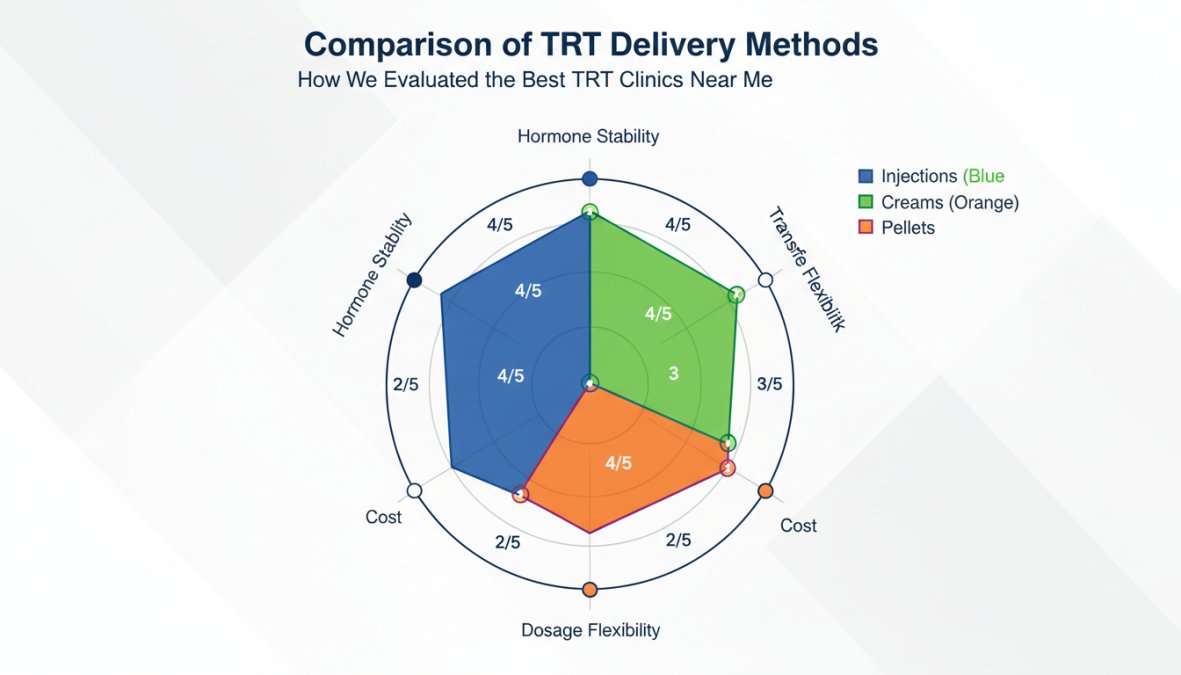
- Testosterone injections are the most common and most studied delivery method. They’re administered intramuscularly or subcutaneously, typically weekly or bi-weekly. The main drawback is hormone level fluctuation between injections, which some men notice as energy and mood swings in the days before their next dose.
- Testosterone creams (topical gels and creams) offer more stable daily hormone levels. They’re applied to the skin and absorbed transdermally. The practical concern is transfer risk to partners and children through skin contact, which requires care around application sites and timing.
- Subcutaneous pellets are implanted under the skin every 3-6 months and release testosterone steadily over time. They eliminate the need for weekly self-administration, which many men find appealing. The tradeoff is that dosage adjustments require a new procedure, unlike injections or creams where dosage can be changed immediately.
Satisfaction Rates by Delivery Method
The data on patient satisfaction by delivery method is more nuanced than most clinics let on. A 2023 PubMed study of 140 men found that 62.7% of patients were satisfied with their current TRT regimen overall. Satisfaction rates were notably higher for specific delivery methods: auto-injectors reached 91.7% satisfaction, subcutaneous pellets reached 90.0%, and intramuscular injections reached 67.5% (PubMed, 2023).
An earlier 2014 PubMed study of 382 patients found similar satisfaction rates across gels (68%), injections (73%), and implantable pellets (70%), with overall satisfaction at 70% and dissatisfaction at 14% (PubMed, 2014).
The practical implication: delivery method preference is personal, but the data suggests that pellets and auto-injectors tend to drive higher satisfaction, likely because of their convenience and consistency.
Benefits of Testosterone Replacement Therapy: What the Research Shows
The benefits of testosterone replacement therapy are well-documented for men with confirmed low testosterone, but they’re often overstated in marketing materials. Here’s what the evidence actually supports.
The core benefits for men with hypogonadism include improved energy levels, increased libido, better mood and reduced symptoms of depression, improved muscle mass and reduced body fat, and support for bone density. These aren’t hypothetical outcomes; they’re the documented effects of restoring testosterone to normal physiological ranges in men with deficient levels.
Real-world outcomes can be striking. One patient case from Numan reported that libido and erectile dysfunction returned to normal within 2-3 months of starting TRT, with no recurrence of depression or fatigue since beginning treatment. A physician case study from Fountain Of You MD documented a 75-pound weight loss, significant improvements in endurance and strength, and resolution of hypertension, sleep apnea, high cholesterol, and elevated blood sugar after starting TRT.
The caveat worth stating clearly: these outcomes are associated with TRT in men with confirmed low testosterone. Men with normal testosterone levels don’t see the same benefits, and using TRT without a confirmed deficiency increases risk without the same upside.
According to Acesis BioMed TRT market analysis 2024, the TRT market was valued at $2.04 billion in 2024, reflecting genuine and growing clinical demand, not just wellness trend chasing.
Personalized treatment approaches are increasingly recognized as the standard for optimizing TRT outcomes, with tailoring based on age, comorbidities, lifestyle factors, and treatment objectives producing better results than generic protocols (IndustryARC, 2024). Combination therapies using adjunctive agents like aromatase inhibitors, SERMs, and hCG are also gaining traction for men who need to maintain hormonal balance or preserve fertility while on TRT.
TRT Side Effects and Risks You Need to Know Before Starting
The TRT side effects and risks conversation is where too many clinics go quiet. That’s a problem.
The most significant fertility risk is well-documented. According to Genesis Fertility NY analysis of TRT and fertility, 75% of men taking testosterone replacement therapy will experience azoospermia (complete absence of sperm) within 6 months. This is not a rare edge case; it’s a predictable physiological response. Men who want to preserve fertility should discuss hCG co-administration or sperm banking before starting TRT.
Cardiovascular risk is more contested. The FDA issued a warning in 2015 that testosterone use is possibly associated with increased cardiovascular risk based on two studies, while other research suggests TRT may reduce heart attack risk over time (Cleveland Clinic, 2025). The honest answer is that the evidence is genuinely mixed, and men with existing cardiovascular disease or risk factors need to have a detailed conversation with their provider before starting.
Other documented TRT side effects include acne, fluid retention, sleep apnea exacerbation, elevated red blood cell count (hematocrit), and breast tissue growth (gynecomastia). These are manageable with proper monitoring, which is why the monitoring rigor of your chosen clinic matters so much.
“I do see some men who are more hesitant to take testosterone supplementation. We talk about the risks, as that’s what we’ve gotten more information on in recent years.”
— Michael Eisenberg, MD, director of the Stanford Male Reproductive Medicine and Surgery Program at Stanford Health Care (WebMD, 2024)
The TRT side effects and risks profile isn’t a reason to avoid treatment if you have confirmed low testosterone. It’s a reason to choose a clinic that monitors you properly and adjusts your protocol when needed.
How to Find the Best TRT Clinics Near Me: Step-by-Step
The process of finding the best TRT clinics near me is more structured than most men realize. Following these steps in order prevents the most common mistakes.
Step 1: Get a Blood Test and Confirm Low Testosterone
Testosterone replacement therapy should only start after a confirmed diagnosis of low testosterone through blood testing. A single morning blood draw measuring total testosterone is the standard starting point. Many clinics will also test free testosterone, LH, FSH, estradiol, and thyroid function to get a complete hormonal picture.
Normal total testosterone ranges from approximately 300 to 1,000 ng/dL depending on the lab. Symptoms of low T, including fatigue, reduced libido, mood changes, and difficulty concentrating, are not sufficient for diagnosis on their own. The blood test is non-negotiable.
Some clinics include lab ordering as part of their onboarding. Others, like TRT Nation, accept outside lab work if you’ve already been tested. If you have recent results from a primary care physician or urologist, bring them to your first consultation.
Step 2: Choose In-Person, Telehealth, or Hybrid Care
Telehealth TRT clinics are the fastest-growing channel in the market, posting a 5.88% CAGR through 2031 (Mordor Intelligence, January 2026). The growth reflects genuine advantages: no travel, discreet service, and competitive pricing. But telehealth isn’t universally better.
Choose telehealth if: you’re comfortable with self-administered injections or topical applications, you have reliable access to a local lab for blood draws, and privacy is a priority.
Choose in-person if: you prefer face-to-face provider relationships, you want same-day testing and results, or you have complex health conditions that benefit from hands-on monitoring.
Choose hybrid if: you want in-person testing and initial evaluation with the convenience of telehealth for follow-up consultations. Low T Center is the primary option in this list for that model.
Step 3: Schedule a Consultation and Review Your Treatment Plan
The consultation is where the quality of a clinic becomes visible. A good initial consultation for testosterone replacement therapy should include a review of your blood test results and symptom history, a discussion of treatment options including delivery method preferences, a clear explanation of dosage and monitoring schedule, and honest disclosure of side effects and risks.
Red flags in a consultation: a provider who recommends a specific protocol before reviewing your labs, no discussion of fertility implications for men of reproductive age, and no mention of follow-up monitoring timelines.
A quality treatment plan will specify your starting dosage, the delivery method, the schedule for follow-up blood work, and the criteria for adjusting your protocol. Get this in writing.
Which TRT Clinic Should You Choose? A Decision Framework
The right clinic depends on your specific situation, not on which provider has the best marketing. Use this framework to match your needs to the right option.
If cost is the primary constraint: TRT Nation at $99/month with unlimited consultations is the clearest value proposition, particularly if you already have lab results.
If monitoring rigor is the priority: PeakPerforMAX’s mandatory comprehensive lab work and regular monitoring panels offer the most clinically thorough online TRT experience.
If you want treatment variety and flexibility: Hone Health’s range of delivery options and individualized care plans suit men who want to find the right method through a guided process.
If you want no long-term commitment: Defy Medical’s pay-as-you-go model with no contracts gives maximum flexibility for men who want to control their own schedule and costs.
If insurance coverage matters: Low T Center’s acceptance of most major insurance and FSA/HSA makes it the strongest option for men with relevant coverage.
If discreet online delivery and a specialized hormone care pathway are the priority: Ascend Vitality’s targeted approach to men’s vitality and direct prescription delivery makes it the top pick for men who want a simplified, privacy-focused experience managed entirely online.
According to PubMed patient satisfaction study on TRT regimens, satisfaction with TRT is strongly influenced by delivery method match and quality of monitoring, not just the medication itself. Choosing a clinic that aligns with your lifestyle and monitoring preferences is as important as the prescription.
TRT prescriptions in Alabama alone showed a 48% increase since 2021 (Inc. Magazine, 2025), a state-level signal of a national trend. The demand is real. The clinics are multiplying. The differentiator is quality of care.
- Confirm low testosterone with a blood test before contacting any clinic
- Decide whether in-person, telehealth, or hybrid care fits your lifestyle
- Get a full cost breakdown including labs, consultations, and medication
- Ask about fertility implications if you plan to have children
- Confirm the clinic’s monitoring schedule for hematocrit, PSA, and lipid panels
- Review the treatment plan in writing before starting
Finding the right TRT clinic requires more than a Google search and a price comparison. The combination of confirmed diagnosis, appropriate delivery method, and consistent monitoring determines whether treatment actually improves quality of life or creates new problems. Ascend Vitality offers a specialized care pathway for men’s vitality and hormones, with medically-supported programs and prescriptions delivered directly to you, making it the most practical starting point for men who want discreet, targeted online TRT care. Get started with Ascend Vitality and access a hormone care pathway built around your specific health profile, delivered to your door.
Frequently Asked Questions
1. What are the benefits of testosterone replacement therapy?
The benefits of testosterone replacement therapy can include improved libido, increased energy levels, better mood, reduced fatigue, greater muscle mass, and improved bone density. Real-world accounts also report resolution of erectile dysfunction and depression symptoms within 2-3 months. However, results vary by individual, delivery method, and baseline hormone levels, so a personalized treatment plan from a qualified clinician is essential before starting TRT.
2. How much does TRT cost per month?
TRT cost per month varies widely depending on the clinic and delivery method. Budget-focused online clinics like TRT Nation offer flat subscriptions starting at $99/month, while more comprehensive programs at clinics like Defy Medical or Hone Health may cost more due to separate lab fees and consultation charges. In-person clinics such as Low T Center may accept FSA/HSA cards or insurance, which can significantly reduce out-of-pocket costs.
3. What are the side effects and risks of TRT?
TRT side effects and risks include acne, fluid retention, sleep apnea, and potential cardiovascular concerns. The FDA issued a warning in 2015 about a possible association between testosterone use and increased cardiovascular risk. Additionally, approximately 75% of men on TRT may experience azoospermia, the complete absence of sperm, within six months, making fertility a critical consideration. Regular monitoring of hematocrit, PSA, and lipid panels is strongly recommended throughout treatment.
4. Should you get TRT from your primary care doctor or a dedicated TRT clinic?
Both options are valid, but dedicated TRT clinics, including telehealth platforms, often provide more specialized monitoring, a wider range of delivery methods like testosterone injections, creams, and pellets, and faster access to treatment. Primary care physicians may be more conservative and may not offer the same level of hormone optimization expertise. For complex cases involving hypogonadism or andropause, referral to an endocrinologist or urologist may also be appropriate.
5. How quickly can I expect to see results from testosterone replacement therapy?
Many men report noticeable improvements in libido, mood, and energy levels within 3-6 weeks of starting TRT, with more significant changes in muscle mass and body composition taking 3-6 months. Patient satisfaction studies show that 62.7% to 70% of men are satisfied with their TRT regimen, with auto-injector and pellet users reporting the highest satisfaction rates. Consistent monitoring and dosage adjustments are key to optimizing long-term outcomes.