Last Updated: May 5, 2026
Men dealing with a declining sex drive often turn to libido supplements for men before they consider anything else, and that instinct is not entirely wrong. At Ascend Vitality, we work with men navigating exactly this challenge every day, and the picture is more nuanced than most supplement labels suggest. Some ingredients have genuine scientific backing. Others are marketing noise. Below, we break down what the research actually says, which ingredients deserve your attention, and how to separate products worth your money from those that are not.
Here is what most guides get wrong: they treat every herbal supplement as equivalent and every man’s low libido as the same problem. Neither is true.
Why Men Turn to Libido Supplements for Men
Low sex drive is one of the most common complaints men bring to health providers, yet it remains one of the least discussed. The reasons men reach for a supplement bottle first are practical: supplements are accessible, private, and do not require a prescription or a difficult conversation with a doctor.
Low libido in men is defined as a persistent reduction in sexual desire that interferes with personal well-being or relationships. It is not simply having a bad week. It is a pattern, and it usually has a cause.
Common Causes of Low Sex Drive in Men
The causes of low sex drive are rarely singular. Most men dealing with reduced sexual desire are contending with a combination of factors:
- Hormonal changes: Testosterone declines naturally with age, typically beginning in a man’s 30s. Low testosterone is among the most direct physiological contributors to reduced libido.
- Chronic stress: Elevated cortisol suppresses testosterone production. Sustained psychological pressure has a measurable dampening effect on sexual desire.
- Poor sleep: Sleep deprivation disrupts the hormonal cycles that regulate testosterone and sexual function.
- Medications: Antidepressants, antihypertensives, and certain other drugs list reduced libido as a documented side effect.
- Underlying health conditions: Diabetes, obesity, cardiovascular disease, and depression all correlate with reduced sexual satisfaction and male function.
- Relationship dynamics and mental health: Emotional disconnection and anxiety are significant, underappreciated contributors.
Understanding which of these is driving your situation matters enormously. A supplement that addresses zinc deficiency will not fix cortisol-driven libido suppression.
When Supplements May Help vs. When to See a Doctor
Dietary supplements for male sexual wellness occupy a legitimate but limited space. They are most appropriate when low libido is mild, situational, or connected to nutritional gaps. They are not appropriate as a substitute for medical evaluation when symptoms are severe, sudden, or accompanied by erectile dysfunction, pain, or other physical changes.
See a doctor if your low sex drive appeared suddenly, is accompanied by fatigue, depression, or unexplained weight changes, or has not responded to lifestyle adjustments. These patterns often signal a hormonal or metabolic condition that requires clinical intervention, not a supplement.
Key Ingredients Found in Top Libido Supplements for Men
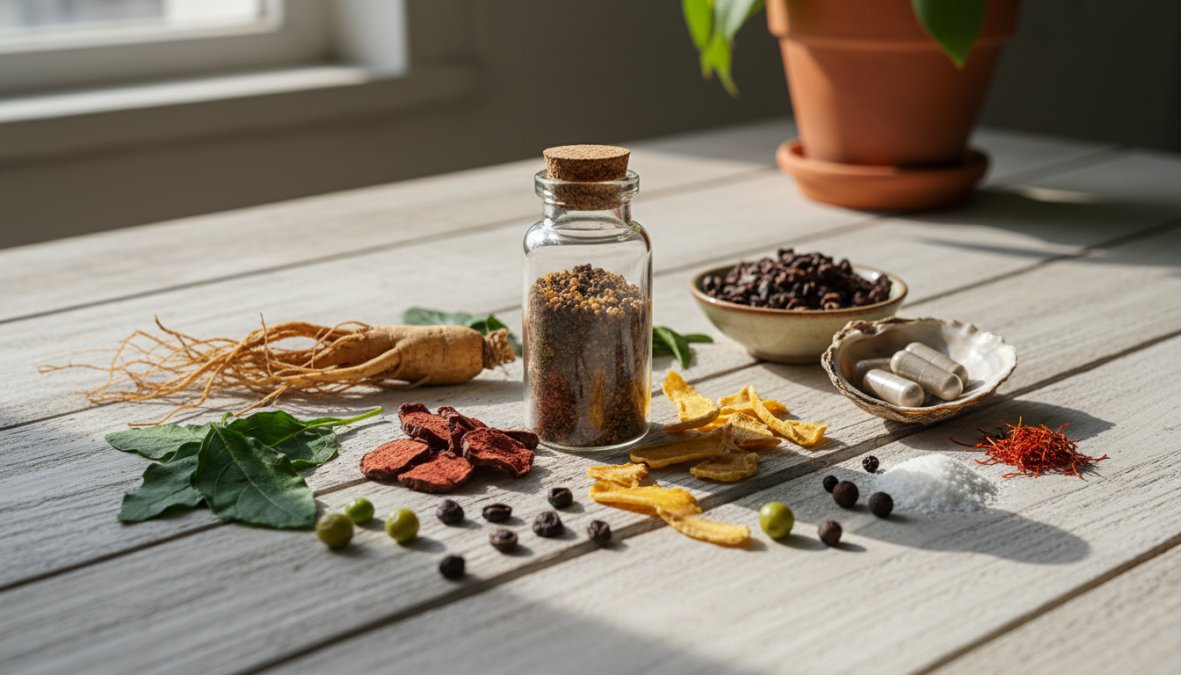
The supplement market is crowded with products claiming to boost testosterone, enhance stamina, and restore sexual performance. The ingredients that actually have scientific backing are a much shorter list than most labels imply.
Maca Root, Tongkat Ali, and Horny Goat Weed
Maca root (Lepidium meyenii) is a Peruvian plant that has been used for centuries as an aphrodisiac and vitality tonic. Modern research, while still limited in scale, suggests maca root may improve sexual desire in men independent of testosterone levels. According to National Institutes of Health research on maca root and libido, several small clinical studies have found positive effects on self-reported sexual desire, though larger trials are needed.
Tongkat ali (Eurycoma longifolia) is a Southeast Asian herb that has attracted attention for its potential to support testosterone levels and improve sexual performance. Some evidence suggests it may work by reducing sex hormone-binding globulin, which would increase free testosterone availability. The key word is “may.” Dosages in studies typically range from 200-400mg daily of a standardized extract.
Horny goat weed (Epimedium) contains icariin, a compound that inhibits PDE5, the same enzyme targeted by prescription erectile dysfunction medications. This mechanism is real, but the icariin concentration in most over-the-counter supplements is far lower than amounts used in laboratory research. Do not expect pharmaceutical-grade results from a standard capsule.
Ginseng, Tribulus Terrestris, and Fenugreek
Ginseng, particularly Korean red ginseng (Panax ginseng), is among the most studied herbal supplements for male sexual wellness. Research has found associations with improved erectile function and sexual satisfaction. It appears to work partly through nitric oxide pathways, which support blood flow. Effective doses in studies typically fall between 600-1000mg daily.
Tribulus terrestris is one of the most marketed ingredients in male sexual enhancers, and also one of the most overhyped. The claim that it significantly raises testosterone in healthy men is not well-supported by current evidence. Where it may have a role is in men with documented deficiency states, or as a mild contributor to sexual satisfaction through non-hormonal pathways.
Fenugreek has shown more promising results for testosterone support than Tribulus in recent comparative research. According to PubMed database of clinical trials on fenugreek and testosterone, some trials report modest but statistically significant improvements in free testosterone and sexual function scores. Standardized extracts at 500-600mg daily are the most studied dosages.
L-Arginine, Zinc, and DHEA
L-arginine is an amino acid that the body converts to nitric oxide, a molecule critical for vasodilation and healthy erectile function. It is one of the better-understood ingredients in this category. For men with mild erectile dysfunction or poor circulation, L-arginine supplementation at 3-6g daily has shown meaningful effects in clinical settings. It works best when combined with other nitric oxide-supporting compounds.
Zinc deserves more attention than it typically gets in libido supplement discussions. Zinc deficiency is genuinely common, particularly in men who sweat heavily or eat low-meat diets, and zinc is directly involved in testosterone synthesis. Correcting a deficiency can produce noticeable improvements in sexual drive and male function. The catch: if you are not deficient, additional zinc will not supercharge your libido.
DHEA (dehydroepiandrosterone) is a precursor hormone that the body converts into testosterone and estrogen. It is one of the few supplements that has a direct hormonal mechanism. However, because it affects hormone balance, DHEA carries more risk than most herbal ingredients and should be used under medical supervision, particularly in men with hormone-sensitive conditions.
Watch OutDHEA is not a benign herbal supplement. Because it converts to both testosterone and estrogen, unsupervised use can disrupt hormonal balance and produce unintended side effects. Always consult a healthcare provider before starting DHEA, especially if you have a history of prostate issues or cardiovascular disease.
How to Evaluate a Libido Supplement: Dosage, Safety, and Evidence
Most men buying libido supplements for men read the front of the label and stop there. The front is marketing. The back is where the real information lives.
Reading Labels: Capsules, Softgels, and Dosage Guidelines
A supplement label tells you three things that matter: what is in it, how much, and what form it takes. Proprietary blends, which list ingredients without individual dosages, are a red flag. You cannot evaluate safety or efficacy if you do not know how much of each ingredient you are consuming.
Key label-reading principles:
- Check for standardized extracts. A tongkat ali extract standardized to 2% eurycomanone is meaningfully different from a non-standardized root powder.
- Compare doses to studied amounts. If a label includes ginseng at 50mg but studies used 600mg, the dose is likely insufficient.
- Softgels vs. capsules: Softgels are generally better for fat-soluble ingredients like vitamin E. Capsules work well for most herbal powders. Neither format is inherently superior.
- Third-party testing seals: Look for NSF International, USP, or Informed Sport certification. These indicate the product was independently verified for contents and purity.
Side Effects, Drug Interactions, and Health Risks to Know
Natural does not mean risk-free. Several common libido supplement ingredients carry real interaction risks:
- Ginkgo biloba has blood-thinning properties and should not be combined with anticoagulants like warfarin.
- Ginseng can interact with diabetes medications and blood pressure drugs.
- L-arginine may lower blood pressure and can be problematic for men already on antihypertensives.
- DHEA should not be used alongside hormone therapies without medical oversight.
- Saw palmetto, sometimes included for prostate support, can affect PSA test results, which matters for cancer screening.
Pro TipBefore starting any new supplement stack, bring the full ingredient list to your prescribing physician or pharmacist. Many interactions are not obvious from the ingredient names alone, and a 10-minute conversation can prevent a serious problem.
Medically-Supported Options vs. Over-the-Counter Dietary Supplements
Here is where the conversation gets more honest. Over-the-counter herbal supplements can support sexual wellness, particularly when the underlying issue is nutritional, mild, or stress-related. They cannot replicate the effects of medically prescribed treatments when a genuine hormonal or vascular problem exists.
Prescription options for low testosterone and erectile dysfunction have a substantially larger and more rigorous evidence base than any supplement on the market. Testosterone replacement therapy, when clinically indicated, addresses the root cause rather than working around it. Phosphodiesterase inhibitors for erectile dysfunction have decades of safety data behind them.
This is where Ascend Vitality occupies a different category entirely. Rather than offering another supplement bottle, Ascend Vitality connects men with specialized care pathways that include medically-supported programs and prescriptions delivered directly to them. For men whose low libido has a clinical driver, that kind of access to real medical evaluation and targeted treatment is meaningfully different from anything available on a supplement shelf.
According to Mayo Clinic overview of testosterone therapy and male sexual health, medically supervised hormone evaluation is the recommended starting point when low libido is persistent and accompanied by other symptoms. Supplements are not a substitute for that evaluation.

Lifestyle Factors That Amplify or Undermine Your Results
Supplements do not work in isolation. This is the part of most guides that gets treated as an afterthought, but it may be the most important section .
The lifestyle factors that most directly affect male libido and sexual performance are:
Sleep: Testosterone production peaks during deep sleep. Men who consistently sleep fewer than six hours show measurably lower testosterone levels than those sleeping seven to nine hours. No supplement compensates for chronic sleep deprivation.
Exercise: Resistance training, in particular, has a well-documented positive effect on testosterone levels and sexual vitality. Cardiovascular exercise supports blood flow and erectile function. Sedentary behavior works against both.
Alcohol: Moderate alcohol consumption has a minimal effect on libido for most men. Heavy or chronic drinking suppresses testosterone and damages the hormonal pathways that regulate sexual desire.
Body composition: Excess body fat, particularly visceral fat, converts testosterone to estrogen through a process called aromatization. Losing weight, for overweight men, often produces more meaningful libido improvement than any supplement.
Stress management: Chronic psychological stress keeps cortisol elevated, which directly suppresses testosterone. Practices that reduce baseline stress, whether exercise, therapy, meditation, or simply better work boundaries, have a compounding positive effect on sexual wellness.
Key TakeawayFor most men, optimizing sleep, exercise, and stress management will produce more noticeable libido improvements than any supplement. Supplements work best as additions to a strong lifestyle foundation, not replacements for one.
Cost Analysis: Are Libido Supplements Worth the Investment?
The honest answer depends entirely on what problem you are trying to solve.
Premium libido supplements for men from reputable brands typically range from moderate to high monthly costs, with quality products often requiring consistent use for eight to twelve weeks before meaningful effects are apparent. The cost of a well-formulated supplement with clinically-dosed ingredients and third-party testing is meaningfully higher than a bargain-bin product, and that difference is usually justified.
What is not justified is spending money on supplements when the underlying issue requires medical attention. A man with clinically low testosterone will spend months and significant money on supplements that produce marginal results, when a medical evaluation and appropriate treatment would address the actual problem.
The value calculation for libido supplements looks like this:
| Scenario | Supplement Value | Better Alternative |
|---|---|---|
| Mild, situational low libido | Moderate to good | Lifestyle optimization first |
| Nutritional deficiency (zinc, vitamin D) | High | Targeted supplementation |
| Chronic stress-driven low libido | Low to moderate | Stress management + adaptogens |
| Clinically low testosterone | Very low | Medical evaluation and treatment |
| Erectile dysfunction with vascular cause | Very low | Medical evaluation |
The pattern is clear. Supplements earn their cost when the problem is mild and the mechanism matches the ingredient. They represent poor value when the problem is clinical.
According to Cleveland Clinic guidance on male sexual health and treatment options, men experiencing persistent sexual health concerns should prioritize a medical evaluation before committing to long-term supplement use. The evaluation often reveals a specific, treatable cause that supplements cannot address.
Persistent low libido is rarely a problem that resolves with willpower or a single supplement bottle. For men whose sex drive has declined significantly, the most productive first step is understanding whether the cause is nutritional, hormonal, psychological, or a combination. Ascend Vitality provides exactly that kind of structured starting point, connecting men with specialized care pathways and medically-supported programs that go beyond what over-the-counter supplements can offer. If you are ready to stop guessing and start with a real clinical picture, get started with Ascend Vitality and access discreet, targeted care designed specifically for men’s vitality and health concerns.
Frequently Asked Questions
What are libido supplements for men and how do they work?
Libido supplements for men are dietary or herbal supplements formulated to support sex drive, sexual performance, and stamina. They typically contain natural ingredients like maca root, tongkat ali, ginseng, or zinc that may influence testosterone levels, blood flow, or stress hormones. Results vary by individual, and most work best when paired with healthy lifestyle habits. They are not prescription medications and should not replace medical treatment for conditions like erectile dysfunction.
Which ingredients in libido supplements have the most scientific support?
Among commonly used ingredients, maca root, tongkat ali, ginseng, and L-arginine have the most clinical studies behind them. Zinc and DHEA also have documented roles in supporting testosterone and hormonal balance. Ingredients like horny goat weed and Tribulus terrestris show some promise but have less robust human trial data. Always look for supplements with transparent labeling that lists ingredient dosages clearly.
Are libido supplements for men safe to take long-term?
Safety depends on the specific ingredients, dosage, and your personal health profile. Many herbal supplements like ginseng and maca root are generally well-tolerated for short to moderate-term use. However, ingredients like DHEA can cause hormonal changes with prolonged use, and some compounds interact with medications. It is advisable to consult a healthcare provider before starting any supplement regimen, especially if you have existing health conditions or take prescription drugs.
Can lifestyle changes improve libido without supplements?
Yes, lifestyle factors often have a significant impact on libido. Regular exercise, adequate sleep, stress management, and a balanced diet rich in zinc and B-complex vitamins can naturally support testosterone and sex drive. Reducing alcohol intake and quitting smoking also contribute to better sexual wellness. Supplements may offer additional support, but they are most effective when combined with these foundational health habits rather than used as a standalone solution.
When should a man see a doctor instead of trying libido supplements?
If low libido is persistent, sudden, or accompanied by symptoms like fatigue, depression, erectile dysfunction, or hormonal changes, a medical evaluation is the right first step. A urologist or men’s health specialist can identify underlying causes such as low testosterone, cardiovascular issues, or medication side effects. Online platforms offering medically-supported programs can provide convenient access to professional assessment and prescription treatments tailored to your specific needs.