
Last Updated: September 16, 2026
What NAD IV Therapy Is and How It Works
NAD IV therapy is an intravenous treatment that delivers nicotinamide adenine dinucleotide, a coenzyme found in every living cell, directly into the bloodstream. Because it bypasses digestion, intravenous administration achieves higher bioavailability than oral supplements, which matters for cellular metabolism and energy production. (Source: the National Institute on Drug Abuse (NIDA))
This guide from Ascend Vitality covers how NAD IV therapy for addiction recovery is used in clinical settings, what the evidence supports, and where honest limitations remain.
NAD+ sits at the center of mitochondrial function. It helps convert nutrients into usable energy and supports the metabolic pathways that repair cells. When someone uses alcohol or opioids heavily, NAD+ levels fall, and the brain’s dopamine regulation and serotonin levels suffer alongside them.
The Biology Behind NAD+ and Addiction
Chronic substance use disrupts how the brain produces and recycles energy. Cells burn through NAD+ faster than they can replace it, which impairs neuronal health and leaves the brain struggling to regulate mood and reward signals. Restoring that coenzyme is the theory behind treatment: give the brain its raw material back, and normal neurotransmitter restoration becomes possible. It is a reasonable hypothesis, and early clinical pilot study work supports parts of it, but the mechanism is not fully settled. Stabilizing these underlying biological processes often serves as a necessary foundation for broader mental health support, particularly when navigating the high-pressure demands of professional leadership.
NAD Therapy Withdrawal Symptoms Management
Managing withdrawal is where NAD therapy gets the most attention, and also where expectations need the most tempering. Clinics that offer this treatment generally position it as a comfort measure during medically supervised detox, not a standalone cure.
How NAD+ May Ease Acute Withdrawal
During acute withdrawal, the nervous system rebounds from suppression, producing anxiety, tremors, and intense cravings. Because NAD+ supports cellular regeneration and oxidative stress reduction, some clinicians report that patients experience symptom mitigation during this window. The honest version: many treatment centers find it helps, but the published evidence remains limited, and responses vary widely between patients.
Addressing Post-Acute Withdrawal Syndrome
Post-acute withdrawal syndrome is the longer tail of recovery, marked by brain fog, mood swings, and cravings that resurface months after the last drink or dose. This phase is why cravings management matters more than the first week of detox. NAD+ infusions are sometimes used in repeated cycles through this period, on the theory that ongoing neurotransmitter restoration reduces relapse pressure. It is a supportive tool, not a substitute for therapy, medication-assisted treatment, or a structured rehabilitation support program.
How Long Does NAD Therapy Take for Addiction?
A single NAD infusion typically runs between two and four hours, and most protocols involve a series of infusions rather than one session. Treatment courses vary by clinic, substance, and history.
Common approaches include:
- Rapid protocol: several infusions over three to five days, often alongside detox
- Standard protocol: a longer series spread across one to two weeks
- Maintenance protocol: periodic infusions during early recovery
There is no single standard, which is exactly why you should ask a provider to explain their specific protocol and its rationale before committing.
Benefits of NAD IV Therapy for Brain Health
The brain-health case for NAD+ rests on its role in energy production and neuronal repair. Cells that run on healthy mitochondria handle stress better, clear waste more efficiently, and communicate more reliably. For someone whose brain has been depleted by heavy use, that matters.
Neurotransmitter Restoration and Dopamine Regulation
Dopamine regulation is the core issue in most substance use disorder cases. Chronic use flattens the brain’s natural reward response, so ordinary pleasures stop registering. NAD+ does not directly produce dopamine, but it supports the cellular machinery that builds and recycles neurotransmitters. Many patients report improved clarity and mood during a course of treatment. That is a meaningful signal, though self-reported improvement is not the same as a controlled trial result.

The Science Behind NAD+ and Addiction: Current Evidence
Here is the part most marketing pages skip. The evidence base for NAD+ in addiction medicine is promising but thin. Most published work consists of small clinical pilot studies and observational reports, not large randomized controlled trials. That does not mean the treatment is worthless. It means you should treat confident claims of dramatic results with skepticism.
What the research does suggest is that NAD+ is generally well tolerated when administered by trained clinicians, and that some patients report reduced cravings and improved mood. What it does not yet show is a clear, reproducible effect size across large populations. Anyone telling you otherwise is selling, not informing.
Some clinics advertise NAD IV therapy as a standalone cure for addiction. No reputable provider should. It works best as one component of a broader treatment plan that includes behavioral therapy, medical oversight, and ongoing support.
What to Expect During a Treatment Session
A session starts with a health screening, including your medication list, cardiac history, and prior substance use. NAD+ can interact with certain drugs and is not appropriate for everyone, so this step is not a formality, a clinic that skips it is a red flag.
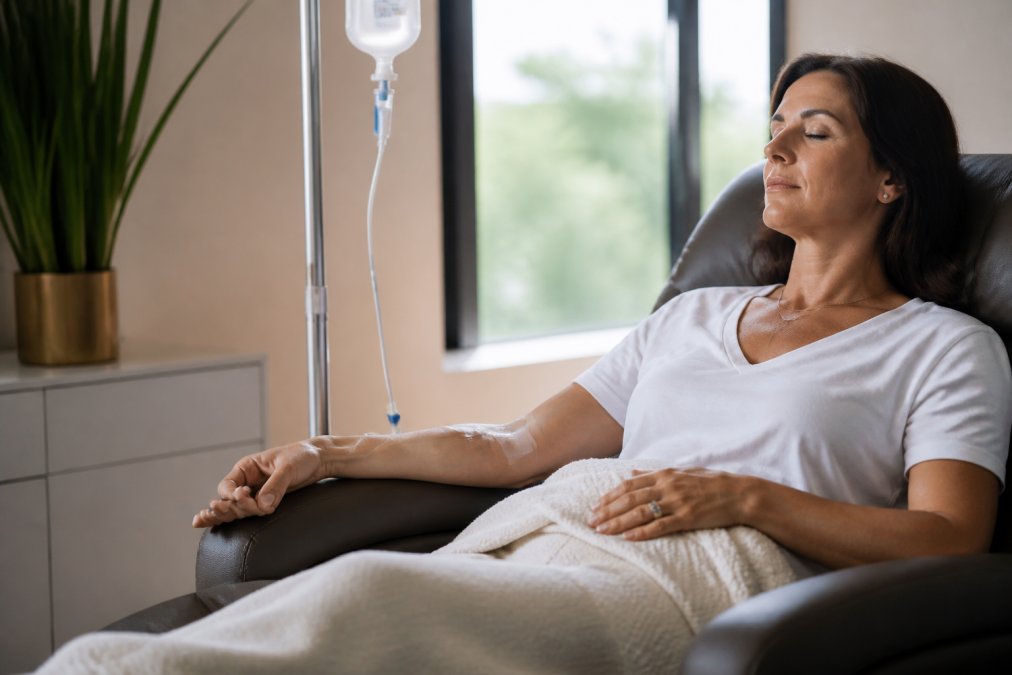
During the infusion, you sit in a comfortable chair while the NAD+ drips in slowly. The most common side effects are rate-dependent: chest tightness, flushing, and nausea show up when the drip runs too fast, and a good clinic titrates the rate up gradually rather than pushing a fixed speed. Sessions usually run two to four hours, and many providers encourage you to bring headphones or a book.
Afterward, most people return to normal activity the same day. Some report feeling energized; others feel tired. Both are normal.
Loading Doses vs. Maintenance Doses
This is the distinction most articles skip, and it changes what a “course” actually looks like.
- Loading phase: a concentrated series of infusions, often daily or near-daily for several days to about two weeks, intended to rebuild depleted NAD+ levels quickly. This is the phase most people mean when they say “NAD therapy.”
- Maintenance phase: periodic infusions (commonly spaced weeks to months apart) intended to hold levels steady during early recovery. Maintenance is not a continuation of loading; it is a lower-frequency schedule with a different goal.
Ask any provider to separate the two phases in writing: how many loading infusions, at what dose range, over how many days, and what the maintenance cadence looks like afterward. A quote that blends them into one number is hard to evaluate.
What a Typical Session Timeline Looks Like
- Intake and screening: 15-30 minutes, including vitals and medication review
- Infusion: 2-4 hours, with the rate adjusted based on how you respond
- Observation: 15-30 minutes after the drip ends, before you leave
- Same-day recovery: most people resume normal activity; some feel energized, others tired
Ask any provider three questions before booking: What is your exact protocol and dose range? Who supervises the infusion, and what are their credentials? What is your plan if I have a reaction mid-session? Vague answers are a red flag.
Protocol Variations, Contraindications, and Drug Interactions
Protocols differ in dose, infusion speed, session count, and whether NAD+ is combined with other vitamins or amino acids. Faster infusions deliver a stronger punch but more side effects. Slower infusions are gentler but take longer.
Contraindications matter more than most articles admit. NAD+ therapy is generally avoided during pregnancy and breastfeeding, and caution is warranted for people with certain cardiac conditions or active infections. Drug interactions are not fully mapped, which is a real limitation of the current evidence base.
Cost-Benefit Analysis and Long-Term Outcomes
Most pages in this space avoid the money question entirely. That is a disservice, because NAD IV therapy is expensive and rarely covered, and the cost-benefit math is the decision most readers are actually trying to make.
What It Realistically Costs
NAD IV therapy is priced per infusion, and a full course means multiple infusions. In practice, patients commonly see:
- Per-session pricing: roughly a few hundred dollars per infusion at many clinics, with higher rates in major metro areas and at physician-supervised programs
- Course pricing: a loading series plus maintenance can run into the low thousands of dollars, depending on session count and dose
- Add-ons: some clinics bundle NAD+ with other vitamins, amino acids, or hydration, which raises the per-session price
These are ranges, not quotes. Ask for a full course quote, not a per-session figure, so you can compare programs on the same basis.
Insurance and Coverage Reality
Insurance generally does not cover NAD IV therapy for addiction recovery. The FDA has not approved it for that indication, which is the main reason payers treat it as elective. Some plans may cover a portion if a clinician documents it as part of a medically supervised detox, but that is the exception, not the rule. Verify coverage in writing before you commit, and ask whether the clinic offers any payment plans.
The Long-Term Outcomes Problem
Here is the honest limitation: longitudinal data is scarce. Most published work consists of small pilot studies and observational reports, not large randomized controlled trials, and there is no long-term follow-up data showing sustained abstinence rates attributable to NAD+ itself.
What we know:
- Patients who combine NAD+ with structured therapy and medical support tend to do better than those who rely on infusions alone.
- NAD+ appears generally well tolerated when administered by trained clinicians.
What we do not know:
- Whether NAD+ itself drives the improvement, or whether it simply gets people engaged in treatment.
- Whether the effect holds up over months and years, not just weeks.
That distinction matters, and honest providers will acknowledge it rather than promise a cure.
A Simple Way to Weigh the Spend
Before committing, run the numbers against these questions:
- Is the cost framed as a full course, or per session? Per-session pricing hides the real total.
- Is NAD+ part of a broader plan? If it is the whole plan, the cost-benefit math is weak.
- Is there a maintenance schedule, and what does it cost over a year? Loading is the cheap part; maintenance is the long tail.
- What does the provider say about evidence? A provider who acknowledges the limits of the research is more trustworthy than one who does not.
| Factor | What to Consider |
|---|---|
| Session length | 2-4 hours per infusion |
| Typical course | Loading series over days to 2 weeks, then maintenance |
| Insurance coverage | Rarely covered; verify in writing upfront |
| Best results with | Therapy + medical oversight |
| Main limitation | Limited long-term data |
NAD IV therapy is a supportive tool with a real cost and an incomplete evidence base. The strongest case for spending on it is as one component of a broader recovery plan, not as a standalone treatment.
Check Ascend Vitality’s website for current pricing and program details.
Frequently Asked Questions
Does NAD help with addiction recovery?
Research suggests NAD IV therapy may support addiction recovery by restoring cellular energy and neurotransmitter balance, which can ease withdrawal symptoms and reduce cravings. However, it is not a standalone cure. Most clinics position it as part of a comprehensive treatment plan that includes counseling and medical oversight. Always consult a qualified professional to see if it fits your situation.
Is NAD IV therapy FDA-approved for addiction treatment?
No, the FDA has not approved NAD IV therapy specifically for addiction treatment. It is used off-label in some clinical settings. The evidence base is still developing, with promising results from small studies and clinical pilot programs. If you are considering this therapy, discuss it with a licensed addiction medicine specialist who can help you weigh potential benefits against unproven claims.
What are the potential side effects of NAD IV therapy?
Common side effects during infusion include nausea, chest tightness, and flushing, which usually subside when the drip rate is slowed. Serious complications are rare but can include infection at the IV site or an allergic reaction. Because NAD IV therapy is not risk-free, it should be administered by a qualified healthcare provider who can monitor you and adjust the protocol as needed.
How long does NAD therapy take to show results for addiction?
Many people report reduced cravings and improved mental clarity within the first few days of treatment, but the timeline varies based on the substance involved, the severity of dependence, and individual biology. A typical initial course may last 5 to 10 days, with maintenance sessions afterward. Your provider can give you a more tailored estimate after an assessment.