

Table of Contents
- Best TRT Clinics That Accept Insurance: A Quick Comparison
- 1. Ascend Vitality: Online TRT With Insurance Support
- 2. Low T Center: In-Person Care With Direct Insurance Billing
- 3. SynergenX Health: Specialized Hormone Therapy and Insurance Integration
- 4. Klinic: Telehealth TRT That Accepts Insurance
- 5. Rise Men’s Health: Hybrid Insurance and Subscription Model
- TRT Insurance Coverage Requirements: What Insurers Look For
- How to Get Insurance to Pay for TRT: A Step-by-Step Process
- TRT Cost With Insurance vs Without: Breaking Down the Numbers
- Online vs. In-Person TRT Clinics: Which Fits Your Insurance?
- Frequently Asked Questions
Last Updated: October 2, 2026
Best TRT Clinics That Accept Insurance: A Quick Comparison
Finding the best TRT clinics that accept insurance starts with one hard truth: coverage depends less on the clinic and more on your diagnosis and plan.
Here is the tension most patients miss. Clinics advertise “we accept insurance,” but that phrase often covers only the physician consultation and lab panels. The medication itself, especially testosterone injections, frequently lands on your out-of-pocket expenses.
Below, we will show you exactly how to verify coverage, what documentation insurers demand, and how to appeal a denial.

Comparison Table: Coverage, Cost Model, and Best For
| Clinic | Coverage Model | Best For | Visit Type |
|---|---|---|---|
| Ascend Vitality | Online care pathways, insurance coordination | Busy professionals wanting discreet telehealth | Telehealth |
| Low T Center | Direct insurance billing | Patients who prefer in-person monitoring | In-person |
| SynergenX Health | Major insurance networks | Structured hormone therapy focus | In-person |
| Klinic | Insurance and self-pay | Online care without corporate limits | Telehealth |
| Rise Men’s Health | Insurance or subscription | Flexibility between billing models | Hybrid |
How We Evaluated These Clinics
We scored each clinic on insurance integration, visit flexibility, and how clearly it explains costs. A clinic that accepts insurance but buries the medication cost is not truly affordable. We weighted transparency heavily.
The evaluation also considered whether a clinic supports prior authorization and provides the clinical documentation insurers require. Clinics that handle paperwork for you reduce administrative headaches. We noted where each one falls short, because no single clinic fits every plan.
1. Ascend Vitality: Online TRT With Insurance Support
Ascend Vitality connects you with specialized care pathways and delivers medically-supported programs and prescriptions directly to you. For men’s vitality concerns, it offers discreet online consultations and treatment.
What sets it apart is the convenience factor. You complete intake online, consult with a provider remotely, and receive prescriptions at home. That matters if your schedule makes in-person visits impractical. The service also extends to female wellness needs and weight-related care.
A common mistake is assuming telehealth means less thorough care. In practice, a proper online intake still requires lab work and a documented clinical diagnosis. Ascend Vitality builds those steps into its process rather than skipping them.
Before your first consultation, gather any recent blood panels and a list of current medications. Providers can move faster when they have baseline lab work showing your testosterone levels and related markers.
2. Low T Center: In-Person Care With Direct Insurance Billing
Low T Center runs a network of physical clinics built around direct insurance billing. If you want hands-on monitoring and prefer to sit across from a provider, this model fits. Each location handles diagnostic testing, blood work, and ongoing testosterone management under licensed supervision.
The advantage is straightforward: direct billing reduces your out-of-pocket expenses when your plan covers the service. You also get in-person oversight, which some patients find reassuring for testosterone injections and follow-up appointments.
Where it falls short is geography. You must travel to a clinic, and coverage varies widely by plan. Two patients with the same diagnosis can face very different bills depending on their deductible and network status.
3. SynergenX Health: Specialized Hormone Therapy and Insurance Integration
SynergenX Health focuses specifically on hormone replacement therapy and integrates with major insurance networks. Its process centers on specialized hormone level testing, customized treatment plans, and ongoing monitoring of your levels over time.
For patients who want a structured medical environment, this is a strong option. The emphasis on clinical labs means your treatment plan reflects actual numbers, not guesswork. That aligns well with what insurers look for when reviewing medical necessity.
The trade-off is regional availability. SynergenX operates in specific service areas, so not everyone can access a location. Pricing also depends entirely on your individual benefits, which makes pre-visit verification essential.

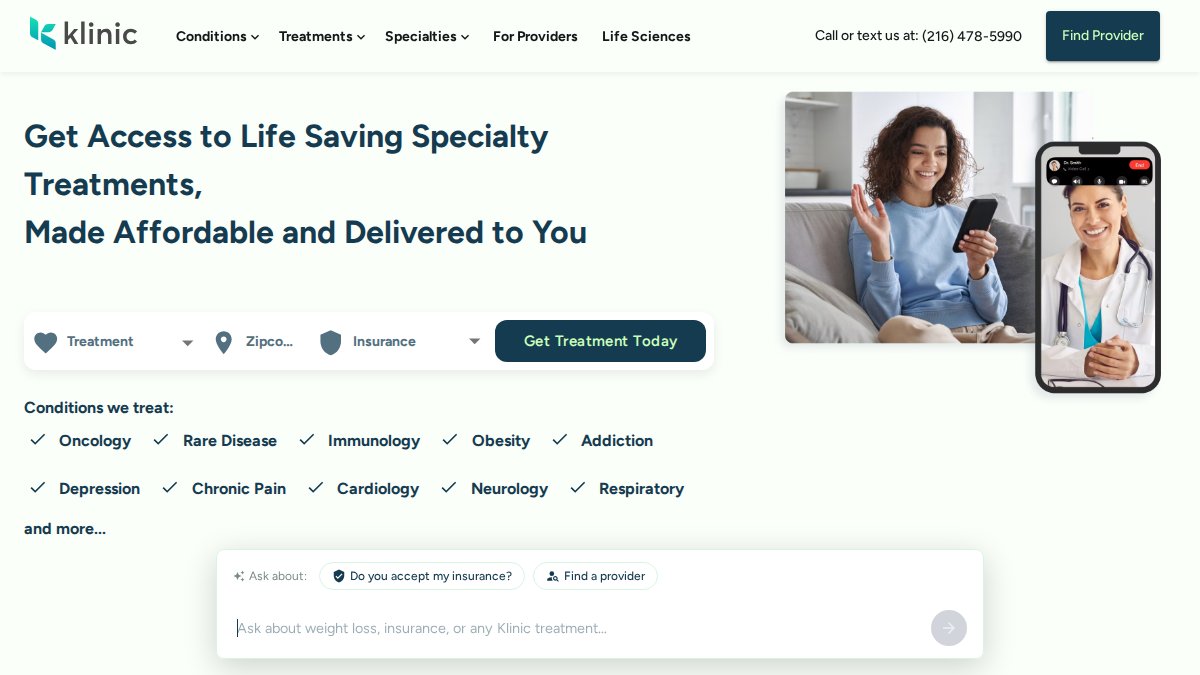
4. Klinic: Telehealth TRT That Accepts Insurance
Klinic is an independent online platform that connects patients with medical providers and accepts insurance for medical services. It stands out because few telehealth options bill insurance at all. Most online clinics are cash-pay only.
The simplified intake process reduces wait times compared with traditional primary care referrals. You verify insurance before your consultation, then meet a provider remotely. For patients who want convenience without a large corporate model, this fills a real gap.
Availability varies by state regulations, and you must complete insurance verification before booking. If your plan is restrictive, confirm coverage early to avoid surprise bills.
5. Rise Men’s Health: Hybrid Insurance and Subscription Model
Rise Men’s Health offers both insurance-covered services and self-pay subscription options. That hybrid approach suits patients who want a predictable monthly fee if their insurance will not cover treatment. Self-pay plans start around $99 per month and can reach higher tiers depending on the plan. Securing comprehensive coverage often depends on evaluating various private health insurance options to ensure that long-term hormone therapy remains both accessible and financially sustainable.
The clinic provides comprehensive TRT management and in-clinic diagnostics. If your insurance denies coverage, the subscription route keeps treatment accessible without abandoning care. Transparent self-pay tiers are genuinely useful for the uninsured.
The catch is protocol adherence. Subscription models often require you to follow clinic-specific schedules and processes. If flexibility matters more than price predictability, weigh that carefully.

TRT Insurance Coverage Requirements: What Insurers Look For
TRT insurance coverage requirements come down to two things: a confirmed diagnosis and documented medical necessity. Insurers rarely cover testosterone therapy for general fatigue or low energy alone. They want lab evidence and a clinical pattern.
Most plans require at least two morning testosterone measurements showing low levels, plus symptoms consistent with hypogonadism (Statement on Testosterone Replacement Therapy). Some also require testing of related hormones to rule out other causes. Without this documentation, a claim is likely to be denied.
Diagnosis Documentation Requirements
Hypogonadism is a clinical condition in which the body produces insufficient testosterone, confirmed through lab testing and symptoms rather than a single number. Insurers typically want the diagnosis supported by blood panels drawn in the morning, when testosterone peaks.
Your provider should document specific symptoms: low libido, fatigue, reduced muscle mass, or mood changes. Vague notes like “feels tired” weaken a claim. Precise clinical language strengthens it.
Prior Authorization and Medical Necessity
Many plans require prior authorization before covering testosterone products. This means your provider submits clinical justification, and the insurer reviews it against its criteria. Approval is not automatic.
Medical necessity is the standard insurers apply. Your records must show that treatment is clinically appropriate, not elective. A provider who understands this process can frame the request to meet the criteria the first time.
How to Get Insurance to Pay for TRT: A Step-by-Step Process
Learning how to get insurance to pay for TRT means working through coverage in a set order. Skip a step and you risk paying full price or facing a denial you could have avoided. The process below reflects how most commercial plans, Medicare Advantage plans, and marketplace plans handle testosterone claims.
Total time: Varies by plan, typically one to three weeks from first call to approval. Appeals add another 30 to 60 days depending on the plan type.
Step 1: Verify In-Network Providers and Benefits
- Call the member services number on the back of your insurance card and ask whether testosterone replacement therapy is a covered benefit under your specific plan.
- Confirm which providers are in-network providers for your plan. Ask for the CPT codes the clinic will bill (commonly 84403 for total testosterone and 96372 for injection administration) and confirm each is covered.
- Ask about deductibles, copayments, and any prior authorization rules. Get the deductible remaining balance in writing.
- Request the specific coverage criteria in writing, many plans publish a “medical policy” or “clinical policy bulletin” for testosterone that lists required lab values and diagnosis codes.
- Confirm whether lab work and medication are billed separately. This is where most surprise bills originate.
Expected result: You will know your estimated out-of-pocket expenses before you commit to a clinic.
Step 2: Confirm Diagnosis Documentation Before Your First Visit
Insurers approve TRT when the chart shows a diagnosis code (most commonly E29.1, hypogonadism) supported by labs and symptoms. Ask your provider to document:
- At least two morning total testosterone draws, typically below 300 ng/dL, drawn before 10 a.m (pubmed.ncbi.nlm.nih.gov).
- Free testosterone if total is borderline (usually 264-916 ng/dL range depending on lab).
- LH and FSH to distinguish primary from secondary hypogonadism.
- Specific symptoms in clinical language: low libido, erectile dysfunction, loss of morning erections, fatigue, reduced muscle mass, depressed mood.
Vague notes like “feels tired” weaken a claim. Precise clinical language strengthens it.
Step 3: Submit Prior Authorization Before Starting Treatment
Many plans require prior authorization before covering testosterone products. Your provider submits clinical justification, and the insurer reviews it against its criteria. Approval is not automatic, and it is rarely same-day.
Do not start treatment and assume you can get reimbursed later. Most insurers deny retroactive claims for testosterone therapy. Get prior authorization first, or you may absorb the full cost.
Step 4: If Your Claim Is Denied, Appeal It, Here Is Exactly How
A denial is not the end. You have the right to appeal, and many denials stem from missing documentation rather than a true lack of coverage. This is the step most patients skip, and it is the single highest-leverage move you can make.
Level 1, Internal appeal (plan review).
- Request the denial reason in writing. You are entitled to it under the Employee Retirement Income Security Act (ERISA) for employer plans, and under state insurance rules for individual plans.
- Ask your provider to supply the clinical notes, lab results, and a letter of medical necessity addressing each criterion the insurer cited.
- Submit a formal written appeal. Keep a copy of everything and send it with tracking.
- Track the clock: most plans must respond to a standard internal appeal within 30 days for a pre-service denial, or 60 days for a post-service denial. Urgent appeals get faster timelines.
Level 2, External review.
If the internal appeal fails, most plans allow an external review by an independent organization. This is a legal right under the Affordable Care Act for non-grandfathered plans. The reviewer is not employed by your insurer, and their decision is binding on the plan.
Level 3, State and federal escalation.
If the plan still refuses, you can file a complaint with your state department of insurance (for fully insured plans) or with the U.S. Department of Labor’s Employee Benefits Security Administration (for self-funded employer plans). These complaints carry real weight and often resolve stalled appeals.
A common pattern: the first denial cites “not medically necessary” without reviewing the labs. A short appeal letter that quotes the plan’s own medical policy back to the reviewer, and attaches the two morning testosterone draws, reverses a meaningful share of these denials. Ask your provider’s office if they have a template appeal letter; many do.
Step 5: Confirm What Is Covered Before Your First Injection
Once approved, ask the clinic and the insurer three questions in writing:
- Is the medication covered, or only the visit and labs?
- Is the pharmacy in-network, or do I need to use a specialty pharmacy?
- What is my cost-share for a 30-day supply at my current deductible status?
Getting these answers in writing before your first dose prevents the most common billing surprise in TRT care.
TRT Cost With Insurance vs Without: Breaking Down the Numbers
TRT cost with insurance versus without depends on your plan design, not just the clinic. With coverage, you typically pay a copayment for visits and a portion of medication costs until your deductible is met. Without coverage, you pay the full retail price for every component. The gap between those two numbers is often larger than patients expect.
The confusion arises because “accepting insurance” does not mean “fully covered.” A clinic may bill your insurer for the consultation while the medication remains self-pay. Always ask which parts are covered and which are not.
Typical Cost Ranges by Component
Your actual cost depends on your plan, your pharmacy, and your deductible status.
| Cost Component | With Insurance (in-network) | Without Insurance (cash-pay) |
|---|---|---|
| Initial consultation | $0-$50 copay | $150-$350 |
| Initial lab panel (total T, free T, LH, FSH, CBC, PSA) | $0-$75 copay | $200-$400 |
| Testosterone cypionate, 30-day supply | $10-$60 (Tier 1-2) | $30-$90 at a retail pharmacy |
| Testosterone gel, 30-day supply | $40-$150 (Tier 2-3) | $200-$500 |
| Injection supplies | Often not covered | $10-$30 per month |
| Follow-up visit | $0-$50 copay | $75-$200 |
| Monitoring labs every 3-6 months | $0-$75 copay | $100-$300 |
A common pattern: the medication is the cheapest part of TRT when insurance covers it, and the most expensive part when it does not. Testosterone cypionate is a generic and usually sits on a low pharmacy tier. Gels and pellets are branded and often land on Tier 3 or require prior authorization.
How Your Deductible Changes the Math
If you have not met your deductible, you may pay the full negotiated rate for every visit and lab until you do. That means a patient with a $3,000 deductible and no prior spending could pay $500 or more out of pocket in the first two months even though the plan “covers” TRT.
Once the deductible is met, the plan typically pays 70-80% of covered services and you pay the rest as coinsurance until you hit your out-of-pocket maximum. This is why two patients with the same diagnosis and the same clinic can face very different bills.
What Cash-Pay and Subscription Clinics Charge
If insurance denies coverage or your plan excludes TRT, self-pay is the fallback. Online men’s health platforms may offer bundled subscriptions that include medication, provider access, and routine labs. In-person cash-pay clinics may also charge monthly fees plus separate lab fees.
Subscription pricing is predictable. Consider your plan’s coverage and deductible before deciding.
FSA and HSA Funds for Hormone Therapy
FSA and HSA accounts can often cover hormone therapy expenses, including consultations, lab work, and prescriptions. These pre-tax accounts stretch your dollars further when insurance falls short, and because the money is pre-tax, a $100 HSA dollar effectively costs you less than $100 of take-home pay.
Check your plan’s rules before spending. Some accounts require a letter of medical necessity for certain treatments. Keep receipts and documentation for every purchase, and remember that HSA funds roll over year to year while most FSA funds do not.
Before you book, ask the clinic for three numbers in writing: the cash price of the initial visit, the cash price of the medication, and the billed insurance price of each. Compare those against your deductible balance and copay. That single comparison tells you more than any “we accept insurance” banner on a clinic website.
Online vs. In-Person TRT Clinics: Which Fits Your Insurance?
Telehealth and in-person clinics each work better for different insurance situations. Online clinics like Ascend Vitality reduce travel and wait times, which suits busy professionals.
The deciding factor is usually your plan’s network. If your insurer has few in-network telehealth providers, an in-person clinic may be the only covered route. If your plan is telehealth-friendly, online care can be faster and more discreet.
Consider how you handle follow-up appointments. Online care makes routine check-ins easier, while in-person visits allow physical exams. Neither is universally better; match the format to your plan and your comfort level.
Frequently Asked Questions
How can I get my insurance to cover TRT?
Start by confirming your plan covers hormone replacement therapy and checking whether the clinic is in-network. You will typically need a clinical diagnosis of hypogonadism supported by at least two morning blood panels showing low testosterone, plus documentation of symptoms. Your provider then submits a prior authorization request with the diagnosis code and lab results. If approved, insurance may cover consultations, lab work, and testosterone injections, though some plans still require copayments or deductibles.
What medical documentation is required for insurance to cover TRT?
Insurers usually want a clinical diagnosis of hypogonadism confirmed by low morning testosterone levels on two separate tests, a record of symptoms such as fatigue or low libido, and a treatment plan from a licensed physician. Some plans also require a specific diagnosis code and evidence that other causes have been ruled out. Keeping copies of your lab work, physician notes, and prior authorization paperwork makes the process faster and helps if you need to appeal a denial.
What are common reasons insurance companies deny TRT coverage?
Denials often happen when testosterone levels fall within the reference range, when only one lab test is submitted, or when the diagnosis code does not match the plan’s medical necessity criteria. Some plans exclude TRT for age-related low testosterone or require a trial of alternative treatments first. If denied, you can request a written explanation, ask your provider to submit additional documentation, and follow the plan’s formal appeal process within the stated deadline.
How does the cost of TRT differ between insurance-covered and out-of-pocket clinics?
With insurance, you typically pay copayments, deductibles, and coinsurance for consultations, lab work, and medication, which can lower your overall cost if the plan covers TRT. Out-of-pocket clinics may charge a flat monthly fee that bundles consultations, labs, and medication, which offers predictable pricing but no insurance reimbursement. The better option depends on your plan’s coverage, your deductible status, and whether you prefer predictable monthly costs or lower per-visit expenses.
Does insurance cover online TRT consultations and prescriptions?
Some plans now cover telemedicine consultations for hormone therapy, especially when the provider is in-network and the visit meets medical necessity criteria. Coverage for prescriptions varies: testosterone injections may be covered under the pharmacy benefit, while enclomiphene or peptide therapy is often excluded. Before booking an online clinic, call your insurer to confirm telehealth coverage, ask about specific billing codes, and verify whether the prescribing provider is in-network.
Insurance coverage for testosterone therapy is genuinely confusing, and the gap between “we accept insurance” and “your treatment is covered” trips up even careful patients. Ascend Vitality helps close that gap by connecting you with specialized online care pathways, handling consultations remotely, and delivering prescriptions discreetly to your door. If you want hormone care that fits a busy schedule, start with a consultation and let the team walk you through your options.