

Last Updated: May 1, 2026
Male hormone replacement therapy is one of the most searched and most misunderstood topics in men’s health today. At Ascend Vitality, we work with men navigating the real-world complexity of hormonal decline, and the gap between what patients expect and what the evidence actually supports is significant. This guide covers everything from diagnosis and treatment options to risks, costs, and the alternatives most clinics never mention. Below, we’ll show you exactly how to evaluate whether TRT is right for you, which delivery method fits your lifestyle, and what good ongoing care actually looks like.
Here’s what most guides get wrong: they treat testosterone replacement therapy (TRT) as a simple fix for aging. It isn’t. It’s a medical intervention with real benefits, real risks, and a monitoring requirement that lasts as long as you’re on it. Understanding the full picture before you start is not optional.
According to the Endocrine Society’s clinical practice guidelines on male hypogonadism, testosterone deficiency affects a meaningful portion of adult men, with prevalence rising significantly with age. The condition is underdiagnosed and undertreated, partly because symptoms overlap with general aging and partly because many men don’t seek care until quality of life has already dropped substantially.
What Is Male Hormone Replacement Therapy?
Male hormone replacement therapy is a medically supervised treatment that restores testosterone to normal physiological levels in men whose bodies no longer produce sufficient amounts on their own. The goal is not to push levels above the normal range, but to bring them back within a healthy window, typically defined in nanograms per deciliter (ng/dL).
Testosterone is the primary male sex hormone, produced mainly in the testicles under signals from the pituitary gland. It governs many functions: muscle mass, bone density, fat distribution, red blood cell production, sex drive, mood, and energy levels. When production drops below clinically meaningful thresholds, the condition is called hypogonadism or androgen deficiency.
How Testosterone Deficiency Develops
Testosterone deficiency develops through two main pathways. Primary hypogonadism originates in the testicles themselves, which fail to produce adequate testosterone despite normal hormonal signaling from the brain. Secondary hypogonadism originates higher up, in the pituitary gland or hypothalamus, where signaling to the testicles breaks down.
Age-related decline is the most common driver. Testosterone levels typically peak in early adulthood and decline gradually after age 30. Certain medical conditions, including obesity, type 2 diabetes, chronic illness, and sleep apnea, can accelerate this decline. Injury, infection, chemotherapy, and genetic conditions can also impair testicular function directly.
The Role of the Pituitary Gland and Endocrine System
The pituitary gland sits at the base of the brain and acts as the command center for testosterone production. It releases luteinizing hormone (LH), which signals the testicles to produce testosterone. When testosterone levels are adequate, the brain reduces LH output. When levels fall, LH increases to stimulate more production.
This feedback loop is why exogenous testosterone (testosterone introduced from outside the body) suppresses the body’s own production. Once you start TRT, your pituitary gland detects sufficient testosterone and stops sending LH signals to the testicles. This matters enormously for fertility, which we’ll address later.

Recognizing Low Testosterone Symptoms in Men
Low testosterone symptoms are easy to dismiss because they overlap with stress, poor sleep, and general aging. The clinical picture, though, is specific enough to warrant investigation when multiple symptoms appear together.
The most commonly reported symptoms include persistent fatigue, reduced libido, erectile dysfunction, decreased muscle strength, increased body fat, mood changes, and difficulty concentrating. Physical signs may include reduced facial hair and body hair growth, decreased bone density, and changes in fat distribution toward the abdomen.
Physical vs. Psychological Symptoms
Physical symptoms are often what bring men to a clinic. Reduced muscle mass despite consistent training, unexpected weight gain, and declining athletic performance are common triggers. Bone density loss is less visible but clinically significant, as low testosterone accelerates the risk of fractures over time.
Psychological symptoms are frequently underreported. Depression, irritability, low motivation, and cognitive fog are all associated with androgen deficiency. These symptoms are sometimes attributed to mental health conditions without a hormonal workup, which delays appropriate treatment.
The important clinical point: symptoms alone are not sufficient to diagnose hypogonadism. Blood testing is required.
Watch OutDo not self-diagnose based on symptoms alone. Many conditions, including thyroid dysfunction, depression, and sleep disorders, produce similar presentations. A proper diagnosis requires blood testing on at least two separate mornings, since testosterone levels fluctuate throughout the day.
Understanding Testosterone Replacement Therapy (TRT): Who Qualifies?
Testosterone replacement therapy (TRT) is appropriate for men with confirmed hypogonadism, meaning both clinical symptoms and consistently low blood testosterone levels. Most guidelines require two separate morning blood draws showing low testosterone before initiating treatment.
Diagnosing Hypogonadism and Androgen Deficiency
Diagnosing hypogonadism involves more than a single testosterone reading. A complete workup typically includes total testosterone, free testosterone, LH, FSH (follicle-stimulating hormone), estrogen, complete blood count, and a metabolic panel. Prolactin levels are sometimes checked to rule out pituitary tumors. The pituitary gland and broader endocrine system need to be assessed to determine whether the problem is primary or secondary.
According to the American Urological Association’s testosterone deficiency guidelines, diagnosis should be based on repeated measurements and clinical context, not a single lab value. A healthcare provider experienced in hormonal medicine is essential for accurate interpretation.
What ng/dL Levels Actually Mean for Your Health
Total testosterone is measured in nanograms per deciliter (ng/dL). Most laboratories define the normal range as roughly 300 to 1,000 ng/dL, though reference ranges vary slightly by lab. Men below 300 ng/dL with symptoms are generally considered candidates for treatment.
Here’s what most guides miss: where you fall within the normal range matters as much as whether you’re technically “in range.” A man at 310 ng/dL who feels terrible is not in the same clinical position as a man at 310 ng/dL who functions well. Symptom burden and quality of life are part of the diagnostic picture.
Free testosterone, the portion not bound to proteins, is a more sensitive marker in some men, particularly those with elevated sex hormone-binding globulin (SHBG). This is why a comprehensive panel matters more than a single total testosterone number.
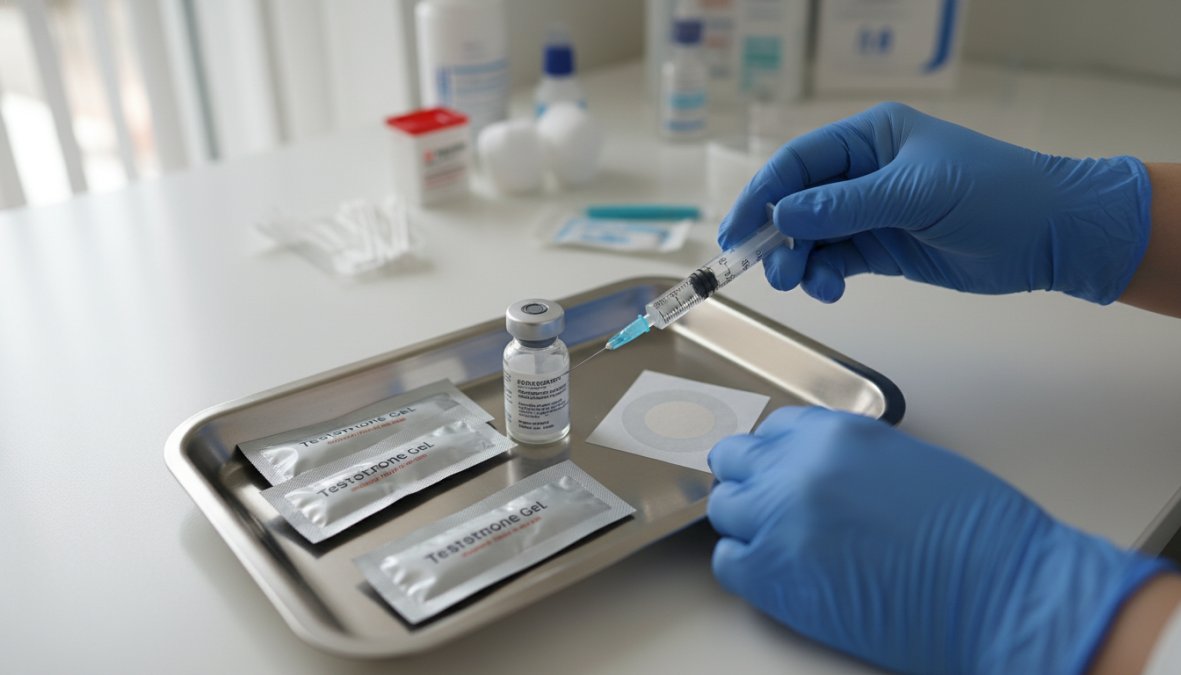
Comparing TRT Administration Methods: Pros and Cons
The delivery method you choose for male hormone replacement therapy affects convenience, cost, stability of hormone levels, and side effect profile. No single method is universally best. The right choice depends on your lifestyle, preferences, and clinical situation.
| Method | Frequency | Level Stability | Fertility Impact | Typical Pros | Typical Cons |
|---|---|---|---|---|---|
| Injections | Weekly or biweekly | Variable (peaks/troughs) | High suppression | Low cost, effective | Peaks and troughs, self-injection |
| Gels | Daily | Stable | High suppression | Easy application | Transfer risk, daily use |
| Patches | Daily | Stable | High suppression | Discreet | Skin irritation common |
| Pellets | Every 3-6 months | Very stable | High suppression | Set-and-forget | Minor procedure required |
Testosterone Injections
Testosterone injections are the most widely used delivery method and, for many men, the most cost-effective. Testosterone cypionate and testosterone enanthate are the two most common injectable forms, typically administered weekly or every two weeks into the muscle.
The main drawback is the peak-and-trough effect. Levels spike shortly after injection and decline before the next dose, which some men experience as mood swings or fluctuating energy. Weekly injections reduce this effect compared to biweekly dosing. Some protocols use smaller, more frequent injections (twice weekly or subcutaneous) to further smooth out fluctuations.
Pros of injections:
- Generally the lowest cost option
- Highly effective at raising testosterone levels
- Flexible dosing schedules
- Well-studied, with decades of clinical data
Cons of injections:
- Requires self-injection or clinic visits
- Hormone level fluctuations between doses
- Possible injection site discomfort
Gels, Patches, and Pellets
Testosterone gels are applied daily to the skin, typically the shoulders or upper arms. They produce more stable hormone levels than injections because absorption is continuous. The significant risk is accidental transfer to partners or children through skin contact, which can cause virilization in women and children.
Patches work similarly to gels but come in a pre-measured adhesive form. Skin irritation at the application site is the most common complaint, and some men find patches impractical for active lifestyles.
Pellets are small testosterone implants inserted under the skin of the buttock in a brief in-office procedure. They release testosterone slowly over three to six months, offering the most stable hormone levels of any method. The procedure is minor but does involve a small incision. Dose adjustment requires waiting until the pellet dissolves, which is a limitation if the initial dose needs correction.
Pro TipIf hormone level stability is your top priority and you dislike daily application or self-injection, pellets offer the most consistent delivery. If cost and flexibility matter most, weekly injections with a small-gauge needle are manageable for most men within a few weeks of starting.
Benefits of Male Hormone Replacement Therapy
The benefits of male hormone replacement therapy are well-documented for men with confirmed hypogonadism. They are not guaranteed, and they are not the same as the benefits claimed in wellness marketing aimed at men with normal testosterone levels.
For men with genuine androgen deficiency, TRT commonly produces the following:
- Improved libido and sexual function: Sex drive typically responds within weeks of reaching therapeutic testosterone levels. Erectile dysfunction related to low testosterone often improves, though ED with other causes (vascular, psychological) may not respond to TRT alone.
- Increased muscle mass and strength: Testosterone is anabolic. Men on TRT, particularly when combined with resistance training, tend to see meaningful improvements in lean mass and muscle strength.
- Reduced body fat: Testosterone influences fat distribution. Restoring levels often shifts fat away from the abdomen over time.
- Improved bone density: Long-term TRT is associated with improvements in bone mineral density, which matters for fracture risk in older men.
- Better mood and energy levels: Many men report significant improvements in mood, motivation, and energy within the first few months of treatment.
- Improved red blood cell production: Testosterone stimulates erythropoiesis, the production of red blood cells, which can improve stamina and reduce fatigue.
The contrast with marketing claims is worth stating plainly. TRT will not turn a man with normal testosterone into a superhuman. The benefits are specific to men with documented deficiency.
Key TakeawayThe benefits of TRT are real and clinically meaningful for men with confirmed hypogonadism. For men with normal testosterone levels, the risk-benefit calculation shifts significantly, and treatment is generally not recommended.
Risks, Side Effects, and What to Watch For
Every treatment carries trade-offs. Male hormone replacement therapy is no exception, and the risk profile deserves honest discussion before starting.
Common side effects include acne, oily skin, increased body hair, mild fluid retention (peripheral edema), and breast tenderness. Testosterone converts to estrogen through a process called aromatization, and elevated estrogen can cause gynecomastia (breast tissue growth) in some men. An aromatase inhibitor is sometimes prescribed alongside TRT to manage this.
Serious Risks: Polycythemia, Cardiac Dysfunction, and Prostate Health
Polycythemia, an abnormal increase in red blood cell count, is one of the more serious risks of TRT. Because testosterone stimulates red blood cell production, hematocrit (the proportion of red blood cells in blood) can rise to levels that increase clotting risk. Regular blood monitoring is essential to catch this early.
Cardiac dysfunction and cardiovascular risk have been subjects of ongoing research and regulatory attention. The FDA has required labeling changes for testosterone products to note the potential for cardiovascular events. The evidence is not fully settled, and risk appears to be higher in men with pre-existing cardiovascular conditions. This is a conversation to have explicitly with your healthcare provider before starting.
Prostate cancer and prostate health are common concerns. Current evidence does not support the idea that TRT causes prostate cancer in men without pre-existing disease. However, testosterone can stimulate growth in existing prostate cancer cells, which is why a PSA (prostate-specific antigen) test and prostate evaluation are standard before initiating therapy. Men with active or suspected prostate cancer or breast cancer are generally not candidates for TRT.
According to the FDA’s safety communications on testosterone products, healthcare providers should confirm hypogonadism diagnosis with lab testing and evaluate cardiovascular risk before prescribing testosterone.
Impact on Fertility and Sperm Production
This is the part nobody tells you about TRT upfront: it significantly suppresses sperm production.
When exogenous testosterone enters the body, the pituitary gland reduces or stops LH and FSH secretion. Without LH signaling, the testicles stop producing testosterone naturally. Without FSH, sperm production (spermatogenesis) shuts down. For men who want to father children in the future, this is a critical consideration.
Sperm production often recovers after stopping TRT, but recovery is not guaranteed and can take months to years. Men who want to preserve fertility should discuss alternatives, including clomiphene citrate (a selective estrogen receptor modulator that stimulates natural testosterone production without suppressing sperm production), before starting TRT.
Monitoring Your Treatment: What Good Care Looks Like
Starting TRT without a monitoring plan is not good medical care. Full stop.
Proper monitoring for male hormone replacement therapy includes regular blood testing throughout treatment. A responsible protocol typically involves:
- Before starting: Baseline testosterone (two morning draws), LH, FSH, estrogen, PSA, complete blood count, metabolic panel, and lipid panel
- At 3 months: Testosterone levels, hematocrit, PSA, estrogen, and symptom review
- At 6 months: Full panel repeat
- Annually: Comprehensive labs plus prostate evaluation for men over 40
Hematocrit monitoring is non-negotiable. If hematocrit rises above 54%, most guidelines recommend pausing or dose-reducing TRT. Therapeutic phlebotomy (blood donation) is sometimes used to manage polycythemia.
Symptom tracking matters as much as lab values. If a man’s numbers look good on paper but he still feels poor, the protocol needs adjustment. The goal is clinical improvement, not hitting a specific ng/dL target.
Ascend Vitality provides medically-supported hormone programs that include ongoing monitoring and prescription delivery, so patients aren’t navigating lab results alone.
Cost, Insurance, and Finding HRT Clinics for Men
Cost is one of the most practical barriers to TRT, and it varies widely depending on the delivery method, provider type, and insurance situation.
Generic injectable testosterone (cypionate or enanthate) is among the least expensive options, often available at retail pharmacies for a modest monthly cost. Branded gels and patches are significantly more expensive. Pellet therapy involves both the cost of the pellets and the procedure fee, which varies by clinic.
Insurance coverage for TRT is inconsistent. Many plans cover TRT for confirmed hypogonadism when properly diagnosed and documented, but prior authorization requirements and coverage limits vary. Men using testosterone for age-related decline without a formal hypogonadism diagnosis often find coverage denied.
Online TRT Providers vs. In-Person Clinics
The telehealth model has changed access to testosterone replacement therapy (TRT) significantly. Online TRT providers offer lab ordering, physician consultations, and prescription delivery without requiring in-person clinic visits. For men in areas without specialized endocrinology or urology practices, this is a genuine improvement in access.
The trade-off is oversight depth. In-person clinics can perform physical exams, administer injections on-site, and provide closer monitoring for complex cases. Men with significant cardiovascular risk, prostate concerns, or complex hormonal profiles benefit from in-person specialist care.
Ascend Vitality connects men with specialized care pathways online, offering medically-supported hormone programs with prescriptions delivered directly to patients. This model works well for men who are good candidates for TRT and want convenient, ongoing access to care without the friction of repeated clinic visits.
Alternatives to TRT: Lifestyle and Other Options
TRT is not the only path forward for men with low testosterone or symptoms of androgen deficiency. This is where most TRT-focused guides fall short.
Lifestyle interventions can meaningfully affect testosterone levels, particularly in men whose deficiency is driven by modifiable factors:
- Weight loss in obese men often raises testosterone levels substantially. Adipose tissue converts testosterone to estrogen, so reducing body fat directly improves the hormonal environment.
- Resistance training is the most evidence-supported exercise modality for testosterone optimization.
- Sleep quality is underrated. Testosterone is produced primarily during sleep, and chronic sleep deprivation suppresses production.
- Reducing alcohol consumption and managing chronic stress (which elevates cortisol, which suppresses testosterone) are also clinically relevant.
Pharmacological alternatives include:
- Clomiphene citrate: A selective estrogen receptor modulator (SERM) that blocks estrogen feedback at the pituitary, causing it to release more LH and FSH, which stimulates the testicles to produce more testosterone naturally. It preserves fertility, which TRT does not.
- Human chorionic gonadotropin (hCG): Mimics LH and stimulates testicular testosterone production. Sometimes used alongside TRT to maintain testicular size and function, or as a standalone treatment.
- Anastrozole: An aromatase inhibitor sometimes used in men with elevated estrogen and borderline-low testosterone.
According to the American Society of Reproductive Medicine’s guidance on male infertility and hormonal treatment, clomiphene and hCG are viable options for men with secondary hypogonadism who wish to preserve fertility.
These alternatives are worth discussing with a healthcare provider before committing to TRT, especially for younger men or those who want biological children.
Common Mistakes and Bad Advice to Ignore
A common mistake is starting TRT based on a single blood test taken at the wrong time of day. Testosterone levels are highest in the morning and can vary by 30% or more throughout the day. A single afternoon reading showing low-normal levels is not a diagnosis.
What most guides miss is the importance of diagnosing the cause of low testosterone, not just treating the number. A man with secondary hypogonadism caused by a pituitary adenoma needs different treatment than a man with primary testicular failure. Jumping straight to TRT without understanding the cause can delay treatment for an underlying condition.
Bad advice to ignore:
- “You can get TRT without a diagnosis.” Reputable providers require documented hypogonadism. Providers who don’t are taking shortcuts that put patients at risk.
- “TRT is safe for everyone.” Men with untreated prostate cancer, breast cancer, severe sleep apnea, or high cardiovascular risk need careful evaluation before starting.
- “Higher testosterone is always better.” Supraphysiological levels increase the risk of polycythemia, cardiac dysfunction, and hepatic dysfunction. The goal is restoration, not maximization.
- “You don’t need monitoring once you’re stable.” Hematocrit, PSA, and estrogen levels can shift over time. Annual monitoring is the minimum standard of care.
- “Testosterone gel is risk-free.” Transfer to partners or children is a real risk that requires behavioral precautions, including covering application sites and washing hands thoroughly.
Watch OutAvoid providers who prescribe TRT without requiring baseline blood work or who offer “optimization” protocols to men with normal testosterone levels. The risk-benefit ratio for TRT is favorable only in confirmed hypogonadism, not for general performance enhancement.
Conclusion
Male hormone replacement therapy offers genuine, evidence-supported benefits for men with confirmed hypogonadism, but it demands a level of medical diligence that the wellness industry often glosses over. The decision to start TRT should follow proper diagnosis, honest risk discussion, and a monitoring plan that lasts as long as treatment does.
Frequently Asked Questions
What is male hormone replacement therapy?
Male hormone replacement therapy is a medically supervised treatment designed to restore testosterone to healthy levels in men diagnosed with low testosterone or hypogonadism. It addresses androgen deficiency caused by aging, pituitary gland dysfunction, or testicular issues. Treatment forms include injections, gels, patches, and pellets. A healthcare provider confirms the diagnosis through blood tests measuring testosterone levels in ng/dL before recommending any therapy.
What are the most common low testosterone symptoms that suggest TRT may help?
Common low testosterone symptoms include reduced sex drive and libido, erectile dysfunction, fatigue, decreased muscle mass and muscle strength, increased body fat, mood changes such as depression or irritability, and reduced bone density. Some men also notice less facial hair or body hair. If you experience several of these symptoms together, it is worth discussing testosterone replacement therapy (TRT) with a qualified healthcare provider who can order the appropriate blood work.
What are the main risks and side effects of male hormone replacement therapy?
Potential risks of male hormone replacement therapy include polycythemia (excess red blood cell production), peripheral edema, acne, sleep apnea, and suppression of sperm production that can affect fertility. More serious concerns include cardiac dysfunction, hepatic dysfunction when using certain formulations, and possible effects on prostate health. Men with a history of prostate cancer or breast cancer are generally not candidates. Regular monitoring with a healthcare provider significantly reduces these risks.
How do testosterone injections compare to other TRT delivery methods?
Testosterone injections are typically the most cost-effective TRT option and allow precise dosing, but they require regular administration and can cause hormone level fluctuations between doses. Gels and patches provide more stable daily testosterone levels but carry a transfer risk to partners or children. Pellets are implanted under the skin and release hormones slowly over months, offering convenience but less flexibility for dose adjustments. Each method has distinct pros and cons depending on your lifestyle and healthcare provider’s guidance.
How do I find reputable HRT clinics for men?
Reputable HRT clinics for men should employ licensed healthcare providers experienced in endocrinology or men’s health, conduct thorough blood work before prescribing, and offer ongoing monitoring throughout treatment. Options include in-person urology or endocrinology practices, men’s health clinics, and FDA-compliant online telehealth platforms that deliver prescriptions directly to you. When evaluating any provider, confirm they follow Endocrine Society guidelines and do not prescribe without proper diagnostic testing.
Are there alternatives to testosterone replacement therapy for men with low testosterone?
Yes. Lifestyle changes such as resistance training, improved sleep, weight loss, and stress reduction can meaningfully support healthy testosterone levels, particularly in cases of age-related decline rather than clinical hypogonadism. Some medications, including clomiphene citrate, may stimulate the body’s own testosterone production and are sometimes used when preserving fertility is a priority. A healthcare provider can help determine whether TRT or an alternative approach is more appropriate based on your specific diagnosis and goals.
How long does it take to see results from male hormone replacement therapy?
Results from male hormone replacement therapy vary by symptom and individual. Many men report improvements in energy levels, mood, and libido within three to six weeks. Changes in muscle mass, muscle strength, fat distribution, and bone density typically take three to six months of consistent treatment to become noticeable. Full benefits may take up to twelve months. Regular follow-up appointments and blood work help your healthcare provider optimize dosing for the best long-term outcomes.
Navigating testosterone deficiency is complex, and finding a provider who combines medical rigor with convenient access is harder than it should be. Ascend Vitality offers medically-supported hormone programs with prescriptions delivered directly to you, connecting men with specialized care pathways that include ongoing monitoring and expert guidance. Get started with Ascend Vitality and access the kind of structured, evidence-based hormone care that actually supports long-term health.