Did you know that by the time you reach 50, your body’s NAD+ levels may have already declined by up to 50%? This decline is linked to many of the changes we associate with getting older. Understanding this coenzyme is key to understanding your own vitality.
NAD+, or nicotinamide adenine dinucleotide, is a crucial coenzyme found in every cell. It is a key player in generating cellular energy and is essential for fundamental processes like DNA repair and maintaining healthy cellular function.
Research shows that NAD+ levels naturally decrease as we get older. This decline is a major focus in the science of aging, as it is connected to changes in metabolic health and cellular energy. This has made it a hot topic in wellness and longevity research.
This article explores the science behind this essential molecule. We’ll look at the benefits of supporting your body’s NAD+ levels, examine different precursor supplements like NR and NMN, and review important safety considerations to be aware of.
What Is NAD+? The Essential Cellular Coenzyme
Imagine a microscopic spark plug igniting the engines of your cells, that’s the essential role played by NAD+. This coenzyme, whose full name stands for nicotinamide adenine dinucleotide, acts as a universal helper molecule throughout your body.
The “+” sign indicates its oxidized, active form ready for work. Dr. Michael Barnish offers a helpful analogy: food provides fuel, but NAD+ starts the process of turning that fuel into cellular power.
As a coenzyme, it binds to other enzymes to facilitate critical reactions. These biochemical processes occur within mitochondria, the powerhouses of every cell.
Scientists first identified this molecule during fermentation research in 1906. Its importance grew when nicotinic acid, an NAD+ precursor, helped cure pellagra in the early 1900s.
Nobel laureate Hans von Euler-Chelpin determined its structure consists of two nucleotides. These are fundamental biological building blocks found in all living systems.
Nicotinamide adenine dinucleotide itself is not a vitamin. However, it maintains a close relationship with Vitamin B3, also called niacin.
Various forms of B3 serve as precursors that your body uses to synthesize this essential coenzyme. This connection explains why B3 vitamins support overall metabolic health.
From humans and mammals to yeast, bacteria, and plants, all living cells use NAD+. Its universal presence underscores fundamental biological importance.
Your body lacks an endless supply of this crucial molecule. NAD+ levels remain dynamic, influenced by both production and consumption during cellular functions.
Hundreds of metabolic processes rely on adequate amounts of this coenzyme. These include energy production and maintaining mitochondrial health throughout your life.
The Critical Roles and Uses of NAD+ in Your Body
NAD+ serves as a fundamental cellular multitasker, coordinating essential processes that sustain life at the most basic level. This coenzyme’s primary functions span from fueling our daily energy to repairing the very code of life within our cells. Understanding these diverse roles explains why maintaining optimal levels is crucial for health and vitality.
1. Fueling Cellular Energy and Mitochondrial Function
At the core of your body’s energy production, NAD+ plays a starring role. It acts as a vital electron carrier in the mitochondria, the power plants of our cells. This process converts nutrients from food into ATP, the primary energy currency of every cell.
This function is not just about generating power. It supports the high-energy demands of the brain, heart, and muscles. Efficient energy production keeps our metabolic engine running smoothly, directly influencing overall vitality and daily energy levels.
2. Enabling DNA Repair and Cellular Maintenance
Beyond energy, NAD+ is a guardian of your genetic material. It serves as a crucial cofactor for enzymes that monitor and maintain DNA integrity. Two key protein families, sirtuins and PARPs, depend on NAD+ for their function.
PARP enzymes, for instance, consume NAD+ to initiate the repair of DNA damage caused by factors like UV radiation or oxidative stress. Simultaneously, sirtuins use NAD+ to regulate cellular health, stress response, and longevity pathways, acting as key guardians of cellular homeostasis.
3. Supporting Skin Health and Resilience
The skin, our largest organ, is under constant environmental assault. NAD+ is vital for skin cell metabolism, aiding in barrier function, collagen production, and the inflammatory response. It fuels the rapid repair and renewal processes that keep skin resilient.
When NAD+ levels decline, the skin’s ability to repair damage and maintain elasticity diminishes. This can lead to visible signs of aging, such as fine lines and a loss of firmness. Supporting cellular NAD+ can help maintain the skin’s structural integrity and youthful appearance.
4. Additional Systemic Functions
The influence of this vital coenzyme extends to whole-body systems. In the liver, NAD+ aids in detoxification processes, helping to metabolize substances and maintain metabolic balance. It also plays a crucial role in regulating circadian rhythms, linking cellular energy metabolism to our sleep-wake cycles.
Because NAD+ is central to so many core processes, its deficiency can have widespread effects. Compromised levels may impact everything from cognitive function and metabolic flexibility to the body’s resilience and repair capacity, underscoring its foundational role in overall health.
Why NAD+ Levels Decline and Why It Matters
As we age, our cells experience a significant drop in NAD+ levels, a fundamental change with wide-ranging effects. This natural, age-related decline in NAD+ represents a core biological shift that affects every cell in the body. It is a primary hallmark of the aging process itself.
This decline in NAD+ levels is not a passive process. The consequences are significant for the body. With lower NAD+, the body’s cellular energy production falters. The cellular power plants, mitochondria, become less efficient. Critical repair processes slow down.
Key cellular processes suffer when NAD+ is low. The repair of damaged DNA, a constant necessity, becomes impaired. Sirtuins, the longevity proteins that depend on NAD+, become less active. The body’s natural detoxification processes also lose efficiency.
In daily life, this cellular decline manifests in ways you might recognize. You may experience persistent fatigue, as cells struggle to generate energy. Mental clarity can suffer, often called “brain fog.” The body also recovers more slowly from physical exertion or illness.
Several lifestyle factors are known to accelerate this natural decline, depleting NAD+ reserves faster:
- Chronic Stress: Constant stress increases the activity of NAD+-consuming enzymes, depleting reserves.
- Poor Diet: Diets high in processed foods and low in NAD+ precursors can starve the body of the building blocks it needs.
- Excessive Sun Exposure: UV radiation directly damages skin cells, forcing them to consume extra NAD+ for repair.
- High Alcohol Consumption: The body uses significant NAD+ to metabolize alcohol, diverting it from other critical functions.
- Inadequate Sleep: Sleep is a crucial time for cellular repair and NAD+ synthesis. Poor sleep disrupts this.
- Exposure to Toxins: Environmental pollutants and toxins increase the body’s detoxification burden, consuming more NAD+.
Scientific research provides a hopeful note. One compelling study showed that adults who engaged in rigorous, consistent exercise maintained NAD+ levels in muscle tissue comparable to much younger individuals. This study highlights a key insight: the rate of decline is not fixed.
This matters for long-term health. The gradual depletion of NAD+ is linked to a decline in resilience and metabolic flexibility. It can make the body more susceptible to age-related metabolic conditions and a general loss of vitality. This understanding is precisely why the science of longevity has focused intensely on this coenzyme. Recognizing NAD+ decline as a modifiable factor has sparked immense interest in strategies to support healthy levels throughout life.
Different Forms of NAD+: Precursors and Direct Supplementation
Your body requires specific building blocks to maintain optimal NAD+ levels. Several approaches exist to support your cellular NAD+ status, each with distinct pathways and applications. Understanding the available forms of supplementation can help you make informed choices about supporting your cellular vitality.
NAD+ precursors are forms of vitamin B3 that your body converts into the essential coenzyme. These precursors serve as the building blocks your cells use to synthesize NAD+. Each precursor follows a unique metabolic pathway, offering different absorption rates and conversion efficiencies.
1. Nicotinamide Riboside (NR): A Highly Efficient Precursor
Nicotinamide riboside (NR) has gained significant attention as a highly efficient NAD+ precursor. This form of vitamin B3 is naturally present in trace amounts in milk and some other foods. Research suggests NR is particularly effective at raising cellular NAD+ levels.
NR serves as a direct precursor in the NAD+ salvage pathway. Studies indicate NR can boost NAD+ levels by up to 60% in specific tissues. Clinical research shows NR supplementation effectively increases cellular NAD+ levels.
Specific supplements like Elysium’s Basis contain 250mg of NR. This dosage has been studied for supporting healthy cellular metabolism. Research continues to explore the full therapeutic potential of NR supplementation.
2. Nicotinamide Mononucleotide (NMN): Another Popular Pathway
Nicotinamide mononucleotide represents another important NAD+ precursor. NMN serves as a direct precursor in the NAD+ biosynthesis pathway. Many researchers consider NMN a direct precursor to NAD+ synthesis.
Products like Elysium’s Signal combine NMN with a SIRT3 activator. This combination aims to support mitochondrial function and cellular health. Scientific studies continue to explore NMN’s bioavailability and conversion efficiency.
Research shows both NR and NMN can increase NAD+ levels significantly. Clinical trials demonstrate both precursors can raise NAD+ levels by approximately 40% in study participants. The scientific debate continues regarding their relative absorption and conversion efficiencies.
3. Intravenous (IV) NAD+ Therapy: Bypassing the Gut
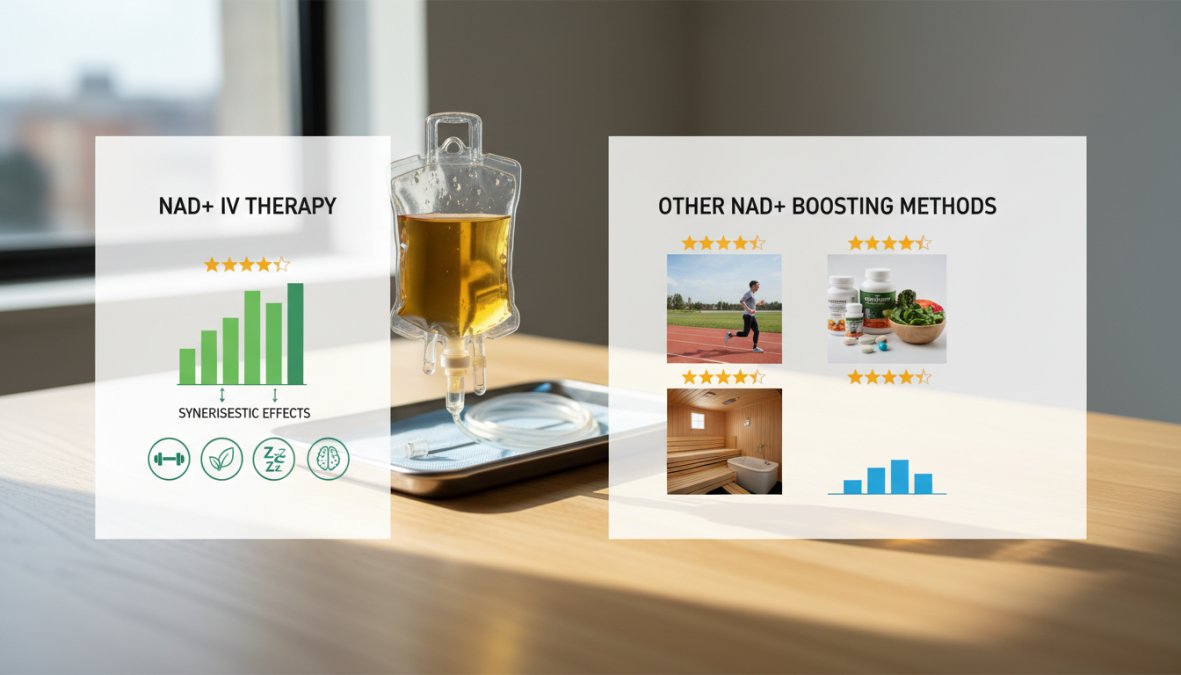
Intravenous NAD+ therapy delivers the coenzyme directly into the bloodstream. This method bypasses the digestive system entirely. Patients receive NAD+ through a controlled IV infusion at specialized clinics.
Medical supervision is essential for IV NAD+ therapy. Clinics like RegenCen provide this treatment under professional supervision. The process typically takes several hours, with patients reporting various sensations during infusion.
This method offers immediate systemic availability. Many patients seek IV therapy for rapid cellular support. Medical professionals should always supervise this NAD+ therapy.
4. Topical NAD+ in Skincare: Penetration and Derivatives
Direct NAD+ has poor skin penetration due to its molecular size. Effective skincare products use precursors or advanced delivery systems. Most formulations contain NR or NMN instead of direct NAD+.
These derivatives convert into active NAD+ within skin cells. This approach parallels retinoid skincare, where derivatives convert to active retinoic acid. Effective delivery systems ensure these precursors reach deeper skin layers.
Advanced encapsulation technologies can enhance penetration. This allows NAD+ precursors to support skin cell metabolism and collagen production effectively.
|
Form |
Primary Use |
Key Characteristics |
Considerations |
|
Nicotinamide Riboside (NR) |
Oral supplementation |
Highly efficient precursor, well-researched, converts to NAD+ via salvage pathway |
Available in 250mg doses in products like Elysium Basis |
|
Nicotinamide Mononucleotide (NMN) |
Oral supplementation |
Direct precursor, often combined with activators like SIRT3 |
Continuing research on absorption and conversion efficiency |
|
IV NAD+ Therapy |
Clinical administration |
Direct bloodstream delivery, bypasses digestion, immediate availability |
Requires medical supervision, typically at specialized clinics |
|
Topical NAD+ Derivatives |
Skincare applications |
Uses NR/NMN derivatives, requires advanced delivery systems |
Penetration challenges addressed via encapsulation technology |
Each supplementation method offers distinct advantages. Oral precursors like NR and NMN provide convenient daily support. IV therapy offers rapid systemic delivery for intensive support. Topical applications target skin health specifically.
Understanding these different forms helps you make informed decisions about supporting your cellular health. Each approach has unique benefits that may suit different individual needs and health goals.
Potential Benefits of Supporting Your NAD+ Levels
Optimizing your NAD+ status can yield remarkable benefits for your cellular function and overall wellness. By supporting this essential coenzyme, you can unlock a cascade of positive effects that extend throughout your body.
1. Boosting Cellular Energy and Reducing Fatigue
Supporting your NAD+ levels can significantly enhance mitochondrial function. This boost helps your cells produce ATP more efficiently, leading to more consistent energy levels throughout the day. Many people report feeling less fatigued and more energetic when they optimize their NAD+ status.
This improvement in cellular energy production helps combat the tiredness and lack of stamina that often comes with age. By enhancing mitochondrial efficiency, NAD+ support helps your body generate more energy from nutrients.
2. Supporting Cognitive Function and Mental Clarity
Your brain requires substantial energy to function optimally. Clinical research demonstrates that supporting NAD+ levels can enhance cognitive performance. A specific study on IV NAD+ therapy showed significant improvements in attention, memory, and reasoning abilities.
Patients often report clearer thinking and improved focus when their NAD+ levels are optimized. This cognitive support can lead to better mental clarity and sharper cognitive function in daily activities.
3. Promoting Healthy Aging and Cellular Repair
NAD+ plays a vital role in DNA repair and cellular maintenance. By activating sirtuin proteins, it helps maintain cellular integrity and function. This supports the body’s natural repair mechanisms.
This cellular maintenance is crucial for healthy aging. Supporting your NAD+ levels helps maintain youthful cellular function and resilience over time.
4. Enhancing Metabolic Health and Resilience
Optimal NAD+ levels support metabolic flexibility and efficiency. This helps your body process nutrients effectively and maintain healthy metabolic function.
Many patients report improved metabolic markers when they support their NAD+ status. This metabolic support contributes to overall health and vitality as we age.
The benefits of supporting your NAD+ status are interconnected. Improved cellular energy supports cognitive function, which in turn enhances metabolic health. Many people experience multiple benefits simultaneously.
Individual results may vary based on baseline levels and overall health status. Consistent support of your NAD+ levels can contribute to better health outcomes over time.
Understanding the Side Effects and Important Warnings
Awareness of potential side effects ensures a safe and informed approach to NAD+ support. Understanding the range of possible reactions, from mild to those requiring medical oversight, is a key part of a responsible supplementation strategy.
1. Common Side Effects of Oral NAD+ Precursors
Oral NAD+ precursors like Nicotinamide Riboside (NR) and Nicotinamide Mononucleotide (NMN) are generally well-tolerated. Clinical research notes a favorable safety profile, with most reported effects being mild and temporary.
Some individuals may experience minor digestive upset or a mild headache when starting supplementation. A common concern is a “niacin flush,” a temporary, harmless reddening of the skin. This effect is more closely associated with another B3 form, nicotinic acid, and is typically less common or intense with newer precursors like NR and NMN.
When choosing a supplement, quality is crucial. Opt for products from reputable companies that invest in clinical science to ensure purity and accurate labeling.
2. Considerations and Sensations with IV NAD+ Therapy
Intravenous NAD+ therapy, administered in a clinical setting, often produces temporary sensations during the infusion. Patients commonly report a feeling of warmth, mild flushing, or a temporary, tingling sensation. A sense of chest tightness or pressure is also possible and should be monitored by a healthcare professional.
These sensations are typically not harmful and usually subside during or shortly after the infusion. The science behind IV therapy is to deliver the coenzyme directly, but this method requires careful monitoring.
The Importance of Medical Supervision
Medical supervision is the most critical safety factor, especially for IV therapy. Clinics like RegenCen, which operate under medical direction, can properly manage dosing and monitor patients, differentiating their service from less-regulated “IV bars.”
Specific warnings and contraindications must be considered. Research on the long-term effects of high-dose NAD+ support is still developing. Experts, like Dr. Hannah Kopelman, emphasize caution and medical guidance. Key considerations include:
- Pre-existing conditions: Individuals with certain medical conditions or those taking specific medications should consult a doctor.
- Pregnancy and Nursing: Safety data is limited for pregnant or nursing women.
- Holistic Approach: NAD+ support is not a miracle cure. It should complement a healthy lifestyle, not replace foundational habits like a balanced diet, regular exercise, and quality sleep.
Starting with a lower dose of oral supplements allows you to assess your body’s response. A consultation with a healthcare provider is essential to determine if NAD+ support is appropriate for your individual health profile.
NAD vs. NAD+: Clarifying the Key Difference
Your cells constantly recycle energy currency. This process relies on a coenzyme that exists in two distinct forms. Understanding the difference between these forms explains how your cells generate energy.
NAD exists in two distinct states within your cells. The oxidized form, NAD+, acts as an electron acceptor. The reduced form, NADH, carries those electrons to power cellular processes.
Think of NAD+ as a cellular battery. It starts fully charged, ready to power metabolic reactions. After donating its energy, it becomes NADH, the discharged form.
This constant cycling between NAD+ and NADH drives cellular respiration. NAD+ accepts electrons during glycolysis and the Krebs cycle. NADH then carries these electrons to the electron transport chain.
|
Form |
Oxidation State |
Primary Function |
Role in Metabolism |
|
NAD+ |
Oxidized |
Electron acceptor |
Accepts electrons during catabolic reactions |
|
NADH |
Reduced |
Electron carrier |
Donates electrons to electron transport chain |
The ratio between NAD+ and NADH serves as a metabolic gauge. A higher ratio supports efficient energy production. This balance influences cellular health and metabolic flexibility.
Your cells regenerate NAD+ through multiple pathways. The electron transport chain recycles NADH back to NAD+. This continuous regeneration maintains the cell’s energy currency.
In marketing, “NAD” often refers broadly to the coenzyme system. However, most research focuses on boosting NAD+ levels specifically. This oxidized form becomes limited during aging.
Supplementation strategies aim to elevate cellular NAD+ concentrations. This supports the activity of sirtuins and PARP enzymes. These proteins rely on NAD+ to perform their cellular maintenance functions.
Some tests can measure cellular NAD+ levels. The NAD+/NADH ratio provides more insight than absolute levels. This ratio reflects the cell’s metabolic state and energy status.
Understanding this redox pair explains why boosting NAD+ may support vitality. The cycling between forms represents a fundamental cellular process. This knowledge helps evaluate various supplementation approaches.
Navigating the Best NAD+ Supplements and Therapies
Selecting the right NAD+ supplement or therapy requires careful consideration of scientific backing and product quality. The market offers many options, but not all are created equal. Your choice should be based on clinical evidence, purity, and a delivery method that fits your health goals. This guide will help you identify high-quality options and make an informed decision.
Choosing an effective supplement involves more than just a label. You need to look for specific markers of quality and efficacy.
- Look for Clinically Studied Doses: Effective supplements use specific, researched doses. For example, 250mg of nicotinamide riboside (NR) or nicotinamide mononucleotide (NMN) are common in studies.
- Verify Third-Party Testing: Independent lab results for purity and potency are non-negotiable. This ensures you get the exact dose and quality advertised.
- Demand Transparency: Reputable brands publish their research and clinical trial data. They clearly list all ingredients and their dosages.
- Beware of Proprietary Blends: Avoid products that hide specific amounts of active ingredients behind “proprietary blend” labels.
Some products have undergone rigorous research. For instance, Elysium’s Basis supplement, which contains 250mg of a nicotinamide riboside (NR) and pterostilbene, was shown in a clinical study to raise NAD+ levels in participants. Similarly, their Signal product, which pairs NMN with a SIRT3 activation complex, has also demonstrated the ability to increase NAD+ levels in research participants.
These studies are crucial. They provide evidence that the supplementation works as intended. The complementary ingredients, like pterostilbene in Basis, are chosen to support the NAD+ pathways synergistically.
Oral Supplements vs. Intravenous (IV) Therapy
Choosing between daily supplements and IV therapy depends on your goals.
|
Method |
Pros |
Cons |
Best For |
|
Oral Supplements (NR/NMN) |
Convenient daily use, supports long-term cellular health, cost-effective over time. |
Slower, systemic buildup; effects are gradual. |
Daily cellular support and maintenance. |
|
IV NAD+ Therapy |
Rapid, high-dose delivery; bypasses the gut for 100% bioavailability. |
Requires a clinic visit, higher cost per session, and medical supervision. |
Rapid replenishment or intensive support. |
For IV therapy, selecting a provider is critical. Seek a physician-led clinic, like RegenCen, that offers medical screening and personalized protocols. Avoid “IV bars” that lack proper medical oversight.
Selecting a High-Quality Supplement
Beyond the supplement facts, consider the source. The best NAD+ supplements will often have published research backing their specific formulation. For skincare, look for products listing nicotinamide riboside or NMN as key ingredients, as these precursors can be effectively delivered to skin cells. Be wary of creams simply labeled “NAD+” without specifying the active, bioavailable form.
Unfortunately, the market is full of products with exaggerated claims. Avoid proprietary blends with undisclosed precursors and products making unrealistic health claims. Quality, transparency, and clinical research are the true markers of the best NAD supplements.
Ultimately, the most effective strategy combines high-quality supplementation with foundational health practices. Quality sleep, a nutrient-rich diet, and regular exercise work in synergy with NAD+ support to promote optimal cellular health and vitality.
Who Should Consider NAD+ Support (And Who Should Not)?
The decision to explore NAD+ support often arises when individuals notice a decline in vitality and mental clarity. Understanding who might benefit, and who should proceed with caution, is critical. This decision is best made with a healthcare provider who can assess your health profile.
Primary candidates for NAD+ support are adults in their 40s and beyond who feel they have “lost their edge,” often reporting brain fog or fatigue. Those with high stress or lifestyle factors depleting NAD+—like poor sleep—may also benefit.
At clinics like RegenCen, active professionals and athletes seek to maintain peak performance through a science-backed approach.
NAD+ support may aid recovery from post-viral fatigue or support skin health, typically after optimizing diet, sleep, and exercise.
However, NAD+ support is not for everyone. Pregnant or breastfeeding women should avoid it due to safety gaps, and those with active cancers should also refrain, as it may fuel growth. Individuals with severe kidney or liver disease must consult a specialist.
Conclusion
Supporting your cellular health is a proactive step toward healthy aging, and the coenzyme NAD+ plays a central role in this process. As the science reveals, maintaining optimal NAD+ levels is fundamental for cellular energy, DNA repair, and metabolic function.
Today, we have several options to support these levels. High-quality supplements, like the precursors NR and NMN, offer a convenient daily approach. For more intensive support, clinical IV therapy provides a direct method. The potential benefits for your health and vitality are significant, from boosting energy to supporting cognitive function.
It is important to remember that NAD+ support works best within a holistic health plan. Quality sleep, regular exercise, and a nutrient-rich diet are foundational. Consult with a healthcare provider to determine if supplementation aligns with your personal health goals.
Ultimately, supporting your NAD+ levels is a forward-looking investment in your long-term cellular health. The science is promising, and as research continues, our understanding of this vital coenzyme will only grow.
FAQ
How does nicotinamide adenine dinucleotide support energy production?
This essential coenzyme acts as a key shuttle for electrons in mitochondria, your cells’ power plants. It directly fuels the process that converts food into ATP, the fundamental energy currency every bodily process requires for optimal function.
What causes declining NAD+ levels with age?
Aging naturally increases the activity of enzymes like CD38 that consume nicotinamide adenine dinucleotide. Simultaneously, the body’s natural production of this molecule slows. This double-edged sword leads to a significant cellular decline, impacting numerous metabolic and repair processes.
Are NAD+ supplements like NMN and NR effective?
Yes, precursors like nicotinamide mononucleotide (NMN) and nicotinamide riboside (NR) are scientifically validated to raise cellular levels. They provide the raw materials your body uses to synthesize the active coenzyme, effectively supporting its various roles in metabolism and health.
Can boosting this coenzyme benefit skin health?
Absolutely. By powering cellular repair and supporting resilient DNA, adequate levels promote skin cell vitality. This can enhance the skin’s barrier function and resilience. Topical formulations with stable derivatives aim to deliver these benefits directly.
What are common side effects of NAD+ therapy?
Oral precursors like NR are generally well-tolerated, with some reporting mild flushing or digestive discomfort. Intravenous (IV) therapy can cause temporary sensations of warmth, flushing, or chest tightness during infusion, which is why medical supervision is crucial.
Who should consider supporting their cellular NAD+ levels?
Individuals noticing age-related declines in energy, metabolism, or cognitive sharpness may benefit. Those under high stress or seeking to support overall cellular health often explore it. However, people with certain medical conditions or on specific medications should consult a doctor first.