Last Updated: May 2, 2026
Hormonal breakouts are one of the most frustrating skin conditions to treat because topical products alone rarely address the root cause. Birth control for hormonal acne works by targeting the hormonal triggers directly, making it a genuinely different category of treatment from anything you’ll find in a skincare aisle. At Ascend Vitality, we’ve helped many women navigate this decision, and this guide breaks down exactly which options work, which FDA-approved pills perform best, and what to do when pills aren’t the right fit.
Here’s what most guides get wrong: they treat all combination oral contraceptives as interchangeable. They’re not. The type of progestin matters enormously for skin outcomes, and choosing the wrong formulation can actually make acne worse before it gets better.
Below, we compare the top FDA-approved options side by side, explain the hormonal mechanism in plain terms, and cover alternatives like spironolactone for women who can’t or don’t want to use oral contraceptives.
How Birth Control Helps With Hormonal Acne
Birth control treats hormonal acne by reducing the androgen activity that drives excess sebum production in the skin’s sebaceous glands. Androgens, particularly testosterone, stimulate these glands to overproduce oil, which clogs pores and creates the environment where blackheads, whiteheads, and cystic acne develop.
Combination birth control pills contain both estrogen (typically ethinyl estradiol) and a progestin. The estrogen component increases levels of sex-hormone-binding globulin (SHBG) in the blood. SHBG binds to free testosterone, reducing the amount of active androgen available to stimulate sebaceous glands. The result: less sebum, fewer inflammatory lesions, and clearer skin over time.
This mechanism is why progestin-only pills (the “mini pill”) generally don’t help with acne and can sometimes worsen it. Progestin-only formulations lack the estrogen component needed to raise SHBG, and some progestins have androgenic activity of their own.
The Role of Androgens, Sebum, and SHBG
Androgens are the hormones most directly responsible for hormonal acne. Even women with normal androgen levels can experience acne if their skin’s androgen receptors are particularly sensitive.
SHBG (sex-hormone-binding globulin) is a protein that binds free testosterone in the bloodstream, rendering it inactive. Higher SHBG means less free testosterone reaching skin cells.
Sebum is the oily substance produced by sebaceous glands. Excess sebum production, driven by androgen stimulation, is the primary precursor to both non-inflammatory lesions (blackheads, whiteheads) and inflammatory lesions (pimples, cystic acne).
The practical implication: combination pills with anti-androgenic progestins produce the strongest acne results because they attack the problem from two directions simultaneously, raising SHBG while also blocking androgen receptors directly.
Pro TipDermatologists typically recommend waiting at least three full menstrual cycles before evaluating whether a birth control pill is working for acne. Hormonal changes take time to stabilize, and early side effects often resolve by month two or three.
Quick Comparison: FDA-Approved Birth Control Pills for Acne
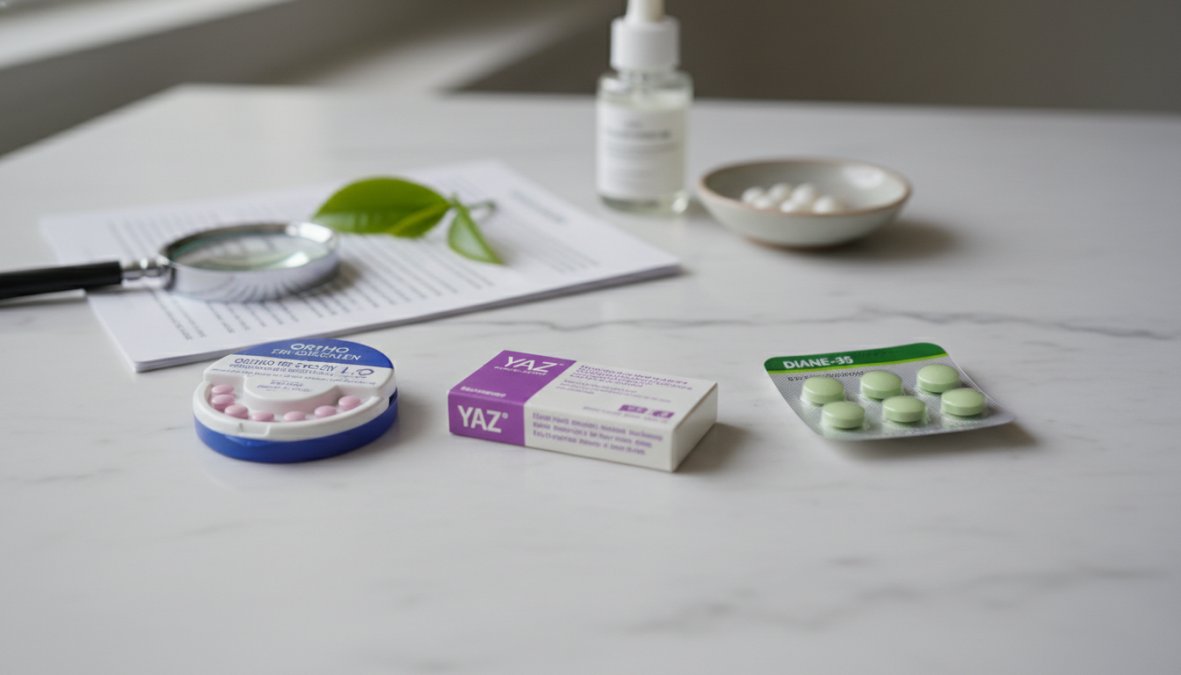
Only four oral contraceptives carry FDA approval specifically for acne treatment in the United States. According to FDA drug approvals database, these are Ortho Tri-Cyclen, Estrostep Fe, Yaz, and Beyaz (a version of Yaz with added folate).
| Brand | Progestin | Type | FDA-Approved Age | Generic Available | Approx. Cost (Generic) |
|---|---|---|---|---|---|
| Yaz | Drospirenone | Monophasic | 14+ | Yes | ~$58.50/month |
| Ortho Tri-Cyclen | Norgestimate | Triphasic | 15+ | Yes (Tri-Sprintec) | $15-$55/pack |
| Estrostep Fe | Norethindrone acetate | Triphasic | 15+ | Yes | $20-$47/pack |
| Beyaz | Drospirenone + folate | Monophasic | 14+ | Limited | Higher cost |
Diane-35, which contains cyproterone acetate, is widely used internationally for severe acne and hirsutism but is not FDA-approved for acne in the US. It’s included in this guide because it’s frequently prescribed off-label in other countries and patients often ask about it.
Yaz (Drospirenone/Ethinyl Estradiol)
Yaz is the strongest option for hormonal acne among the FDA-approved pills, largely because drospirenone is a uniquely anti-androgenic progestin. Unlike norgestimate or norethindrone, drospirenone actively blocks androgen receptors in addition to raising SHBG, giving it a dual mechanism that other progestins lack.
Best for: Women aged 14 and older who experience moderate hormonal acne, particularly those who also deal with PMDD symptoms or noticeable premenstrual breakout patterns.
Key features:
- 24 active pills and 4 placebo pills (shorter hormone-free interval than most pills)
- FDA-approved for both moderate acne and PMDD
- Reduces water retention due to drospirenone’s mild diuretic effect
Pros:
- Strongest anti-androgenic effect among FDA-approved acne pills
- Dual indication for acne and PMDD
- Shorter placebo window reduces hormone fluctuation
Cons:
- Drospirenone carries a slightly elevated blood clot risk compared to some other progestins
- Potential side effects include nausea, headaches, and mood changes
- Generic versions (like Loryna or Nikki) vary in cost by pharmacy
Watch OutWomen with kidney, liver, or adrenal disease should not use drospirenone-containing pills like Yaz. Drospirenone affects potassium levels and can interact with medications that raise potassium, including certain blood pressure drugs. Discuss your full medication list with a prescriber before starting.
What most reviews miss: The 24/4 dosing schedule is a meaningful clinical advantage for acne patients specifically. The shorter placebo interval means fewer days of low estrogen, which translates to more consistent SHBG levels and fewer hormone-dip breakouts at the end of each pack.
Ortho Tri-Cyclen and Generics (Norgestimate/Ethinyl Estradiol)
The brand name Ortho Tri-Cyclen has been discontinued, but its generics, primarily Tri-Sprintec and Tri-Estarylla, remain among the most widely prescribed oral contraceptives in the US. For patients focused on cost, this is the most accessible FDA-approved option for acne.
Norgestimate is considered a low-androgenic progestin, meaning it’s unlikely to worsen acne the way older progestins like levonorgestrel can. The triphasic design delivers increasing doses of norgestimate across the three-week active cycle.
Best for: Females aged 15 and older seeking contraception and moderate acne treatment, particularly those prioritizing affordability or who are new to hormonal contraception.
Pros:
- FDA-approved for acne treatment
- Generic versions widely available at $15-$55 per pack with discount cards
- Low-androgenic progestin profile reduces acne-worsening risk
Cons:
- Triphasic dosing means hormone levels shift weekly, which some women find less predictable
- The brand name has been discontinued; only generics remain
- Mild fluid retention possible
In practice, Tri-Sprintec is often the first pill dermatologists and gynecologists reach for when prescribing birth control for acne, primarily because of its established safety record and low cost. It’s not as aggressively anti-androgenic as Yaz, but for many patients with moderate acne, it’s more than sufficient.
Estrostep Fe (Norethindrone Acetate/Ethinyl Estradiol)
Estrostep Fe takes a different approach from the other FDA-approved options: rather than varying the progestin dose, it varies the estrogen dose across the cycle. The norethindrone acetate dose stays constant while ethinyl estradiol steps up in phases.
The addition of ferrous fumarate (iron) tablets during the placebo week is a practical benefit for women prone to iron deficiency during menstruation. It doesn’t affect acne outcomes directly, but it addresses a common side effect of heavy periods.
Best for: Females aged 15 and older seeking contraception and acne treatment, particularly those who benefit from iron supplementation or who have had side effects from drospirenone-based pills.
Pros:
- FDA-approved for acne treatment
- Iron supplementation built into the placebo week
- Predictable, consistent menstrual cycles
Cons:
- Norethindrone acetate has mild androgenic activity, making it less ideal for patients with severe androgen-driven acne compared to drospirenone
- Generic pricing ranges from $20-$47 per pack, which is affordable but varies by pharmacy
- Not recommended under age 15
The honest assessment: Estrostep Fe is a solid third-line option for acne. It works, it’s FDA-approved, and the iron component is a genuine bonus. But for patients whose primary goal is acne clearance, Yaz or Tri-Sprintec generics will typically outperform it on skin outcomes.
Birth Control Side Effects on Acne: What to Expect
Starting any combination pill for acne requires patience. Most patients see initial improvement within two to three months, but the trajectory isn’t always linear.
The first month often brings hormonal adjustment symptoms: nausea, breast tenderness, and sometimes a temporary worsening of acne as the body adapts. This initial flare is common and not a sign that the pill isn’t working.
According to American Academy of Dermatology acne treatment guidelines, combination oral contraceptives are an established treatment for inflammatory and non-inflammatory acne lesions in women, with clinical benefit typically observed by the third treatment cycle.
Typical timeline:
- Month 1: Hormonal adjustment, possible initial flare
- Months 2-3: Gradual reduction in inflammatory lesions
- Months 4-6: Full effect on sebum production and acne lesion count
- Beyond 6 months: Stable improvement, with maintenance as long as the pill is continued
When Birth Control Can Make Acne Worse
Progestin type is the key variable here. Pills containing high-androgenic progestins, including levonorgestrel, norethindrone (not norethindrone acetate), and some older formulations, can stimulate sebaceous glands and worsen acne. This is why the progestin-only mini pill is generally contraindicated for acne patients.
If your acne worsens after starting a new pill, the most likely explanation is androgenic progestin activity. Switching to a pill with drospirenone or norgestimate typically resolves this.
Key TakeawayThe progestin in your birth control pill matters more than the estrogen dose for acne outcomes. Always check the progestin type before starting a new formulation.
Spironolactone for Acne: A Powerful Non-Pill Alternative
Spironolactone is not a birth control pill. It’s an oral medication originally developed as a diuretic that also blocks androgen receptors in the skin, making it one of the most effective treatments for hormonal acne in adult women.
Dermatologists frequently prescribe spironolactone for women who can’t take estrogen-containing pills (due to migraines with aura, clotting history, or cardiovascular risk factors) or who want acne treatment without contraception.
How it works: Spironolactone blocks androgen receptors in the sebaceous glands, reducing sebum production directly. It doesn’t affect ovulation or provide contraception.
Practical notes:
- Typically prescribed at 50-200mg daily, with dosing adjusted based on response
- Often takes 3-6 months for full effect
- Common side effects include irregular periods, breast tenderness, and increased urination
- Not appropriate during pregnancy (requires reliable contraception if sexually active)
- Potassium levels should be monitored, particularly at higher doses
For women with polycystic ovary syndrome (PCOS), spironolactone is particularly valuable because PCOS involves elevated androgen levels that drive both acne and hirsutism. It addresses both concerns simultaneously.
A newer topical alternative worth knowing: clascoterone (brand name Winlevi) is a topical androgen receptor blocker approved for acne in patients 12 and older. It applies the same anti-androgenic mechanism as spironolactone but works locally on the skin rather than systemically.
Non-Hormonal Acne Treatment Options When Birth Control Isn’t Right for You
Hormonal contraception isn’t appropriate for every patient. Women over 35 who smoke, those with a history of blood clots or stroke, and those with certain cardiovascular conditions are typically advised against estrogen-containing pills. Others simply prefer non-hormonal approaches.
The most evidence-supported non-hormonal options for acne treatment include:
- Topical retinoids (tretinoin, adapalene): Regulate skin cell turnover, prevent clogged pores, and reduce inflammatory lesions. Tretinoin is available by prescription; adapalene 0.1% is available over the counter.
- Topical antibiotics (clindamycin, dapsone): Reduce acne-causing bacteria and inflammation. Typically combined with benzoyl peroxide to prevent antibiotic resistance.
- Oral antibiotics (doxycycline, minocycline): For moderate to severe inflammatory acne. Recommended for short-term use (3-6 months) to minimize resistance.
- Isotretinoin: The most effective treatment for severe cystic acne. Reserved for cases that haven’t responded to other therapies due to its significant side effect profile and strict monitoring requirements.
- Clascoterone cream: The topical anti-androgen mentioned above, effective for both males and females.
According to National Institute of Arthritis and Musculoskeletal and Skin Diseases acne overview, combining treatments that target different mechanisms, such as a retinoid with an antibiotic, typically produces better outcomes than any single agent alone.
The thing nobody tells you about non-hormonal acne treatment: topical retinoids cause an initial purging phase that looks like a worsening of acne. Most patients who quit in the first four to six weeks never see the real results. Commit to the full timeline.
Which Birth Control for Hormonal Acne Is Right for Your Profile?
Matching the right pill to the right patient comes down to three variables: acne severity, tolerance for side effects, and whether contraception is actually needed.
Use Yaz (drospirenone) if:
- Acne is moderate to severe with a clear hormonal pattern (worsens before periods)
- PMDD symptoms are also present
- You want the strongest anti-androgenic effect from an FDA-approved pill
Use Tri-Sprintec or another norgestimate generic if:
- Cost is a primary concern
- Acne is mild to moderate
- You want a widely prescribed option with a long safety record
Use Estrostep Fe if:
- You’ve had side effects from drospirenone-based pills
- Iron supplementation is a secondary benefit you’d welcome
- Your acne is moderate and you’re 15 or older
Use spironolactone if:
- You can’t take estrogen or don’t want hormonal contraception
- You have PCOS with elevated androgen levels
- You’ve tried combination pills without adequate response
Skip hormonal options entirely if:
- You have a history of blood clots, stroke, or certain cardiovascular conditions
- You’re pregnant or planning pregnancy in the near term
- Your acne is mild and responds to topical treatments
Cost, Insurance, and Getting a Prescription Online
Generic versions of all three FDA-approved pill brands are widely available and significantly cheaper than their brand-name counterparts. With GoodRx or similar discount programs, Tri-Sprintec generics run as low as $15 per pack, while drospirenone generics typically cost around $58 per month without insurance.
Most insurance plans cover generic oral contraceptives at no cost under the ACA’s preventive care mandate, though this varies by plan and state. Spironolactone is also generic and typically inexpensive.
For patients who prefer not to visit a clinic in person, telehealth platforms have made prescriptions significantly more accessible. Ascend Vitality offers online care pathways for hormonal health, connecting patients with prescribers who can evaluate acne treatment options and deliver prescriptions directly, without requiring an in-person appointment.
As documented in Planned Parenthood birth control cost information, birth control pills often cost $0 with insurance and $20-$50 per month without, making them one of the most cost-effective prescription acne treatments available.
Pro TipIf cost is a barrier, ask your prescriber specifically for a generic with a low-androgenic progestin like norgestimate (Tri-Sprintec) or drospirenone (Loryna, Nikki). These generics deliver the same hormonal profile as brand-name FDA-approved acne pills at a fraction of the price.
Conclusion
Choosing the right birth control for hormonal acne isn’t a one-size-fits-all decision, and the wrong progestin can set your skin back months. The clearest guidance: if acne clearance is your primary goal and you want the strongest anti-androgenic effect, drospirenone-based pills like Yaz and its generics lead the field. For cost-conscious patients, norgestimate generics like Tri-Sprintec offer solid FDA-approved results at a fraction of the price. And for women who can’t or don’t want hormonal contraception, spironolactone remains one of the most effective alternatives available.
Ascend Vitality provides online care pathways for hormonal health, connecting you with prescribers who can evaluate your specific acne profile and deliver medically-supported treatment directly to you. If you’re ready to address hormonal acne with a treatment plan tailored to your needs, get started with Ascend Vitality and take the first step toward clearer, healthier skin.
Frequently Asked Questions
Which birth control is best for hormonal acne?
The three FDA-approved combination pills for acne in the US are Yaz (drospirenone/ethinyl estradiol), Ortho Tri-Cyclen and its generics like Tri-Sprintec (norgestimate/ethinyl estradiol), and Estrostep Fe (norethindrone acetate/ethinyl estradiol). Yaz is often favored for its anti-androgenic progestin drospirenone, which also helps with PMDD. The best choice depends on your age, health history, and specific skin concerns, a dermatologist or gynecologist can help narrow it down.
How long does birth control take to clear hormonal acne?
Most people do not see significant improvement in hormonal acne for at least two to three months after starting combination birth control pills. Full results may take up to six months. This is because it takes time for estrogen and progestin to consistently suppress androgen levels and reduce sebum production. Patience is important, dermatologists often recommend giving any hormonal acne treatment at least three full cycles before evaluating its effectiveness.
Can birth control make acne worse?
Yes, in some cases birth control can worsen acne, particularly progestin-only pills (mini pills) or formulations containing progestins with higher androgenic activity. These can increase sebum production and trigger breakouts, including blackheads, whiteheads, and cystic acne. If acne worsens after starting a new pill, talk to your doctor about switching to a combination pill with a low-androgen progestin like norgestimate or drospirenone.
What is spironolactone, and can it treat hormonal acne without birth control?
Spironolactone is an oral medication that blocks androgen receptors in the sebaceous glands, reducing sebum production and hormonal acne, especially deep, cystic acne along the jawline and chin. It is not a contraceptive, so it can be used independently of birth control. It is commonly prescribed off-label by dermatologists for women with hormonal acne, including those with PCOS. Side effects can include irregular periods, dizziness, and elevated potassium levels.
Are there non-hormonal acne treatment options if I can’t use birth control?
Yes. Non-hormonal acne treatments include topical retinoids, benzoyl peroxide, salicylic acid, and oral antibiotics for inflammatory lesions. Clascoterone is a topical anti-androgen approved for acne that works locally without systemic hormonal effects. For those with PCOS or significant hormonal involvement, a dermatologist may combine topical treatments with dietary and lifestyle changes. These options are worth exploring if combination pills or spironolactone are contraindicated for you.