

Last Updated: May 6, 2026
Semaglutide has become one of the most discussed medications in modern weight management, and for good reason. Knowing how to get semaglutide for weight loss is the first step toward a treatment path that has helped many people achieve meaningful, sustained results. This guide from Ascend Vitality walks you through every stage of the process, from checking your eligibility to managing your dosage long-term. Semaglutide is a glucagon-like peptide-1 (GLP-1) receptor agonist, a class of medication that works by mimicking a hormone your body naturally produces to regulate appetite and blood sugar.
Most guides stop at “talk to your doctor.” That’s not enough. Below, we’ll show you exactly how to qualify, which pathway to choose, what compounded semaglutide actually means, and how to make the medication work beyond the first few months.
How to Get Semaglutide for Weight Loss: Step-by-Step
Getting a semaglutide prescription is a structured process, not a guessing game. The pathway is clearer than most people expect, but skipping steps is where things go wrong.
Step 1: Assess Whether You May Qualify
Before booking any appointment, do a quick self-assessment. Semaglutide for weight loss is FDA-approved for adults with a BMI (Body Mass Index) of 30 or above, or a BMI of 27 or above combined with at least one weight-related medical problem such as high blood pressure, type 2 diabetes, or metabolic dysfunction-associated steatohepatitis (MASH). If you fall into either category, you have a reasonable basis to pursue a formal evaluation.
Pro TipCheck your BMI before your consultation using a reliable calculator. Arriving with this number ready saves time and signals to your provider that you’ve done your homework.
Step 2: Choose Your Care Pathway, In-Person or Telehealth
Two routes exist: a traditional in-person visit with a primary care physician or specialist, or a virtual healthcare consultation through a telehealth platform. Telehealth for semaglutide has grown substantially as a care pathway because it removes geographic and scheduling barriers. Both options result in the same outcome if you qualify: a valid prescription.
The real difference comes down to speed and convenience. In-person visits may involve more comprehensive lab work upfront. Telehealth consultations tend to move faster, often completing the evaluation and prescription step within days.
Step 3: Complete a Medical Consultation and Get Your Prescription
Your healthcare provider will review your medical history, current medications, weight history, and relevant lab results. Be honest about contraindications and prior conditions. This is also where your provider will determine whether brand-name options like Wegovy or Ozempic are appropriate, or whether compounded semaglutide is a viable alternative given cost or availability factors.
Step 4: Start Your Dosage and Stick to the Program
Semaglutide for weight loss is not a one-time injection. Treatment begins at a low dosage and escalates gradually over several weeks to minimize side effects. Most protocols pair the medication with a reduced-calorie diet and increased physical activity. Consistency with the escalation schedule matters enormously. Providers who offer medication management support see better patient outcomes because accountability structures work.
Wegovy Eligibility Criteria: Who Qualifies for Semaglutide?
Wegovy eligibility criteria are defined by FDA approval parameters, and understanding them before your appointment prevents wasted time.
BMI Thresholds and Weight-Related Medical Conditions
Wegovy (semaglutide 2.4 mg, administered as a single-use injection pen) is approved for adults who meet one of two conditions. First, a BMI of 30 or higher, which classifies as obesity. Second, a BMI of 27 or higher combined with at least one weight-related medical problem. Qualifying conditions in the second category include high blood pressure, type 2 diabetes, high cholesterol, obstructive sleep apnea, and cardiovascular disease.
The practical implication: many people who don’t classify as obese still qualify. A BMI of 28 with documented high blood pressure is sufficient. According to FDA prescribing information for Wegovy, the medication is also approved for adolescents aged 12 and older under specific criteria, which expanded access significantly.
Contraindications: Who Should Not Take Semaglutide
Semaglutide is not appropriate for everyone. Providers will screen for contraindications during consultation. The most significant include:
- Personal or family history of medullary thyroid carcinoma (MTC)
- Multiple Endocrine Neoplasia syndrome type 2 (MEN 2)
- Prior serious hypersensitivity reaction to semaglutide or any component of the formulation
- Pregnancy or planned pregnancy
- Active pancreatitis
Watch OutDo not attempt to source semaglutide without a prescription. Unregulated online sources may supply counterfeit or incorrectly dosed products. This is a serious patient safety risk, not just a legal issue.

Telehealth for Semaglutide: Getting a Prescription Online
Telehealth for semaglutide has fundamentally changed who can access this treatment. Geographic location and specialist availability used to be real barriers. They largely aren’t anymore.
What to Expect From a Virtual Healthcare Consultation
A virtual healthcare consultation for semaglutide typically follows a structured intake process. You’ll complete a health questionnaire covering weight history, current medications, relevant diagnoses, and lifestyle factors. A licensed healthcare provider then reviews your intake and may conduct a synchronous video visit or an asynchronous review depending on the platform.
Most telehealth platforms that prescribe semaglutide will also request recent lab work or arrange for at-home lab testing. The consultation itself usually takes 20 to 40 minutes. If approved, your prescription is sent to a pharmacy directly, and in many cases, medication management continues through the platform with regular check-ins.
What most guides miss here: the quality of ongoing support varies enormously between telehealth providers. A platform that offers only the initial prescription without follow-up is not the same as one with structured medication management, dietary guidance, and dose escalation oversight. Ask about this before committing.
Compounded Semaglutide vs. Brand-Name Options
Compounded semaglutide has entered the conversation as brand-name Wegovy and Ozempic have faced supply shortages and high costs. Compounded semaglutide is produced by compounding pharmacies that create custom formulations when a commercially available drug is on the FDA shortage list.
The distinction matters: compounded semaglutide is not FDA-approved in the same way Wegovy is. The active ingredient may be the same, but manufacturing standards, dosing consistency, and quality controls differ. As documented in FDA guidance on compounded GLP-1 medications, the agency has issued specific guidance on when compounded versions are permissible and when they are not.
For many patients, compounded semaglutide offers a meaningful cost reduction. The trade-off is less regulatory oversight on the compounding pharmacy’s output. A reputable telehealth provider will only work with licensed 503A or 503B compounding pharmacies.
Cost of Semaglutide for Weight Loss: What You’ll Actually Pay
The cost of semaglutide for weight loss is one of the most common barriers patients encounter, and it’s worth addressing directly rather than softening the reality.
Insurance Coverage and Savings Programs
Insurance coverage for semaglutide weight loss treatment remains inconsistent. Many commercial insurance plans cover Ozempic for type 2 diabetes management but do not cover Wegovy for obesity. Medicare Part D has historically excluded weight loss medications, though this is an evolving policy area.
Novo Nordisk, the manufacturer of Wegovy and Ozempic, offers savings programs for eligible patients. These programs can reduce out-of-pocket costs substantially for commercially insured patients who qualify. Checking eligibility through Novo Nordisk’s patient assistance programs is a practical first step before assuming you’ll pay full price.
Coupons, Compounded Options, and Online Pharmacy Pricing
For patients without insurance coverage, several options exist. Manufacturer coupons and copay cards are available for brand-name products. Online pharmacies operating through telehealth platforms sometimes offer bundled pricing that includes the consultation, prescription, and medication.
Compounded semaglutide through a telehealth platform typically costs less per month than brand-name Wegovy without insurance. The exact difference varies by provider and dosage. The key question to ask any online pharmacy or telehealth platform: is the compounding pharmacy they use FDA-registered and compliant with current good manufacturing practices?
| Option | Typical Coverage | Notes |
|---|---|---|
| Brand-name Wegovy (insured) | Varies by plan | Often excluded for weight loss |
| Brand-name Ozempic (insured) | Often covered for T2D | Off-label use for weight loss may not be covered |
| Compounded semaglutide | Usually not covered | Lower out-of-pocket cost |
| Manufacturer savings programs | Commercially insured | Income and eligibility requirements apply |
Semaglutide Side Effects for Weight Loss: What to Expect
Semaglutide side effects for weight loss are real, manageable, and largely predictable. Going in without preparation is where most people struggle unnecessarily.
Common Side Effects and How to Manage Them
The most frequently reported semaglutide side effects are gastrointestinal: nausea, vomiting, diarrhea, constipation, and abdominal discomfort. These are most pronounced during the dose escalation phase and tend to diminish as the body adjusts to the medication.
Practical management strategies that actually work:
- Eat smaller, more frequent meals rather than large portions
- Avoid high-fat, greasy foods during the first weeks of each new dose level
- Stay well-hydrated throughout the day
- Take the injection on the same day each week to maintain consistency
- Report persistent or severe symptoms to your healthcare provider immediately
The psychological dimension of weight loss with semaglutide is underreported. Many patients experience a significant shift in their relationship with food, including reduced cravings and a diminished interest in eating for emotional reasons. This can be disorienting. Having a support structure, whether through a healthcare provider, a counselor, or a structured program, helps patients process these changes rather than abandon treatment prematurely.
Key TakeawayNausea during dose escalation is normal and temporary for most patients. The patients who push through the first 4-8 weeks with dietary adjustments in place are significantly more likely to stay on the program long enough to see meaningful results.
Ozempic, Wegovy, and Rybelsus: Which Semaglutide Is Right for You?
All three medications contain semaglutide as the active ingredient, but they are not interchangeable. Understanding the differences is essential before your consultation.
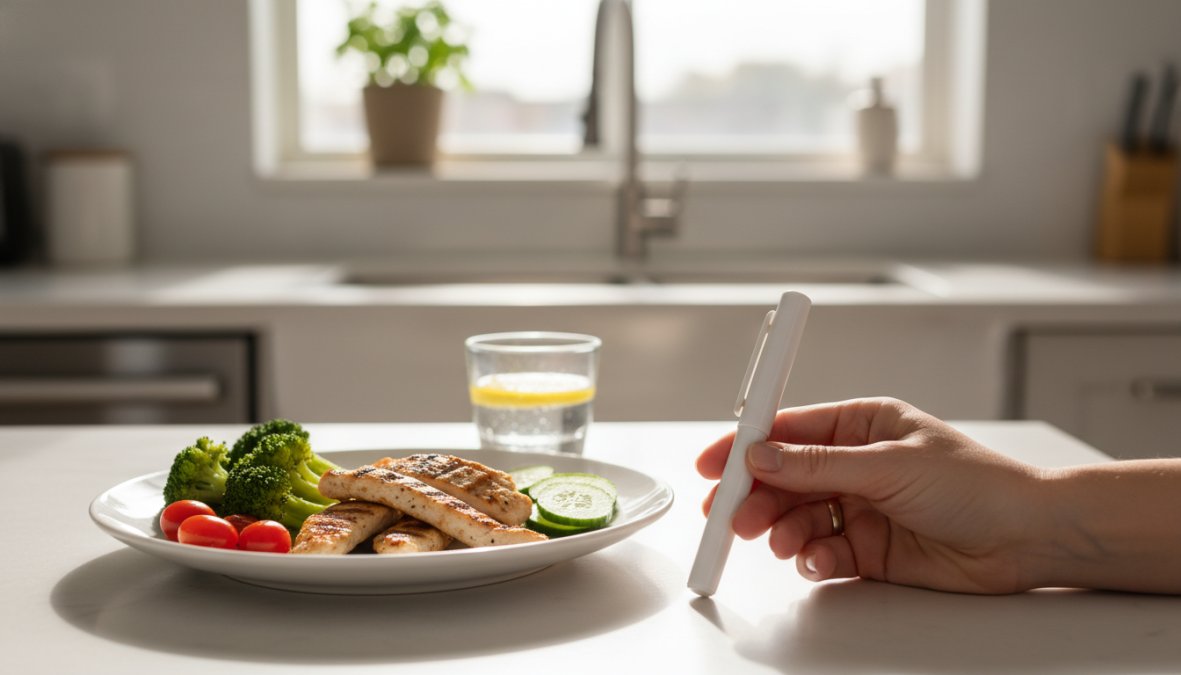
Wegovy is the only FDA-approved semaglutide formulation specifically indicated for chronic weight management in adults and adolescents with obesity or overweight with a weight-related medical problem. It is delivered as a weekly subcutaneous injection using a single-use injection pen at a dose of 2.4 mg.
Ozempic is FDA-approved for type 2 diabetes management and to reduce the risk of cardiovascular death, heart attacks, and strokes in adults with type 2 diabetes and established heart disease. It contains semaglutide at doses up to 2 mg. Many providers prescribe Ozempic off-label for weight loss, but it is not its primary approved indication.
Rybelsus is an oral medication containing semaglutide, approved for type 2 diabetes. It offers a non-injection option, which appeals to patients with needle aversion. However, it is not approved for weight loss and delivers semaglutide at lower doses than Wegovy.
The bottom line: if your primary goal is weight loss and you qualify under Wegovy eligibility criteria, Wegovy is the appropriate first conversation with your provider. If you have type 2 diabetes alongside obesity, Ozempic may address both conditions. Rybelsus is generally not the right choice for weight loss as a primary goal.
According to clinical trial data published in the New England Journal of Medicine, patients on semaglutide 2.4 mg (Wegovy) alongside lifestyle intervention achieved substantially greater weight reduction than those on placebo in landmark trials. This is the evidence base that drove FDA approval.
How to Get Semaglutide for Weight Loss and Make It Work Long-Term
Getting the prescription is the easy part. The harder question is what happens after month three.
Semaglutide is most effective as part of a comprehensive weight management program, not as a standalone fix. Patients who pair the medication with a reduced-calorie diet, consistent physical activity, and behavioral support see better long-term outcomes than those who rely on the medication alone. This is not a minor caveat: clinical trials were conducted with lifestyle intervention as a required component.
The practical framework for long-term success breaks into three areas:
- Dietary structure: Focus on protein-forward meals that support satiety alongside the medication’s appetite-suppressing effects. High-fiber vegetables, lean proteins, and minimally processed foods complement how semaglutide works at the hormonal level.
- Physical activity: Resistance training is particularly valuable during semaglutide treatment because weight loss from any source includes muscle loss. Preserving lean mass protects metabolic rate over time.
- Medication management continuity: Many patients who stop semaglutide regain weight. Work with your healthcare provider on a long-term plan, including whether you’ll transition off the medication, maintain a lower dose, or continue indefinitely based on your health profile.
A common mistake is treating semaglutide as a short-term course. The evidence from clinical trials suggests that weight regain is common after discontinuation. That doesn’t mean you’re committed to injections forever, but it does mean the conversation about your exit strategy should happen before you start, not when you’re thinking about stopping.
Ascend Vitality’s medically-supported weight loss programs are built around exactly this kind of continuity. Rather than a one-time prescription, Ascend Vitality connects patients with specialized care pathways that include ongoing medication management and direct prescription delivery, so the program adapts as your needs change.
For anyone researching how to get semaglutide for weight loss through a telehealth pathway, the Obesity Medicine Association’s clinical resources offers provider-level guidance that helps patients understand what quality care should look like.
Weight loss with semaglutide works best when the prescription is just the beginning of a structured, medically-supported program. Ascend Vitality connects patients with specialized care pathways for weight loss, hormones, and metabolic health, with prescriptions delivered directly and ongoing medication management built in. If you’re ready to move from researching how to get semaglutide for weight loss to actually starting the process, get started with Ascend Vitality and access a care pathway designed to support results beyond the first dose.
Frequently Asked Questions
What are the eligibility requirements for semaglutide for weight loss?
To qualify for semaglutide for weight loss, you generally need a BMI of 30 or higher, or a BMI of 27 or higher with at least one weight-related medical problem such as type 2 diabetes, high blood pressure, or heart disease. Your healthcare provider will also screen for contraindications. Meeting these Wegovy eligibility criteria is the first step toward getting a prescription, whether through an in-person doctor or a telehealth platform.
How much does semaglutide for weight loss cost with and without insurance?
The cost of semaglutide for weight loss varies significantly. Brand-name options like Wegovy can exceed $1,000 per month without insurance coverage. Many insurance plans do not cover weight loss medications, though some do when a qualifying condition like type 2 diabetes is documented. Savings programs, manufacturer coupons, and compounded semaglutide through an online pharmacy can reduce costs considerably. Telehealth programs often bundle consultation fees with medication pricing for more predictable monthly costs.
Can I get semaglutide for weight loss online?
Yes, telehealth for semaglutide has made it possible to get a prescription entirely online. Virtual healthcare platforms connect you with a licensed healthcare provider who reviews your medical history, assesses your eligibility, and, if appropriate, sends a prescription to a pharmacy. Some platforms also offer compounded semaglutide shipped directly to your door. The process typically takes just a few days from your initial consultation to receiving your medication.
What are the potential side effects of semaglutide for weight loss?
Common semaglutide side effects for weight loss include nausea, vomiting, diarrhea, constipation, and stomach discomfort, especially when starting treatment or increasing dosage. These effects often improve over time as your body adjusts. Eating smaller meals, avoiding high-fat foods, and staying hydrated can help manage symptoms. Serious side effects are less common but should be discussed with your healthcare provider before starting. Always report any unusual symptoms during medication management follow-ups.
What is the difference between Ozempic, Wegovy, and Rybelsus for weight loss?
All three are FDA-approved semaglutide medications and GLP-1 receptor agonists, but they differ in form and approved use. Wegovy is specifically FDA-approved for chronic weight management and comes as a single-use injection pen. Ozempic is approved for type 2 diabetes but is sometimes prescribed off-label for weight loss, also as an injection. Rybelsus is an oral medication approved for type 2 diabetes. Your doctor will recommend the most appropriate option based on your health profile and weight loss goals.
How long does it take to lose weight on semaglutide?
Most people begin to notice weight loss within the first four to eight weeks of starting semaglutide, though results vary by individual. Significant weight loss typically develops over several months as dosage is gradually increased. Clinical trials show meaningful reductions in body weight over 68 weeks when combined with a reduced-calorie diet and physical activity. Consistency with medication management, diet, and lifestyle habits is key to achieving and maintaining long-term results with semaglutide.