

Everyday wellbeing
Eating well on a GLP-1: make a smaller appetite count
By Ascend Vitality LLC ·
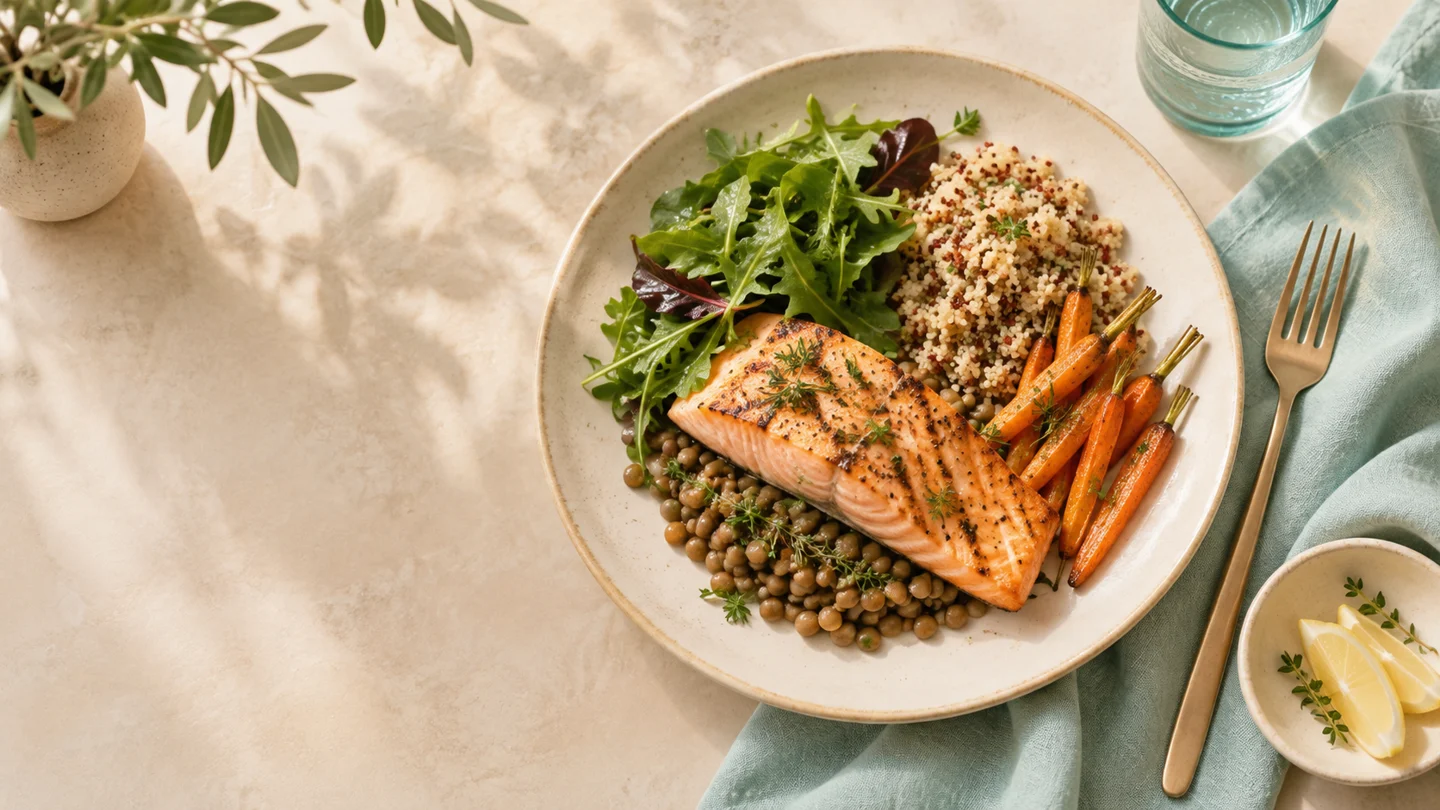
Illustrative image; not a specific medicine or patient.
When eating feels different, familiar routines may need an update. The answer does not have to be a refrigerator full of special products. Start with ordinary food, practical preparation, and a conversation about what your body needs.
Give nourishment its own place in the plan
A joint advisory from four professional organizations emphasizes nutrition and lifestyle support alongside GLP-1 obesity treatment. The advisory addresses inadequate nutrient intake, digestive symptoms, and preservation of muscle and function. Medication alone does not replace that planning. [1]
If you are regularly skipping meals because food feels unappealing, tell your clinician or registered dietitian. The question is not simply whether you are eating less; it is whether your routine provides what you need and remains manageable.
Build a short list of dependable meals
Choose two or three meals you already enjoy and can prepare without much effort. A useful starting conversation is how to include a protein source, produce, and another food that supplies energy and fits your needs. Healthy eating patterns can include seafood, beans, eggs, dairy or suitable alternatives, whole grains, fruit, and vegetables. [2]
These are menu ideas, not prescribed portions:
- Yogurt or an appropriate alternative with fruit and oats.
- Lentil soup with vegetables and a side you tolerate.
- Fish, chicken, tofu, or beans with cooked vegetables and rice.
Adjust for allergies, dietary preferences, kidney disease, digestive conditions, and any other restrictions your clinician identifies. A plan that ignores those details is not personalized.
Ask about protein without chasing an internet number
Protein planning is part of the broader discussion about preserving muscle during weight reduction. Resistance activity and adequate overall nutrition matter too; a supplement is not a substitute for an individualized plan. [1]
Ask your dietitian how to distribute food across your day and whether a supplement would solve a specific problem. Bring a realistic example of a workday and weekend rather than an idealized meal diary. The most useful plan is one you can actually follow.
Make hydration visible
Keep a drink where you will remember it, and discuss fluid needs with your care team—especially if you have a condition requiring fluid restriction. If vomiting or diarrhea makes it difficult to keep fluids down, contact a clinician rather than trying to manage everything through food choices. FDA has documented dehydration in reports involving dosing errors with compounded semaglutide. [3]
Use a weekly planning check
Once a week, ask: Which meals were easy? Which foods felt difficult? Did I miss meals unintentionally? What would make the next week simpler? Write down the answers for your next visit. This makes the discussion specific without turning every meal into a performance score.
For movement, ask what is safe and suitable for you. General activity recommendations include aerobic and muscle-strengthening activity, but health conditions may require adaptation. [2] The goal is a repeatable routine that supports your broader care—not a contest to eat the least or exercise the most.
Frequently asked questions
Do I need a special GLP-1 diet?
There is no single menu for everyone. Your care team can help adapt food choices and portions to your nutritional needs, symptoms, preferences and medical history.
Should everyone use protein shakes?
No. Discuss whether a supplement addresses a specific gap. It should fit your overall nutrition plan rather than replace assessment of what you are eating.
Sources
Ready to talk with a licensed clinician?
A short questionnaire helps a clinician decide whether any treatment is appropriate for you.
Under 1-minute intake · No insurance needed · Only pay if prescribed
This content shares general, publicly available health information for educational purposes only. It is not medical advice and does not replace an individual clinical evaluation by a licensed clinician. Images are illustrative. For urgent symptoms, call 911.