
Last Updated: August 9, 2026
Understanding Hair Loss: Causes and Types
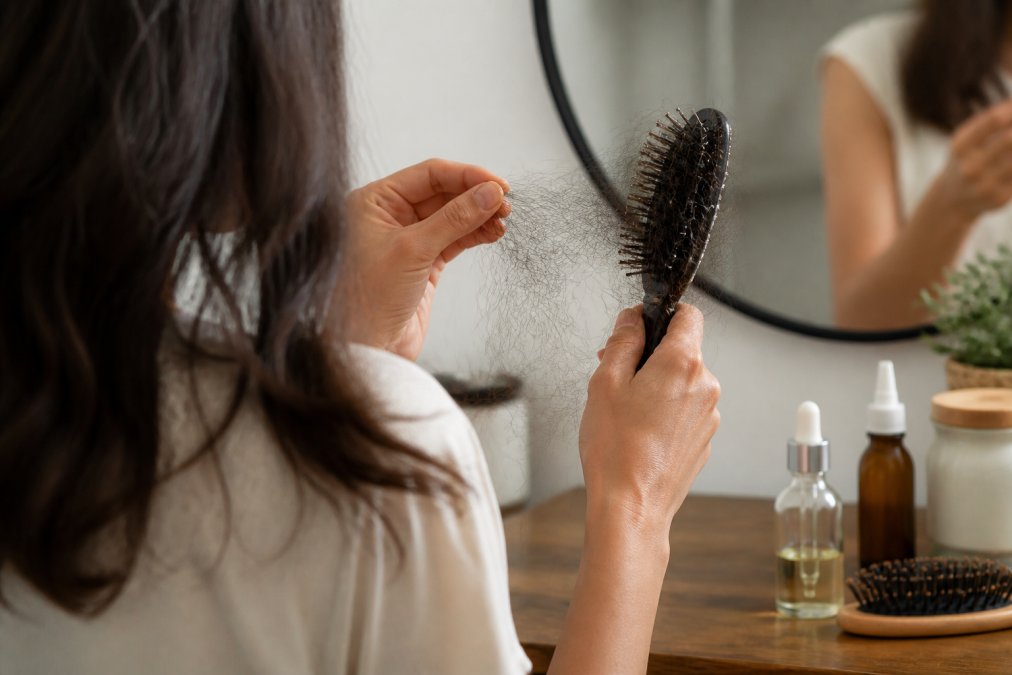
Hair loss affects millions of adults in the United States, and understanding the root causes is the first step toward effective treatment. Hair fall loss treatment begins with recognizing what type of hair loss you’re experiencing, as different causes require different approaches. The hair growth cycle normally includes three phases: the anagen phase (active growth), the catagen phase (transition), and the telogen phase (resting). When this cycle becomes disrupted, hair thinning and loss accelerate.
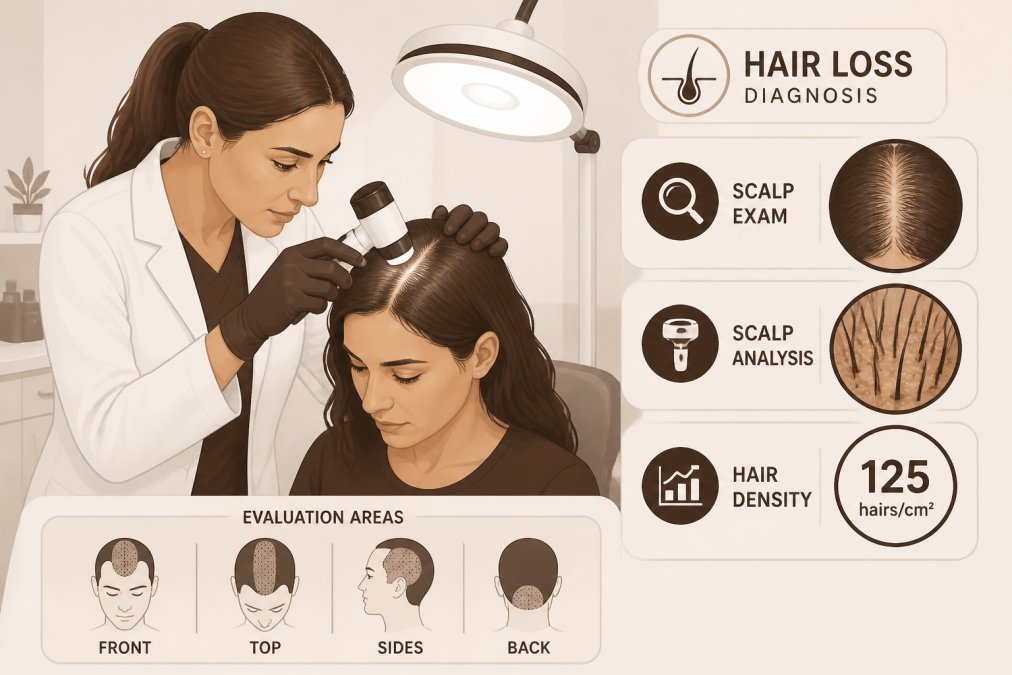
At Ascend Vitality, we work with patients to identify the underlying cause of their hair loss before recommending a treatment plan. The most common forms include androgenetic alopecia, telogen effluvium, and alopecia areata, each with distinct characteristics and treatment options. Knowing which type you have fundamentally changes how you approach hair fall loss treatment.
Androgenetic Alopecia and Pattern Baldness
Androgenetic alopecia, commonly known as pattern baldness, accounts for the majority of hair loss cases in both men and women. This condition stems from a combination of genetic predisposition and sensitivity to dihydrotestosterone, commonly abbreviated as DHT. The hormone DHT causes follicle miniaturization, where hair follicles shrink over time, producing thinner, shorter hairs until they eventually stop growing altogether.
Pattern baldness typically follows a predictable progression. In men, it often begins with a receding hairline or thinning at the crown. Women experience diffuse thinning across the scalp rather than localized baldness. The genetic component means if your parents experienced hair loss, your risk increases significantly. However, genetics alone don’t guarantee hair loss, DHT sensitivity is equally important in determining whether you’ll develop androgenetic alopecia.
Understanding this mechanism matters because it directly informs treatment options. Medications like finasteride work by blocking DHT production, while minoxidil stimulates blood flow to hair follicles. These treatments address the underlying biology of pattern baldness rather than just treating symptoms.
Telogen Effluvium and Other Hair Loss Types
Telogen effluvium represents a different category of hair loss, one triggered by physical or emotional stress, nutritional deficiencies, hormonal changes, or illness. In this condition, a larger-than-normal number of hairs simultaneously enter the telogen phase and shed within two to three months. Unlike androgenetic alopecia, telogen effluvium is often reversible once the triggering stress factor is removed.
Common triggers include major surgery, severe illness, significant weight loss, hormonal fluctuations, or prolonged emotional stress. Nutritional deficiencies, particularly iron, zinc, and B vitamins, can also precipitate telogen effluvium. The good news is that this type of hair loss typically resolves without intervention once the underlying cause is addressed, though recovery can take several months.
Alopecia areata operates through yet another mechanism. This autoimmune condition causes the body’s immune system to attack hair follicles, resulting in patchy hair loss. It’s unpredictable and can range from small bald spots to complete scalp baldness. Treatment approaches differ markedly from those used for pattern baldness, often involving topical or injectable immunotherapy rather than DHT blockers.
Dermatologist Hair Loss Diagnosis: What to Expect
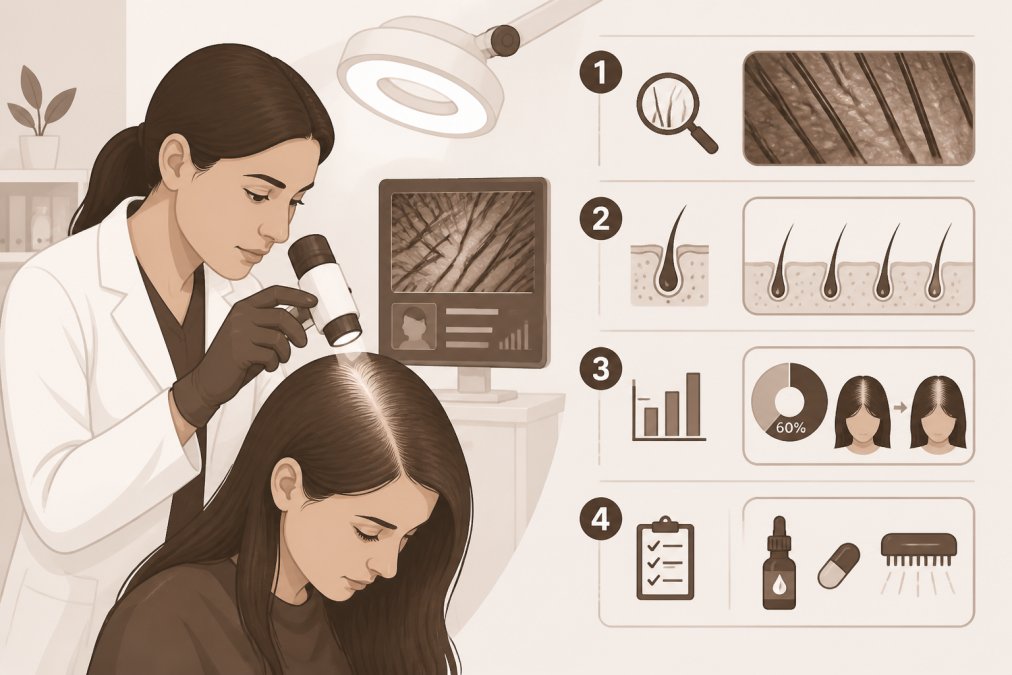
A dermatologist’s evaluation of hair loss begins with a detailed medical history and visual examination of your scalp. Your doctor will assess hair density, the pattern of loss, and whether the hair shaft itself shows signs of damage or disease. They’ll ask about your family history, recent stressors, medications, and nutritional habits, all factors that influence diagnosis and treatment recommendations.
Clinical Diagnostic Procedures
During a scalp biopsy, a small tissue sample from the scalp is removed and examined under a microscope. This procedure helps differentiate between androgenetic alopecia and other conditions like alopecia areata or scarring alopecia. While not always necessary, a biopsy provides definitive diagnosis when the cause remains unclear after initial evaluation.
Your dermatologist may also perform a pull test, gently tugging on a small section of hair to count how many strands are shed. This simple test reveals whether you’re experiencing normal shedding or excessive hair loss. Normal shedding ranges from 50 to 100 hairs daily, but during a pull test, only one or two hairs should come out from a group of 60.
Blood tests can identify nutritional deficiencies, thyroid dysfunction, or hormonal imbalances contributing to hair loss. Testing for iron levels, vitamin B12, zinc, and thyroid function provides actionable information that guides both medical and lifestyle interventions. Some dermatologists also check for autoimmune markers if alopecia areata is suspected.
The Psychological Dimension of Hair Loss Diagnosis
While clinical evaluation focuses on identifying the biological cause, the emotional and psychological impact of hair loss is equally significant and often overlooked in standard dermatological consultations. Research shows that hair loss correlates with increased rates of depression, anxiety, and social withdrawal, particularly in cultures where hair is tied to identity and self-esteem. A comprehensive diagnosis acknowledges both the medical and emotional dimensions.
During your consultation, it’s appropriate to discuss how hair loss is affecting your quality of life, mental health, and daily functioning. Some dermatologists screen for depression or anxiety using validated tools like the Patient Health Questionnaire-9 (PHQ-9) or refer patients to mental health professionals when psychological distress is evident. If your dermatologist doesn’t broach this topic, you can initiate the conversation: “This hair loss is affecting my confidence and mood. Are there mental health resources you recommend?”
The diagnosis itself, learning whether your hair loss is permanent (androgenetic alopecia) or temporary (telogen effluvium), carries psychological weight. A diagnosis of permanent pattern baldness can trigger grief, identity disruption, and body image concerns, even when effective treatments exist. Conversely, learning that hair loss is stress-related or nutritional can feel empowering, as it suggests reversibility and personal agency in recovery.
Many dermatologists now recommend a multidisciplinary approach: medical treatment combined with counseling or therapy to address the emotional toll. Support groups, both in-person and online, connect patients with others navigating similar experiences, reducing isolation and providing practical coping strategies. Organizations like the National Alopecia Areata Foundation (NAAF) offer peer support, educational resources, and mental health referrals specifically for hair loss patients.
If you’re experiencing significant distress, anxiety about appearance, or depressive symptoms alongside hair loss, discussing these with your dermatologist or primary care physician ensures your treatment plan addresses the whole person, not just the scalp. Some patients find that treating the psychological impact, through therapy, support groups, or acceptance work, improves treatment adherence and overall outcomes, as depression and anxiety can themselves exacerbate hair loss through stress-related mechanisms.
FDA Approved Hair Loss Treatments That Work
The FDA has approved only a limited number of medications for hair loss treatment, making these options the gold standard for medical intervention. Understanding which treatments are FDA approved versus off-label is crucial for making informed decisions about your hair fall loss treatment plan.
How Topical and Oral Medications Stop Hair Thinning
Topical minoxidil, available over-the-counter under brand names like Rogaine, directly stimulates hair growth by increasing blood flow to hair follicles and extending the anagen phase. Applied directly to the scalp twice daily, minoxidil works best for vertex (crown) hair loss and shows modest effectiveness for receding hairlines. Results typically appear after four to six months of consistent use, and stopping treatment reverses any gains within months.
Finasteride, a prescription oral medication sold as Propecia, blocks the enzyme that converts testosterone to DHT. By reducing DHT levels, finasteride slows hair loss and can regrow some hair in approximately one-third of men who use it. Finasteride requires a prescription and works best for men with androgenetic alopecia; its effectiveness in women remains limited and its use in women of childbearing age is contraindicated due to potential birth defects.
Both medications require ongoing use to maintain results. Discontinuing either treatment allows hair loss to resume at its previous rate. For many patients, combining minoxidil and finasteride produces better outcomes than either medication alone, addressing hair loss through complementary mechanisms.
Minoxidil vs Finasteride: Comparing the Top Medications
When evaluating minoxidil vs finasteride, the choice depends on your hair loss type, gender, and personal circumstances. Minoxidil works for both men and women and addresses hair thinning regardless of cause, though it’s most effective for androgenetic alopecia. Finasteride specifically targets DHT-related hair loss and works primarily in men, with limited evidence supporting its use in women.
| Medication | Form | Application | Best For | Timeline to Results |
|---|---|---|---|---|
| Minoxidil | Topical foam or liquid | Applied to scalp twice daily | Both men and women; vertex thinning | 4-6 months |
| Finasteride | Oral tablet | One tablet daily | Men with androgenetic alopecia | 3-6 months |
| Combination | Both together | Minoxidil topical + Finasteride oral | Moderate to severe androgenetic alopecia | 6-12 months |
Minoxidil’s advantage lies in its accessibility, it’s available without a prescription and suitable for women. Its disadvantage is the requirement for twice-daily application and modest effectiveness compared to finasteride in men. Finasteride offers superior results for men with pattern baldness but carries potential side effects including sexual dysfunction and requires ongoing prescription management.
The cost-effectiveness comparison favors minoxidil initially, as generic versions cost significantly less than brand-name Rogaine. However, finasteride’s oral form eliminates the inconvenience of topical application. Many dermatologists recommend starting with minoxidil and adding finasteride if results plateau after six months.
Surgical and Advanced Hair Restoration Options
For patients seeking permanent solutions, surgical hair restoration provides options that medications cannot achieve. Hair transplant surgery involves removing hair follicles from areas of dense growth and transplanting them to thinning or bald areas. The procedure is permanent because transplanted hair retains its original genetic characteristics and typically resists DHT-related hair loss.
Two primary surgical techniques exist: follicular unit transplantation (FUT) and follicular unit extraction (FUE). FUT involves removing a strip of scalp from the donor area and dissecting it into individual grafts. FUE extracts individual follicular units directly from the scalp using a specialized punch tool. FUE requires more time and expertise but leaves minimal scarring, while FUT is faster and often more cost-effective but leaves a linear scar at the donor site.
Platelet-rich plasma (PRP) therapy represents an advanced non-surgical option gaining recognition in hair restoration. PRP involves extracting blood, concentrating the platelets, and injecting the resulting serum into the scalp to stimulate hair follicles. While research continues, some patients report improved hair density and thickness after PRP treatments, though results remain variable and require multiple sessions.
Microneedling combined with topical medications or PRP shows promise in early research. The procedure creates controlled micro-injuries to the scalp, triggering the body’s natural healing response and potentially improving the efficacy of topical treatments. Dermatologists increasingly recommend microneedling as an adjunctive therapy alongside minoxidil or finasteride.
Lifestyle Changes for Hair Thinning: Nutrition and Habits
While medications and surgery address hair loss directly, lifestyle factors profoundly influence hair health and growth. Nutritional deficiencies represent a common but often overlooked cause of hair thinning. Unlike generic supplement advice, identifying and correcting specific deficiencies through targeted blood testing produces measurable improvements in hair density and shedding rates.
Nutritional Deficiency Testing: Which Blood Tests to Request
If you’re experiencing unexplained hair thinning or telogen effluvium, ask your dermatologist or primary care physician to order the following blood tests:
Serum Ferritin (Iron Storage)
- Normal range: 30-300 ng/mL for adult women; 30-400 ng/mL for adult men
- Hair loss risk: Ferritin below 40 ng/mL is associated with increased telogen effluvium, particularly in women of reproductive age
- Action: If low, iron supplementation (typically 325 mg ferrous sulfate daily) or dietary increases in red meat, poultry, legumes, and fortified cereals can restore levels within 8-12 weeks
- Note: Iron overload (ferritin >400 ng/mL) can also trigger hair loss; balance is essential
Vitamin B12 (Cobalamin)
- Normal range: 200-900 pg/mL
- Hair loss risk: Deficiency below 200 pg/mL impairs hair follicle protein synthesis and is especially common in vegetarians, vegans, and those with pernicious anemia
- Action: Supplementation via oral tablets (1000 mcg daily), sublingual lozenges, or intramuscular injections (1000 mcg monthly) restores levels in 4-8 weeks
- Source: Animal products (beef, poultry, fish, eggs, dairy); fortified plant-based alternatives for non-meat eaters
Vitamin D (25-Hydroxyvitamin D)
- Normal range: 30-100 ng/mL (some labs use 20-100 ng/mL)
- Hair loss risk: Deficiency below 20 ng/mL correlates with androgenetic alopecia progression and alopecia areata severity
- Action: Supplementation (1000-4000 IU daily) or increased sun exposure (10-30 minutes daily, depending on skin tone and latitude) raises levels in 6-8 weeks
- Note: Vitamin D receptors are present on hair follicles; adequate levels support the anagen phase
Zinc (Serum Zinc)
- Normal range: 70-120 mcg/dL
- Hair loss risk: Deficiency below 70 mcg/dL impairs immune function and follicle protein synthesis, contributing to both telogen effluvium and alopecia areata
- Action: Supplementation (15-30 mg daily as zinc glucinate or picolinate) restores levels in 4-6 weeks; excessive supplementation (>150 mg daily) can paradoxically worsen hair loss
- Source: Oysters, beef, pumpkin seeds, chickpeas, cashews
Thyroid Function (TSH, Free T4)
- Normal range: TSH 0.4-4.0 mIU/L; Free T4 0.8-1.8 ng/dL
- Hair loss risk: Both hyperthyroidism and hypothyroidism trigger telogen effluvium; thyroid dysfunction affects hair follicle cycling
- Action: If abnormal, thyroid hormone replacement (levothyroxine for hypothyroidism) or antithyroid medication stabilizes hair loss within 3-6 months of achieving euthyroid state
Complete Blood Count (CBC) and Hemoglobin
- Normal range: Hemoglobin 13.5-17.5 g/dL for men; 12.0-15.5 g/dL for women
- Hair loss risk: Anemia reduces oxygen delivery to hair follicles, exacerbating shedding
- Action: Address underlying cause (iron deficiency, B12 deficiency, or other) to restore hemoglobin
Most dermatologists recommend ordering these tests as a panel if hair loss is unexplained or accompanied by fatigue, weight changes, or other systemic symptoms. Insurance typically covers these tests when ordered by a physician for a documented medical condition. If results are normal, nutritional deficiency is unlikely the primary driver, and focus shifts to genetic, hormonal, or stress-related causes.
Protein, Micronutrients, and Scalp Health
Beyond testing, hair follicles require specific nutrients to function optimally. Hair follicles require specific nutrients to function optimally. Hair strands consist primarily of a protein called keratin, so inadequate protein intake directly compromises hair quality and growth. Aim for 0.8 to 1.0 grams of protein per pound of body weight daily, distributed across multiple meals. Plant-based sources like legumes, tofu, and quinoa work equally well as animal sources when consumed in sufficient quantity.
Stress management significantly impacts hair health. Chronic stress elevates cortisol levels, which can trigger or worsen telogen effluvium and potentially accelerate androgenetic alopecia. Regular exercise, meditation, adequate sleep (7-9 hours nightly), and social connection all reduce stress and support overall hair health. Many patients report improvements in hair density after implementing stress-reduction practices alongside medical treatments.
Scalp health directly influences hair growth. A healthy scalp microbiome supports follicle function, while inflammation or microbial imbalance can impair growth. Gentle scalp massage for 5 minutes daily increases blood flow to hair follicles and may enhance the effectiveness of topical treatments. Avoiding excessive heat styling, tight hairstyles, and harsh chemical treatments prevents mechanical damage to hair shafts and reduces inflammation. Washing hair 2-3 times weekly with gentle, sulfate-free shampoo maintains scalp health without over-stripping natural oils.
Long-Term Hair Loss Management and Prevention
Successful hair fall loss treatment extends beyond initial intervention to long-term management and prevention of future loss. For patients using medications like minoxidil or finasteride, consistency matters profoundly. Missing doses or discontinuing treatment allows hair loss to resume, potentially undoing months of progress. Setting reminders and integrating medications into daily routines improves adherence.
Regular dermatological follow-up helps monitor treatment effectiveness and adjust strategies if needed. Many patients benefit from reassessment every six to twelve months to evaluate hair density changes, assess for side effects, and modify treatment plans based on results. Early intervention with additional treatments prevents further loss if initial approaches prove insufficient.
Nutritional maintenance deserves ongoing attention. Annual blood work to check iron, B12, zinc, and vitamin D levels identifies emerging deficiencies before they manifest as hair loss. For patients with documented deficiencies, supplementation combined with dietary improvements provides the most reliable approach to correction.
Hair loss recurrence remains possible even after successful treatment. Androgenetic alopecia continues progressing if medications are discontinued. Telogen effluvium may recur if triggering stressors resurface. Maintaining awareness of your personal risk factors and addressing them proactively, managing stress, maintaining nutrition, treating medical conditions, reduces the likelihood of setbacks.
Some patients explore emerging treatments still under investigation, such as JAK inhibitors for alopecia areata or novel DHT-blocking compounds. Staying informed about clinical trial opportunities through your dermatologist allows access to modern options if conventional treatments prove inadequate.
Hair loss treatment has evolved significantly, offering multiple evidence-based options ranging from topical medications to surgical restoration. The most effective approach combines medical intervention with lifestyle optimization and professional guidance. If you’re experiencing hair thinning or loss, a consultation with a dermatologist establishes the specific cause and reveals which treatments align with your situation. Ascend Vitality connects you with specialized care pathways for targeted medical support, including access to prescription treatments like finasteride delivered directly to you through convenient online consultations. Starting treatment early typically yields better outcomes, as intervening before significant follicle damage occurs preserves more hair and improves results from medications or procedures.
Frequently Asked Questions
Can thinning hair be reversed with hair loss treatment?
Some hair loss can be reversed, depending on the cause and how early you start treatment. Medications like minoxidil and finasteride work best when used before significant follicle miniaturization occurs. Telogen effluvium and nutritional deficiencies often respond well to treatment and lifestyle changes. However, advanced androgenetic alopecia may require surgical hair restoration for permanent results. A dermatologist can assess your specific situation and recommend the most effective approach.
When should I see a dermatologist for hair loss?
See a dermatologist if you notice sudden hair shedding, bald patches, or progressive thinning over several weeks or months. Early evaluation is critical because FDA approved hair loss treatments work best in early stages before follicles shrink permanently. A dermatologist can diagnose the underlying cause through scalp examination, hair pull tests, or biopsy if needed, then recommend appropriate treatment options tailored to your condition.
What’s the difference between minoxidil and finasteride for hair loss?
Minoxidil is a topical treatment that stimulates blood flow to hair follicles and extends the anagen phase of hair growth. Finasteride is an oral medication that blocks DHT, the hormone responsible for follicle miniaturization in pattern baldness. Minoxidil works on any hair loss type, while finasteride is most effective for androgenetic alopecia in men. Many people use both together for better results, but side effects and effectiveness vary by individual.
Are there natural remedies that actually stop hair loss?
Lifestyle changes can support hair health and may slow hair thinning: adequate protein, iron, zinc, and B vitamins support hair growth cycles; scalp stimulation through massage may improve blood flow; stress reduction and quality sleep support hormonal balance. However, these alone typically cannot reverse established pattern baldness or significant hair loss. They work best alongside FDA approved treatments or as preventive measures. Consult a healthcare provider before relying solely on natural approaches for active hair loss.