

Last Updated: June 4, 2026
Hair loss and baldness treatment is one of the most searched health topics worldwide, and for good reason: losing your hair is rarely just a cosmetic concern. At Ascend Vitality, we work with people navigating exactly this challenge every day, and the number one mistake we see is jumping straight to a product without understanding what’s actually driving the loss. This guide cuts through the noise. Below, we’ll show you exactly how to identify your hair loss type, match it to the right treatment, manage side effects, and build a sustainable routine that fits your budget and lifestyle.
Most guides stop at “try minoxidil.” This one goes further.
Understanding Hair Loss: Causes, Types, and the Hair Cycle
Hair loss is a clinical condition in which hair follicles stop producing new strands at a rate sufficient to maintain normal hair density, resulting in visible thinning or baldness. Understanding the hair cycle is the foundation of any effective treatment plan.
Each hair follicle operates on a cycle with three distinct phases. The anagen phase is active growth, lasting two to seven years. The catagen phase is a short transitional period. The telogen phase is resting and shedding, lasting roughly three months. Disruptions to this cycle, at any stage, produce noticeable hair thinning.
According to the American Academy of Dermatology’s patient education resources, hair loss affects tens of millions of Americans, with causes ranging from genetics to hormonal imbalance, nutritional deficiency, and immune system dysfunction.
Androgenetic Alopecia and DHT: The Most Common Culprit
Androgenetic alopecia is the most prevalent form of hair loss, affecting both men and women and driven primarily by dihydrotestosterone (DHT). DHT is a potent derivative of testosterone that binds to receptors in the dermal papilla, progressively shrinking hair follicles over time until they can no longer produce a visible hair shaft. The result is a receding hairline in men and diffuse thinning at the crown in women.
This is the part most people get wrong: androgenetic alopecia is not about having too much testosterone. It’s about follicle sensitivity to DHT. Two people with identical hormone levels can have completely different outcomes based on genetic predisposition.
Ignoring early signs of androgenetic alopecia is costly. Hair follicles that miniaturize completely cannot be reactivated by topical treatments alone. Early intervention dramatically improves outcomes.
Other Types: Alopecia Areata, Telogen Effluvium, and More
Alopecia areata is an autoimmune condition in which the immune system mistakenly attacks hair follicles, producing patchy, unpredictable hair loss. It can affect the scalp, eyebrows, and body hair, and it requires a fundamentally different treatment approach than androgenetic alopecia.
Telogen effluvium is temporary hair shedding triggered by a physiological stressor: surgery, illness, significant weight loss, childbirth, or severe vitamin deficiency. The shedding typically begins two to three months after the trigger and resolves once the underlying cause is addressed.
Other types include traction alopecia (from hairstyling tension), scarring alopecias, and postmenopausal hair loss driven by declining estrogen levels. Getting the type right before starting treatment is not optional.
How to Stop Hair Loss: Building Your First Action Plan
The biggest mistake people make when trying to stop hair loss is self-diagnosing and self-treating simultaneously. These are two separate steps, and collapsing them into one wastes money and delays real results.
Getting a Clinical Diagnosis Before You Spend a Dollar
A clinical diagnosis is the single most important step in any hair loss and baldness treatment plan. A dermatologist can identify your hair loss type through physical examination, pull tests, dermoscopy, and blood work to rule out thyroid dysfunction, iron deficiency, and hormonal imbalance.
Blood panels commonly ordered include:
- Ferritin and serum iron (iron deficiency is a frequent, overlooked driver)
- Thyroid panel (TSH, T3, T4)
- Complete blood count
- Hormone levels including testosterone, DHT, and estrogen
- Vitamin D and B12 levels
Without this baseline, you risk spending months on a treatment that targets the wrong mechanism entirely.
Step-by-Step Daily Routine for Scalp Health and Hair Regrowth
A practical daily routine for scalp health and hair regrowth should be simple enough to maintain for months, because treatment compliance is where most people fail. Here’s a framework that works:
Morning:
- Apply topical minoxidil to dry scalp (if prescribed)
- Take oral medication with breakfast (finasteride or other prescription)
- Use a gentle, sulfate-free shampoo if washing that day
Evening:
- Scalp massage for five minutes to increase blood flow to hair follicles
- Apply any prescribed topical treatments
- Take any supplement protocol (biotin, vitamin D, iron if deficient)
Weekly:
- Use a scalp-focused conditioner to maintain moisture balance
- Track progress with photos in consistent lighting every four weeks
Scalp massage is one of the most underrated tools in hair regrowth. Research suggests consistent daily massage can increase hair thickness over time by stretching dermal papilla cells. Five minutes costs nothing and compounds over months.
FDA-Approved Hair Loss and Baldness Treatment Options
FDA-approved hair loss and baldness treatment options fall into four main categories: topical medications, oral medications, procedural treatments, and light-based therapies. Only a small number of treatments have cleared the FDA’s clinical evidence threshold, and knowing which ones have matters enormously.
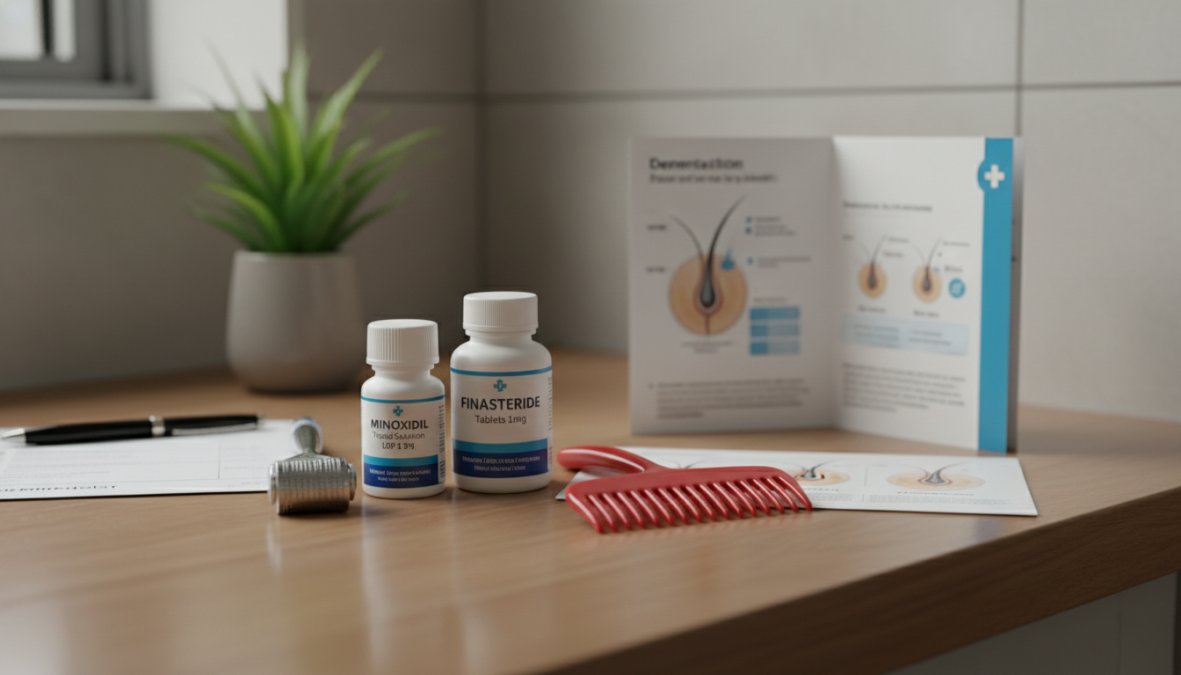
The FDA-approved options as of 2026 include:
| Treatment | Type | Approved For | Availability |
|---|---|---|---|
| Minoxidil 2% / 5% | Topical | Men and women | Over-the-counter |
| Oral Minoxidil | Oral | Off-label, widely prescribed | Prescription |
| Finasteride 1mg | Oral | Men | Prescription |
| Dutasteride | Oral | Off-label for hair loss | Prescription |
| Low-Level Light Therapy | Device | Men and women | OTC devices |
| PRP Therapy | Procedural | Men and women | Clinical setting |
According to the FDA’s drug approval database, minoxidil and finasteride remain the only two medications with formal FDA approval specifically for androgenetic alopecia. Everything else is used off-label, which doesn’t mean ineffective, but it does mean the evidence base is thinner.
The honest assessment: most people will see meaningful results from combining two or more of these approaches rather than relying on a single treatment.
Minoxidil vs Finasteride: Which Treatment Is Right for You?
Minoxidil vs finasteride is the central question for anyone starting a hair loss and baldness treatment protocol. The short answer: they work through completely different mechanisms, and many people benefit from using both.
Topical Minoxidil: How It Works and What to Expect
Topical minoxidil is a vasodilator that increases blood flow to hair follicles, extending the anagen phase of the hair cycle and encouraging dormant follicles to re-enter active growth. It does not address DHT, which means it treats the symptom rather than the root cause in androgenetic alopecia.
What to realistically expect:
- Weeks 1-8: Possible initial shedding (this is normal, not failure)
- Months 2-4: Stabilization of hair loss
- Months 4-6: Early regrowth visible in some users
- Month 12+: Full assessment of efficacy
Topical application is straightforward: apply to a dry scalp twice daily (or once daily for the 5% foam formulation). The most common mistake is applying it to wet hair, which dilutes the solution and reduces absorption.
The limitation nobody talks about: minoxidil requires indefinite use. Stop it, and any regrowth typically reverses within three to six months.
Oral Finasteride: Efficacy, Side Effects, and Who Should Avoid It
Oral finasteride works by inhibiting the enzyme 5-alpha reductase, which converts testosterone into DHT. By reducing DHT levels in the scalp by a significant margin, finasteride addresses the underlying driver of androgenetic alopecia rather than just managing symptoms.
Finasteride is a prescription medication approved for men. It is not approved for use in premenopausal women due to risks of fetal harm, and its use in postmenopausal women remains off-label.
Side effects are real and should be discussed honestly. A subset of men report sexual side effects including reduced libido and erectile dysfunction. These effects are typically reversible upon discontinuation, but a small number of users report persistent symptoms. Anyone experiencing these effects should contact their prescribing clinician immediately.
Who should avoid finasteride:
- Women who are pregnant or may become pregnant
- Men with a history of depression (monitor closely)
- Anyone with liver dysfunction
Never obtain finasteride without a prescription and proper medical oversight. The side effect profile requires baseline health assessment and ongoing monitoring.
Hair Transplant Cost and Recovery: Is Surgery Worth It?
Surgery is where the hair loss and baldness treatment conversation gets expensive and complicated. Hair transplants are the only option that provides permanent, natural-looking results, but they come with real cost, recovery time, and expectations management.

Hair transplant cost varies widely based on the number of grafts needed, the surgeon’s experience, and geographic location. Many patients require 1,500 to 3,000 grafts for meaningful coverage, and costs can range from several thousand to over fifteen thousand dollars for complex cases. This is not a one-time cost for everyone: some patients require a second procedure years later as hair loss continues in untreated areas.
Recovery typically involves:
- Days 1-5: Swelling and scabbing at the recipient site
- Weeks 2-4: Transplanted hairs shed (this is expected and temporary)
- Months 3-6: New hair begins growing from transplanted follicles
- Month 12: Final result assessment
FUT vs FUE: Comparing Surgical Approaches
FUT (Follicular Unit Transplantation) and FUE (Follicular Unit Extraction) are the two primary surgical methods, and the choice between them depends on the number of grafts needed, scarring tolerance, and budget.
FUT removes a strip of scalp from the donor area, from which individual follicular units are dissected and implanted. It yields a higher number of grafts per session and is generally less expensive, but it leaves a linear scar.
FUE extracts individual follicular units directly from the scalp using a small punch tool. There is no linear scar, recovery is faster, and it’s preferred by patients who wear their hair short. The tradeoff is higher cost and longer procedure time.
Neither technique is universally superior. A qualified surgeon should assess your donor hair density, scalp laxity, and coverage goals before recommending one over the other.
Low-Level Light Therapy, PRP, and Emerging Treatments
Here’s where the evidence gets genuinely interesting, and where most guides either overclaim or dismiss too quickly.
Low-level light therapy (LLLT) uses specific wavelengths of light to stimulate hair follicles at the cellular level, increasing ATP production in follicle cells and extending the anagen phase. Devices include laser combs, helmets, and caps. The FDA has cleared several LLLT devices for hair loss, though “cleared” and “approved” carry different evidentiary standards. LLLT works best as an adjunct to minoxidil or finasteride, not as a standalone treatment.
Platelet-rich plasma (PRP) therapy involves drawing the patient’s own blood, centrifuging it to concentrate growth factors, and injecting the plasma directly into the scalp. The theory is sound: growth factors in PRP can stimulate dermal papilla activity and promote hair regrowth. Clinical results are promising but variable, and most practitioners recommend three to four sessions spaced four to six weeks apart, followed by maintenance treatments.
According to clinical hair loss research published by the National Institutes of Health, PRP shows meaningful results in a subset of patients with androgenetic alopecia, particularly when combined with other treatments.
Emerging options include JAK inhibitors (currently approved for alopecia areata, not androgenetic alopecia) and topical prostaglandin analogs. These are worth watching but not yet standard of care.
Natural Remedies for Hair Growth: What Actually Works
Natural remedies for hair growth occupy a frustrating middle ground: some have legitimate evidence, most are overhyped, and a few actively waste time that could be spent on proven treatments.
The ones worth taking seriously:
Scalp massage: Consistent evidence that daily mechanical stimulation increases hair shaft thickness over time. Costs nothing, has no side effects, and complements every other treatment.
Saw palmetto: A plant-based DHT inhibitor with some clinical support. It’s weaker than finasteride but an option for those who cannot tolerate prescription medication.
Rosemary oil: A comparative study on rosemary oil and minoxidil published in dermatology literature found comparable efficacy to 2% minoxidil for hair regrowth after six months of use. This is one of the more compelling pieces of evidence for a natural approach.
What doesn’t work: biotin supplementation in people who are not biotin deficient, castor oil as a regrowth agent, and most “hair growth shampoos” that don’t contain proven actives.
Vitamins, Biotin, and Nutritional Deficiencies
Vitamin deficiency is a genuine driver of hair thinning, but supplementation only helps if you’re actually deficient. This is a critical distinction.
Deficiencies most commonly linked to hair loss:
- Iron/Ferritin: Low ferritin is one of the most common and most overlooked causes of diffuse hair thinning, particularly in women
- Vitamin D: Deficiency is associated with alopecia areata and general hair cycle disruption
- Zinc: Plays a role in hair follicle structure and protein synthesis
- Biotin: Only relevant if you have an actual biotin deficiency, which is rare in people eating a normal diet
Get bloodwork done before buying a supplement stack. Supplementing nutrients you’re not deficient in produces no hair benefit and wastes money.
Side Effect Management and Long-Term Treatment Compliance
Treatment compliance is where most hair loss and baldness treatment plans fall apart. People start strong, hit a side effect or a plateau, and quit, often right before they would have seen results.
A common mistake is abandoning minoxidil during the initial shedding phase, which typically occurs in the first four to eight weeks. This shedding is a sign the treatment is working, pushing telogen-phase hairs out to make room for new anagen growth. Stopping at this point resets the clock entirely.
For managing finasteride side effects:
- Start with the lowest effective dose and titrate up if needed
- Give the body eight to twelve weeks before assessing tolerability
- Report sexual side effects to your clinician immediately rather than waiting
- Some clinicians recommend topical finasteride as an alternative with a potentially lower systemic side effect profile
For minoxidil scalp irritation:
- Switch from solution to foam formulation (propylene glycol-free)
- Apply to completely dry scalp
- Reduce application frequency temporarily, then rebuild
The real key to long-term compliance is setting accurate expectations upfront. Hair loss treatments are marathons, not sprints. Visible improvement typically requires six to twelve months of consistent use. Anyone promising faster results is overstating the evidence.
The single biggest predictor of treatment success is not which product you choose, it’s whether you use it consistently for long enough to evaluate it properly. Set a twelve-month commitment before judging any regimen.
Cost-Benefit Analysis: Choosing the Right Hair Loss and Baldness Treatment for Your Budget
Not every hair loss and baldness treatment is worth its price tag at every stage of hair loss. Here’s a practical framework for matching treatment to budget and severity.
Early-stage hair loss (thinning, no visible scalp):
The most cost-effective approach is topical minoxidil combined with a dermatologist consultation. Generic minoxidil is widely available and significantly less expensive than branded versions with identical active ingredients. Add oral finasteride if appropriate, and the monthly cost remains modest.
Moderate hair loss (visible scalp, significant thinning):
A combination protocol makes sense here: minoxidil, finasteride, and potentially LLLT device therapy. The LLLT device is a higher upfront cost but has no ongoing expense after purchase. PRP sessions add meaningful cost but can accelerate results for some patients.
Advanced hair loss (extensive baldness):
Hair transplant surgery becomes the primary consideration. Medical management can stabilize remaining hair and protect the transplant result, but it cannot restore what’s already gone. The cost-benefit calculation here is straightforward: surgery is expensive once, while ongoing medication is expensive indefinitely.
Long-term cost reality check:
- Generic topical minoxidil: low monthly cost, indefinite
- Oral finasteride (generic): low monthly cost, indefinite
- LLLT device: higher one-time cost, no ongoing expense
- PRP therapy: significant per-session cost, maintenance required
- Hair transplant: high one-time cost, potentially permanent result
The most expensive mistake is cycling through unproven natural remedies for years before starting proven treatment. Early intervention with FDA-approved options costs less in the long run and preserves more hair follicles before they miniaturize permanently.
Conclusion
Hair loss is a progressive condition, and the window for effective intervention is not unlimited. The treatments that work best, minoxidil, finasteride, PRP, and surgical options, all perform significantly better when started early and used consistently.
Managing hair loss requires medical guidance, the right protocol, and consistent follow-through. Ascend Vitality connects you directly with specialized care pathways, offering medically-supported programs and prescriptions delivered to you, including targeted solutions for men’s vitality concerns and female hormonal wellness. If you’re ready to stop guessing and start a protocol that’s built around your specific situation, get started with Ascend Vitality and take the first step toward a clinically guided hair loss treatment plan.
Frequently Asked Questions
What is the most effective hair loss and baldness treatment available?
The most effective hair loss and baldness treatment depends on the underlying cause. For androgenetic alopecia, FDA-approved options like minoxidil and finasteride have the strongest evidence for slowing hair loss and supporting regrowth. Hair transplant surgery offers a more permanent solution for advanced baldness. A dermatologist can provide a clinical diagnosis and recommend the approach most likely to work for your specific hair loss pattern and health profile.
What is the difference between minoxidil vs finasteride for hair loss?
Minoxidil is a topical application that widens hair follicles and extends the anagen phase of the hair cycle, making it suitable for both men and women. Finasteride is an oral prescription medication that blocks DHT (dihydrotestosterone), the hormone that shrinks hair follicles in androgenetic alopecia. Finasteride is generally not prescribed for women of childbearing age due to potential hormonal side effects. Many dermatologists recommend combining both for greater hair density improvement.
Can baldness be reversed naturally without medication?
Fully reversing established baldness through natural remedies alone is unlikely, but natural approaches can support overall scalp health and slow further hair thinning. Addressing a vitamin deficiency, particularly biotin, iron, or vitamin D, can help if deficiency is the root cause. Reducing stress, improving diet, and using gentle scalp massage may support the hair cycle. For significant regrowth, natural remedies are best used alongside medical treatments rather than as a standalone solution.
How much does a hair transplant cost and what does recovery involve?
Hair transplant costs vary widely depending on the technique and the number of grafts needed, but procedures typically range from several thousand to over fifteen thousand dollars. FUE (Follicular Unit Extraction) tends to cost more than FUT (Follicular Unit Transplantation) due to its precision. Recovery usually involves mild swelling and scabbing for one to two weeks. Most patients see new hair growth within three to six months, with full results visible closer to twelve months post-procedure.
At what age does hair loss usually start, and is it hereditary?
Hair loss from androgenetic alopecia can begin as early as the late teens or early twenties in men, though it more commonly becomes noticeable in the thirties and forties. Women often experience increased hair thinning postmenopausal due to hormonal changes. Genetics play a significant role, if close family members have a receding hairline or pattern baldness, your risk is higher. However, factors like stress, hormonal imbalance, and vitamin deficiency can trigger or accelerate hair loss at any age.
What are the common side effects of hair loss medications?
Minoxidil’s most common side effects include scalp irritation, dryness, and an initial shedding phase during the first few weeks of topical application. Finasteride can cause decreased libido, erectile dysfunction, or mood changes in a small percentage of male users, and is contraindicated in women who are pregnant. Corticosteroids used for alopecia areata may cause skin thinning with prolonged use. Always discuss side effects with a dermatologist before starting any prescription medication for hair loss.