

Last Updated: August 14, 2026
What You Need to Know Before Starting Tirzepatide Online
Tirzepatide is a GLP-1 receptor agonist that regulates appetite and blood sugar levels for weight management through telehealth. Before starting, understand this isn’t a quick fix, it requires ongoing clinical oversight, honest conversations with a licensed clinician, and willingness to manage side effects as your body adjusts.
The appeal is obvious: skip months-long waits, avoid awkward clinic conversations, and receive medications at your door. But convenience demands responsibility. You’ll need to verify your provider’s legitimacy, understand compounded versus brand-name formulations, navigate insurance and prior authorization, and know what to expect during titration, a gradual dosage increase typically lasting 16 weeks or longer.
At Ascend Vitality, we help patients navigate this process by connecting them with specialized care pathways that prioritize medical evaluation and ongoing clinical oversight. The difference between safe and risky often comes down to three things: choosing a provider with genuine medical credentialing, understanding what you’re receiving, and having a clear plan for managing the transition period.
Starting tirzepatide without proper medical evaluation or through an unlicensed provider puts you at risk for serious adverse reactions, drug interactions, and wasted money. Verify every step.
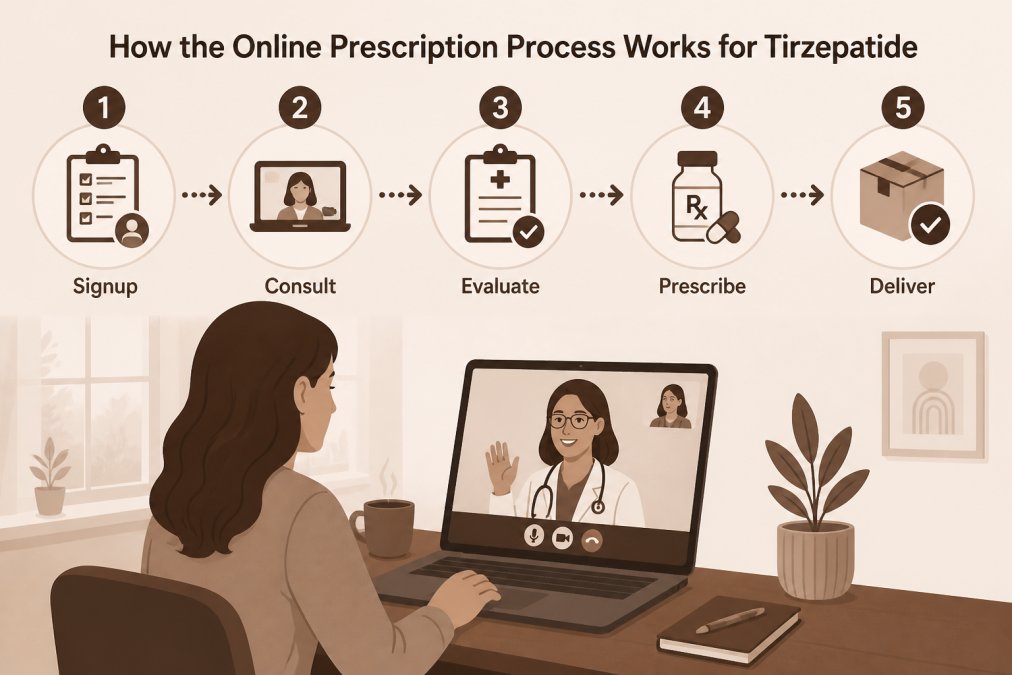
How the Online Prescription Process Works for Tirzepatide
The process begins with a medical consultation, either video or detailed health questionnaire reviewed by a licensed clinician. The clinician assesses your health history, current medications, BMI eligibility (usually 30 or higher, or 27 with weight-related comorbidities), and contraindications that would make tirzepatide unsafe.
Initial Medical Consultation
A thorough consultation should take 20-30 minutes and cover your complete medical history, including thyroid cancer, pancreatitis, or gallbladder disease; current medications; previous weight loss attempts; metabolic conditions; family history of medullary thyroid cancer or MEN2; kidney or liver disease; pregnancy status; and alcohol or smoking use. If the consultation feels rushed or lacks substantive questions, that’s a red flag.
Lab Work Requirements for Safety Screening
Most reputable providers order baseline lab work before approving tirzepatide. This critical safety step includes:
Metabolic panel: Fasting glucose, kidney function (creatinine and eGFR), and liver function (AST, ALT, bilirubin). Tirzepatide is processed by the kidneys; if eGFR is below 30, tirzepatide may not be appropriate.
Lipid panel: Total cholesterol, LDL, HDL, triglycerides establish baseline cardiovascular risk.
Hemoglobin A1C (if diabetic or prediabetic): Measures average blood sugar over three months. If you’re on diabetes medications, tirzepatide may require dose adjustments to avoid hypoglycemia.
Thyroid function (TSH): Establishes baseline thyroid health and rules out dysfunction that might complicate treatment.
Amylase and lipase (sometimes): Indicate pancreatic health, particularly important if you have pancreatitis or gallbladder disease history.
If you’ve had recent lab work (within three months), ask whether your provider will accept those results instead of ordering new tests.
Request your most recent lab work before consultation. Having these on hand speeds evaluation and helps your clinician make informed dosage recommendations. If you lack recent labs, ask whether your provider can order them through a local lab, which is often faster and cheaper than mail-in kits.
Lab Results That May Disqualify You
Certain results may make tirzepatide inappropriate: eGFR below 30 (severe kidney disease), elevated liver enzymes (AST or ALT more than 3 times normal), elevated amylase or lipase (possible pancreatitis), or abnormal TSH with clinical symptoms. Your clinician will discuss alternatives or recommend additional testing if these appear.
Prescription Approval and Pharmacy Selection
Once approved, your prescription goes to a licensed retail or compounding pharmacy. The pharmacy prepares your medication and ships it with detailed storage and injection instructions.
Pharmacist Review for Drug Interactions
A critical step separating careful providers from negligent ones: a licensed pharmacist should review your complete medication list before your prescription is filled. Common drug interactions with tirzepatide include diabetes medications (which lower blood sugar and may require dose adjustment), blood pressure medications (tirzepatide can lower blood pressure), and thyroid medications (tirzepatide may affect thyroid hormone absorption; take levothyroxine at least 30 minutes before injection). If your provider doesn’t mention pharmacist consultation, ask why.
Starting tirzepatide without proper medical evaluation, lab work, or through an unlicensed provider puts you at risk for serious adverse reactions, drug interactions, and wasted money. Verify every step.
Verifying Your Telehealth Provider and Licensed Clinician
Before committing to a consultation, verify that your clinician holds an active medical license in your state. Most reputable platforms display credentials prominently, including state medical license number and board certifications. Visit your state medical board’s website and search by name to confirm the license is active, in good standing, and not subject to disciplinary actions.
Ask the provider directly: What is the clinician’s specialty? How many tirzepatide patients have they treated? Do they offer ongoing clinical oversight? A legitimate provider will have clear answers and explain their protocol for dosage adjustments, side effect management, and serious adverse reactions.
The provider should also have a licensed pharmacist available for consultation to review your medication list and flag drug interactions before your prescription is filled.
A licensed clinician should spend at least 20-30 minutes on your initial consultation. If it’s shorter, the evaluation is likely incomplete.
How to Verify a Pharmacy License and Ensure Legitimacy
Whether your tirzepatide comes from a retail or compounding pharmacy, that pharmacy must be licensed and regulated by your state pharmacy board.
For retail pharmacies, ask for the pharmacy’s DEA number and state license number, then verify through your state pharmacy board’s website. Confirm the license is active and the pharmacy is authorized to dispense your medication.
For compounding pharmacies, verify they hold an active state pharmacy license and comply with FDA regulations on compounded GLP-1s. Confirm they follow United States Pharmacopeia (USP) standards for compounding, have documented quality control procedures, and do not compound from bulk drug substances that are not FDA-approved for compounding. Ask directly about their quality assurance process, testing protocols, and batch sterility and potency testing. Legitimate compounding pharmacies are transparent about these details.
FDA guidance on compounded medications provides detailed information on legally compliant compounding pharmacy standards.
Understanding Compounded vs. Brand-Name Tirzepatide
Brand-name tirzepatide (Zepbound for weight loss, Mounjaro for diabetes) is manufactured by Eli Lilly under strict FDA oversight. Every dose is identical, potency is guaranteed, and formulations have been extensively tested. The downside: brand-name tirzepatide costs $900-$1,200 per month without insurance, and coverage remains inconsistent.
Compounded tirzepatide is prepared by a licensed pharmacy using FDA-approved tirzepatide powder mixed with sterile saline or approved diluents. Compounded versions cost $200-$400 per month, making them accessible to uninsured patients or those with high deductibles. The tradeoff is that compounding introduces variables, potency can vary between batches, and storage and shipping conditions matter more.
Neither option is inherently “better.” The right choice depends on insurance coverage, budget, and risk tolerance. However, compounded tirzepatide carries additional risk if the pharmacy cuts corners.
Some compounding pharmacies source tirzepatide from questionable suppliers or use non-sterile techniques. Contaminated or improperly dosed compounded tirzepatide can cause serious infections or ineffective treatment. Verify the pharmacy’s quality standards before ordering.
If you have insurance, it’s worth fighting for brand-name coverage through prior authorization rather than defaulting to compounded versions.
FDA Regulations on Compounded GLP-1s and Safety Standards
Compounded tirzepatide must be prepared from FDA-approved tirzepatide powder, not from bulk drug substances or unapproved sources. The pharmacy must follow United States Pharmacopeia (USP) standards for sterile compounding, including preparation in an ISO Class 5 or better clean room, use of sterile, pyrogen-free equipment, and documented testing for sterility, endotoxins, and potency.
USP standards for sterile compounding establish the baseline for safe compounding practice. If a pharmacy cannot describe compliance with USP standards, they’re cutting corners.
Check the FDA drug shortage list before starting tirzepatide to understand current supply conditions. Some compounding pharmacies have faced FDA warning letters for improper practices, contamination, or falsified testing. You can search for FDA warning letters on their website, if your pharmacy has received one, reconsider.
Tirzepatide Dosage Titration Schedule and What to Expect
Tirzepatide dosage titration is gradual, designed to minimize side effects while allowing your body to adapt. Most patients start at 2.5 mg once weekly, then increase by 2.5 mg increments every 4 weeks until reaching an effective maintenance dose.
A typical schedule:
- Weeks 1-4: 2.5 mg once weekly
- Weeks 5-8: 5 mg once weekly
- Weeks 9-12: 7.5 mg once weekly
- Weeks 13-16: 10 mg once weekly
- Weeks 17+: Maintenance dose (typically 10 mg, though some reach 15 mg)
This 16-week timeline is important. Many patients expect rapid weight loss and become discouraged during the first month when doses are still low. Real weight loss acceleration typically begins around week 8-12 as your dose increases and your body adapts.
Your clinician may adjust this schedule based on your response and side effects. If you experience severe nausea, your provider may recommend staying at that dose longer before titrating up.
You won’t see significant weight loss during the first 4-8 weeks. This is normal. The medication is working on appetite regulation even if the scale hasn’t moved much yet.
Keep detailed notes on how you feel each week, track nausea, appetite changes, energy levels, and other symptoms. Share this with your clinician during follow-up consultations to inform dosage decisions.
Managing Side Effects at Home During Your Treatment
The most common side effects are nausea, vomiting, constipation, and reduced appetite, exactly what you want for weight loss, but often uncomfortable during adjustment.
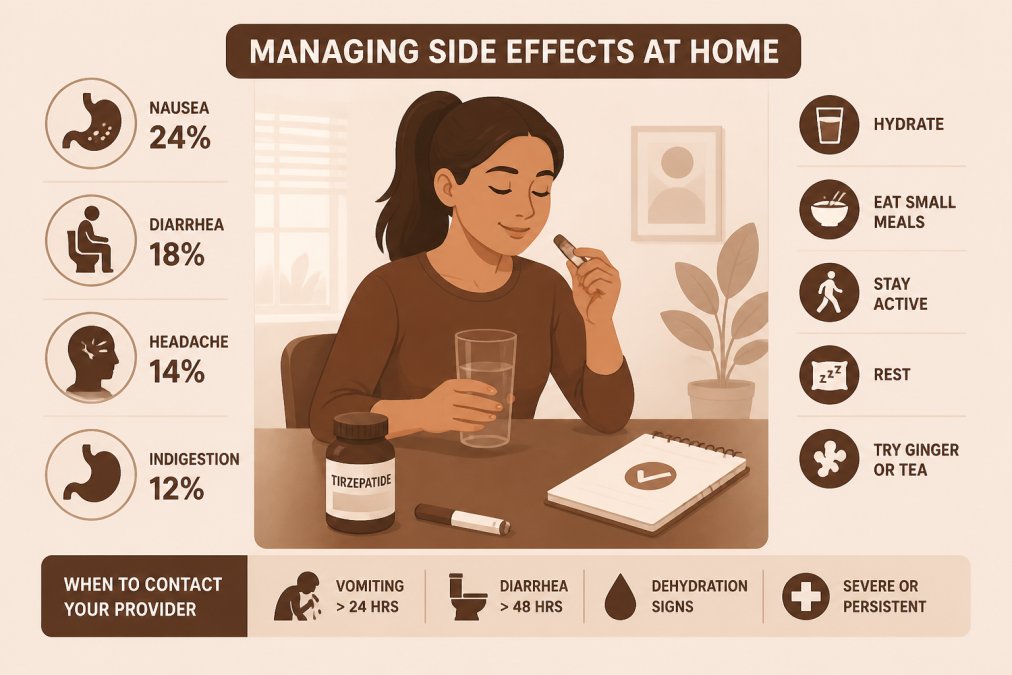
Nausea is most frequent, particularly during the first 4-8 weeks, typically peaking a few hours after injection and subsiding within 24 hours. Eating smaller, lighter meals helps. Ginger tea, peppermint, or over-the-counter anti-nausea remedies provide relief. If nausea prevents eating or staying hydrated, contact your clinician immediately.
Constipation is equally common. Tirzepatide slows gastric emptying, so food moves through your digestive system more slowly. Increase fiber gradually, drink more water, and consider a stool softener like docusate. If constipation persists for more than a few days or becomes severe, contact your clinician.
Vomiting is less common but more serious. If you vomit more than once or twice after injection, contact your clinician, this may indicate your dose is too high or you have an undetected contraindication.
Appetite suppression is intended, but it can be problematic if it prevents adequate nutrition. Aim for at least three small meals daily with adequate protein, even if not hungry, to preserve muscle mass.
Other reported side effects include fatigue, dizziness, and headaches, typically resolving within weeks as your body adjusts. If they persist or worsen, notify your clinician.
If you experience severe abdominal pain, persistent vomiting, signs of pancreatitis (severe upper abdominal pain radiating to the back), or any symptoms feeling like a medical emergency, seek immediate care. Do not wait for a telehealth consultation.
Insurance Coverage and Prior Authorization for Tirzepatide
Insurance coverage for tirzepatide remains inconsistent and often requires prior authorization. Most companies classify tirzepatide as a weight loss medication subject to stricter coverage criteria than diabetes indications. Understanding prior authorization and appeals can mean the difference between affording treatment and abandoning it.
What Prior Authorization Requires
Prior authorization typically requires documentation of BMI of 30 or higher (or 27 with weight-related comorbidities), evidence of previous weight loss attempts, confirmation you lack personal or family history of medullary thyroid cancer or MEN2, a prescription from a licensed clinician with supporting clinical notes, and sometimes recent lab work showing metabolic markers supporting medical necessity. The process takes 5-14 business days.
Common Denial Reasons and How to Appeal
Denial: “Insufficient documentation of prior weight loss attempts.” Insurance often requires evidence of at least two failed weight loss interventions. Ask your clinician to document your weight loss history in detail with dates, duration, and outcomes. Resubmit with this documentation.
Denial: “BMI does not meet coverage criteria.” If borderline, ask your clinician to document weight-related health conditions, hypertension, type 2 diabetes, sleep apnea, osteoarthritis, or fatty liver disease all qualify. Resubmit with clinical documentation.
Denial: “Step therapy required; must try lower-cost alternatives first.” Many plans require failure or contraindication to semaglutide/Ozempic before approving tirzepatide. Either request semaglutide to satisfy step therapy or request a medical exception if your clinician believes tirzepatide is medically necessary and semaglutide is contraindicated.
Denial: “Not medically necessary; weight loss is cosmetic.” Counter by having your clinician submit clinical notes emphasizing metabolic or weight-related comorbidities, framing tirzepatide as treatment for a medical condition rather than elective weight loss.
Filing an Appeal
If denied, you have the right to appeal. Request the denial letter explaining the specific reason and referencing the plan’s coverage policy. Review the coverage policy to understand exactly what criteria must be met. Work with your clinician to submit additional clinical notes addressing the specific denial reason. Submit your appeal in writing with a cover letter explaining why the denial was incorrect, attach all supporting documentation, and reference the specific coverage policy criteria you now meet. Send via certified mail or email with read receipt. Appeals typically take 15-30 business days.
Medical Exception Requests
If your insurance’s coverage policy is restrictive and you don’t meet their criteria, request a medical exception, a formal request asking the insurance company to override their standard policy based on your specific clinical circumstances. Medical exceptions are most successful when your clinician submits a detailed letter explaining why tirzepatide is medically necessary, why alternatives are contraindicated or have failed, what clinical outcomes you expect, and any relevant lab work or clinical findings supporting the request.
Compounded Tirzepatide and Insurance
If insurance denies coverage for brand-name tirzepatide and you exhaust appeals, compounded tirzepatide becomes more accessible. Verify your insurance’s stance on compounded medications first, some plans cover compounded GLP-1s under different criteria or cost-share levels. If your insurance won’t cover either, you’ll pay out of pocket: compounded versions typically cost $200-$400 per month, while brand-name costs $900-$1,200 without insurance. Some telehealth providers offer payment plans or sliding-scale pricing for uninsured patients.
Medicare and Medicaid Coverage
Medicare coverage information for GLP-1 medications provides details for Medicare beneficiaries. Medicare Part D coverage for tirzepatide varies by plan. If you’re on Medicare, check directly with your plan about coverage before starting. You may need a formulary exception if your plan doesn’t cover it.
Medicaid coverage is determined by individual state programs. Some states cover tirzepatide for weight loss; others only for diabetes. Contact your state Medicaid program directly to confirm eligibility.
Many telehealth providers employ staff specializing in insurance appeals and prior authorization. Before paying out of pocket, ask whether your provider offers insurance navigation support. They may resubmit your authorization with stronger clinical documentation at no additional cost.
Conclusion
Safely starting tirzepatide online requires deliberate verification at every step: confirming your clinician’s credentials, validating your pharmacy’s licensing and quality standards, understanding your formulation, and preparing for titration and side effect management realities. Telehealth convenience only works if you choose a provider prioritizing medical evaluation and ongoing clinical oversight over speed and volume.
Ascend Vitality connects you with specialized care pathways designed for this process, verifying clinician credentials, ensuring pharmacy FDA compliance on compounded GLP-1s, and providing ongoing support during titration and side effect management. Begin with a consultation that feels thorough, not rushed.
Frequently Asked Questions
Is it safe to get tirzepatide online through a telehealth provider?
Yes, when you work with a legitimate telehealth provider that connects you with a licensed clinician who reviews your medical history and monitors your treatment. Safety depends on verifying the provider’s credentials, ensuring the pharmacy is licensed, and following your prescribed tirzepatide dosage titration schedule closely. The FDA regulates compounded GLP-1s the same way it oversees brand-name medications. Always disclose your full health history, including contraindications and other medications, to your clinician before starting treatment.
How do I verify that an online pharmacy is legitimate and licensed?
Check that the pharmacy is licensed in your state by searching your state’s pharmacy board website or using the National Association of Boards of Pharmacy (NABP) Verified Internet Pharmacy Practice Sites (VIPPS) directory. Legitimate pharmacies display their license number, pharmacist contact information, and physical address on their website. Never purchase from a pharmacy that doesn’t require a valid prescription or doesn’t have a licensed pharmacist available for consultation. Verify the pharmacy’s DEA registration and confirm they follow FDA regulations on compounded GLP-1s.
What is the typical tirzepatide dosage titration schedule when starting online?
Most tirzepatide treatment plans start with a low dose, typically 2.5 mg as a once-weekly subcutaneous injection, and increase gradually every 4 weeks based on your response and tolerance. A standard tirzepatide dosage titration schedule moves from 2.5 mg to 5 mg, then 7.5 mg, and may reach 10 mg or higher depending on your weight management goals and how you tolerate the medication. Your licensed clinician will adjust your dosage based on your progress and any side effects you experience. Never skip doses or adjust your dosage without consulting your provider.
What should I do if I experience side effects from tirzepatide?
Contact your telehealth provider immediately if side effects are severe. Common side effects like nausea or mild gastrointestinal discomfort often improve as your body adjusts during the maintenance phase. Managing side effects at home involves staying hydrated, eating smaller meals, and avoiding fatty or greasy foods. Your clinician may slow your dosage titration or recommend over-the-counter remedies. Keep detailed notes of when side effects occur and their severity to share during follow-up consultations. Never stop taking tirzepatide without medical guidance.