
Last Updated: June 14, 2026
Peptide degradation is one of the most preventable research failures, yet it happens constantly because storage protocols get treated as an afterthought. Knowing how to store research peptides properly is the difference between consistent, reproducible results and wasted compounds that have lost all biological activity. This guide from Ascend Vitality covers every layer of proper peptide storage: temperature, light, moisture, oxidation, aliquoting, and the practical home-researcher workflows that most lab-centric guides ignore.
Here’s what most guides get wrong: they focus exclusively on freezer temperature and ignore the other four degradation pathways that silently destroy potency. Moisture, UV exposure, oxygen, and repeated freeze-thaw cycles each degrade amino acid residues independently, and their effects compound.
Why Proper Peptide Storage Determines Potency and Research Outcomes
Peptide stability measures how well a compound retains its original chemical structure and biological activity over time. Research-grade peptides are short chains of amino acid residues held together by peptide bonds vulnerable to hydrolysis, oxidation, and conformational changes triggered by environmental stress.
A peptide stored incorrectly for even a few weeks can lose significant potency before it ever reaches the point of use. Lyophilized peptides are far more chemically stable than reconstituted ones, but not invulnerable. Reconstituted peptides are actively susceptible to hydrolysis and microbial contamination from the moment solubilization occurs.
Cold chain integrity matters across the entire supply chain. According to guidance on biologic storage from the U.S. Pharmacopeia, temperature excursions are among the leading causes of biological compound degradation during transit and storage. If the cold chain breaks at any point, potency loss begins.
Every storage decision you make is either protecting or attacking the protein structure of your peptide. Keep that frame in mind and the protocols below will make intuitive sense.
Peptide Storage Temperature Chart: Lyophilized vs. Reconstituted
The correct storage temperature depends entirely on whether your peptide is lyophilized or reconstituted, two fundamentally different stability profiles requiring different conditions.
| State | Recommended Temperature | Typical Stability | Notes |
|---|---|---|---|
| Lyophilized (powder) | -20°C (long-term) | 1-2+ years | Keep desiccated, away from light |
| Lyophilized (short-term) | 4°C (refrigerator) | Up to 4 weeks | Only if using soon |
| Reconstituted in solution | 4°C (refrigerator) | 2-4 weeks | Use bacteriostatic water |
| Reconstituted (extended) | -20°C (aliquoted) | 3-6 months | Avoid freeze-thaw cycles |
Storing Lyophilized Peptides at -20°C for Long-Term Preservation
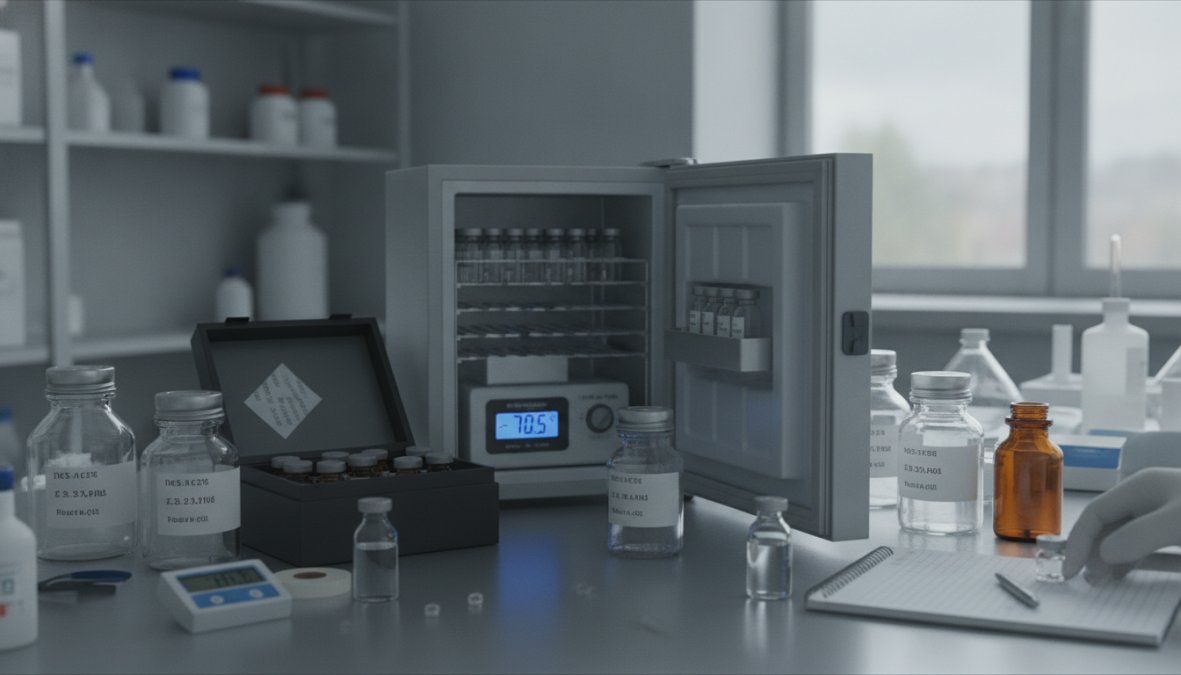
Lyophilized peptides stored at -20°C represent the gold standard for long-term preservation. The freeze-drying process removes nearly all water content, dramatically slowing hydrolysis and oxidative damage. At -20°C, molecular motion slows to the point where most degradation pathways become negligible over months to years.
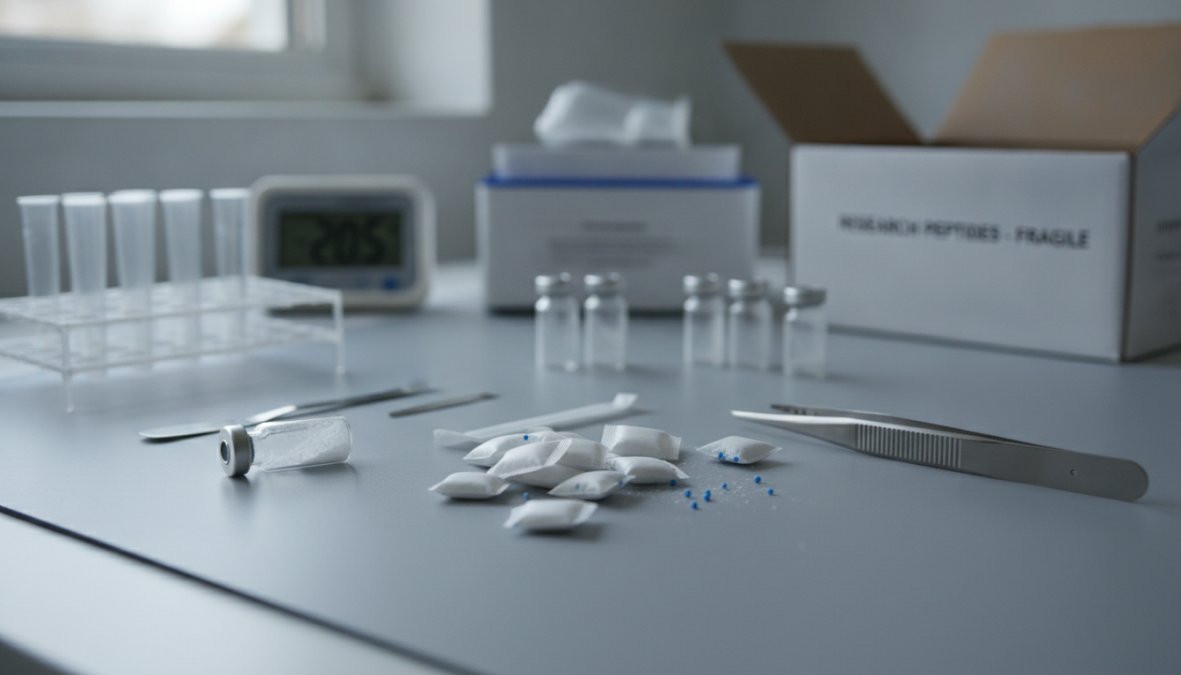
The critical mistake is opening cold vials at room temperature. Condensation forms on the inside of the vial when a cold container meets warm ambient air, enough moisture to begin hydrolysis in susceptible peptides. Always allow vials to equilibrate to room temperature before opening, and keep them sealed with desiccant until the moment of use.
For peptides containing cysteine, methionine, or tryptophan residues, -20°C storage is not optional. These amino acids are particularly vulnerable to oxidative damage, and some researchers working with highly sensitive sequences opt for -80°C for additional margin.
Never store lyophilized peptides in a frost-free (auto-defrost) freezer. The temperature cycling in frost-free units creates repeated freeze-thaw stress on your samples, defeating the purpose of long-term cold storage. Use a manual defrost freezer whenever possible.
Refrigerating Reconstituted Peptides at 4°C for Active Use
Once reconstituted into solution, the stability window shrinks to roughly two to four weeks at 4°C, depending on the specific sequence and solvent used. Bacteriostatic water (sterile water containing 0.9% benzyl alcohol) is the preferred reconstitution vehicle because benzyl alcohol inhibits microbial growth over the storage period. Standard sterile water is acceptable for single-use reconstitution but not for multi-week refrigerated storage.
Store peptide vials in the interior of the refrigerator, not the door. Door placement exposes vials to temperature fluctuations every time it opens; a dedicated interior container buffers against ambient temperature swings.
How to Store Research Peptides Properly: Step-by-Step Protocol
Properly storing research peptides requires a systematic approach that addresses temperature, light, moisture, and oxygen simultaneously. No single factor is sufficient on its own.
Total Time: 15-20 minutes per storage session
Difficulty: Beginner to intermediate
What You’ll Need Before You Start
Before handling any peptide, gather the following:
- Manual defrost freezer (set to -20°C) or dedicated laboratory refrigerator
- Amber glass vials or opaque vials for light protection
- Desiccant packets (silica gel, indicating type preferred)
- Airtight storage container or desiccator
- Bacteriostatic water (for reconstitution)
- Sterile syringes and needles
- Permanent marker or label tape for vial identification
- Nitrile gloves
- Argon or nitrogen gas spray (optional, for oxidation-sensitive peptides)
- Freezer-safe resealable bags or vacuum-sealed pouches
Step-by-Step Storage Checklist
- Receive and inspect vials – Check that lyophilized peptides arrived as a white or off-white powder. Discoloration, clumping, or visible moisture are signs of transit damage.
- Label every vial immediately – Include peptide name, lot number, date received, and concentration. Unlabeled vials become unidentifiable within weeks.
- Place desiccant in your storage container – Add fresh silica gel desiccant packets before placing vials inside. Replace desiccant every 3-6 months or when indicator beads change color.
- Seal vials in an airtight container – For oxidation-sensitive peptides (those containing cysteine, methionine, or tryptophan), flush the container with argon gas before sealing to create an inert atmosphere.
- Store at the correct temperature – Lyophilized peptides go to -20°C. Reconstituted peptides in active use go to 4°C.
- Allow equilibration before opening – When removing from the freezer, let vials reach room temperature (15-20 minutes) before opening to prevent condensation.
- Document every use – Record the date, amount used, and remaining quantity to support research reproducibility and inventory management.
How to Reconstitute Research Peptides Without Damaging Them
Reconstitution is where most peptide damage occurs. Solubilization introduces mechanical stress, pH changes, and oxygen exposure simultaneously, and rushing it compounds all three problems.
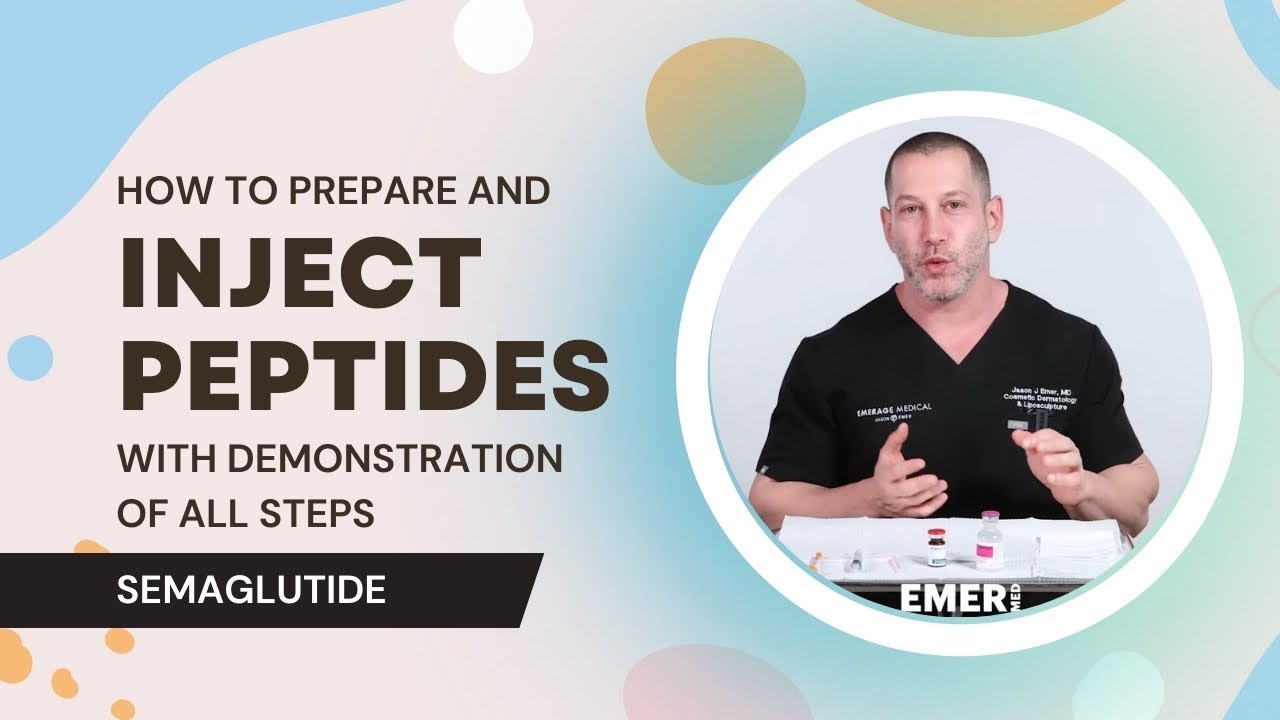
The correct approach is slow, gentle reconstitution:
- Remove the lyophilized vial from cold storage and allow it to reach room temperature fully before opening.
- Wipe the rubber septum with an alcohol swab and allow it to dry completely.
- Draw the appropriate volume of bacteriostatic water into a sterile syringe.
- Insert the needle at an angle against the glass wall of the vial, not directly onto the powder.
- Allow the solvent to run down the side of the vial slowly. Do not inject directly into the powder mass.
- Swirl gently. Never vortex or shake vigorously, mechanical agitation breaks peptide bonds and denatures protein structure.
- Allow the solution to sit for 5-10 minutes if the peptide does not dissolve immediately.
According to peptide chemistry guidance from the American Peptide Society, the pH of the reconstitution solvent significantly affects solubility and stability. Basic peptides (those with multiple lysine or arginine residues) often dissolve better in slightly acidic solvents like dilute acetic acid, while acidic peptides may require dilute ammonia solution.
If a peptide is resistant to reconstitution in bacteriostatic water, try adding a small volume (5-10% of final volume) of DMSO first to break the powder into solution, then dilute to final volume with bacteriostatic water. This works well for hydrophobic sequences that resist aqueous solubilization.
Aliquoting Best Practices to Avoid Freeze-Thaw Cycles
Every freeze-thaw cycle degrades reconstituted peptides. The physical stress of ice crystal formation and osmotic changes during thawing both damage peptide structure, and the effect accumulates with each cycle.
The solution is aliquoting: dividing a reconstituted peptide into single-use volumes before freezing.
Here’s the practical workflow:
- Reconstitute the full vial into a calculated total volume.
- Immediately divide the solution into individual-use aliquots using sterile syringes.
- Transfer each aliquot into a separate sterile, labeled vial.
- Seal each vial and store at -20°C.
- Thaw only the aliquot you need for each use session. Never refreeze a thawed aliquot.
The aliquot size should match your typical single-use dose with no excess. A small amount of waste per aliquot is far preferable to potency loss from repeated freeze-thaw cycles on a larger shared vial.
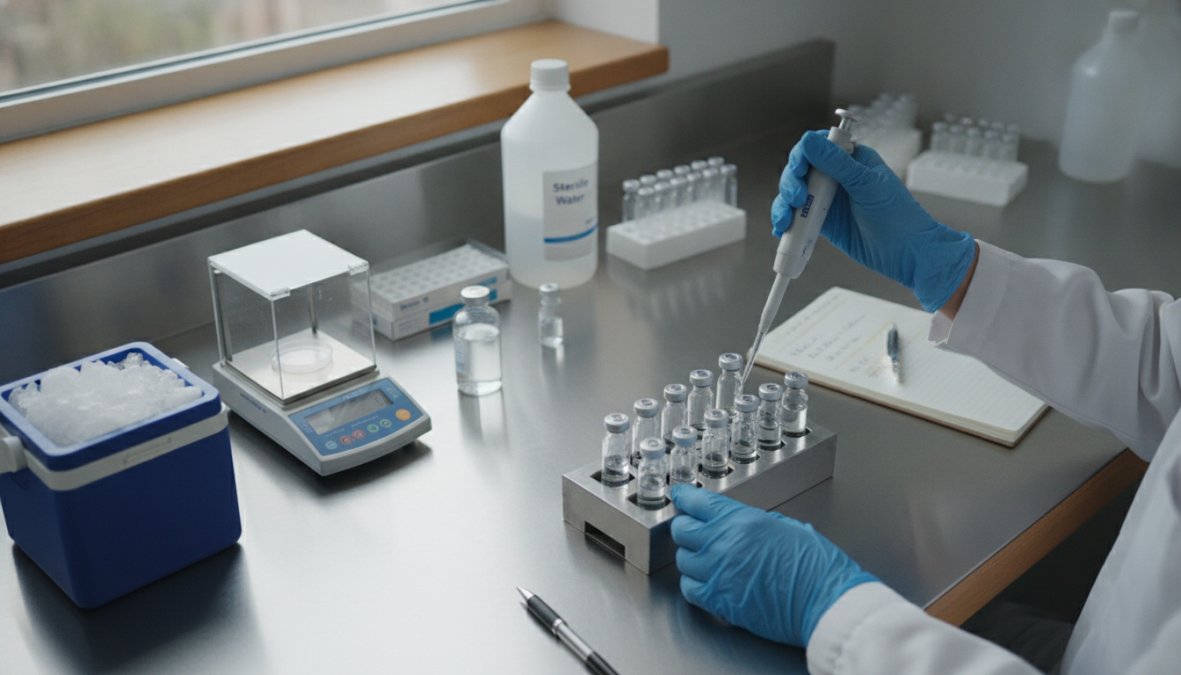
For lyophilized peptides used across multiple sessions, weigh and divide the dry powder into separate vials before any reconstitution occurs. Each vial is then reconstituted fresh for each use, preserving the stability advantage of the lyophilized state as long as possible.
Aliquoting is the single highest-impact storage practice for reconstituted peptides. Eliminating freeze-thaw cycles preserves potency more effectively than any other variable after initial temperature control.
Protecting Peptides from Light, Moisture, and Oxidative Damage
Temperature is the most discussed variable in peptide storage, but light, moisture, and oxygen collectively account for a substantial portion of real-world degradation. A peptide stored at the correct temperature in a clear vial under fluorescent lighting will still degrade.
Light Sensitivity and UV Protection
UV radiation provides enough energy to break certain amino acid side chains, particularly tryptophan, tyrosine, and phenylalanine residues. The resulting photodegradation products are biologically inactive and can interfere with assay results.
Practical UV protection measures:
- Store peptides in amber glass vials or wrap clear vials in aluminum foil
- Keep storage containers opaque or in a dark environment
- Minimize exposure time during reconstitution and handling
- Work under low-intensity lighting, avoiding direct UV sources
Moisture Control, Desiccation, and Deliquescence Prevention
Moisture is the primary enemy of lyophilized peptides. Certain sequences are hygroscopic and actively absorb water from ambient air, a phenomenon called deliquescence, which can convert a dry powder into a sticky, partially dissolved mass within minutes in a humid environment.
A desiccator maintains relative humidity below 10%, sufficient to prevent deliquescence in most sequences. For home researchers without laboratory desiccators, airtight containers with fresh indicating silica gel desiccant packets are a practical alternative. According to laboratory storage best practices from the National Institutes of Health, desiccant should be replaced on a defined schedule, not when it appears visually saturated. Indicating silica gel changes color when saturated; non-indicating types offer no visual warning.
Oxidation Prevention for Cysteine, Methionine, and Tryptophan Peptides
Peptides containing cysteine residues are the most oxidation-vulnerable: cysteine’s thiol group oxidizes readily to form disulfide bonds, altering the peptide’s three-dimensional structure and eliminating biological activity. Methionine oxidizes to methionine sulfoxide; tryptophan degrades via several oxidative pathways.
For these sequences, creating an inert atmosphere during storage is not optional. The practical approach is argon shielding: briefly flush the headspace of a storage container or vial with argon gas from a small pressurized canister before sealing. Argon is denser than air and displaces oxygen effectively. Vacuum-sealed storage is an alternative for lyophilized peptides, removing oxygen from the vial headspace provides similar protection without requiring a gas supply.
How Long Do Peptides Last After Reconstitution?
Reconstituted peptides last approximately two to four weeks at 4°C in bacteriostatic water under proper conditions. Potency decline begins immediately after reconstitution and accelerates with each temperature fluctuation, light exposure, or contamination event.
Several factors shorten this window:
- Use of sterile water instead of bacteriostatic water (no antimicrobial protection)
- Storage in a door-mounted refrigerator position (temperature fluctuations)
- Repeated needle insertions into the same vial (contamination risk)
- Sequences containing cysteine, methionine, or tryptophan (faster oxidative degradation)
Aliquoted and frozen reconstituted peptides can maintain acceptable potency for three to six months at -20°C when handled correctly. The actual duration depends on the specific sequence, some are inherently less stable, and no storage protocol can fully compensate for intrinsic chemical instability.
The practical rule: if you will not use a reconstituted peptide within two weeks, aliquot and freeze it immediately after reconstitution rather than waiting.
Signs of Degraded Peptides and How to Troubleshoot Them
Most researchers discover peptide degradation only when results become inconsistent. By that point, significant compound has already been wasted. Knowing the early signs allows intervention before the entire batch is compromised.
Visual signs of degradation:
- Cloudiness or particulate matter in a previously clear solution
- Discoloration (yellowing or browning of a white lyophilized powder)
- Visible clumping or aggregation in the dry powder
- Unusual viscosity changes in solution
Functional signs of degradation:
- Inconsistent or declining biological response at previously effective concentrations
- Complete loss of expected activity despite correct dosing
- Unexpected side effects suggesting impurity formation
Troubleshooting steps:
- Check storage records for any temperature excursions or cold chain breaks
- Inspect remaining vials for visual signs of moisture contamination
- Verify desiccant is still active and replace if saturated
- Review handling records for freeze-thaw cycle count
- If degradation is confirmed, discard the affected batch. Degraded peptides cannot be restored, and using compromised compounds produces unreliable data.
Peptide degradation often presents as “the peptide stopped working” rather than an obvious physical change. If a previously reliable sequence is producing inconsistent results, storage conditions should be the first variable investigated, not the last.
How to Store Research Peptides Properly at Home: Biohacker Solutions
The home-researcher community faces a specific challenge: meeting professional storage standards without laboratory infrastructure. With the right equipment and discipline, home storage can achieve this.
Practical home storage setup:
- Dedicated mini-freezer or dorm refrigerator: A small, manual defrost freezer set to -20°C used exclusively for peptide storage is the most important investment. Sharing space with food introduces door-opening frequency and odor contamination risks.
- Airtight storage containers: Pharmaceutical-grade airtight containers with gasket seals are available from laboratory supply retailers and replace the laboratory desiccator for most home applications.
- Indicating silica gel desiccant: Available in small packets designed for pharmaceutical storage. Replace every 3-6 months regardless of appearance.
- Amber vials: Small amber glass vials with rubber septa are inexpensive and provide light and oxygen protection superior to original packaging in many cases.
- Argon canisters: Small pressurized argon canisters (marketed for wine preservation) work well for displacing oxygen from storage containers and vials before sealing.
The common mistake among home researchers is treating original shipping packaging as adequate long-term storage. Most peptides arrive in simple plastic vials inside a padded envelope, packaging designed for transit, not months of storage. Transfer to proper amber vials with desiccant immediately upon receipt.
For inventory management at home, a simple spreadsheet tracking peptide name, lot number, date received, storage location, reconstitution date, and remaining quantity is sufficient. The goal is never to open a vial and wonder how old the contents are.
Inventory Management for Research Peptide Collections
Systematic inventory management separates researchers who consistently reproduce results from those who constantly troubleshoot unexplained variability, and it’s the angle almost no storage guide addresses.
A functional peptide inventory system tracks:
- Identity: Peptide name, sequence (if known), supplier, lot number
- Quantity: Original amount, current remaining amount, unit (mg, vials)
- Storage status: Location (which freezer/shelf), vial number, lyophilized or reconstituted
- Dates: Date received, date first opened, date reconstituted, expected expiration
- Conditions: Any temperature excursions, freeze-thaw cycle count for reconstituted aliquots
- Notes: Any observed changes in appearance, solubility, or activity
A spreadsheet works well for collections under 20 compounds. For larger collections, tools like Quartzy laboratory inventory management platform offer free tiers with barcode scanning, expiration alerts, and audit trails suitable for individual researchers.
The first-in, first-out (FIFO) principle applies directly: always use the oldest lot of a given peptide before opening a newer one. Labeling discipline is non-negotiable, every vial needs at minimum the peptide name, concentration (if reconstituted), date, and lot number. A vial with a fallen-off or illegible label becomes an unknown that cannot be safely used in research.
Never rely on memory to track peptide storage dates or freeze-thaw cycle counts. A vial thawed and refrozen twice three months ago is indistinguishable by appearance from a freshly aliquoted one. Without documentation, you cannot know which you are holding.
For researchers working with Ascend Vitality’s medically-supported programs, understanding peptide stability profiles directly supports treatment consistency. The specific stability profiles worth knowing: growth hormone-releasing peptides (GHRPs) are moderately stable at 4°C for up to three weeks reconstituted; melanotan variants are sensitive to light and oxidation and benefit significantly from argon shielding; BPC-157 is relatively stable but still requires protection from freeze-thaw cycling. No two sequences behave identically, and consulting sequence-specific stability data from your supplier is always worth the effort.
According to peptide stability and formulation resources from the Peptide Therapeutics Foundation, storage conditions account for a substantial portion of variability in peptide research outcomes across independent laboratories. Standardizing storage protocols is one of the most effective steps researchers can take to improve reproducibility without changing their experimental design.
Inconsistent peptide storage is one of the most common sources of failed research outcomes, and it is entirely preventable. Ascend Vitality supports researchers and patients by providing medically-supported programs with prescriptions delivered directly, combined with the education needed to maintain compound integrity from delivery through use. If you are navigating peptide-based health protocols, get started with Ascend Vitality and benefit from targeted care pathways that take storage, dosing, and clinical outcomes seriously.
Frequently Asked Questions
Do research peptides need to be refrigerated?
It depends on their form. Lyophilized (freeze-dried) research-grade peptides can often be stored at -20°C in a freezer for long-term preservation, or at 4°C for shorter periods. Once reconstituted, peptides generally require refrigeration at 4°C and should be used within a few weeks. Leaving peptides at ambient temperature accelerates degradation and loss of potency, so cold chain management is essential regardless of the storage phase.
How long do peptides last after reconstitution?
Reconstituted peptides typically remain stable for 2-4 weeks when stored at 4°C in a sterile vial. Stability varies depending on the specific amino acid residues involved, peptides containing cysteine, methionine, or tryptophan are more prone to oxidative damage and may degrade faster. Using bacteriostatic water instead of plain sterile water can extend usability. Always aliquot before reconstitution to avoid repeated freeze-thaw cycles that accelerate breakdown.
What are the signs of degraded peptides?
Common signs of degraded peptides include visible cloudiness, unexpected precipitation, or discoloration in a previously clear solution. Lyophilized peptides that have absorbed moisture may clump or appear wet rather than as a dry powder, a process called deliquescence. Functionally, degraded peptides may show reduced or inconsistent effects. If you notice any of these signs, the peptide’s chemical stability has likely been compromised and it should not be used for research purposes.
Can you store peptides at room temperature?
Short-term storage at ambient temperature is generally not recommended for maintaining peptide potency. While some lyophilized peptides can tolerate brief periods at room temperature during shipping, extended exposure accelerates degradation of sensitive amino acid residues and damages protein structure. For proper storage of research peptides, always return vials to -20°C or 4°C promptly. Vacuum-sealed, desiccated containers can reduce risk if cold storage is temporarily unavailable, but this is not a long-term solution.
How do you reconstitute peptides for storage?
To reconstitute research peptides, allow the vial to reach room temperature before opening to prevent condensation. Add bacteriostatic water or an appropriate sterile solvent slowly along the vial wall, never inject directly onto the peptide cake. Gently swirl rather than shake to avoid damaging the protein structure. Once fully in solution, divide into aliquots immediately to minimize freeze-thaw cycles. Label each vial with the peptide name, concentration, reconstitution date, and solvent used for proper inventory management.
What is the best container for storing peptides?
Sterile, amber glass vials are widely considered the best containers for storing research peptides because they protect light-sensitive compounds from UV degradation. For lyophilized peptides, vacuum-sealed vials stored inside a desiccator with silica gel or molecular sieve desiccant provide optimal moisture control. Avoid plastic containers that may leach compounds or allow moisture ingress. For home-use or biohacker setups, amber vials stored in a small airtight desiccator box inside a dedicated mini-freezer offer a practical and effective solution.