
Last Updated: August 18, 2026
What Is Cellular Energy Therapy and Why Cost Matters
Cellular energy therapy encompasses treatments designed to enhance ATP production, support mitochondrial function, and promote cellular repair. These modalities, NAD+ supplementation, red light therapy, and PEMF therapy, operate on the premise that optimizing cellular energy generation improves recovery, reduces inflammation, and slows aging.
The cost question cuts to a larger tension: you’re weighing unproven promises against real out-of-pocket expenses. Some modalities have clinical backing; others remain speculative. Prices range from affordable daily supplements to multi-thousand-dollar home devices and recurring clinic sessions.
This guide from Ascend Vitality breaks down the evidence, costs, and realistic ROI for each major approach, examining which modalities have clinical support and which might deliver value for your health goals.
How Cellular Energy Therapy Works: ATP Production and Mitochondrial Function
Your cells run on ATP (adenosine triphosphate), a molecule that stores and transfers energy. When ATP production declines due to aging, stress, illness, or poor metabolic health, cells struggle to repair themselves. Cellular energy therapy aims to reverse this by boosting ATP availability and supporting the mitochondria that manufacture it.
NAD+ therapy restores nicotinamide adenine dinucleotide, a coenzyme critical to ATP synthesis. Red light therapy uses specific wavelengths to stimulate mitochondrial electron transport and energy production. PEMF therapy applies pulsed electromagnetic fields to influence cellular signaling and bioenergetics.

The appeal is straightforward: restore cellular energy production, restore cellular repair capacity. In theory this makes sense. In practice, evidence is mixed. NAD+ levels do decline with age, but whether restoring NAD+ produces measurable health benefits in humans remains an open question. Most clinical evidence comes from animal studies or small human trials. Red light therapy has stronger evidence for specific uses (wound healing, muscle recovery, skin health), but the cellular energy angle is less proven. PEMF therapy is even further behind in clinical validation.
Benefits of NAD+ Therapy for Cellular Recovery and Anti-Aging
NAD+ therapy proponents claim benefits across multiple domains: faster muscle recovery, improved mental clarity, enhanced energy levels, and anti-aging effects. Some claims have preliminary support; others are largely marketing.
In animal models, NAD+ restoration improves mitochondrial function, enhances metabolic health, and extends lifespan. In humans, small studies suggest NAD+ therapy may improve endurance capacity, reduce fatigue in chronic illness, and support cognitive function. A 2024 study in Nature showed that NAD+ precursors improved muscle regeneration in aging mice, compelling, but mice are not humans.
For anti-aging specifically, the logic is appealing but unproven in humans. NAD+ does decline with age, and restoring it theoretically supports cellular repair. But whether this translates to visible anti-aging effects, reduced wrinkles, or increased lifespan remains unknown. Most claims rest on extrapolation from animal data, not human trials.
NAD+ therapy may help if you’re recovering from illness or managing chronic fatigue. For general anti-aging in healthy people, the case is weaker. Ascend Vitality offers NAD+ therapy with customized dosing and treatment plans tailored to specific recovery goals.
Red Light Therapy Cost vs Effectiveness: What the Evidence Shows
Red light therapy (wavelengths roughly 600-1000 nanometers) has the strongest clinical evidence of any cellular energy therapy modality. It’s FDA-cleared for acne, anti-aging skin conditions, and pain relief, meaning the device manufacturer demonstrated safety and efficacy to a federal standard.
The evidence supports red light therapy for wound healing, muscle recovery, and certain skin conditions. Studies show it can reduce inflammation, accelerate tissue repair, and improve collagen production. For athletic recovery, the data is encouraging but not overwhelming.
A single professional session typically costs $50-$150. A course of 10-20 sessions runs $500-$3,000. Home devices range from $200 for basic panels to $1,795 for professional-grade systems.
The ROI depends on your use case. If you’re treating a specific condition with measurable outcomes, clinical sessions make sense. If you’re buying a home device for general wellness, you’ll need consistent use, 3-5 sessions weekly for months, to see results. Many people abandon home devices within weeks. Red light therapy works best for surface-level and shallow tissue conditions; for deep tissue or systemic issues, penetration depth limits effectiveness.
Is NAD+ IV Therapy Worth It: Comparing Modalities and Price Points
NAD+ therapy comes in three main forms: oral supplements, injections, and IV infusions. Each has different bioavailability, cost, and convenience profiles.
Oral NAD+ supplements (like Tru Niagen) start around $35-$40 monthly. Oral supplements have lower bioavailability; your digestive system breaks down some NAD+ before it reaches your bloodstream.
NAD+ injections offer higher bioavailability than oral supplements. A single injection costs $150-$300. At 1-2 injections weekly, monthly costs run $600-$2,400.
NAD+ IV therapy delivers nearly 100% bioavailability. A single session starts at $250 and can reach $1,000 for high-dose protocols. Weekly or bi-weekly sessions mean $1,000-$4,000 monthly for active treatment.
The cost-effectiveness question hinges on whether you see results. A practical strategy: start with oral NAD+ supplementation for 2-3 months. If you see measurable improvements, consider escalating to injections or IV therapy. If oral supplements produce no benefit, spending thousands on IV therapy is unlikely to help.
Home Devices vs. Clinical Sessions: Breaking Down the ROI
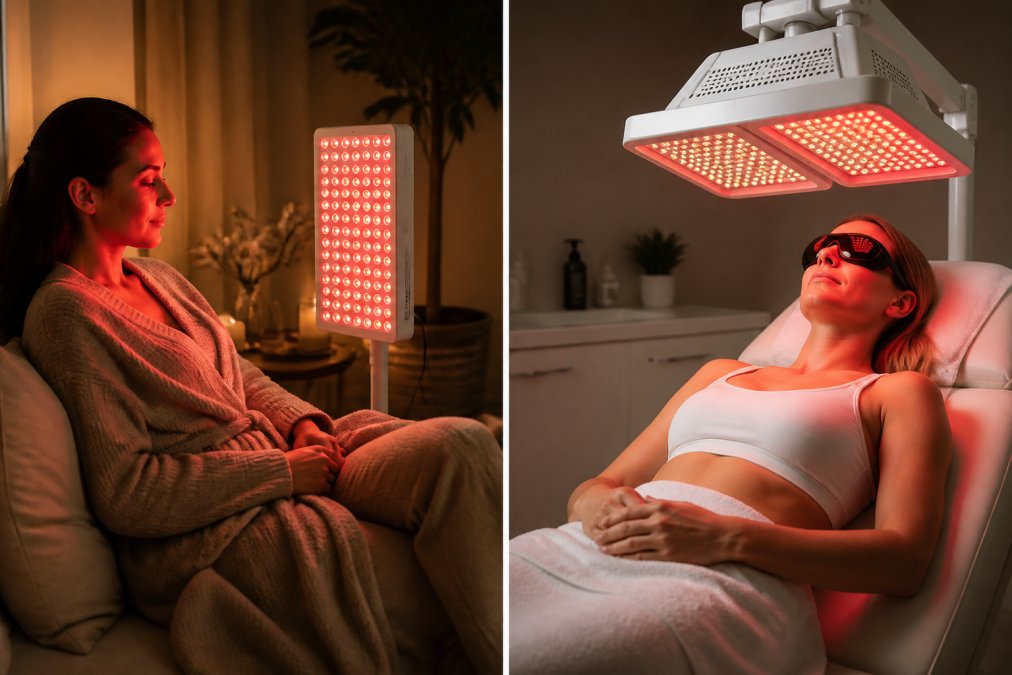
The home-device market for cellular energy therapy has exploded, with promises of clinical-grade results at home. The appeal is obvious: no travel, no ongoing costs, full control. But the financial decision requires calculating your actual return on investment based on usage patterns and expected outcomes.
The ROI Framework: Cost Per Effective Treatment
To compare home devices against clinical sessions fairly, calculate the cost per effective treatment, total money spent divided by the number of treatments you’ll actually complete.
Clinical sessions have straightforward costs: $50-$150 per session, with a typical treatment course of 10-20 sessions over 4-8 weeks totaling $500-$3,000. The advantage is professional oversight, optimal positioning, accountability through scheduling, and the ability to adjust treatment if results aren’t materializing.
Home devices flip the cost structure: upfront investment of $200-$1,795 with negligible ongoing costs ($5-$15 monthly electricity). A $1,795 device at $100 per clinical session equivalent breaks even at 18 sessions. If you use it 2 times weekly, that’s 9 weeks to break even. After that, every additional use is essentially free.
But break-even math only works if you actually use the device.
The Discipline Problem: Usage Rates and Device Abandonment
Research shows a consistent pattern: initial enthusiasm drops sharply after 4-6 weeks. A 2023 Consumer Technology Association survey found that 35% of people who purchase home wellness devices abandon them within the first month, and 60% stop regular use within three months.
Home devices lack the friction that makes clinical sessions effective: no scheduled appointment, no therapist expecting you, easy to postpone, and requires remembering correct positioning and frequency. This means the real ROI calculation must account for realistic usage rates, not theoretical ones.
Realistic Usage Scenarios and Payback Periods
High Discipline (3-5 uses per week): Device cost $1,000 versus $15,600 equivalent clinical cost annually. Payback period: 10 weeks. Annual savings after payback: $14,600. Home device is worth it. But only 20-30% of people maintain this usage rate.
Moderate Discipline (1-2 uses per week): Device cost $1,000 versus $7,800 equivalent clinical cost annually. Payback period: 10 weeks. Annual savings after payback: $6,800. Home device makes financial sense if you maintain consistency. This is more realistic for people who stick with home devices.
Low Discipline (sporadic use, 2-4 times monthly): Device cost $1,000 versus $3,600 equivalent clinical cost annually. Payback period: 10+ months. Home device is a poor investment; clinical sessions are more cost-effective. This scenario describes roughly 40% of home device purchasers.
Clinical Sessions: The Accountability Advantage
Clinical sessions cost more per use, but they solve the discipline problem. You’ve scheduled the appointment, paid upfront, and someone is expecting you. This friction increases the likelihood you’ll complete a full treatment course and see results. Additionally, clinical sessions offer professional assessment, optimal positioning, combination treatments, and accountability.
Decision Matrix: When to Choose Each Option
Choose clinical sessions if:
- You’re new to cellular energy therapy and want to test whether it works
- You have low confidence in maintaining a consistent home routine
- You want professional oversight and the option to adjust treatment
- You’re treating a specific condition and want expert guidance
Choose a home device if:
- You’ve already done clinical sessions and confirmed the modality works
- You’re committed to using it at least 2-3 times weekly long-term
- You want ongoing maintenance after completing a clinical protocol
- You have a history of maintaining home fitness routines
Hybrid approach (most cost-effective for many people):
Start with 8-12 clinical sessions to confirm the treatment works. If results are measurable, invest in a home device for ongoing maintenance. Use the home device 2-3 times weekly between occasional clinical sessions (monthly or quarterly). For a red light therapy example: 12 initial clinical sessions at $100 each = $1,200, plus a $1,500 home device = $2,700 total. Over 12 months, this costs less than weekly clinical sessions ($5,200) and balances cost with accountability.
The Device Quality Factor
Not all home devices are created equal. A $200 red light panel may not deliver the same wavelengths or intensity as a $1,795 professional-grade device. Lower-cost devices often have narrower wavelength ranges, lower irradiance, shorter lifespan, and less consistent build quality. When calculating ROI, factor in device quality and expected lifespan. Ask manufacturers for specifications: wavelength range, irradiance (measured in mW/cm²), and expected lifespan.
Insurance Coverage and HSA/FSA Eligibility for Cellular Therapies
Most cellular energy therapies are classified as wellness or anti-aging treatments rather than medical necessities, which means insurance coverage is rare. However, HSA and FSA eligibility rules are more nuanced than many clinics explain.
Insurance Coverage: The Medical Necessity Standard
Insurance companies cover treatments only if they meet the definition of “medically necessary.” For cellular energy therapies, this is a high bar.
What insurance typically does NOT cover:
- NAD+ IV therapy for general wellness, energy, or anti-aging
- Red light therapy for general skin health or anti-aging
- PEMF therapy for general wellness
What insurance MIGHT cover:
- Red light therapy prescribed by a physician for a specific medical condition: wound healing, diabetic ulcers, or dermatological conditions
- NAD+ therapy prescribed for a documented medical condition: chronic fatigue syndrome, Lyme disease, certain neurological conditions, or post-COVID syndrome (in rare cases)
- PEMF therapy prescribed for specific pain conditions or bone healing (varies by plan)
The key word is “prescribed.” Insurance won’t cover a treatment you pursue on your own at a wellness clinic. It must be ordered by a licensed physician as part of a documented treatment plan.
How to Check Your Coverage
Before investing in any cellular energy therapy:
- Get a prescription from your physician. If your doctor believes the treatment is medically necessary, ask for a prescription or letter of medical necessity.
- Contact your insurance company’s pre-authorization department. Call the number on your insurance card and ask whether your plan covers the specific treatment for your specific diagnosis.
- Request a written determination. Don’t rely on a phone conversation. Ask for written confirmation of coverage or denial.
- Understand your plan’s specific rules. Coverage varies dramatically by plan, employer, and state.
HSA and FSA Eligibility: The IRS Rules
Health Savings Accounts (HSAs) and Flexible Spending Accounts (FSAs) have different rules, and both are stricter than many people realize.
HSA eligibility (governed by IRS Publication 969):
You can use HSA funds for a medical expense if it’s prescribed by a licensed healthcare provider for a specific medical condition and is not primarily for general health or wellness. This means a red light therapy device prescribed for wound healing likely qualifies, but a red light therapy device for general anti-aging does not. NAD+ IV therapy prescribed for chronic fatigue syndrome likely qualifies; NAD+ IV therapy for general energy and wellness does not.
FSA eligibility (governed by IRS Section 213(d)):
FSA rules are similar to HSA rules but slightly more restrictive. You can use FSA funds for a medical expense if it’s prescribed by a licensed healthcare provider, is for the diagnosis, cure, mitigation, treatment, or prevention of disease, and is not a general health product. FSA plans are also more likely to require pre-approval before you incur the expense.
Documentation Requirements: What You Need
If you want to use HSA or FSA funds for cellular energy therapy, you’ll need:
- A prescription or letter of medical necessity from your physician including your diagnosis, the treatment prescribed, the medical reason, frequency and duration, and the physician’s signature.
- Itemized receipts from the provider showing the date of service, specific treatment provided, cost, and provider’s name and credentials.
- Pre-approval from your HSA/FSA plan administrator (if required).
- Documentation that the expense is not covered by insurance.
Real-World Scenarios: What Actually Gets Covered
Red light therapy for diabetic wound healing: Your endocrinologist prescribes red light therapy for a non-healing diabetic foot ulcer. You purchase a device for $1,200 and submit the prescription, itemized receipt, and letter of medical necessity to your HSA plan. Likely outcome: HSA covers the expense.
NAD+ IV therapy for chronic fatigue syndrome: Your primary care physician prescribes NAD+ IV therapy for diagnosed chronic fatigue syndrome. You do 8 IV sessions at $400 each ($3,200 total) and submit the prescription, receipts, and medical necessity letter to your FSA plan. Likely outcome: FSA may cover it, depending on the plan’s specific rules and whether you got pre-approval.
Red light therapy for anti-aging: You purchase a $1,500 red light panel for general anti-aging and ask your doctor to write a prescription so you can use HSA funds. Your doctor writes: “Red light therapy for skin health and anti-aging.” You submit this to your HSA plan. Likely outcome: HSA denies it. The IRS views anti-aging as general wellness, not treatment for a specific medical condition.
PEMF therapy for chronic pain: You have documented chronic pain from a spinal condition. Your pain management specialist prescribes PEMF therapy. You purchase a PEMF mat for $1,200 and submit the prescription and receipts to your HSA plan. Likely outcome: Uncertain. PEMF therapy is less established. Some HSA plans will approve it; others will deny it as “experimental.”
The Appeal Process: What to Do If Coverage Is Denied
If your HSA or FSA plan denies coverage, you have the right to appeal. Request a written explanation of the denial, gather supporting evidence including your physician’s prescription, clinical studies supporting the treatment for your condition, and documentation that the treatment is prescribed by a licensed healthcare provider. Submit a formal appeal to your plan’s appeals department with all supporting documentation. Plans typically have 30-60 days to respond. Many denials are reversed on appeal, especially if you provide clinical evidence and a clear medical necessity letter.
Practical Strategy: Maximizing Coverage
If you’re considering cellular energy therapy and want to maximize the chance of HSA/FSA coverage:
- See your physician first. Get your doctor’s evaluation and, if appropriate, a prescription.
- Get everything in writing. Ask your physician for a detailed letter of medical necessity.
- Contact your HSA/FSA plan before incurring expenses. Get a written response.
- Choose a provider who understands HSA/FSA rules. Some wellness clinics are experienced with HSA/FSA reimbursement and can help with documentation.
- Keep meticulous records. Save every receipt, prescription, and communication with your plan.
If your plan denies HSA/FSA coverage, you can still deduct the expense as a medical expense on your tax return (Schedule A, Form 1040) if you itemize deductions and the expense exceeds 7.5% of your adjusted gross income. Consult a tax professional for your specific situation.
The Bottom Line on Coverage
Most cellular energy therapies won’t be covered by insurance or HSA/FSA funds unless they’re prescribed for a specific medical condition by a licensed physician. If you’re pursuing these treatments for general wellness or anti-aging, expect to pay out of pocket. If you have a documented medical condition and your physician believes the treatment is appropriate, it’s worth exploring coverage options.
What the Clinical Evidence Actually Shows About Patient Outcomes
Red light therapy has the strongest evidence. Multiple peer-reviewed studies show it accelerates wound healing, reduces muscle soreness after exercise, and improves certain skin conditions. The FDA clearance for acne and anti-aging skin conditions is based on clinical data. For these specific uses, red light therapy is evidence-based medicine.
NAD+ therapy has promising mechanistic evidence and animal data, but limited human clinical trials. Studies suggest NAD+ may improve mitochondrial function, support metabolic health, and enhance endurance capacity. But most human studies are small, and long-term outcomes are unknown. A 2024 review in Nature Aging noted that while NAD+ restoration shows promise in preclinical models, human clinical evidence remains “limited but growing.”
PEMF therapy has the weakest evidence base. Some small studies suggest it may reduce pain and accelerate healing, but the overall evidence is inconsistent. Many PEMF manufacturers make broad claims that outpace the clinical data.
Combination therapies (NAD+ plus red light, for example) are even less studied. There’s theoretical synergy, but human studies on combined protocols don’t exist.
Before investing significant money, ask your provider: What specific condition are we treating? What does the clinical evidence say about this treatment for that condition? What’s a reasonable timeline to expect results? If the answers are vague, the treatment is likely speculative.
Many wellness clinics market cellular energy therapies with claims that exceed the clinical evidence. “Boost your energy,” “reverse aging,” “optimize your cells”, these are marketing phrases, not medical claims backed by data. Ask for specific, peer-reviewed studies supporting claims relevant to your condition. If the clinic can’t provide them, that’s a red flag.
The Bottom Line: Is Cellular Energy Therapy Worth Your Money
Cellular energy therapy is worth the cost if three conditions are met: there’s clinical evidence for your specific use case, you’ve confirmed the treatment works for you personally, and the cost aligns with your budget and health priorities.
Red light therapy for wound healing, muscle recovery, or specific skin conditions: yes, worth considering. Start with clinical sessions to confirm it works. If results are measurable, a home device becomes a reasonable investment.
NAD+ therapy for energy, recovery, or general wellness: maybe. The evidence is promising but incomplete. Oral supplements are low-cost and low-risk; try them first. If you see results, IV therapy becomes more justifiable. If oral NAD+ produces no benefit, spending thousands on IV therapy is unlikely to help.
PEMF therapy for general wellness: probably not worth the cost unless you’re treating a specific condition with documented evidence.
Anti-aging claims: approach skeptically. Most cellular energy therapies have not been proven to slow or reverse aging in humans. They may support cellular health, but that’s not the same as proven anti-aging effects.
Cellular energy therapy works best as part of a comprehensive health strategy that includes exercise, sleep, nutrition, and stress management. No amount of NAD+ IV therapy or red light therapy will compensate for poor fundamentals. If you’re already exercising regularly, sleeping well, and eating properly, cellular energy therapy might provide an incremental benefit.
Ascend Vitality’s approach emphasizes medically-supported treatment plans tailored to your specific health goals. That personalization matters; generic wellness protocols don’t account for individual variation in response. Working with a provider who can assess your baseline, recommend appropriate modalities, and track results over time increases the likelihood that you’ll see value from cellular energy therapy.
The cost question ultimately comes down to this: Are you investing in proven treatments for specific health goals, or are you buying into speculative wellness marketing? The former is worth the money. The latter is not.
Cellular energy therapy can genuinely support recovery and wellness, but only if you choose modalities with evidence backing your specific use case. Ascend Vitality connects you with healthcare providers who can assess whether NAD+ therapy, red light therapy, or other cellular energy therapies align with your health goals and medical history. Rather than guessing which treatment might work, you get personalized recommendations based on your individual needs and baseline health status. Explore whether cellular energy therapy makes sense for your situation by scheduling a consultation with Ascend Vitality’s medical team.
Frequently Asked Questions
Does cellular energy therapy actually work, or is it just marketing hype?
Clinical evidence supports specific modalities. NAD+ IV therapy shows measurable improvements in mitochondrial function and ATP production in research settings, though results vary by individual. Red light therapy has FDA clearance for pain and skin conditions, with documented photobiomodulation effects on cellular repair. PEMF therapy demonstrates promise for inflammation reduction and tissue regeneration. The key distinction: proven modalities exist, but results depend on consistent use, proper dosing, and realistic expectations about what these therapies can address.
What makes NAD+ IV therapy worth the cost compared to oral supplements?
NAD+ IV therapy offers significantly higher bioavailability, nearly 100% of the dose reaches your cells versus 10-20% with oral supplements. IV sessions deliver rapid ATP production and metabolic health improvements, often noticeable within days. Oral NAD+ precursors like Tru Niagen cost $35-40 monthly but require weeks to show results. The trade-off: IV sessions start at $250 per session with treatment plans typically requiring multiple sessions. Choose IV if you need fast results for specific recovery goals; choose oral supplements for long-term, affordable cellular maintenance.
Will insurance cover cellular energy therapy treatments?
Most cellular energy therapies, NAD+ IV, red light, and PEMF, are not covered by standard health insurance because they’re classified as wellness or anti-aging treatments rather than medically necessary procedures. Some exceptions exist if a therapy treats a specific diagnosed condition (e.g., red light for wound healing). HSA and FSA accounts may cover certain modalities if prescribed by a physician for a qualifying medical condition, but this varies by plan. Check your plan documents or contact your provider directly, and ask your treatment clinic whether they’ve seen coverage approvals for your specific therapy.
Should I invest in a home device like the Celluma PRO or HigherDOSE mat, or stick with clinic sessions?
Home devices make financial sense if you commit to consistent use over 6-12 months. The Celluma PRO costs $1,795 upfront but eliminates per-session fees; the HigherDOSE PEMF mat runs $699 and supports daily recovery. Clinic sessions cost $250+ per visit but provide professional-grade intensity and monitoring. Calculate your break-even: if you’d attend clinic sessions twice monthly ($500-600/month), a home device pays for itself in 3-4 months. Home devices win on convenience and long-term cost; clinic sessions win if you want faster, more intensive results or haven’t committed to regular use yet.