Last Updated: May 22, 2026
NAD+ IV therapy benefits cost is one of the most searched topics in regenerative medicine right now, and for good reason. At Ascend Vitality, we work with patients navigating the full spectrum of wellness treatments, and NAD+ infusions consistently generate the most questions about both clinical value and pricing. This guide cuts through the marketing noise to give you a clear-eyed look at what the therapy actually does, what it realistically costs, and what to expect before you book your first session.
Here’s what most guides get wrong: they either oversell the benefits with breathless anti-aging claims or dismiss the therapy entirely as unproven. The truth sits in a more interesting middle ground. Below, we’ll walk you through the science, the pricing mechanics, the delivery method comparisons, and the pre-session protocols that most clinic websites quietly skip.
What Is NAD+ IV Therapy and How Does It Work in the Body?
NAD+ IV therapy is the intravenous administration of nicotinamide adenine dinucleotide, a coenzyme found in every living cell, delivered directly into the bloodstream to support cellular energy production, DNA repair, and metabolic function. The therapy bypasses the digestive system entirely, which is the core reason practitioners favor it over oral supplementation for therapeutic applications.
NAD+ as a Coenzyme: The Cellular Powerhouse Explained
Nicotinamide adenine dinucleotide (NAD+) is a coenzyme that functions as an essential electron carrier in cellular metabolism, enabling mitochondria to convert nutrients into usable energy (ATP). Without adequate NAD+ levels, cells cannot efficiently perform oxidative phosphorylation, the process that powers nearly every biological function.
NAD+ levels decline naturally with age. This decline correlates with reduced mitochondrial function, slower DNA repair, and the kind of metabolic sluggishness that shows up as fatigue, cognitive fog, and decreased physical resilience. The cellular powerhouse analogy is accurate: NAD+ is to mitochondria what fuel is to an engine.
Beyond energy, NAD+ activates sirtuins, a class of proteins involved in longevity signaling and cellular stress response. It also feeds the PARP enzyme system responsible for detecting and repairing DNA strand breaks. These two pathways are why NAD+ sits at the center of serious anti-aging and longevity research.
Why Intravenous Delivery Maximizes Bioavailability
Oral NAD+ supplements face a significant absorption problem. The molecule does not cross intestinal membranes intact at meaningful concentrations. Most oral products deliver NAD+ precursors like nicotinamide riboside (NR) or nicotinamide mononucleotide (NMN), which the body must then convert into NAD+ through multiple enzymatic steps.
Intravenous delivery skips this conversion chain entirely. The NAD+ enters the bloodstream directly, achieving near-complete bioavailability. This is why clinical practitioners use IV infusion for therapeutic loading doses rather than relying on oral supplementation alone. The difference in plasma concentration between IV and oral delivery is substantial enough to matter clinically, particularly for patients seeking acute effects on energy, cognition, or addiction recovery support.
If you’re comparing delivery methods, think of IV NAD+ as the direct route and oral precursors as the scenic route. Both can raise NAD+ levels, but the IV method gets there faster and more predictably, which matters when you’re paying for a therapeutic outcome.
NAD+ IV Therapy Benefits: What the Evidence Actually Shows
The benefits of NAD+ infusion therapy fall into three overlapping categories: neurological, metabolic, and cellular repair. Understanding which category applies to your goals helps set realistic expectations before you invest in a treatment course.
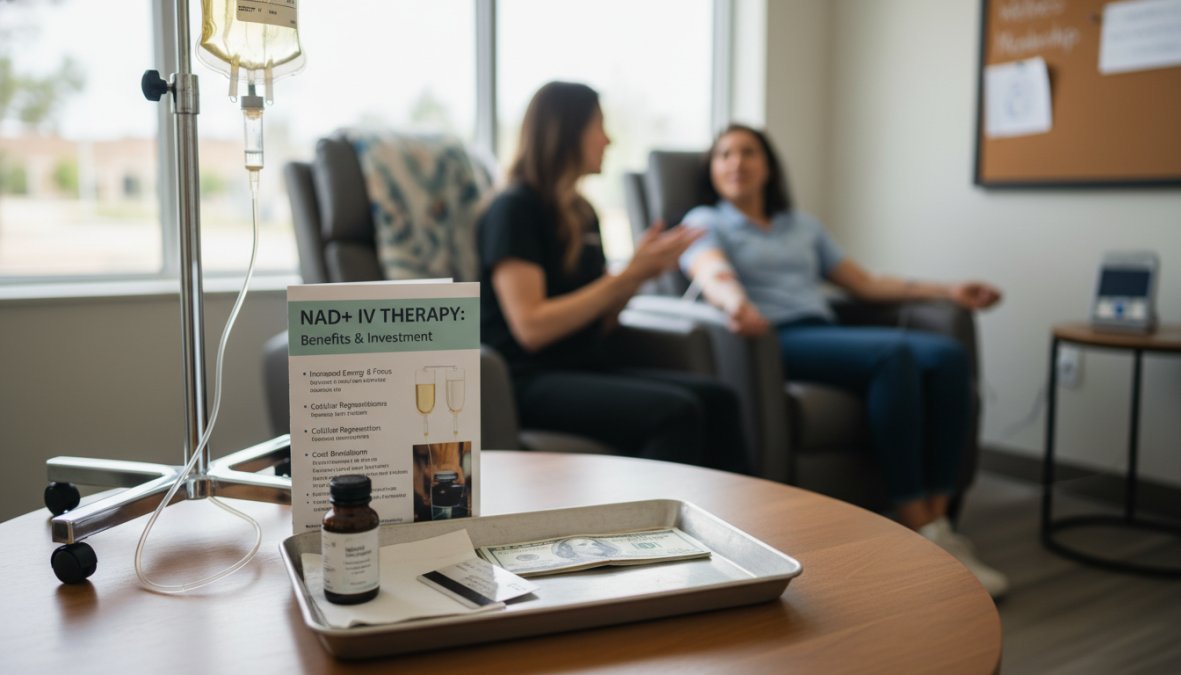
A person sitting comfortably in a reclining chair in a modern clinical wellness suite, receiving an IV infusion through a forearm line, looking relaxed and alert, soft warm lighting from a nearby window casting gentle shadows across the treatment room.

Energy Production, Mental Clarity, and Brain Fog Relief
Many patients report significant improvements in mental clarity and energy within 24 to 48 hours of their first infusion. Brain fog relief is consistently among the top outcomes cited in clinical wellness settings. The mechanism is straightforward: when neurons have adequate NAD+ to fuel mitochondrial activity, cognitive processing becomes more efficient.
This is where the placebo effect question legitimately arises. Any IV therapy administered in a clinical setting carries expectation bias. What separates NAD+ from pure placebo is the underlying biochemistry: the coenzyme directly participates in neuronal energy metabolism, so the reported cognitive benefits have a plausible mechanistic basis rather than relying solely on patient expectation.
Practitioners commonly use NAD+ infusions as part of protocols for chronic fatigue, burnout recovery, and post-COVID neurological symptoms. The energy production effects tend to be most pronounced in patients who begin with measurably depleted baseline NAD+ levels.
DNA Repair, Anti-Aging, and Cellular Rejuvenation
The anti-aging case for NAD+ centers on two mechanisms: sirtuin activation and PARP-mediated DNA repair. Sirtuins regulate gene expression in response to cellular stress, and they require NAD+ as a substrate. Higher NAD+ availability means more active sirtuin signaling, which translates to better cellular stress management and, theoretically, slower biological aging.
According to research published in the National Library of Medicine on NAD+ and aging, NAD+ depletion is a hallmark of cellular aging, and restoring NAD+ levels in animal models has produced measurable improvements in mitochondrial function and lifespan markers. Human data is still developing, but the mechanistic evidence is compelling enough that longevity researchers treat NAD+ as a serious intervention rather than a wellness trend.
Cellular rejuvenation through DNA repair is the less glamorous but arguably more important benefit. Every cell accumulates DNA damage daily from oxidative stress, UV exposure, and metabolic byproducts. PARP enzymes consume NAD+ to detect and repair these breaks. When NAD+ is scarce, repair efficiency drops, and cellular dysfunction accumulates over time.
Metabolic Health, Mitochondrial Function, and Longevity
Mitochondrial dysfunction underlies a surprisingly broad range of chronic conditions, from metabolic syndrome to neurodegenerative disease. NAD+ is the central cofactor in the electron transport chain, the mitochondrial process that generates ATP. Restoring NAD+ levels supports more efficient energy metabolism across tissues, which shows up clinically as improved exercise tolerance, better glucose regulation, and reduced fatigue.
The longevity connection is the area attracting the most serious scientific attention. Researchers studying metabolic health increasingly view NAD+ restoration as a foundational intervention rather than a supplementary one. This doesn’t mean a single infusion reverses aging, but a structured course of therapy, particularly combined with lifestyle factors like exercise and caloric moderation, may support meaningful improvements in metabolic vitality.
NAD+ IV Therapy Cost: Pricing Breakdown and What Drives It
NAD+ IV therapy cost is the practical question that stops most interested patients from booking. The pricing varies considerably, and understanding why helps you evaluate whether a specific clinic’s rates reflect genuine value or simply reflect their zip code.

Average Cost Per Session and Loading Dose Packages
Single NAD+ infusion sessions at wellness clinics generally range from several hundred dollars to over a thousand dollars per session, depending on the dosage, infusion duration, and geographic market. Loading dose packages, which typically involve multiple sessions over a compressed timeframe, are priced as bundles and usually offer a lower per-session cost than booking individual appointments.
A typical loading protocol runs three to five sessions over five to ten days. This front-loaded approach is designed to rapidly elevate NAD+ levels before transitioning to maintenance sessions scheduled monthly or quarterly. Clinics that offer only single-session pricing without package options may not be structuring treatment for optimal therapeutic effect.
| Session Type | Typical Duration | Relative Cost | Best For |
|---|---|---|---|
| Single maintenance session | 2-4 hours | Mid range | Established patients |
| Loading dose (3-5 sessions) | 2-4 hrs each | Lower per session | New patients, acute goals |
| High-dose single infusion | 4-8 hours | Higher | Addiction recovery protocols |
| Low-dose introductory session | 1-2 hours | Entry level | First-time patients |
Factors That Influence Pricing at a Wellness Clinic
Several variables explain why two clinics in the same city can charge dramatically different rates for what appears to be the same treatment.
- Dosage: NAD+ is dosed in milligrams, and higher doses require more raw material. A 250mg infusion costs meaningfully less than a 1,000mg infusion.
- Infusion rate: Slower infusion rates reduce side effects but require longer chair time and more staff oversight, which increases operational cost.
- Add-on compounds: Many clinics bundle NAD+ with adjunct IV components like amino acids, B vitamins, or glutathione. These additions affect pricing.
- Clinical oversight level: Physician-supervised infusions at medical practices cost more than nurse-administered sessions at standalone wellness centers.
- Market and location: Urban markets with high commercial rents pass those costs to patients.
Be cautious of clinics advertising NAD+ infusions at prices significantly below the market average. Unusually low pricing often signals reduced dosage, less qualified oversight, or compromised sterility standards in compounding. The infusion enters your bloodstream directly, so the quality of the compounding pharmacy and the clinical environment matters more here than with most wellness treatments.
Insurance, HSA, and FSA Eligibility: What Patients Should Know
Most private health insurance plans do not cover NAD+ IV therapy because the treatment is classified as elective wellness rather than medically necessary care under standard coverage frameworks. This is unlikely to change in the near term given the current FDA regulatory status of compounded NAD+.
The more useful question for most patients is HSA and FSA eligibility. Health Savings Accounts and Flexible Spending Accounts can be used for qualified medical expenses, and some patients successfully use these funds for NAD+ therapy when it is administered under physician supervision and prescribed for a specific medical condition. The key is documentation: a letter of medical necessity from a licensed physician significantly strengthens the case for HSA/FSA reimbursement.
Patients should verify HSA/FSA eligibility directly with their account administrator before treatment, as interpretations vary. As noted by IRS guidance on qualified medical expenses, treatments must be primarily for the diagnosis, cure, mitigation, treatment, or prevention of disease to qualify.
NAD+ Infusion vs Oral Supplements: Comparing Delivery Methods
The delivery method debate is where the marketing gets loudest and the nuance gets lost. Most comparisons stop at “IV has better bioavailability” without ever answering the question a cost-conscious patient actually needs answered: given what I’m spending, am I getting meaningfully more NAD+ where it matters, or am I paying a premium for marginal gains? This section provides the cost-per-milligram and efficacy-per-dollar framework that most clinic pages deliberately avoid.

Understanding Bioavailability: What the Numbers Actually Mean
Bioavailability describes the fraction of an administered dose that reaches systemic circulation in an active form. For IV infusion, bioavailability is effectively 100%, the NAD+ enters the bloodstream directly with no absorption barrier. This is the ceiling.
Oral NAD+ precursors, primarily nicotinamide riboside (NR) and nicotinamide mononucleotide (NMN), do not deliver NAD+ directly. They deliver molecules that the body must convert into NAD+ through enzymatic pathways. NMN is converted to NAD+ via the salvage pathway, primarily in the small intestine and liver. NR follows a slightly different route but arrives at the same destination. The conversion efficiency varies by individual, age, gut microbiome composition, and metabolic health, the very factors that tend to be compromised in patients who are most motivated to seek NAD+ therapy in the first place.
Research on oral NR and NMN has demonstrated that these precursors do raise blood NAD+ levels with consistent daily use. The elevation is real. The question is magnitude and speed relative to cost.
The Cost-Per-Milligram Framework: A Practical Analysis
This is the calculation most clinic websites avoid because it complicates their pricing narrative. Here is how to think about it honestly.
A single IV infusion session delivering 500mg of NAD+ directly into the bloodstream achieves near-complete cellular availability of that 500mg dose within the infusion window. The cost per milligram of delivered NAD+ is straightforward to calculate once you know the session price and dose.
Oral NMN or NR supplements are available at a fraction of the per-milligram cost of IV therapy. A 500mg daily oral dose costs considerably less per month than a single IV session. However, the effective dose, the amount that actually reaches target tissues as NAD+, is lower due to conversion inefficiency and first-pass metabolism. The precise conversion rate varies by individual and is not reliably measurable without testing, but the practical implication is that the apparent cost advantage of oral supplements narrows when you account for the dose required to achieve a comparable cellular effect.
Subcutaneous injections occupy a genuinely interesting middle position. They bypass the digestive system and achieve higher bioavailability than oral options, though not at the 100% ceiling of IV delivery. They are faster to administer, can be self-administered at home under physician guidance after proper training, and the per-milligram cost sits between oral supplements and IV infusion. For patients who have completed an IV loading protocol and want a cost-effective maintenance strategy, subcutaneous injections represent a clinically reasonable bridge.
| Delivery Method | Effective Bioavailability | Speed of Meaningful Effect | Relative Cost Per Effective mg | Best Use Case |
|---|---|---|---|---|
| IV infusion | ~100% | Hours to 1-2 days | Highest | Therapeutic loading, acute goals, addiction recovery |
| Subcutaneous injection | High (estimated 70-90%) | 1-3 days | Moderate | Maintenance between IV sessions, home protocol |
| Nasal spray | Moderate, variable | Variable | Low to moderate | Adjunct only; limited standalone data |
| Oral NMN / NR | Lower, individually variable | Weeks of consistent use | Lowest per mg listed; moderate per effective mg | Long-term daily maintenance, general wellness |
Bioavailability estimates for non-IV routes reflect current clinical understanding and individual variation; they are not fixed values.
The Conversion Efficiency Problem With Oral Precursors
The conversion efficiency issue deserves more attention than it typically receives. NMN and NR must be converted to NAD+ by specific enzymes, NAMPT (nicotinamide phosphoribosyltransferase) for NMN, and a separate set of enzymes for NR. NAMPT activity declines with age and is reduced in states of chronic inflammation and metabolic dysfunction. This creates a frustrating paradox: the patients most likely to benefit from NAD+ restoration are often the same patients whose conversion machinery is least efficient.
This is not an argument against oral precursors, it is an argument for understanding their limitations in specific populations. A healthy 35-year-old using NMN for performance optimization may convert precursors efficiently and achieve meaningful NAD+ elevation at low cost. A 60-year-old with metabolic syndrome using the same product may see a much smaller return on the same investment.
IV infusion sidesteps this problem entirely. The NAD+ does not need to be converted, it is already in its active form when it enters the bloodstream. This is the core clinical argument for IV delivery in therapeutic contexts, not simply the bioavailability percentage.
NAD+ Precursors, Subcutaneous Injections, and Nasal Sprays
Oral NAD+ precursors are the most accessible and affordable option for long-term maintenance and general wellness support. They are appropriate for patients who have completed an IV loading protocol and want to sustain elevated NAD+ levels between sessions, and for patients whose goals are gradual optimization rather than acute intervention. The key is consistency, intermittent oral supplementation is unlikely to produce meaningful results.
Subcutaneous NAD+ injections are an underutilized option that many patients and even some practitioners overlook. They require a physician prescription and proper injection training, but for motivated patients, they offer a practical home-based maintenance strategy. The needle gauge used for subcutaneous injection is typically fine enough that most patients report minimal discomfort, comparable to insulin injection.
Nasal spray formulations are an emerging delivery method with limited clinical outcome data. The nasal mucosa does offer a direct route to systemic circulation, and some practitioners include nasal NAD+ as an adjunct to IV protocols rather than a standalone approach. Until more robust clinical data exists, treating nasal spray as a primary delivery method is premature.
The Honest Recommendation: Sequencing, Not Competing
The framing of IV versus oral as competing options is a false choice that serves marketing narratives more than patient outcomes. The evidence-informed approach treats these methods as a sequenced protocol:
- IV loading phase to rapidly restore depleted NAD+ levels and establish a new cellular baseline
- Subcutaneous injections or high-dose oral precursors to maintain elevation between IV sessions
- Periodic IV maintenance sessions (monthly to quarterly) to reinforce the baseline established during loading
This sequenced approach also makes financial sense. Relying exclusively on IV infusions for long-term maintenance is the most expensive path. Relying exclusively on oral supplements for therapeutic goals in patients with significant depletion is the least effective path. The combination optimizes both cost and outcome.
If you are comparing delivery methods primarily on cost, reframe the question: instead of asking which method is cheapest per milligram listed on the label, ask which method delivers the most NAD+ to your cells per dollar spent given your specific age, health status, and goals. For most patients with therapeutic goals, the answer is an IV loading phase followed by oral or subcutaneous maintenance, not a permanent commitment to the most expensive delivery method available.
Not all oral NMN and NR supplements are equivalent. The supplement market is minimally regulated, and independent testing has found significant variation between labeled and actual doses in some products. If you are using oral precursors as part of a maintenance protocol, prioritize brands that provide third-party certificate of analysis (COA) documentation for each batch.
How Long Does NAD+ IV Therapy Take and What Should You Expect?
How long does NAD+ IV therapy take is one of the most common questions from first-time patients, and the answer surprises most people. A single NAD+ infusion takes significantly longer than a typical vitamin drip because the infusion rate must be carefully controlled.
Pre- and Post-Infusion Protocols for Best Results
Most NAD+ IV therapy sessions run between two and four hours for standard doses. High-dose sessions used in addiction recovery protocols can extend to six to eight hours. The extended duration is not inefficiency; it is clinical necessity. Administering NAD+ too quickly causes a characteristic cluster of side effects including nausea, chest tightness, and dizziness, which resolve immediately when the infusion rate is slowed.
Pre-infusion preparation matters more than most clinics communicate:
- Hydrate well for 24 hours before your session, as dehydration increases side effect risk
- Eat a light meal two to three hours before, avoiding heavy fats that may affect absorption
- Avoid alcohol for 48 hours prior, as alcohol accelerates NAD+ depletion
- Disclose all medications and supplements to your provider, particularly blood thinners
- Arrange transportation for your first session until you know your personal response
Post-infusion:
- Expect a period of heightened energy followed by fatigue in some patients during the first 24 hours
- Light activity is fine; intense exercise is best avoided on infusion days
- Continue hydrating and maintain protein intake to support the metabolic processes the infusion activates
- Track your response across sessions, as effects often compound with successive treatments
The patients who get the most from NAD+ infusion therapy are those who treat it as a structured protocol rather than a one-off treatment. Loading doses followed by scheduled maintenance sessions, combined with basic lifestyle support, consistently outperform sporadic single sessions.
NAD+ IV Therapy Side Effects, Risks, and FDA Status
This is the section most clinic marketing pages either skip or minimize. A clear-eyed look at the risk profile is essential for informed consent.
Common Side Effects: Nausea, Dizziness, and Infusion Rate Issues
The most common NAD+ IV therapy side effects are directly tied to infusion rate. Nausea, dizziness, chest tightness, headache, and a sensation of flushing or warmth are all well-documented responses that occur when NAD+ is administered faster than the body can process it. These are not allergic reactions; they are pharmacological responses to the rate of delivery.
A competent clinical team manages these by slowing the infusion rate at the first sign of discomfort. The symptoms typically resolve within minutes of rate adjustment. Patients who have experienced these effects and been told to simply tolerate them should consider that as a signal about the quality of clinical oversight they are receiving.
Serious adverse events from NAD+ infusions are rare when the therapy is administered in a proper clinical setting with pharmaceutical-grade compounded NAD+. The risks increase meaningfully with unregulated providers, improperly compounded solutions, or unsupervised self-administration.
Is NAD+ IV Therapy FDA-Approved? Understanding the Regulatory Landscape
NAD+ IV therapy is not FDA-approved as a drug treatment for any specific condition. This is a critical distinction that patients deserve to understand clearly. The FDA approves drugs for specific indications through a clinical trial process. NAD+ infusions are administered as compounded preparations under physician supervision, which places them in a different regulatory category.
According to FDA guidance on compounded drug products, compounded medications are not FDA-approved, but they are legal when prepared by licensed compounding pharmacies operating under state pharmacy board oversight and administered under a valid prescription. This means the therapy is legal and regulated, but it has not undergone the same efficacy and safety review process as an FDA-approved pharmaceutical.
Patients should ask any clinic providing NAD+ infusions where their NAD+ is sourced, whether the compounding pharmacy is accredited, and whether a physician reviews their case before treatment. These are reasonable questions and any reputable provider will answer them directly.
Evidence-Based Dosage Guidelines and How Many Sessions You Need
Dosage is where the gap between marketing and medicine is most apparent. Most clinics list prices by milligram without ever explaining why one patient needs 250mg and another needs 1,000mg. That omission is not accidental, it is easier to sell a standard package than to explain individualized clinical reasoning. This section fills that gap.
The Clinical Rationale Behind Common Dose Ranges
NAD+ dosing in clinical practice typically spans 250mg to 1,000mg per session. The number is not arbitrary, and it is not simply a function of how much you want to spend. Practitioners calibrate dose based on four primary variables:
1. Presenting condition and therapeutic goal
This is the most important variable. Patients pursuing general wellness, anti-aging support, or metabolic optimization typically start in the 250mg to 500mg range. The rationale is that their baseline NAD+ depletion, while real, is not severe, and moderate doses are sufficient to produce a meaningful cellular response without overwhelming the body’s ability to utilize the coenzyme efficiently.
Patients undergoing NAD+ therapy as part of addiction recovery or detoxification support, particularly for alcohol, opioids, or benzodiazepines, are commonly prescribed doses in the 750mg to 1,000mg range, sometimes higher, administered over consecutive days. The clinical reasoning here is different: acute withdrawal and substance-related neurological stress create a dramatically higher NAD+ deficit, and the goal is rapid neurochemical stabilization rather than gradual optimization. This is why high-dose addiction protocols run six to eight hours per session rather than two to four.
Patients with documented chronic fatigue, post-viral syndromes, or significant mitochondrial dysfunction often fall in the 500mg to 750mg range, higher than general wellness but not at the acute-intervention ceiling.
2. Body weight and metabolic rate
Like most intravenous therapies, NAD+ dosing has a weight-related component. A larger body mass means more cells requiring NAD+ support, and a higher metabolic rate means faster utilization. Practitioners who do not account for body composition in their dosing recommendations are applying a one-size-fits-all approach that may underserve larger patients or over-administer to smaller ones.
3. Tolerance and prior exposure
First-time patients are almost always started at the lower end of the therapeutic range, regardless of their stated goals. This is not conservatism for its own sake, it is practical pharmacology. The side effect profile of NAD+ infusions (nausea, chest tightness, flushing) is dose-rate dependent, and a patient’s first session establishes their individual tolerance baseline. Practitioners use that response data to titrate subsequent sessions upward. A patient who tolerates 250mg with minimal side effects at a standard infusion rate is a candidate for 500mg at their next session. A patient who experiences significant nausea at 250mg may need a slower infusion rate before any dose increase is considered.
4. Baseline NAD+ status
Some clinics now offer baseline NAD+ testing through blood or urine analysis before initiating therapy. While not yet a universal standard, baseline testing provides objective data to support dosing decisions. A patient with measurably depleted NAD+ levels has a stronger clinical case for higher initial doses than a patient whose levels are only modestly below optimal. If a clinic offers baseline testing, it is worth the additional cost, it converts dosing from educated guesswork into data-driven prescription.
Loading Protocols vs. Maintenance Sessions: The Sequencing Logic
The distinction between loading doses and maintenance sessions is not just a pricing structure, it reflects a specific physiological rationale.
Loading protocols, typically three to five sessions over five to ten days, are designed to rapidly saturate cellular NAD+ levels. Think of it as filling a depleted reservoir. The body cannot meaningfully utilize a single infusion to its full therapeutic potential if the underlying deficit is large. Front-loading creates a new baseline from which maintenance sessions can sustain elevation.
Maintenance sessions, scheduled monthly to quarterly after the loading phase, are designed to counteract the ongoing natural decline in NAD+ that resumes after the loading effect fades. The frequency of maintenance depends on individual response, some patients report sustained effects for eight to twelve weeks after a loading course, while others notice a return of fatigue or cognitive fog within four to six weeks, signaling a need for more frequent maintenance.
| Patient Profile | Suggested Starting Dose | Typical Loading Sessions | Maintenance Frequency |
|---|---|---|---|
| General wellness / anti-aging | 250-500mg | 3 sessions over 1-2 weeks | Every 4-8 weeks |
| Chronic fatigue / post-viral | 500-750mg | 4-5 sessions over 2 weeks | Every 4-6 weeks |
| Addiction recovery support | 750-1,000mg+ | 5-10 sessions over 10-14 days | As clinically directed |
| Athletic performance / recovery | 250-500mg | 2-3 sessions | Monthly or pre/post event |
Note: These ranges reflect common clinical patterns, not universal protocols. Individual prescribing should always be based on a physician’s assessment of your specific health history and goals.
What to Ask Before Accepting a Dosage Recommendation
A clinic that offers a single standard package without discussing your health history, goals, or any relevant lab work is not providing individualized care, it is selling a product. Before accepting any dosage recommendation, ask:
- Why this dose for my specific situation? A competent provider should be able to articulate the clinical reasoning, not just cite a standard package.
- Is baseline NAD+ testing available? If yes, consider it. If the clinic dismisses it as unnecessary, that is informative.
- How will you adjust dosing if I experience side effects? The answer should involve slowing the infusion rate, not simply pushing through.
- What outcomes are you using to evaluate whether the dose is working? Subjective symptom tracking is acceptable, but a provider who also monitors objective markers (energy levels, sleep quality, cognitive function on a structured scale) is offering a higher standard of care.
The most important cost-related insight in NAD+ therapy is this: a lower-dose session that is correctly calibrated to your actual deficit will outperform a higher-dose session that is poorly tolerated or improperly administered. Dose is not a proxy for quality. Clinical reasoning behind the dose is.
Frequently Asked Questions
What are the primary benefits of NAD+ IV therapy?
NAD+ IV therapy benefits commonly reported by patients and wellness clinics include improved energy production, reduced brain fog, enhanced mental clarity, support for DNA repair, and better mitochondrial function. Because the intravenous route delivers nicotinamide adenine dinucleotide directly into the bloodstream, bioavailability is significantly higher than oral supplements. While early clinical evidence is promising, large-scale randomized trials are still limited, so individual results can vary. Always consult a licensed provider before starting infusion therapy.
How much does NAD+ IV therapy typically cost per session?
NAD+ IV therapy cost generally ranges from roughly $200 to $1,000 or more per session depending on dosage, clinic location, and whether additional nutrients are included in the drip. A loading dose protocol, typically a series of sessions over several days, can run $1,500 to $3,000 or higher. Mobile or concierge infusion services may charge a premium. Prices vary widely between wellness clinics, so comparing package options and asking about bundled session discounts is advisable before committing.
Are there side effects associated with NAD+ IV drips?
NAD+ IV therapy side effects are usually mild and often related to infusion rate rather than the compound itself. The most commonly reported include nausea, dizziness, flushing, chest tightness, and headache. Slowing the infusion rate typically resolves these symptoms quickly. Serious adverse events are rare when therapy is administered in a proper clinical setting by trained staff. Patients with certain pre-existing conditions should discuss risks with their provider before beginning any intravenous infusion therapy.
How does NAD+ IV infusion compare to oral supplements or NAD+ precursors?
When comparing NAD+ infusion vs oral supplements, the key difference is bioavailability. Intravenous delivery bypasses the digestive system, allowing nearly complete absorption into the bloodstream. Oral NAD+ precursors like NMN or NR must survive digestion and conversion before reaching cells, which reduces their effective dose. Subcutaneous injections and nasal sprays fall between the two in absorption efficiency. IV therapy is generally more expensive and time-intensive, while oral supplements offer convenience and lower cost for maintenance between sessions.
How long does a NAD+ IV therapy session take, and how many sessions are needed?
A single NAD+ IV therapy session typically takes between two and four hours, depending on the dosage and how quickly your body tolerates the infusion rate. Higher doses require slower administration to minimize side effects like nausea or dizziness. Most wellness clinics recommend an initial loading dose of three to ten sessions over one to two weeks, followed by monthly maintenance infusions. How long does NAD+ IV therapy take to show results varies by individual, but many patients report noticeable improvements in energy and mental clarity within the first few sessions.
Is NAD+ IV therapy covered by insurance or eligible for HSA/FSA funds?
NAD+ IV therapy is generally not covered by traditional health insurance because it is classified as a wellness or elective treatment rather than a medically necessary procedure. However, some patients have successfully used Health Savings Account (HSA) or Flexible Spending Account (FSA) funds to pay for sessions, particularly when therapy is prescribed or recommended by a licensed physician for a documented condition. It is advisable to confirm eligibility with your HSA/FSA plan administrator and request a letter of medical necessity from your provider.