
Last Updated: September 25, 2026
How NAD Supplements and Resveratrol Work in Your Body
Comparing NAD supplements to resveratrol starts with one fact: they operate on completely different biological systems. NAD+ is a coenzyme your cells use to convert food into usable energy. Resveratrol is a polyphenol found in grape skins and red wine that influences how cells respond to stress.
NAD+ (nicotinamide adenine dinucleotide) is a coenzyme present in every living cell that drives energy production and supports DNA repair. Levels decline with age, which is why NAD+ precursors like NMN and NR have become popular. Resveratrol works differently, activating sirtuins, a family of proteins tied to longevity pathways and inflammation modulation.
NAD+ and Cellular Energy Production
NAD+ sits at the center of cellular metabolism. Without it, mitochondria cannot convert nutrients into ATP, the fuel your cells run on. Declining NAD+ is linked to fatigue, slower DNA repair, and reduced metabolic homeostasis.
Resveratrol and Sirtuin Activation
Resveratrol’s main mechanism is sirtuin activation. Sirtuins regulate oxidative stress response and cellular senescence. Resveratrol also has antioxidant properties, though its bioavailability is notoriously poor when taken alone.
Benefits of NAD+ Supplementation: Energy, DNA Repair, and More
The most consistent benefits of NAD+ supplementation reported in human trials involve energy, DNA repair, and metabolic health. Responses vary widely.
NAD+ precursors fall into two main categories:
- NMN (Nicotinamide Mononucleotide): Converts directly to NAD+ in cells
- NR (Nicotinamide Riboside): Enters the NAD+ biosynthesis pathway through a different route
Both raise NAD+ levels, but pharmacokinetics differ. NMN appears to absorb faster in some studies; NR has more published human trial data. Neither is clearly superior, which is why many people stack them with resveratrol for synergistic supplementation.
NIH Office of Dietary Supplements fact sheets publishes guidance on what supplement claims are and are not supported by clinical evidence.
Resveratrol’s Role in Longevity and Oxidative Stress
Resveratrol’s reputation rests on longevity pathways, but the honest answer is that human trials show modest effects, not miracles. It supports antioxidant defense and may improve endothelial function. The polyphenol’s real limitation is absorption. Overcoming these bioavailability hurdles requires integrating such compounds into broader longevity lifestyle steps that prioritize systemic metabolic health over isolated supplementation.
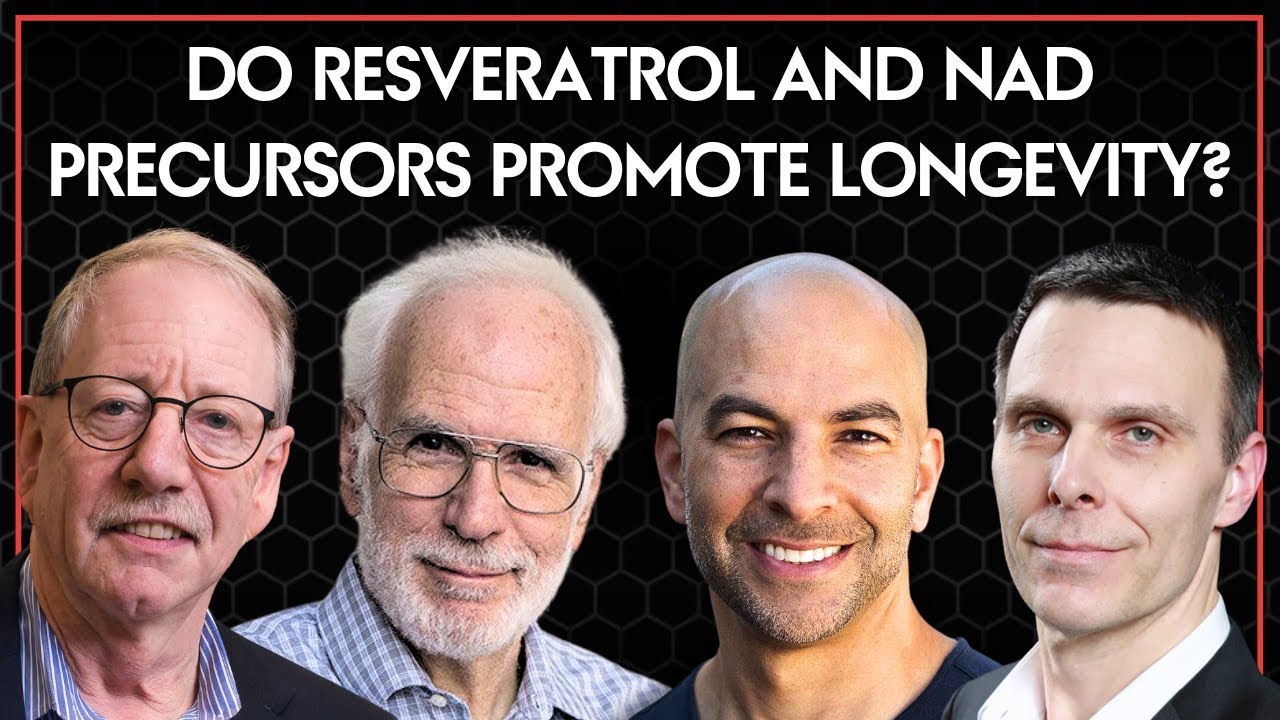
Do resveratrol and NAD precursors promote longevity?
Peter Attia MD
Taking resveratrol with certain blood-thinning medications can increase bleeding risk. If you take warfarin, aspirin, or similar drugs, talk to a clinician before adding resveratrol to your routine.
Synergistic Effects of NAD and Resveratrol: Better Together?
The synergistic effects of NAD and resveratrol come down to one dependency: sirtuins are NAD+-dependent enzymes. They cannot deacetylate target proteins without NAD+ available as a co-substrate. Resveratrol increases sirtuin activity, but if cellular NAD+ is depleted, which is the normal trajectory with age, that activation has a ceiling. This is the mechanistic case for stacking an NAD+ precursor with a sirtuin activator rather than taking either alone.
There is a second, less-discussed pathway. Resveratrol also activates AMPK, an energy-sensing kinase that raises fatty acid oxidation and glucose uptake, and AMPK activation indirectly increases NAD+ availability by shifting cellular metabolism toward catabolic pathways. So the interaction runs in both directions: NAD+ enables resveratrol’s sirtuin effects, and resveratrol’s AMPK effects can support NAD+ availability. That bidirectional loop is the actual rationale behind combination formulas, not marketing.
What the human evidence supports, and what it does not:
- Animal models: Rodent studies from multiple longevity-focused labs have shown combined NAD+ precursor and resveratrol administration improving insulin sensitivity, mitochondrial function, and exercise capacity more than either compound alone. These are consistent findings, but rodents are not people.
- Human trials: Human data on the combination is limited and mostly short-duration. Individual trials of NMN, NR, and resveratrol exist, but head-to-head combination trials in humans are scarce. Most practitioners therefore treat the stack as mechanistically reasonable, not clinically proven.
- What is well-supported: Each compound independently raises NAD+ (precursors) or modulates sirtuin and AMPK signaling (resveratrol) in humans at appropriate doses. The combination logic rests on that.
Timing and Dosing Interaction
A common pattern is taking the NAD+ precursor in the morning and resveratrol with a meal that contains fat, since resveratrol absorption improves with dietary lipids. Some suggest separating them by a few hours to avoid competing for the same absorption pathways, though this is based on pharmacokinetic reasoning rather than direct trial data. Others recommend taking them together for convenience. There is no consensus, and the difference is likely small.
One practical caution: resveratrol can inhibit certain cytochrome P450 enzymes, which means it may alter how your body clears other medications. That is a drug-interaction issue, but it matters if you take prescription drugs.
How to Tell If the Stack Is Actually Working
This is where most articles stop and where the real value is. Subjective ‘feeling better’ is unreliable. If you want to know whether the stack is doing anything, track measurable inputs:
- Baseline blood work before starting: fasting glucose, HbA1c, lipid panel, hs-CRP (inflammation), and a complete metabolic panel. These are standard labs any clinician can order.
- Optional deeper markers: NAD+ levels themselves can be measured through specialty labs, though availability and cost vary widely and results are not standardized across labs. GDF15 and certain epigenetic age tests are sometimes used in longevity-focused practices, but their interpretation is still evolving.
- Functional markers you can track at home: resting heart rate, heart rate variability if you wear a compatible device, sleep duration and quality, and morning energy on a consistent 1-10 scale.
- Re-test at 8-12 weeks: compare the same labs under similar conditions (fasted, same time of day). If nothing moved and you feel no different, the stack may not be earning its cost for you.
The synergy is real in mechanism and plausible in humans, but it is not a switch you flip. Decide based on tracked markers over 8-12 weeks, not on how you feel in week one.
Bioavailability and Absorption: Why Form Matters
Bioavailability decides whether any of this works. Standard resveratrol absorbs poorly. Trans-resveratrol and micronized forms improve absorption. For NAD+ precursors, enteric coatings and stabilized NMN help protect the compound through digestion.
Pterostilbene, a close chemical relative of resveratrol found in blueberries, has better oral bioavailability. Some researchers consider it the more practical choice for sirtuin activation. It is not a drop-in replacement, but it is worth knowing about if resveratrol has not delivered results.
Dosage, Safety, and What to Avoid Mixing with Resveratrol
Typical research doses range from 250 to 500 mg for resveratrol and 250 to 500 mg for NMN or NR daily. Start at the lower end. More is not better with these compounds, and dosage optimization should be guided by a clinician familiar with your medications.
What to avoid mixing with resveratrol:
- Blood thinners (warfarin, aspirin, clopidogrel)
- Blood pressure medications
- Certain chemotherapy drugs
- High-dose vitamin K supplements
NAD+ precursors are generally well tolerated. Reported side effects include mild nausea and flushing. Anyone with a thyroid condition, active cancer, or on immunosuppressants should consult a physician first.
FDA Regulation of Dietary Supplements: What You Need to Know
FDA regulation of dietary supplements is lighter than most people assume. Under the Dietary Supplement Health and Education Act, supplements are regulated as food, not drugs. They do not need FDA approval before sale.
That means two things for buyers. First, no one verifies the label matches the contents before a product hits shelves. Second, third-party testing matters enormously. Look for brands using independent labs and publishing certificates of analysis.
The FDA does take action against products making illegal disease claims, but enforcement is reactive, not proactive.
Cost-Benefit Analysis: Are NAD Supplements or Resveratrol Worth It?
Most articles on this topic compare efficacy and skip the money. That is a mistake, because the honest answer to ‘is the stack worth it’ depends heavily on what you are already spending and what you expect to get back.
What a Real Monthly Stack Costs
Pricing varies enormously by brand, dose, and form, so treat these as ranges rather than quotes:
- NAD+ precursor (NMN or NR): commonly $30-$80 per month at 250-500 mg daily, with premium or third-party-tested brands at the top of that range.
- Resveratrol (trans-resveratrol or micronized): commonly $15-$40 per month at 250-500 mg daily.
- Pterostilbene (if used instead of resveratrol): commonly $25-$60 per month, reflecting higher bioavailability per milligram.
- Combined ‘longevity’ formulas: often $60-$150 per month, and the per-milligram cost of actives is frequently worse than buying separately, convenience is what you are paying for.
A realistic all-in range for a well-sourced stack varies. This is the number to weigh against whatever benefit you actually observe.
The Cost-Benefit Framework
Ask three questions in order:
- What is your primary goal? If it is energy and focus, an NAD+ precursor alone is the cleaner, cheaper bet, resveratrol adds cost without a strong energy signal in human data. If it is cardiovascular and antioxidant support, resveratrol alone may be sufficient. If it is longevity-pathway support broadly, the stack is the only version with a mechanistic rationale for combining.
- What does your baseline blood work show? If fasting glucose, lipids, and hs-CRP are already optimal, the marginal benefit of adding compounds is smaller and harder to detect. If markers are off, the stack is more likely to show measurable movement, and you have a clear way to judge whether it is working.
- What is your opportunity cost? The same money spent on a structured exercise program, sleep intervention, or dietary change will often produce larger and better-documented effects on the same markers. Supplements are one lever, not the largest.
Lifestyle Interactions That Change the Math
This is where the cost-benefit picture gets more interesting, and where most articles say nothing:
- Fasting and caloric restriction: Both raise NAD+ availability and activate AMPK and sirtuins through the same pathways these supplements target. If you already fast regularly, the incremental benefit of an NAD+ precursor may be smaller, and the same money might be better spent on a higher-quality resveratrol or pterostilbene.
- Ketogenic and low-carb diets: Also activate AMPK and can raise NAD+ availability. Same logic applies.
- Alcohol: Resveratrol’s association with red wine is misleading. The amount of resveratrol in a glass of wine is far below research doses, and alcohol itself works against several of the pathways you are trying to support. Do not count wine as a resveratrol source.
- Exercise: Both NAD+ precursors and resveratrol have been studied alongside exercise, and the combination of supplement plus training consistently outperforms supplement alone in animal models. If you are not training, you are paying for half the effect.
When the Stack Is Not Worth It
Be honest about these cases:
- You have no baseline labs and no plan to track anything. You will not know if it worked, so you cannot judge value.
- You are already fasting, training hard, sleeping well, and eating a whole-foods diet. Your marginal return is small.
- You are on multiple prescription medications without clinician review. The interaction risk outweighs the speculative benefit.
- You are buying the cheapest product on a marketplace with no third-party testing. You may be paying for filler.
| Option | Best For | Monthly Cost Range | Trade-Off |
|---|---|---|---|
| NAD+ precursor only | Energy, focus, DNA repair support | $30-$80 | No sirtuin activation |
| Resveratrol only | Cardiovascular, antioxidant support | $15-$40 | Poor absorption alone |
| Pterostilbene only | Sirtuin support with better absorption | $25-$60 | Less human trial data than resveratrol |
| Combined stack | Longevity pathways, convenience | $60-$150 | Higher cost, more variables to isolate |
For anyone managing metabolic health, hormonal imbalance, or weight concerns, a supplement stack is a small piece of a larger picture. That is where Ascend Vitality fits. We connect you with licensed clinicians who review your history, medications, and goals before recommending anything, including NAD+ treatments and medically-supported programs. Everything ships discreetly to your door.
Track two things for 60 days before judging results: resting heart rate and morning energy on a 1-10 scale. Subjective “feeling better” is unreliable. Numbers are not.
FDA dietary supplements consumer information explains labeling rules and how to report adverse events.
Frequently Asked Questions
Can you take NAD+ and resveratrol together?
Yes, many people combine them. NAD+ precursors like NMN or NR fuel cellular energy, while resveratrol activates sirtuins that rely on NAD+. This synergistic pairing is common in longevity stacks. However, resveratrol can affect how your body processes certain medications, so check with your doctor before starting, especially if you take blood thinners or have hormone-sensitive conditions.
Does resveratrol raise estrogen levels?
Resveratrol has weak estrogen-like activity in some lab studies, but human evidence is mixed. It may interact with estrogen-sensitive conditions like breast cancer. If you have a history of hormone-sensitive cancer or take hormonal therapy, talk to your healthcare provider before using resveratrol. NAD supplements do not have this concern.
What is the downside of taking NAD+?
NAD+ supplements are generally well tolerated, but some people report nausea, fatigue, or headaches, especially at high doses. There is also limited long-term safety data in humans. Additionally, NAD+ levels naturally decline with age, and supplementing may not reverse all age-related changes. Always start with a lower dose and consult a professional.
Is it better to take NAD+ or resveratrol for longevity?
It depends on your goals. NAD+ precursors directly support cellular energy and DNA repair, which decline with age. Resveratrol mimics caloric restriction and activates sirtuins, but its bioavailability is poor. Many experts suggest combining them for a synergistic effect, but human trials are still limited. Focus on lifestyle first, then consider supplements as an add-on.
Most people chasing longevity compounds are guessing at doses and hoping for the best. That approach wastes money and can interact badly with medications you already take. Ascend Vitality connects you with qualified clinicians who review your full picture, offer medically-supported weight loss and hormone programs, and deliver prescriptions directly to you with discreet packaging. Get started with Ascend Vitality and build a plan grounded in your actual health data, not internet hype.