Last Updated: May 29, 2026
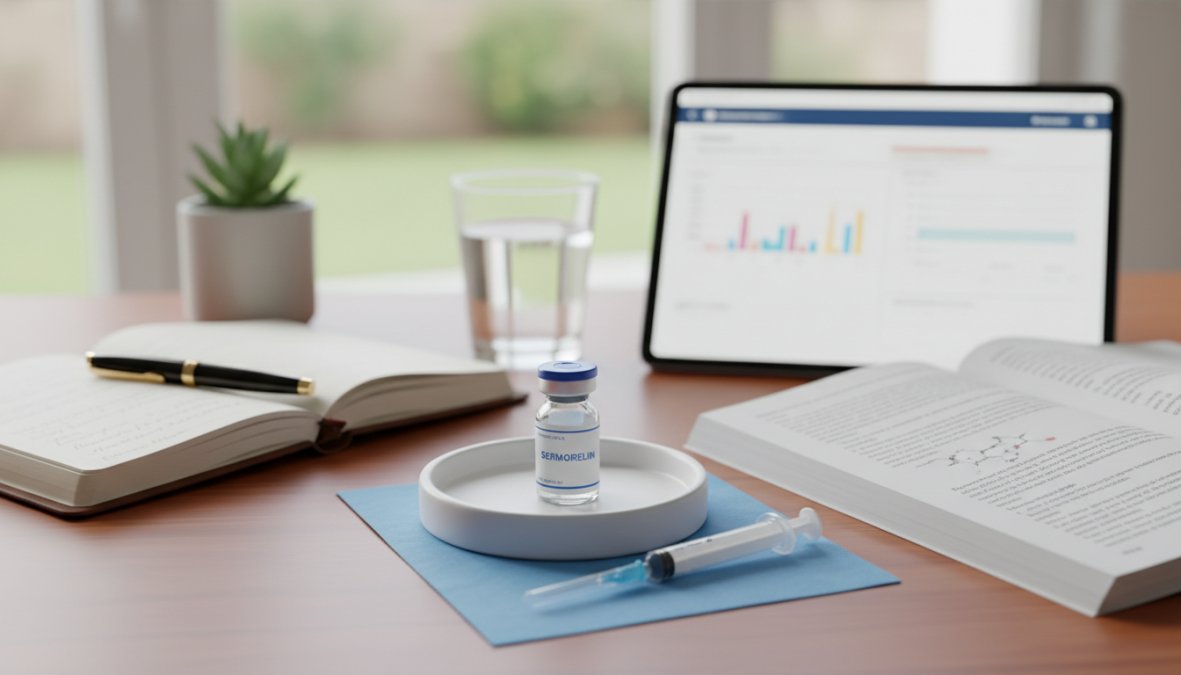
Sermorelin is a synthetic peptide that has quietly become one of the more clinically interesting tools in hormone replacement therapy, and understanding what is sermorelin used for is the first step toward knowing whether it belongs in your treatment plan. At Ascend Vitality, we work with patients navigating exactly this question every day. Sermorelin is used primarily to stimulate the pituitary gland to produce and release human growth hormone (hGH), making it a fundamentally different approach than injecting synthetic hGH directly. Below, we’ll cover the full clinical picture: how it works, who it’s approved for, what the evidence says about off-label use, and the lab testing protocols most guides skip entirely.
Here’s what most articles get wrong: they treat sermorelin as a simple anti-aging supplement. It isn’t. It’s a prescription-only clinical intervention that operates through your endocrine system, not around it.

What Is Sermorelin and What Is It Used For?
Sermorelin is a synthetic analog of growth hormone-releasing hormone (GHRH), specifically the first 29 amino acids of endogenous GHRH. It signals the pituitary gland to produce and secrete hGH naturally, rather than introducing exogenous hormone directly into the bloodstream. This distinction matters clinically: sermorelin preserves the body’s own feedback mechanisms, which synthetic hGH bypasses entirely.
Sermorelin is used for two primary purposes: treating diagnosed hGH deficiency in children and adolescents (its FDA-approved indication), and off-label use in adults seeking to address age-related decline in growth hormone output, improve body composition, support workout recovery, and pursue anti-aging or regenerative medicine goals.
The compound was originally marketed under the brand name Geref. While that specific branded formulation is no longer commercially available in the U.S., sermorelin continues to be prescribed as a compounded medication through licensed pharmacies under physician supervision.
How Sermorelin Works in the Endocrine System
The pituitary gland contains specialized cells called somatotrophs, which are responsible for synthesizing and releasing hGH. As the body ages, natural GHRH signaling weakens, and somatotroph activity declines. This is the mechanism behind age-associated reductions in muscle mass, slower metabolism, increased fat accumulation, and diminished workout recovery capacity.
Sermorelin binds to GHRH receptors on somatotrophs, triggering a pulse of hGH release. That hGH then stimulates the liver to produce insulin-like growth factor 1 (IGF-1), which is the downstream mediator of most growth hormone’s anabolic and metabolic effects. Because sermorelin works through a pulse mechanism, it mimics the body’s natural rhythm more closely than recombinant human growth hormone (rhGH) injections, which flood the system with a fixed dose regardless of physiological need.
The practical implication: the risk of suppressing the hypothalamic-pituitary axis is lower with sermorelin than with direct hGH administration.
FDA Approval Status and Prescription Access
Sermorelin holds FDA approval specifically for the treatment of idiopathic growth hormone deficiency in children. It is not FDA-approved for adult anti-aging or body composition applications. Any adult use is therefore classified as off-label, which is legal and common in clinical medicine but requires explicit physician oversight.
Because the branded Geref product was discontinued, most sermorelin today is dispensed as a compounded medication. Compounded sermorelin is not FDA-approved as a finished drug product, though it is prepared by licensed compounding pharmacies under state pharmacy board oversight. Patients should verify that their pharmacy holds appropriate accreditation. According to FDA guidance on compounded drug products, compounded medications fall outside the standard drug approval pathway but are permissible under specific regulatory conditions.
Purchasing sermorelin from any source that does not require a valid prescription is illegal and carries significant safety risks. Unregulated peptide products sold online may contain incorrect concentrations, contaminants, or no active compound at all.
Medical Uses and Off-Label Applications of Sermorelin
The clinical landscape for sermorelin spans two distinct populations, and conflating them leads to confusion about both the evidence base and the risk profile.
Idiopathic Growth Hormone Deficiency in Children
Idiopathic growth hormone deficiency (idiopathic GHD) is the condition for which sermorelin received FDA approval. Children with this diagnosis produce insufficient hGH without an identifiable structural or organic cause. The result is growth failure: significantly below-average height velocity, delayed bone maturation, and in some cases metabolic complications.
Sermorelin therapy in this population is well-characterized. Treatment involves subcutaneous injection, typically administered at bedtime to align with the body’s natural nocturnal hGH pulse. Response is monitored through IGF-1 levels, growth velocity measurements, and bone age assessments. The goal is normalized growth trajectory before epiphyseal plate closure.
What most guides miss: sermorelin’s effectiveness in children depends heavily on residual pituitary function. Children with organic GHD (caused by pituitary tumors, cranial radiation, or structural abnormalities) respond less predictably to GHRH analogs and are more often candidates for direct rhGH therapy instead.
Adult Off-Label Use: Anti-Aging and Regenerative Medicine
The majority of sermorelin prescriptions written today target adults, not children. This is off-label use, and the evidence base is thinner than proponents sometimes suggest. That said, the biological rationale is sound: growth hormone secretion declines measurably with age, a process sometimes referred to as somatic senescence, and the downstream effects on body composition, metabolism, and recovery are clinically observable.
Physicians working in regenerative medicine and hormone replacement therapy (HRT) prescribe sermorelin to adults experiencing symptoms consistent with low hGH output: increased visceral fat, reduced lean muscle mass, poor workout recovery, low energy, and disrupted sleep. The treatment is not a cure for aging, but it can be a meaningful clinical intervention when properly indicated and monitored.
Adult patients should request both a baseline IGF-1 level and a morning cortisol before starting sermorelin. These two markers establish whether the pituitary-adrenal axis is functioning adequately and help identify contraindications before therapy begins.
Key Benefits of Sermorelin Therapy
The benefits attributed to sermorelin therapy fall into categories that map directly onto what hGH and IGF-1 do physiologically. Patients and physicians typically report the following outcomes when therapy is properly dosed and monitored:

- Improved body composition: Increased lean muscle mass and reduction in visceral fat, driven by IGF-1’s anabolic signaling and hGH’s lipolytic effects on adipose tissue.
- Enhanced workout recovery: Faster muscle repair after resistance training, with patients often noting reduced soreness and improved training frequency.
- Better sleep quality: hGH is secreted predominantly during slow-wave sleep, and sermorelin’s ability to amplify nocturnal pulses often correlates with improved sleep architecture.
- Metabolic support: Improved fat loss and energy metabolism, particularly relevant for patients with insulin resistance or metabolic syndrome.
- Bone density maintenance: IGF-1 plays a role in osteoblast activity; long-term therapy may support bone mineral density, though this benefit requires extended treatment duration.
- Anti-aging effects: Skin elasticity, cognitive clarity, and general vitality are frequently reported improvements, though these are harder to quantify in clinical settings.
A critical qualifier: these benefits develop gradually. Sermorelin is not a fast-acting compound. Most patients need three to six months before meaningful changes in body composition are measurable.
Sermorelin Side Effects and Safety Considerations
Sermorelin side effects are generally mild compared to direct hGH administration, which is one reason many physicians prefer it as a first-line option. But understanding why specific side effects occur, and which patient profiles face elevated risk, is what separates informed clinical decision-making from a simple risk checklist.

Common Adverse Reactions and Their Mechanisms
Most side effects from sermorelin are downstream consequences of the hGH pulse it triggers, not direct effects of the peptide itself. Understanding this distinction helps patients and clinicians anticipate which symptoms are transient and which warrant dose adjustment.
- Injection site reactions: Redness, swelling, or mild pain at the subcutaneous injection site. These are typically transient and diminish with consistent technique and site rotation. The reaction is a local inflammatory response to the peptide vehicle, not the sermorelin molecule itself, and is rarely a reason to discontinue therapy.
- Flushing and headache: Particularly in the first two to four weeks of therapy. The mechanism is vasodilation triggered by the initial hGH pulse. As the pituitary adapts to regular GHRH stimulation, this response typically attenuates. Patients who experience persistent headaches beyond the first month should have their IGF-1 checked, supraphysiologic levels are the most common correctable cause.
- Nausea: Reported by a subset of patients, usually early in treatment and most often linked to injection timing. Administering sermorelin on an empty stomach or immediately before sleep, rather than after a large meal, reduces this in most cases.
- Dizziness or lightheadedness: Often associated with incorrect injection timing, suboptimal hydration, or, in patients on antihypertensive medications, an additive vasodilatory effect. This is worth flagging to the prescribing physician rather than self-managing.
- Water retention: Mild fluid retention is possible, especially at higher doses or during the initial weeks of therapy. hGH has a direct effect on renal sodium reabsorption, which is the physiologic mechanism. This is dose-dependent: reducing the sermorelin dose typically resolves it without requiring diuretic intervention.
- Carpal tunnel-like symptoms: Less commonly reported, but worth noting. Fluid retention in confined anatomical spaces can compress the median nerve, producing tingling or numbness in the hands. This is more commonly associated with direct rhGH therapy at supraphysiologic doses but can occur with sermorelin if IGF-1 climbs too high.
Contraindications: Who Should Not Use Sermorelin
This is where most side-effect summaries fall short. The contraindication logic for sermorelin is not arbitrary, each restriction maps to a specific physiologic risk.
Active malignancy: Growth hormone and IGF-1 are mitogenic signals. They stimulate cell proliferation through IGF-1 receptor pathways, which are overexpressed in many tumor types. Sermorelin is absolutely contraindicated in patients with active cancer. This is not a precautionary hedge, it is a mechanistic concern grounded in oncology literature. Patients in remission require individualized risk-benefit assessment with their oncologist before any GHRH analog is considered.
Untreated hypothyroidism: Thyroid hormone is required for normal pituitary responsiveness to GHRH. Patients with undiagnosed or undertreated hypothyroidism may show blunted IGF-1 response to sermorelin and are at higher risk for adverse metabolic effects. A thyroid panel (TSH, free T3, free T4) is not optional before initiating therapy, it is a clinical prerequisite.
Poorly controlled type 2 diabetes or insulin resistance: hGH is a counter-regulatory hormone. It reduces peripheral insulin sensitivity, which is the opposite of what a patient with poorly controlled blood glucose needs. Patients with diabetes are not automatically excluded from sermorelin therapy, but they require tighter glucose monitoring and should have HbA1c below a clinically acceptable threshold before starting. Fasting insulin and fasting glucose at baseline are essential, not optional.
Pregnancy: Sermorelin has not been studied in pregnant populations, and the effects of amplified hGH signaling on fetal development are unknown. It is contraindicated in pregnancy and should be discontinued in women who become pregnant during therapy.
Pituitary tumors or structural pituitary abnormalities: Because sermorelin acts directly on pituitary somatotrophs, any structural abnormality affecting the pituitary, including adenomas, changes the risk calculus significantly. An MRI of the pituitary is not required for every adult patient, but it is warranted in patients with symptoms suggesting pituitary pathology (visual field changes, persistent headache, galactorrhea) before therapy begins.
Dose-Dependency and the IGF-1 Safety Ceiling
One of the most clinically important safety concepts in sermorelin therapy is that more is not better, and the evidence for this is not subtle. Epidemiological data consistently associates chronically elevated IGF-1 levels with increased risk of certain cancers, particularly colorectal, breast, and prostate. The goal of sermorelin therapy is not to maximize IGF-1; it is to restore IGF-1 to the upper-normal range for the patient’s age.
Most practitioners use the age-adjusted IGF-1 reference range published by the testing laboratory and target the upper third of that range, not above it. Patients who push for higher doses in pursuit of faster results are accepting a risk profile that is not supported by the clinical evidence base.
If your IGF-1 level rises above the upper limit of the age-adjusted reference range during sermorelin therapy, that is a signal to reduce dose, not to continue and monitor. Supraphysiologic IGF-1 is not a treatment goal; it is an adverse finding that requires dose correction.
Athletic Use and Anti-Doping Regulations
The World Anti-Doping Agency (WADA) classifies sermorelin on its prohibited list under the category of peptide hormones, growth factors, and related substances. According to WADA’s prohibited list for peptide hormones, any substance that stimulates endogenous hGH production is banned in competition regardless of its prescription status or the clinical legitimacy of the underlying diagnosis.
This has a practical implication that most guides omit: a therapeutic use exemption (TUE) for sermorelin is extremely difficult to obtain in competitive sport, because the banned-substance framework does not distinguish between medical necessity and performance enhancement at the regulatory level. Competitive athletes, even those with a legitimate clinical diagnosis of hGH deficiency, should consult with their sport’s governing body and a sports medicine physician before initiating any GHRH analog therapy.
Patients who are recreational athletes but not subject to WADA jurisdiction (the majority of adult patients) are not affected by anti-doping rules. The WADA prohibition applies specifically to athletes competing under organizations that have adopted the WADA code.
Sermorelin vs HGH: Which Is Right for You?
The comparison between sermorelin and recombinant human growth hormone (rhGH) is where clinical decision-making gets genuinely interesting, and where most comparison guides stop just short of being useful. A table of mechanism differences does not tell a patient which therapy fits their situation. What follows is the clinical decision logic that practitioners actually use, including the transition scenarios that no competitor currently addresses.
The Fundamental Mechanistic Difference
Direct rhGH therapy delivers exogenous growth hormone in a fixed dose, bypassing the pituitary entirely. This is effective but comes with trade-offs: supraphysiologic hGH levels can suppress the pituitary’s own production over time through negative feedback on the hypothalamus, and the risk of adverse reactions scales with dose. Sermorelin, by contrast, works through the pituitary, preserving feedback regulation and producing a more physiologic hGH pulse pattern.
This is not a minor distinction. The hypothalamic-pituitary-somatotroph axis has evolved to release hGH in discrete pulses, primarily during slow-wave sleep, rather than as a sustained elevation. Sermorelin respects that architecture. rhGH does not. The clinical consequence is that patients on long-term rhGH therapy can develop blunted endogenous hGH production, meaning the therapy becomes self-perpetuating in a way that sermorelin does not.
| Factor | Sermorelin | Recombinant hGH (rhGH) |
|---|---|---|
| Mechanism | Stimulates pituitary to produce hGH | Delivers exogenous hGH directly |
| Pituitary axis | Preserved | Suppressed with long-term use |
| FDA approval | Children with idiopathic GHD | Multiple approved indications |
| Onset of effects | Slower (3-6 months) | Faster (weeks) |
| Cost | Generally lower | Higher |
| Compounded availability | Yes | Limited |
| WADA prohibited | Yes | Yes |
| Pituitary reserve required | Yes, therapy depends on functional somatotrophs | No, bypasses pituitary entirely |
| Risk of supraphysiologic hGH | Lower, self-regulated by feedback | Higher, dose-dependent |
The Clinical Decision Framework: Which Patients Belong in Which Category
The table above describes mechanisms. What it cannot tell you is which therapy is appropriate for a specific patient. Here is the decision logic most practitioners apply:
Sermorelin is typically the better starting point when:
- The patient has mild-to-moderate, age-related decline in hGH output rather than a confirmed pituitary pathology
- IGF-1 is below the mid-range for age but not severely deficient (generally, IGF-1 below age-adjusted normal but not below 100 ng/mL)
- The patient has adequate pituitary reserve, meaning the pituitary can still respond to GHRH stimulation (confirmed or inferred from clinical presentation and lab trajectory)
- The clinical goals are body composition improvement, recovery, and metabolic support rather than urgent correction of severe deficiency
- The patient prefers a more conservative, physiologically-aligned approach with a lower risk profile
- Cost is a meaningful consideration, compounded sermorelin is generally less expensive than branded rhGH products
Recombinant hGH is typically the more appropriate choice when:
- The patient has a confirmed, severe hGH deficiency with IGF-1 significantly below the lower limit of the age-adjusted reference range
- The deficiency has an identifiable organic cause: pituitary tumor, cranial radiation history, traumatic brain injury, or surgical pituitary damage, all of which reduce or eliminate functional somatotroph reserve
- The patient has already completed an adequate trial of sermorelin (minimum six months at appropriate dosing) without meaningful IGF-1 response
- The clinical urgency is high, for example, a patient with significant muscle wasting, severe osteoporosis, or metabolic complications that require faster correction than sermorelin’s three-to-six-month timeline allows
- The patient has a condition with an FDA-approved rhGH indication, such as adult-onset GHD secondary to pituitary disease, short bowel syndrome, or HIV-associated wasting
The single most useful pre-therapy test for distinguishing sermorelin candidates from rhGH candidates is not a baseline IGF-1 alone, it is a GHRH stimulation test or arginine stimulation test, which directly assesses pituitary reserve. Patients whose pituitary cannot mount an adequate hGH response to stimulation are unlikely to respond to sermorelin and should be evaluated for direct rhGH therapy instead.
The Combination Approach: Peptide Stacking
A third option that competitors rarely address is the use of sermorelin in combination with a growth hormone-releasing peptide (GHRP), most commonly ipamorelin or GHRP-2. These peptides work through a different receptor pathway, the ghrelin receptor, and produce a synergistic hGH pulse when combined with a GHRH analog like sermorelin.
The clinical rationale: GHRH (sermorelin) amplifies the magnitude of the hGH pulse, while GHRPs increase the frequency of pulsatile release and suppress somatostatin (the hormone that inhibits hGH release). Together, they produce a more robust hGH response than either agent alone, without the supraphysiologic risk of direct rhGH injection.
This combination is commonly used in patients who show a partial but insufficient response to sermorelin monotherapy after three to six months. It is also used as an alternative to transitioning to rhGH in patients who want to preserve pituitary-axis integrity. The trade-off is increased complexity: two peptides require two injection protocols, and the monitoring requirements are the same as for sermorelin alone.
Transitioning From Sermorelin to Other Therapies
This is the patient-journey question that almost no published guide addresses, and it is one of the most practically important decisions in hormone optimization.
When to consider transitioning away from sermorelin:
- Non-response after six months: If IGF-1 has not risen meaningfully after six months of consistent, correctly-dosed sermorelin therapy, the most likely explanation is insufficient pituitary reserve. The appropriate next step is a formal pituitary stimulation test, not a dose increase. If stimulation testing confirms inadequate somatotroph function, rhGH is the logical transition.
- Goal achievement and maintenance: Patients who reach their target IGF-1 range and clinical goals may elect to taper sermorelin and maintain results through lifestyle factors, resistance training, sleep optimization, and nutritional support for endogenous hGH production. This is a legitimate endpoint, not a failure. IGF-1 should be rechecked four to six weeks after stopping to establish the new baseline.
- Plateau after initial response: Some patients respond well in the first three to six months and then plateau. This can reflect receptor desensitization, which is why some protocols use five-days-on, two-days-off cycling rather than daily dosing. Before transitioning to a different therapy, a dosing-protocol adjustment and a recheck at three months is the appropriate first step.
- Transition to peptide combination: Patients who want to maintain pituitary-axis integrity but need a stronger response than sermorelin monotherapy provides are candidates for adding ipamorelin or transitioning to a CJC-1295/ipamorelin combination. CJC-1295 is a longer-acting GHRH analog with a modified structure that extends its half-life significantly compared to sermorelin, reducing injection frequency while maintaining GHRH receptor stimulation.
What transitioning does NOT look like:
Abrupt discontinuation of sermorelin does not cause a withdrawal syndrome in the way that stopping exogenous rhGH can. Because the pituitary axis remains intact throughout sermorelin therapy, the body retains its capacity to produce hGH endogenously. IGF-1 levels will decline over the weeks following cessation, but the decline is gradual and does not produce the acute symptoms associated with stopping direct hormone replacement.
Patients who have been on long-term rhGH therapy and want to transition to sermorelin face a different challenge: the pituitary may have reduced responsiveness after prolonged suppression by exogenous hGH. A washout period and stimulation testing are advisable before assuming sermorelin will produce an adequate response in this population.
The practical answer for most adults exploring this decision: sermorelin is the appropriate starting point if pituitary function is intact, clinical goals are moderate, and the patient is willing to commit to a six-month minimum evaluation period. rhGH becomes the right answer when pituitary reserve is confirmed to be inadequate, clinical urgency is high, or sermorelin has been given a fair trial without sufficient response. The transition between them is not a failure, it is the expected progression of a well-managed clinical protocol.
How Long Does Sermorelin Take to Work? Timeline and Lab Testing
Most patients want a direct answer to how long sermorelin takes to work: expect three to six months for meaningful, measurable changes in body composition and IGF-1 levels. This is slower than direct hGH therapy, and setting accurate expectations upfront prevents premature discontinuation.
The timeline typically breaks down as follows:
- Weeks 1-4: Improved sleep quality is often the first reported change. Some patients notice subtle energy improvements.
- Months 1-3: IGF-1 levels begin rising, which is detectable on lab work. Subjective improvements in recovery and mood are common.
- Months 3-6: Measurable changes in lean muscle mass and fat distribution become apparent. Body weight may not change significantly, but body composition shifts.
- Months 6+: Cumulative benefits in bone density, skin quality, and metabolic markers become more pronounced with continued therapy.
Specific Lab Testing Protocols to Track Progress
A common mistake in sermorelin therapy is treating it as a “set it and forget it” prescription. It isn’t. Systematic lab monitoring is what separates a well-managed clinical intervention from a shot in the dark.
The standard monitoring protocol includes:
- Baseline: IGF-1, fasting insulin, fasting glucose, lipid panel, CBC, comprehensive metabolic panel, morning cortisol, thyroid panel (TSH, free T3, free T4). For men, add total and free testosterone. For women, add estradiol and progesterone.
- At 6-8 weeks: IGF-1 recheck to assess initial pituitary response. Dose adjustments are made here if IGF-1 has not moved.
- At 3 months: Full repeat of baseline labs. This is the first meaningful checkpoint for body composition correlation.
- Every 6 months thereafter: Ongoing monitoring to keep IGF-1 within the physiologic range for the patient’s age, typically the upper third of the age-adjusted reference range.
The target is not the highest possible IGF-1. Supraphysiologic IGF-1 has been associated with increased cancer risk in epidemiological literature. The goal is optimization within normal physiologic bounds, as discussed in endocrine society clinical practice guidelines on growth hormone.
Transitioning From Sermorelin to Other Therapies
Sermorelin is not always a permanent solution. Patients who achieve their clinical goals may taper off and maintain results through lifestyle factors. Others who plateau may transition to different peptide combinations (such as CJC-1295 with ipamorelin) or, in cases of confirmed pituitary insufficiency, to direct rhGH therapy.
The transition process requires careful timing. Abrupt discontinuation of sermorelin does not cause a withdrawal syndrome the way exogenous hGH suppression might, because the pituitary axis remains intact. However, IGF-1 levels will decline over weeks following cessation, and patients should expect a gradual return to baseline if no alternative therapy is initiated.
Physicians managing these transitions should recheck IGF-1 four to six weeks after stopping sermorelin to establish the new baseline before deciding on next steps.
What to Know Before Starting Sermorelin: Dosage and Physician Supervision
Dosage in sermorelin therapy is not one-size-fits-all, and this is where physician supervision becomes non-negotiable rather than optional.
Typical adult dosing in off-label applications ranges from 100 mcg to 300 mcg administered via subcutaneous injection, most commonly at bedtime to align with the natural nocturnal hGH pulse. Some protocols use daily dosing; others use five days on, two days off to reduce receptor desensitization.
The injection technique matters. Subcutaneous injections are typically administered into the abdomen, rotating sites to minimize local tissue reactions. Patients are trained on self-injection technique during their initial consultation.
Before starting therapy, any reputable prescriber should:
- Review a complete hormone panel and metabolic labs
- Screen for contraindications (active cancer, untreated hypothyroidism, poorly controlled diabetes)
- Discuss realistic expectations and the timeline for results
- Establish a monitoring schedule
The thing nobody tells you about starting sermorelin: the first month is the least informative. Patients who judge the therapy’s effectiveness in the first four weeks almost always reach the wrong conclusion. The compound requires time to build pituitary responsiveness, and early subjective improvements (sleep, energy) are real but not the primary clinical endpoint.
According to NIH guidance on growth hormone secretagogue research, GHRH analogs like sermorelin show the most consistent outcomes when therapy is maintained for a minimum of six months under supervised care. Shorter courses produce inconsistent results that are difficult to interpret clinically.
Ascend Vitality’s approach to hormone therapy connects patients with physician-supervised care pathways that include lab monitoring, prescription access, and ongoing clinical support delivered directly. For patients exploring sermorelin or related hormone therapies, that structure is not a luxury. It’s what makes the difference between a well-managed intervention and a guessing game.
Navigating hormone therapy without the right clinical infrastructure is where most patients struggle. Ascend Vitality provides medically-supported programs with physician oversight, lab monitoring, and prescriptions delivered directly to you, removing the logistical barriers that cause people to either skip monitoring or source medications unsafely. If sermorelin is the right clinical intervention for your situation, get started with Ascend Vitality and access a care pathway built around your specific hormone profile and health goals.
Frequently Asked Questions
What is sermorelin used for in adults?
Sermorelin is primarily used in adults on an off-label basis to address age-related decline in growth hormone production. Physicians may prescribe it under physician supervision to support goals such as improved body composition, fat loss, muscle mass maintenance, and workout recovery. Because it stimulates the pituitary gland to produce growth hormone naturally rather than introducing synthetic hGH directly, it is considered a more physiologically conservative approach within hormone replacement therapy programs.
What are the common sermorelin side effects?
Common sermorelin side effects are generally mild and often related to the subcutaneous injection site. These can include redness, swelling, or itching at the injection site, as well as occasional headache, flushing, or dizziness. More rarely, patients may experience nausea or difficulty swallowing. Serious adverse reactions are uncommon when sermorelin is used under proper physician supervision. Always disclose your full medical history to your prescribing provider before beginning any compounded medication or hormone-based clinical intervention.
How long does sermorelin take to work, and what results can I expect?
Most patients beginning sermorelin therapy report noticing initial changes, such as improved sleep quality and energy levels, within the first four to eight weeks. More measurable outcomes like fat loss, increased muscle mass, and improved workout recovery typically become apparent between three and six months of consistent use. IGF-1 blood levels are commonly used as a lab marker to assess response. Individual results vary based on age, baseline hormone levels, lifestyle factors, and dosage protocol established by your physician.
How does sermorelin differ from human growth hormone (HGH)?
Sermorelin is a synthetic peptide that mimics growth hormone-releasing hormone (GHRH), signaling the pituitary gland to produce its own hGH naturally. Recombinant human growth hormone (rhGH) bypasses this process by introducing growth hormone directly into the body. Sermorelin is generally considered to carry a lower risk of suppressing the body’s natural hormone production and may be more cost-accessible as a compounded medication. HGH, by contrast, acts more rapidly but carries stricter regulatory oversight and higher cost.
Is sermorelin FDA approved?
Sermorelin was previously FDA-approved under the brand name Geref for treating idiopathic growth hormone deficiency in children. That specific formulation was later discontinued from the commercial market. Today, sermorelin is widely available through compounding pharmacies as a prescription-only compounded medication for off-label use in adults. It is not currently on the FDA’s approved list for adult indications, meaning its use in adults falls under off-label prescribing by licensed physicians. It also appears on the WADA prohibited list for competitive athletes.
Who is a good candidate for sermorelin therapy?
Adults experiencing symptoms consistent with declining growth hormone levels, such as increased body fat, reduced muscle mass, low energy, poor sleep, or slow workout recovery, may be candidates for sermorelin therapy. A thorough evaluation including IGF-1 and other relevant lab testing is typically required before a prescription is issued. Sermorelin is generally not appropriate for individuals with active malignancies, certain pituitary conditions, or those who are pregnant. A qualified physician should assess candidacy based on a full clinical picture.