Sermorelin for Muscle Recovery: Benefits & Results
Last Updated: July 11, 2026
Sermorelin isn’t a direct hormone replacement, it’s a stimulus that tells your pituitary gland to produce more of its own growth hormone, fundamentally changing how your body approaches cellular repair and muscle adaptation. This endogenous approach carries different risk profiles, regulatory status, and long-term sustainability compared to exogenous HGH therapy.
Sermorelin works by stimulating your body’s natural growth hormone production rather than replacing it outright. This endogenous approach carries different risk profiles, regulatory status, and long-term sustainability compared to exogenous HGH therapy.
How Sermorelin Works for Muscle Recovery
Sermorelin is a synthetic peptide that mimics Growth Hormone Releasing Hormone (GHRH). When administered via subcutaneous injection, it binds to receptors on your pituitary gland and triggers the release of endogenous human growth hormone (hGH). Your body remains in control of the hormone production process, responding to sermorelin’s signal with its own regulated output.
Growth hormone stimulates the liver to produce Insulin-like Growth Factor 1 (IGF-1), critical for muscle protein synthesis, cellular repair, and tissue regeneration. Unlike exogenous hormone therapy, which suppresses natural production and creates dependency, sermorelin maintains your body’s feedback loops. Your pituitary continues functioning normally, and when you stop using sermorelin, your system doesn’t face the recovery period required after direct HGH suppression.
GHRH Stimulation and Endogenous hGH Production
Sermorelin activates somatotroph cells in your anterior pituitary gland, which then synthesize and release their own growth hormone in pulses, mimicking your body’s natural rhythm. This pulsatile release preserves the circadian patterns and feedback mechanisms that exogenous HGH therapy disrupts.
Sermorelin’s effectiveness depends heavily on your baseline pituitary function. If your pituitary is already compromised from age, previous steroid use, or other hormonal disruptions, sermorelin may produce a muted response. Younger athletes with intact hormonal function often see dramatic improvements in recovery markers within 4-6 weeks of consistent use.
IGF-1 and Cellular Repair Mechanisms
Once hGH stimulates hepatic production of IGF-1, it circulates systemically and binds to IGF-1 receptors on muscle cells, fibroblasts, and osteocytes. This triggers increased amino acid uptake into muscle tissue, enhanced protein synthesis, reduced protein breakdown, and accelerated collagen turnover in connective tissue.
IGF-1 also promotes angiogenesis (new blood vessel formation), improving nutrient delivery to recovering tissues. Joint cartilage, tendons, and ligaments all respond to elevated IGF-1, which explains why athletes on sermorelin often report reduced joint soreness and faster connective tissue adaptation.
Request IGF-1 and growth hormone panels before starting sermorelin and again at 8-12 weeks. You’re looking for IGF-1 to move into the upper-normal range for your age. This tells you whether your pituitary is responding appropriately to the stimulus.
Key Benefits of Sermorelin for Muscle Recovery
Accelerated Recovery Time and DOMS Reduction
Delayed Onset Muscle Soreness (DOMS) typically peaks 24-72 hours after intense training. With elevated growth hormone and IGF-1, many athletes report that DOMS resolves within 24 hours. This isn’t just comfort, reduced soreness correlates with faster restoration of muscle force production, allowing you to train the same muscle groups more frequently without sacrificing quality.
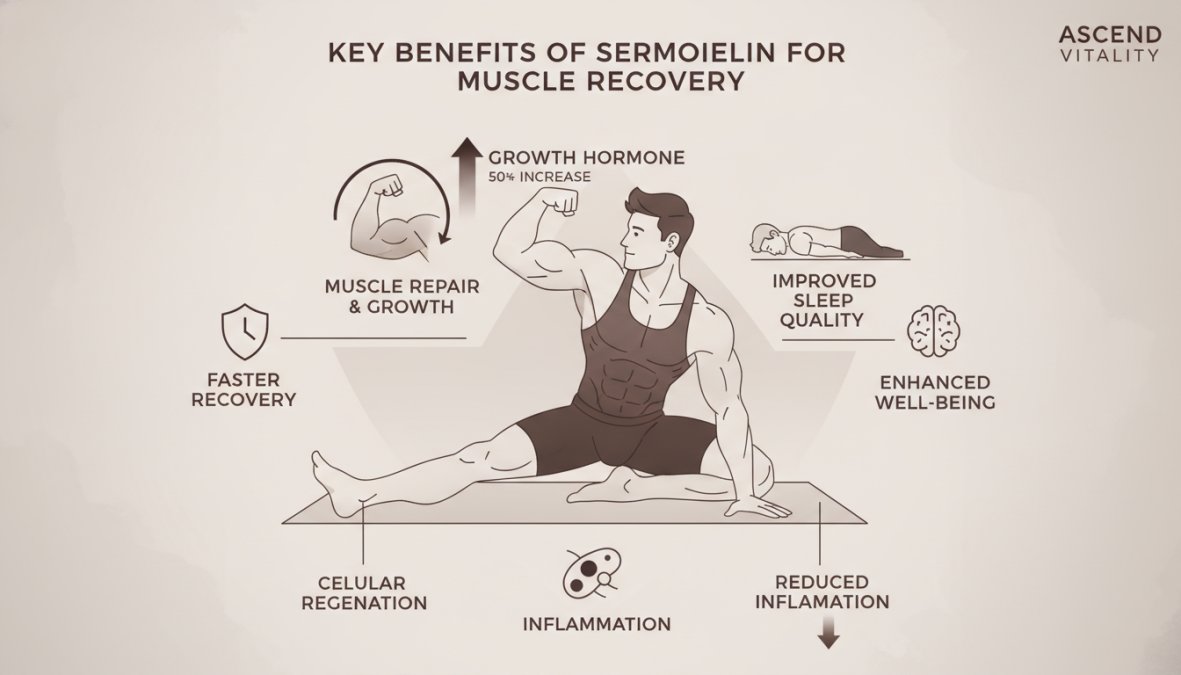
Growth hormone reduces inflammatory markers and accelerates clearance of metabolic byproducts from muscle tissue. Additionally, sermorelin-stimulated hGH increases sleep quality, and sleep is where most muscle protein synthesis occurs. By week 3-4, recovery time between intense sessions drops from 72 hours to 48 hours for the same muscle groups, allowing higher training frequency without overuse injury.
Muscle Hypertrophy and Lean Body Mass Gains
Growth hormone creates an anabolic environment where muscle growth accelerates when combined with proper training stimulus and nutrition. IGF-1 enhances protein synthesis efficiency, meaning more amino acids get incorporated into new muscle tissue rather than oxidized for energy.
Sermorelin-stimulated hGH increases fat metabolism, enabling body recomposition, simultaneous muscle gain and fat loss, even without caloric restriction. Growth hormone preferentially mobilizes triglycerides from adipose tissue while sparing muscle protein. Over 12-16 weeks of consistent training and sermorelin use, lean body mass gains of 4-8 pounds are common, with concurrent fat loss offsetting some scale weight gain.
Enhanced Sleep Quality and Hormonal Balance
Growth hormone promotes deeper NREM sleep stages, where most muscle protein synthesis occurs. Athletes on sermorelin consistently report falling asleep faster, sleeping deeper, and waking more refreshed.
Poor sleep suppresses growth hormone production and elevates cortisol, a catabolic hormone that breaks down muscle tissue. Sermorelin reverses this pattern. By supporting deeper sleep, it reduces nighttime cortisol elevation and creates a hormonal environment optimized for tissue repair.
Sermorelin Dosage for Muscle Recovery
Dosing sermorelin for muscle recovery differs from therapeutic applications because the goal is optimizing athletic performance. The standard approach uses lower doses than clinical protocols, administered strategically around training and sleep windows.

Standard Dosing Protocols and Subcutaneous Administration
The typical muscle recovery protocol uses 0.5-1.0 mg administered via subcutaneous injection in the evening 30-60 minutes before bed. This timing capitalizes on sermorelin’s ability to enhance sleep quality and aligns with your body’s natural growth hormone secretion pattern, which peaks during deep sleep.
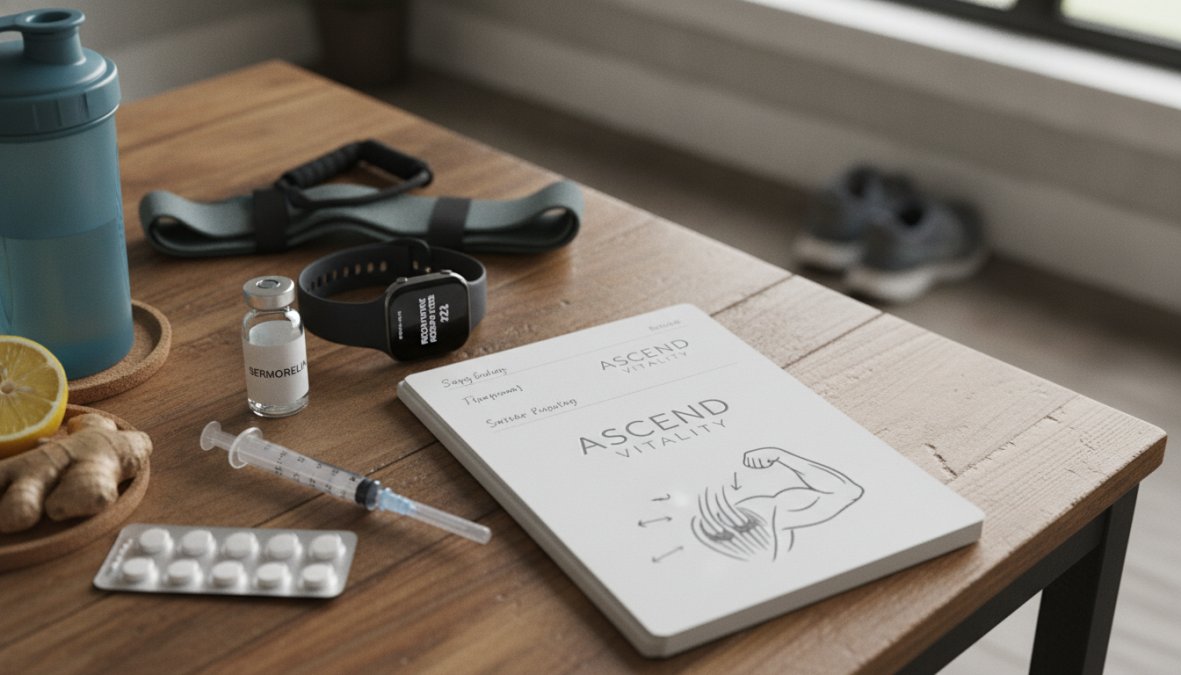
Subcutaneous injection means injecting into fatty tissue just beneath the skin, usually the abdomen, thigh, or upper arm. The injection uses a small-gauge needle (typically 29-31G) and causes minimal discomfort. Most athletes self-administer after a single demonstration from their healthcare provider.
Some protocols use twice-daily dosing (morning and evening), particularly for athletes in heavy training phases. Morning doses are often smaller (0.25-0.5 mg) and timed 30 minutes before training to capitalize on growth hormone’s fat-mobilizing effects during exercise.
Sermorelin requires medical supervision and a prescription. Self-sourcing from unverified suppliers introduces contamination risk, incorrect dosing, and legal liability. Work with a provider like Ascend Vitality who can monitor your response through biomarker tracking and adjust dosing based on individual results.
Adjusting Dosage Based on Individual Response
Individual response to sermorelin varies significantly based on age, baseline growth hormone production, body composition, and training intensity. A 25-year-old athlete with intact hormonal function may see dramatic IGF-1 elevation at 0.5 mg, while a 45-year-old with age-related hGH decline might need 1.0 mg to achieve similar results.
Start at a conservative dose (0.5 mg) for 4 weeks, then reassess with growth hormone and IGF-1 testing. If IGF-1 is in the lower-normal range, increase to 0.75 mg for another 4 weeks. If it’s already elevated into the upper-normal range, maintain the current dose. The goal is achieving IGF-1 in the upper-normal range for your age, not maximizing the number.
How Long to Take Sermorelin for Results
The timeline for benefits spans weeks to months, with different markers appearing at different intervals.
Expected Results Timeline: Weeks to Months
Weeks 1-2: Minimal noticeable changes. Sleep quality may improve slightly, but muscle recovery and body composition remain largely unchanged.
Weeks 3-4: DOMS reduction becomes apparent. Athletes report faster resolution of muscle soreness and accelerated recovery between sessions. Sleep quality continues improving.
Weeks 6-8: Lean body mass gains become measurable. Visual body composition improves noticeably. Recovery time between intense sessions drops from 72 hours to 48 hours. Strength improvements begin appearing from the ability to train more frequently and recover more completely.
Weeks 12-16: Cumulative benefits plateau at their maximum for the current dose. Total lean mass gains of 4-8 pounds are typical. Fat loss ranges from 3-10 pounds depending on diet and training adherence.
Most athletes pursuing muscle recovery benefits use sermorelin in 12-16 week blocks, then take 4-8 weeks off before reassessing. This cycling approach prevents tolerance development and allows periodic evaluation of whether continued use remains necessary.
Biomarker Tracking and Progress Monitoring
Without blood work, you’re essentially guessing whether the dose is optimal and whether your pituitary is responding. Essential biomarkers to track:
- Growth hormone (fasting): Should increase from baseline. Normal fasting hGH is 0.5-5 ng/mL; on sermorelin, expect 5-15 ng/mL depending on dose.
- IGF-1: The most reliable marker of growth hormone status over time. Target the upper-normal range (160-200 ng/mL).
- Glucose and fasting insulin: Growth hormone can impair glucose tolerance. Monitor to catch early signs of insulin resistance.
- Prolactin: Should remain normal; elevated prolactin indicates pituitary overstimulation.
Test at baseline, 8 weeks, and 16 weeks. If maintaining long-term use, test every 6 months.
| Timepoint | Growth Hormone | IGF-1 Target | Action |
|---|---|---|---|
| Baseline | Measure fasting level | Establish baseline | Determine starting dose |
| Week 8 | Retest (same time of day) | Upper-normal range | Assess pituitary response |
| Week 16 | Retest | Stable or optimized | Decide on continuation |
| Month 6+ | Every 6 months | Maintain optimization | Long-term safety monitoring |
Sermorelin vs HGH for Recovery: Key Differences
The choice between sermorelin and exogenous human growth hormone (HGH) affects both short-term results and long-term hormonal health.
Endogenous Production vs Exogenous Hormone Therapy
Sermorelin stimulates your body to produce its own growth hormone. HGH therapy involves injecting synthetic human growth hormone directly, bypassing your pituitary entirely.
Sermorelin advantages: Your body remains in control of hormone production. No suppression of endogenous growth hormone production, when you stop, your body resumes normal hGH secretion within days. Lower risk of dependency or hormonal dysregulation. Typically lower cost than pharmaceutical HGH. Preserves natural feedback mechanisms.
HGH advantages: Faster and more dramatic results. More predictable dosing. More research on long-term outcomes.
Sermorelin disadvantages: Results depend on pituitary function. Slower onset of benefits. Requires consistent compliance. Less research on long-term use in athletic populations.
HGH disadvantages: Suppresses endogenous growth hormone production; recovery takes weeks or months after discontinuation. Higher cost. Greater risk of insulin resistance and glucose dysregulation. More likely to cause water retention and joint stiffness.
For most athletes prioritizing recovery without long-term hormonal disruption, sermorelin is the more sustainable choice.
Regulatory Status and Athletic Eligibility
Sermorelin: Not explicitly banned by USADA or WADA in most contexts, though it exists in a gray area. Some sports organizations consider it prohibited under the “hormone and metabolic modulators” category. If you compete in tested sports, verify the specific rules with your governing body.
Exogenous HGH: Explicitly prohibited by USADA, WADA, and virtually all sports organizations.
This regulatory difference makes sermorelin the only viable option for athletes in tested sports who want growth hormone therapy.
Before starting sermorelin, confirm your sport’s specific anti-doping rules. Contact your governing body’s medical office directly rather than relying on online summaries.
Sermorelin and Post-Cycle Therapy Integration
Sermorelin doesn’t require aggressive post-cycle therapy like exogenous HGH. If combined with anabolic steroids, the peptide supports recovery and muscle growth while steroids provide the primary anabolic stimulus. After the steroid cycle ends, sermorelin can continue supporting recovery during the PCT phase when hormones are normalizing.
A typical integration: use sermorelin throughout the steroid cycle (0.5-1.0 mg nightly), then continue during PCT while using SERMs (Selective Estrogen Receptor Modulators) or aromatase inhibitors to restore natural testosterone. Sermorelin maintains an anabolic environment and accelerates recovery of your hypothalamic-pituitary-gonadal (HPG) axis during the critical PCT window.
For athletes using sermorelin standalone, PCT isn’t necessary, your endogenous hGH production normalizes within days of discontinuation.
Safety, Side Effects, and Candidate Suitability
Sermorelin is generally well-tolerated, but side effects do occur, and certain populations should avoid it.
Common Side Effects and Tolerability
Joint and connective tissue effects: The most common side effect is joint stiffness or mild carpal tunnel symptoms in the first 2-4 weeks. This occurs because elevated growth hormone and IGF-1 cause fluid retention in synovial joints. The effect is usually dose-dependent and resolves with dose reduction or increased sodium and water intake.
Water retention: Most athletes experience mild puffiness in the face and extremities, particularly in the first 4 weeks. This typically resolves as the body adapts.
Headaches: Less common, but some users report mild headaches in the first 1-2 weeks, which typically resolve without intervention.
Insulin sensitivity: Growth hormone can impair glucose tolerance and increase fasting insulin levels. For individuals with insulin resistance or prediabetes, sermorelin may worsen metabolic markers.
Most side effects are mild and dose-dependent. Starting at 0.5 mg and titrating up allows you to find your individual tolerance threshold.
Who Is an Ideal Candidate for Sermorelin
Sermorelin works best for athletes meeting these criteria:
Age 25-55: Sermorelin is most effective in individuals with residual pituitary function. After age 55-60, natural growth hormone production declines significantly.
Intact pituitary function: Medical evaluation before starting is essential if you have a history of pituitary disease or significant hormonal disruption.
Good metabolic health: Individuals with insulin resistance or metabolic syndrome should approach sermorelin cautiously.
Serious about training: Sermorelin amplifies recovery but doesn’t build muscle without training stimulus. Train 4-5 days per week with progressive resistance.
Adequate nutrition: Muscle recovery requires sufficient protein (0.8-1g per pound of bodyweight) and overall caloric intake to support growth.
Not competing in tested sports (or verified legal status): Verify sermorelin’s legal status before use if you compete in anti-doping tested sports.
Dietary Synergy and Lifestyle Optimization
Sermorelin’s recovery benefits are amplified or diminished by dietary and lifestyle choices.
Protein intake: Aim for 0.8-1.0g of protein per pound of bodyweight daily. Without adequate protein, sermorelin stimulates growth hormone production with nowhere for it to go.
Sleep quality: Prioritize 7-9 hours of sleep nightly with consistent schedules and optimized sleep environment. Sermorelin enhances sleep quality, but poor sleep hygiene still limits recovery.
Training intensity: Progressive resistance training 4-5 days per week is the baseline requirement. Without adequate training stimulus, sermorelin produces minimal muscle growth.
Carbohydrate timing: Consume 40-80g of carbohydrates within 2 hours post-training, ideally with 20-40g of protein. This synergizes with sermorelin’s IGF-1 elevation to maximize muscle protein synthesis.
Micronutrient status: Ensure adequate intake of zinc, magnesium, vitamin D, and B vitamins. Many athletes benefit from basic supplementation when using sermorelin.
Stress management: Elevated cortisol suppresses growth hormone. Incorporate stress-reduction practices for 20-30 minutes daily.
Long-Term Sustainability and Hormonal Health
Sermorelin doesn’t suppress endogenous hGH production, your pituitary remains functional and responsive. However, long-term use beyond 12-16 months enters territory with limited research in athletic populations.
The conservative approach: use sermorelin in 12-16 week cycles with 4-8 week breaks between cycles. This maximizes benefits while minimizing unknown long-term risks.
Regardless of approach, commit to biomarker testing every 6 months if using sermorelin long-term. Monitor growth hormone, IGF-1, fasting glucose, insulin, and prolactin. If any marker drifts outside acceptable ranges, adjust dose or discontinue.
The benefits of sermorelin for muscle recovery are real and measurable: accelerated DOMS resolution, faster recovery between sessions, lean body mass gains, and improved sleep quality. These benefits only materialize with proper dosing, consistent training, adequate nutrition, and periodic biomarker monitoring. Focus on finding your individual optimal dose through systematic testing and adjustment rather than chasing maximum dosages or indefinite use. Ascend Vitality specializes in medically-supervised peptide therapy with direct prescription delivery, biomarker tracking, and ongoing protocol optimization, ensuring your recovery gains don’t come at the cost of long-term hormonal health.
Frequently Asked Questions
How does sermorelin help with muscle recovery?
Sermorelin stimulates your pituitary gland to release more natural growth hormone, which accelerates cellular repair and protein synthesis in muscle tissue. This enhanced endogenous hGH production promotes faster recovery from training-induced muscle damage, reduces delayed onset muscle soreness (DOMS), and supports lean body mass development. The mechanism works by signaling your body’s own growth hormone pathways rather than introducing synthetic hormones.
How long does it take to see results from sermorelin for muscle recovery?
Most users begin noticing improvements in recovery speed and sleep quality within 2-4 weeks of consistent sermorelin use. Measurable changes in lean body mass and muscle definition typically appear between 6-12 weeks. Full benefits on metabolic rate, joint health, and sustained muscle hypertrophy develop over 3-6 months. Biomarker tracking (IGF-1 and growth hormone levels) helps confirm progress earlier than visible physical changes.
Is sermorelin legal and safe for athletes?
Sermorelin is legal for medical use when prescribed by a licensed healthcare provider, but its regulatory status differs from synthetic HGH. Unlike exogenous human growth hormone, sermorelin is not prohibited by USADA for most athletes, though competitive regulations vary by sport and governing body. It carries a favorable safety profile with minimal side effects when used at appropriate dosages, though individual tolerance and underlying health conditions should always be evaluated by a medical professional.
What is the typical sermorelin dosage for muscle recovery?
Standard sermorelin dosing for recovery typically ranges from 100-200 mcg administered via subcutaneous injection once daily, usually in the evening to align with natural growth hormone pulses during sleep. Dosage protocols may be adjusted based on individual response, body weight, and baseline hormone levels. A qualified healthcare provider at Ascend Vitality can determine the optimal protocol for your specific needs and monitor progress through periodic biomarker testing.