Table of Contents
- What Phytoestrogens Are and How They Work
- Foods High in Phytoestrogens: The Complete List
- Flaxseed for Menopause: Lignans and Practical Serving Sizes
- Other Top Phytoestrogen Sources: Seeds, Legumes, and Plant Foods
- Phytoestrogen Benefits and Risks: What the Evidence Shows
- Realistic Expectations: Timeline and Individual Variation
- Practical Meal Ideas and Daily Integration
- When to Consult a Healthcare Provider
- Conclusion
- Frequently Asked Questions
Last Updated: October 17, 2026
What Phytoestrogens Are and How They Work
Phytoestrogens are plant compounds that mimic estrogen’s effects in your body. They’re naturally occurring substances found in certain foods and plants. When you consume them, they can bind to estrogen receptors in your cells, potentially providing relief from menopause symptoms like hot flashes and night sweats.
The science behind phytoestrogens is straightforward. Your body produces less estrogen during menopause, triggering uncomfortable symptoms. Phytoestrogens work by filling some of that gap, not perfectly, but enough to matter for many women. The most studied types are isoflavones (found mainly in soy) and lignans (found in seeds and whole grains).
Here’s what matters: phytoestrogen-rich foods won’t replace hormone therapy, but they’re a dietary approach worth trying first. At Ascend Vitality, we work with women exploring natural symptom management alongside medical guidance, and dietary phytoestrogens can be part of a comprehensive approach.
The key difference between types matters. Isoflavones are more potent and better researched for menopause specifically. Lignans work more gently. Understanding this distinction helps you choose foods strategically rather than randomly adding plant-based meals to your diet.
Foods High in Phytoestrogens: The Complete List
Phytoestrogen-rich foods span multiple food categories, and the best approach is mixing sources rather than relying on one or two. But before you build a grocery list, it helps to know that “phytoestrogen” is an umbrella term for three main families of compounds that behave differently in your body. Knowing which family a food belongs to tells you more than any single milligram count.
The Three Types of Phytoestrogens (and Why the Distinction Matters)
- Isoflavones, found almost exclusively in soybeans and soy-based foods (tofu, tempeh, edamame, miso, soy milk). These are the most studied phytoestrogens for menopause, and they bind to estrogen receptors more readily than the other types. Genistein and daidzein are the two isoflavones you’ll see named in research.
- Lignans, found in flaxseed, sesame seeds, whole grains (especially barley and oats), and to a lesser degree in berries and other fruits. Lignans are not estrogenic on their own; your gut bacteria convert them into enterolactone and enterodiol, which are the compounds that actually interact with estrogen receptors. This conversion step is why lignan-rich foods produce more variable results from person to person.
- Coumestans, found in smaller amounts in legumes such as chickpeas and lentils, and in alfalfa and clover sprouts. Coumestans are the least studied of the three for menopause symptoms, so treat them as a supporting player rather than a primary strategy.
A practical takeaway: soy foods are your isoflavone anchor, flaxseed and sesame are your lignan anchor, and legumes and whole grains fill in the rest. Rotating across all three families gives you a broader intake than doubling down on any one food.
Soy Foods for Menopause
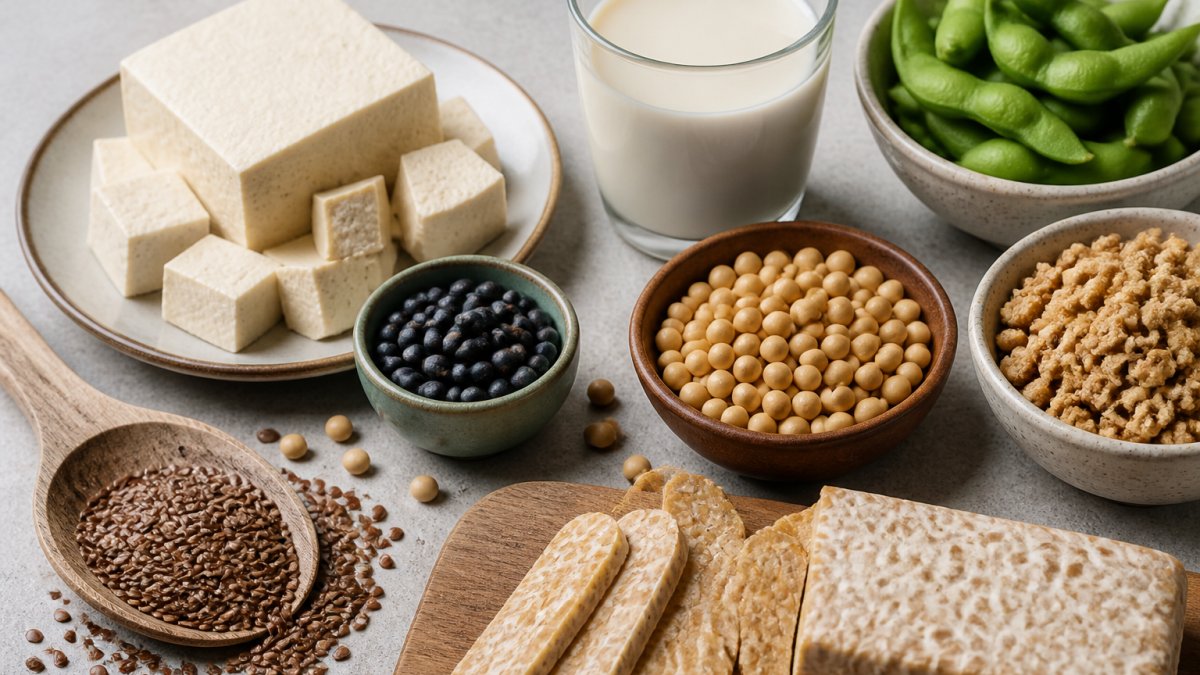
Soy foods contain the highest concentration of isoflavones among all plant sources. Tofu, tempeh, edamame, and soy milk are the primary options. A single serving of tofu (about 4 ounces) delivers roughly 25-35 mg of isoflavones, a meaningful dose for symptom management.
Tofu works well because it’s versatile. You can add it to stir-fries, blend it into smoothies, or crumble it into grain bowls. Tempeh has a firmer texture and nuttier flavor, making it ideal for marinating and grilling. Edamame (young soybeans) make an easy snack, boil them, salt them, and eat them straight from the pod. Miso and natto are additional soy options, though their isoflavone content varies by product and fermentation method.
The practical challenge: consistency matters more than perfection. Aim for 1-2 servings of soy foods daily to see measurable results. One serving equals roughly 4 ounces of tofu, 3 ounces of tempeh, or 1 cup of edamame. Many women find their best results come from mixing soy with other phytoestrogen sources rather than eating soy alone.
Seeds and Legumes
Flaxseeds are your second-tier powerhouse. They contain lignans, a different type of phytoestrogen that works more subtly than soy isoflavones. Two tablespoons of ground flaxseed daily is a standard recommendation, that’s roughly 40 mg of lignans. Grind them fresh because whole seeds pass through your digestive system largely unabsorbed.
Sesame seeds offer a similar lignan profile. Sprinkle them on salads, add them to grain bowls, or use tahini (sesame seed butter) as a dressing base. A quarter-cup serving provides meaningful lignan content without the texture some people dislike about flaxseeds.
Legumes, chickpeas, lentils, and beans, contain moderate phytoestrogen levels plus fiber and protein. One cup of cooked chickpeas delivers around 4 mg of isoflavones. They’re not as potent as soy, but they’re easier to incorporate into familiar meals. Add them to salads, roast them as snacks, or blend them into hummus.
Fruits, Nuts, and Whole Grains
Dried fruits contain meaningful phytoestrogen amounts. Prunes and dried peaches rank highest. A quarter-cup of dried fruit provides measurable isoflavone content. Fresh berries also contribute, blueberries, strawberries, and raspberries all contain phytoestrogens, though in lower concentrations than dried versions.
Nuts add both phytoestrogens and healthy fats. Almonds and peanuts contain moderate levels. An ounce of almonds (roughly 23 nuts) provides around 0.5 mg of isoflavones. They work best as part of mixed meals rather than the primary phytoestrogen source.
Whole grains like barley contribute lignans. Barley contains roughly 2 mg of lignans per cup of cooked grain. Brown rice, oats, and whole wheat offer smaller amounts but add up when eaten regularly. The fiber in whole grains also supports the gut bacteria that help metabolize phytoestrogens, a detail we’ll return to.
Quick Reference: Serving Sizes and Approximate Phytoestrogen Content
Use this as a rough guide, not a prescription. Values vary by brand, preparation, and growing conditions, and no single food needs to hit a target on its own.
| Food | Typical serving | Approximate phytoestrogen content | Primary type |
|---|---|---|---|
| Tofu | 4 oz | 25-35 mg isoflavones | Isoflavones |
| Tempeh | 3 oz | ~20-30 mg isoflavones | Isoflavones |
| Edamame | 1 cup shelled | ~15-25 mg isoflavones | Isoflavones |
| Soy milk | 1 cup | ~5-10 mg isoflavones | Isoflavones |
| Ground flaxseed | 2 tbsp | ~40 mg lignans | Lignans |
| Sesame seeds | 1 tbsp | ~11 mg lignans | Lignans |
| Cooked chickpeas | 1 cup | ~4 mg isoflavones | Isoflavones/coumestans |
| Cooked barley | 1 cup | ~2 mg lignans | Lignans |
| Almonds | 1 oz | ~0.5 mg isoflavones | Isoflavones |
Don’t chase a daily milligram target. Aim for a pattern, one or two soy servings, a daily tablespoon or two of ground flaxseed, and legumes or whole grains most days, and let the numbers follow.
Flaxseed for Menopause: Lignans and Practical Serving Sizes
Flaxseeds deserve their own section because they’re the most accessible phytoestrogen source for most people. Ground flaxseed has become mainstream, you’ll find it in most grocery stores, and it’s inexpensive.
The lignan content in flaxseeds is roughly 100 times higher than in other plant foods. Two tablespoons of ground flaxseed contains about 40 mg of lignans. That’s a meaningful dose, but it only works if you consume it consistently. Many women add flaxseed to their morning routine, stirred into yogurt, blended into smoothies, or sprinkled on oatmeal.
Here’s the practical reality: whole flaxseeds don’t break down in your digestive system. You must grind them. Buy them whole and grind them at home, or purchase pre-ground flaxseed and store it in the refrigerator (the oil oxidizes quickly). Use ground flaxseed within a few weeks of opening.
Start with one tablespoon daily and increase to two tablespoons over a week or two. Some women experience digestive changes (bloating or loose stools) when they increase fiber intake suddenly. Drinking adequate water helps. Most women adjust within a few days.
Other Top Phytoestrogen Sources: Seeds, Legumes, and Plant Foods
Beyond flaxseeds and soy, several other foods deserve regular rotation. Sesame seeds are underrated, they’re easier to use than flaxseeds and work well in Asian-inspired meals. A tablespoon of sesame seeds provides roughly 11 mg of lignans.
Chickpeas are the legume workhorse. They’re versatile, affordable, and widely available. Roast them with spices for a snack, add them to salads, or blend them into hummus. One cup of cooked chickpeas provides about 4 mg of isoflavones plus substantial fiber.
Cruciferous vegetables like broccoli and cabbage contain small amounts of phytoestrogens. They’re not primary sources, but they support overall health during menopause. The same applies to apples and plums, they contribute phytoestrogens but shouldn’t be your main focus.
The practical strategy: variety beats perfection. Eating the same phytoestrogen-rich food every day works, but rotating sources keeps meals interesting and ensures you’re getting a broader nutrient profile. A typical week might include 3-4 soy meals, daily flaxseed, sesame seeds 2-3 times weekly, and chickpeas 2-3 times weekly.
Phytoestrogen Benefits and Risks: What the Evidence Shows
The research on phytoestrogens and menopause is genuinely mixed, and the most useful thing you can do is separate what’s well established from what’s still uncertain. Here’s an honest breakdown.
What the Evidence Suggests (and How Strong It Is)
Isoflavones from soy have the deepest evidence base. Reviews of clinical trials generally find that soy isoflavones may modestly reduce the frequency and severity of hot flashes, particularly in women whose diets already include regular soy. The effect is real but not dramatic, think fewer or milder episodes rather than elimination, and it tends to be more consistent in women who consume soy as part of their regular diet rather than as an occasional add-on.
Lignans from flaxseed have a smaller and less consistent body of evidence. Some trials suggest flaxseed may help with hot flashes and vaginal dryness; others show little difference from placebo. The conversion of lignans by gut bacteria is a likely reason results vary so much between studies and between individuals.
Coumestans and other phytoestrogens are the least studied for menopause specifically. They’re worth including in your diet for overall nutrition, but don’t build your symptom strategy around them.
A key limitation across the field: study designs, doses, and populations differ widely, and many trials are short. That makes it hard to promise a specific percentage improvement. A common pattern practitioners describe is that some women notice a meaningful difference and others notice none, and that’s consistent with what the trial data show.
Why Gut Bacteria Change Your Results
This is the mechanism most food lists skip. For lignans, and to some extent for the isoflavone daidzein, your gut bacteria must convert the plant compound into its active form before it can interact with estrogen receptors. The compound produced from daidzein is called equol, and only a portion of people, estimates vary by population, but it’s often described as a minority, carry the gut bacteria needed to produce it efficiently.
That single fact explains a lot: two women can eat identical amounts of tofu or flaxseed and get different results. It also means gut health, fiber intake, diversity of plant foods, antibiotic history, is part of the equation, not a side note. You can’t test your way to a guaranteed answer at home, but eating a varied, fiber-rich diet supports the bacteria that do the conversion work.
Food vs. Supplements: Not the Same Thing
Isoflavone and lignan supplements are widely sold, and they are not interchangeable with food. Concentrated supplements can deliver doses far higher than typical dietary intake, and the safety data at those doses is thinner. Regulators have raised questions about high-dose isoflavone supplements in certain populations, and product quality varies. Whole foods also bring fiber, protein, and other nutrients that supplements don’t.
The practical position most clinicians take: get phytoestrogens from food first, and treat supplements as a decision to make with a healthcare provider rather than a default upgrade.
Safety Considerations
- Estrogen-sensitive conditions. Women with a history of estrogen receptor-positive breast cancer, or who are in active treatment for a hormone-sensitive cancer, should talk with their oncology team before significantly increasing phytoestrogen intake. This isn’t because food phytoestrogens are known to be dangerous, population studies of soy consumption have generally been reassuring, but because individual situations differ and the guidance should come from someone who knows your history.
- Thyroid medication. Soy foods can interfere with the absorption of levothyroxine if eaten at the same time. Separating soy intake from your thyroid medication by several hours is a common approach; confirm timing with your prescriber.
- Medication interactions. Phytoestrogens can interact with certain hormone-related medications. If you’re on tamoxifen, aromatase inhibitors, or hormone therapy, loop in your provider before making large dietary changes.
- Digestive adjustment. A sudden jump in flaxseed or legume intake can cause bloating or loose stools. Ramp up gradually and drink enough water.
The Realistic Take
Phytoestrogens are a legitimate, low-risk dietary tool for many women, but they are not equivalent to hormone therapy and shouldn’t be positioned as a replacement for it. They work best as one part of a broader approach that includes sleep, movement, stress management, and adequate protein, calcium, and vitamin D for bone health. If symptoms are severe or disrupting your life, medical options exist and are worth discussing, food and medical care are not an either/or.
The strongest evidence supports soy isoflavones for modest hot-flash relief; lignan evidence is mixed and depends heavily on your gut bacteria. Food first, supplements with guidance, and no promises of a specific percentage improvement.
Realistic Expectations: Timeline and Individual Variation
Most women need 4-8 weeks to notice meaningful improvement. Your body doesn’t respond overnight to dietary changes. The phytoestrogens need time to accumulate in your system and your gut bacteria need to adapt to processing them.
Individual variation is substantial. Some women see hot flash reduction within two weeks. Others see minimal change even after three months. Genetics play a role, specifically, how efficiently your gut bacteria convert plant lignans into their active forms. Gut health matters more than most people realize.
Age at menopause onset affects results. Women in early menopause (still producing some estrogen) often see better results than women five or ten years into menopause. Symptom severity also matters, women with mild to moderate hot flashes typically see more dramatic percentage improvements than women with severe, disruptive symptoms.
Body composition influences outcomes too. Women with higher body fat percentages often see better results because fat tissue produces estrogen. This isn’t permission to gain weight, but it explains why results aren’t uniform across the board.
The practical approach: give dietary phytoestrogens a genuine 8-week trial before deciding they’re not working. Track your symptoms, specifically hot flash frequency and intensity, in a simple journal. Most women who see results notice them gradually, not dramatically. A reduction from eight hot flashes daily to five or six is meaningful, even if it doesn’t feel new.
Practical Meal Ideas and Daily Integration
The challenge isn’t knowing which foods to eat, it’s actually eating them consistently. Here are real meal patterns that work.
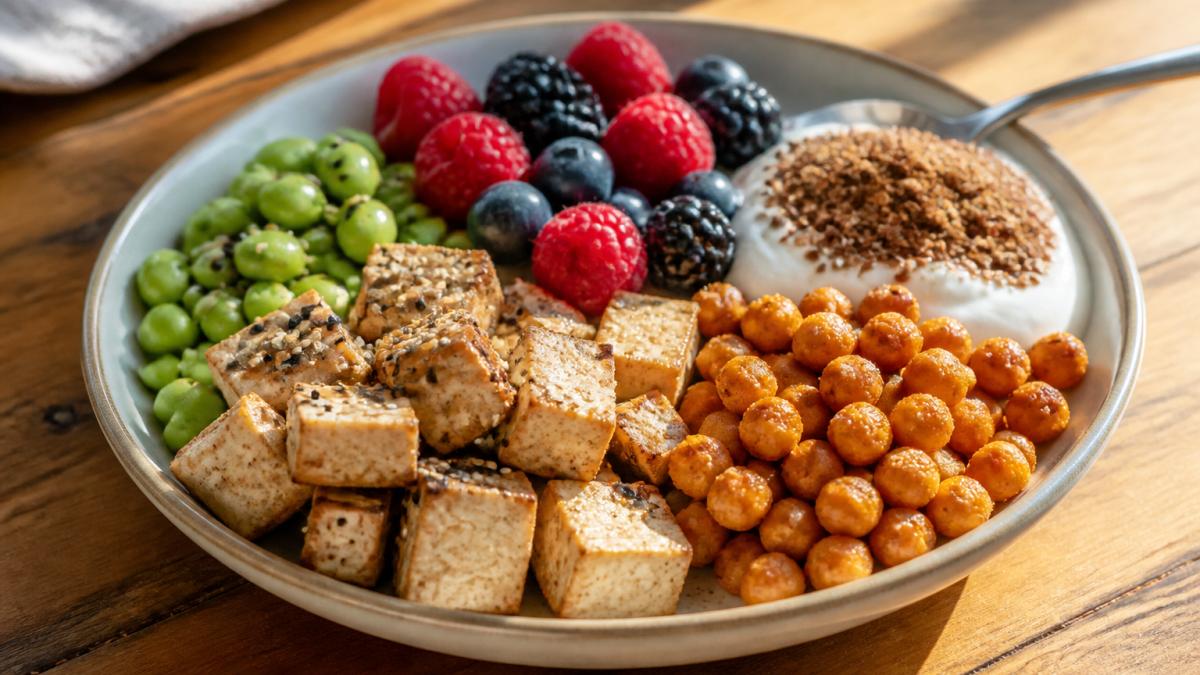
Breakfast: Greek yogurt with ground flaxseed, berries, and a drizzle of tahini. That’s lignans, fruit phytoestrogens, and sesame seeds in one bowl. Takes five minutes.
Lunch: Edamame and chickpea salad with mixed greens, cucumber, and sesame seed dressing. One cup edamame, half-cup chickpeas, two tablespoons sesame seeds. This combination delivers meaningful isoflavone and lignan content.
Dinner: Tofu stir-fry with broccoli, bell peppers, and brown rice. Marinate tofu in soy sauce and ginger before cooking. One four-ounce serving of tofu plus a cup of cooked barley instead of rice increases phytoestrogen content significantly.
Snacks: Roasted chickpeas (toss with olive oil and spices, bake at 375°F for 25 minutes), handful of almonds, or a piece of fruit with tahini.
The math: this pattern delivers a significant amount of phytoestrogens daily. This is in the range where some research shows symptom improvement.
The real barrier isn’t complexity, it’s consistency. Pick three meals you actually enjoy and rotate them. Most women find success by building phytoestrogen foods into meals they already eat rather than creating entirely new routines.
Grind flaxseeds in bulk and store in the freezer. They stay fresh for months, and you’ll actually use them if they’re ready to go.
When to Consult a Healthcare Provider
Dietary phytoestrogens work well for many women, but they’re not appropriate for everyone. Consult a healthcare provider before significantly increasing phytoestrogen intake if you have:
- A history of estrogen-sensitive breast cancer
- Current hormone-related cancer treatment
- Thyroid medication (phytoestrogens can affect absorption)
- Certain medications that interact with plant compounds
- Severe menopause symptoms requiring immediate relief
Your healthcare provider can assess your individual situation and help you determine whether dietary phytoestrogens make sense as part of your menopause management strategy. If you’re working with Ascend Vitality on hormone-related concerns, your care team can integrate dietary guidance into your overall treatment plan and monitor how phytoestrogen intake affects your specific health markers.
Women experiencing severe hot flashes, night sweats, or mood changes shouldn’t wait months for dietary changes to work. Medical options exist, and sometimes combining dietary phytoestrogens with targeted medical support produces the best results. The goal is symptom relief and quality of life, not proving that food alone is sufficient. Emerging therapeutic approaches for treating night sweats often involve exploring non-hormonal alternatives that can be integrated alongside nutritional adjustments to further stabilize sleep patterns.
Conclusion
Phytoestrogen-rich foods offer a practical, accessible starting point for menopause symptom management. Soy foods, flaxseeds, legumes, and whole grains deliver measurable phytoestrogen content that many women find helpful. Results vary individually, but consistency over 6-8 weeks typically reveals whether this approach works for you.
The best strategy combines dietary phytoestrogens with adequate sleep, regular movement, stress management, and professional guidance when symptoms are severe. If you’re exploring comprehensive menopause support, Ascend Vitality connects you with healthcare providers who can assess your specific situation, recommend targeted treatments when needed, and integrate dietary strategies into a personalized plan. Get started with Ascend Vitality to discuss how phytoestrogen-rich foods and medical support can be integrated into your menopause management plan.
Frequently Asked Questions
What are the strongest natural phytoestrogens in foods?
Isoflavones in soy products and lignans in flaxseeds are among the most studied phytoestrogens. Soybeans, tofu, and tempeh contain high concentrations of isoflavones, while flaxseeds deliver lignans. These plant compounds mimic estrogen-like effects in the body. Research suggests they may help with hot flashes and other menopause symptoms, though individual responses vary. Sesame seeds, chickpeas, and berries also contain meaningful amounts of phytoestrogens.
How much flaxseed for menopause should you eat daily?
A common recommendation is 1 to 2 tablespoons of ground flaxseed per day, though some sources suggest up to 3 tablespoons. Ground flaxseed is more bioavailable than whole seeds. You can add it to smoothies, yogurt, oatmeal, or baked goods. Start with a smaller amount and increase gradually to minimize digestive adjustment. Pair it with adequate water intake. Consult a healthcare provider for guidance tailored to your health history, especially if you take blood thinners or other medications.
Can phytoestrogen-rich foods actually reduce hot flashes?
Research shows mixed results. Some studies indicate that soy-based phytoestrogens may reduce hot flash frequency and severity in some women, while others show modest or no benefit. Results depend on the type and amount of phytoestrogens consumed, individual gut bacteria composition, and how your body metabolizes these compounds. Realistic expectations are important: symptom relief, when it occurs, often takes 4 to 12 weeks. A food-based approach works best as part of a broader menopause management strategy alongside lifestyle factors like sleep, exercise, and stress management.
Are phytoestrogen-rich foods safe for everyone during menopause?
For most women, phytoestrogen-rich foods are safe when eaten as part of a balanced diet. However, certain health conditions warrant caution. Women with a history of estrogen-sensitive breast cancer should discuss soy and other phytoestrogen sources with their oncologist before increasing intake. Those on blood thinners, thyroid medications, or other drugs should consult their healthcare provider, as phytoestrogens may interact. Pregnant women and those with soy allergies should avoid soy-based phytoestrogens. A qualified healthcare provider can assess your individual risk factors and recommend appropriate dietary changes.