Last Updated: October 14, 2026
How Sleep Quality Drives Anti-Aging and Cellular Repair
Sleep quality is the degree to which your nightly rest restores your body, measured by how quickly you fall asleep, how long you stay asleep, and how much deep and REM sleep you get. At Ascend Vitality, we see how often people chase expensive creams while ignoring the eight hours that do more for their skin than any serum. And the stakes are bigger than wrinkles. Poor rest raises cortisol levels, which breaks down collagen and weakens your skin barrier over time.
The good news: sleep quality is trainable. Below, we’ll show you exactly how to improve sleep quality for anti-aging with a step-by-step nighttime protocol you can start tonight.
Deep sleep is when your body repairs skin, balances hormones, and clears cellular waste. Miss it, and no topical product fully compensates.
What Happens to Your Skin and Cells During Deep Sleep
Your body does its repair work after you fall asleep, not before. During deep sleep, blood flow to the skin rises, collagen synthesis ramps up, and growth hormone helps rebuild tissue. This is nocturnal recovery in action.
Meanwhile, your skin barrier repair process peaks overnight. Miss this window often, and you may notice fine lines look deeper, skin hydration drops, and puffiness lingers into the morning.
- Cellular regeneration speeds up during deep sleep
- Cortisol levels fall, protecting collagen from breakdown
- Oxidative stress gets cleared more efficiently
- Melatonin, a key antioxidant for skin, rises in darkness
The takeaway is simple: sleep architecture, not just sleep duration, decides how much repair you actually get.
How to Improve Deep Sleep: A Step-by-Step Nighttime Protocol
Learning how to improve deep sleep starts with three moves: fix your schedule, fix your room, and fix your light. Do these in order. Each one builds on the last.
Step 1: Set a Consistent Sleep-Wake Schedule
Go to bed and wake up at the same time every day, weekends included. This anchors your sleep-wake cycle and raises sleep efficiency. Your circadian rhythm thrives on consistency, not perfection. Pick a wake time you can keep, then count back seven to nine hours for bedtime.
Set your alarm for the same time daily, but let your bedtime flex by 30 minutes. A rigid bedtime creates anxiety; a fixed wake time trains your clock.
Step 2: Optimize Your Sleep Environment for Nocturnal Recovery
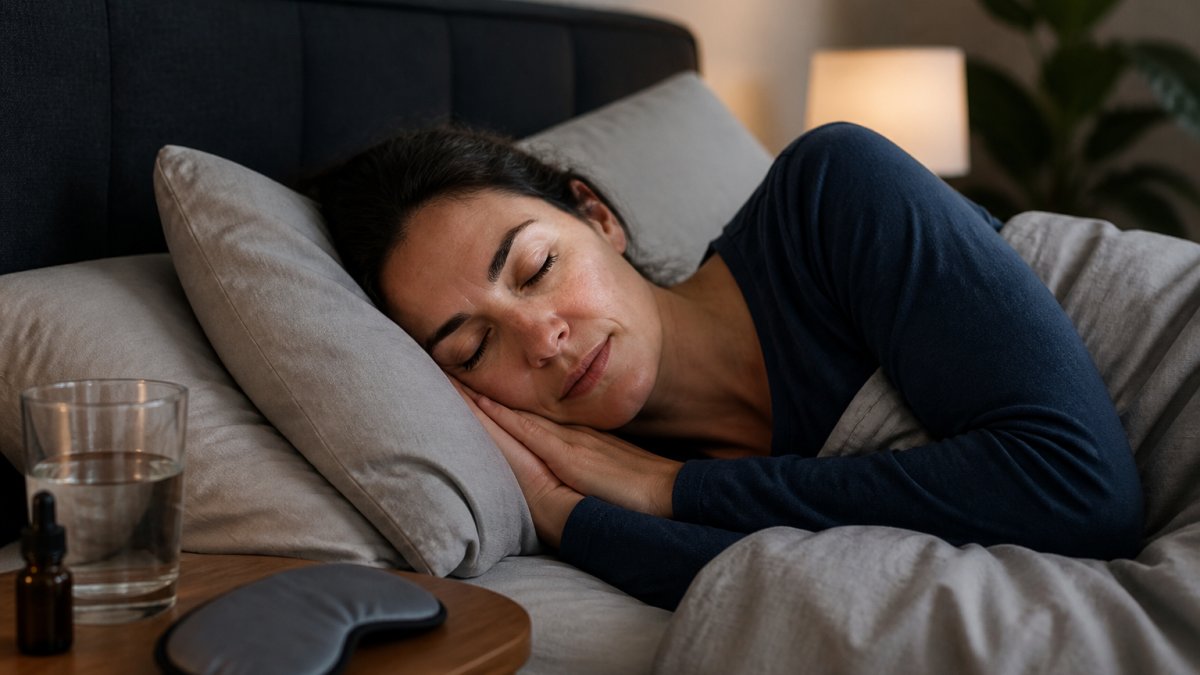
Cool, dark, and quiet is the goal. Keep your bedroom between 65 and 68 degrees Fahrenheit (The Best Temperature for Sleep). Use blackout curtains to block light. A white noise machine can mask disruptions that fragment your sleep architecture.
- Set the thermostat lower than your daytime setting
- Remove screens and bright clocks from the bedside
- Choose a supportive mattress and pillow for your sleep position
- Keep pets off the bed if they wake you
Step 3: Use Light Exposure to Anchor Your Circadian Rhythm
Get bright light within an hour of waking. Morning sunlight tells your brain it’s daytime and sets your internal clock. Then dim your lights in the evening. Blue light exposure from phones and laptops delays melatonin release.
Aim for 10 to 20 minutes of outdoor light each morning. In the evening, switch to warm lamps and lower the brightness.
Scrolling in bed under bright light pushes your melatonin peak later, so you fall asleep slower and get less deep sleep. That single habit can undo an otherwise solid routine.
Sleep Deprivation and Skin Aging: What the Research Shows
The link between sleep deprivation and skin aging comes down to stress hormones and repair time. When you sleep poorly, cortisol stays elevated. That breaks down collagen and slows skin barrier repair. Cleveland Clinic overview of sleep and health explains how chronic poor sleep affects the whole body, not just your mood.
Skin tells the story first. Studies on sleep-deprived adults point to more visible fine lines, weaker skin elasticity, and slower recovery after sun exposure. The mechanism is straightforward: less deep sleep means less cellular regeneration and more inflammation.
So the question isn’t whether sleep affects aging. It’s how much damage a bad month does, and how fast you can reverse it.
The Best Sleep Position for Your Face (and Why It Matters)
Sleeping on your back is the best sleep position for your face. Side and stomach sleeping press your skin against the pillow for hours. Over years, that pressure can deepen creases and contribute to asymmetry.
Back sleeping also keeps your face off surfaces that collect oils and bacteria. If you can’t sleep on your back, switch to a silk or satin pillowcase. It creates less friction than cotton.
- Back: best for skin, reduces facial compression
- Side: can crease cheeks and jawline over time
- Stomach: worst for the face and hard on your neck
You don’t need to change overnight. Train yourself gradually by hugging a body pillow.
Building a Nighttime Routine for Better Sleep and Skin Recovery
A nighttime routine for better sleep works because it lowers arousal before bed. The goal is to signal safety to your nervous system. Start 60 to 90 minutes before lights out.

Here’s a sequence that supports both rest and skin:
- Dim the lights and put screens away
- Take a warm shower or bath to drop your core temperature
- Apply skincare while skin is still damp
- Read or stretch in low light
- Keep the room cool and dark for sleep
Why the First Hours of Sleep Are the Skincare Window
Skin barrier repair, cell turnover, and collagen synthesis follow a circadian pattern. Transepidermal water loss rises at night, which means skin loses moisture faster while you sleep. Blood flow to the skin increases overnight, and the barrier’s permeability goes up, which is why topical ingredients absorb differently at night than in the morning. This is the mechanism behind the phrase “beauty sleep,” and it is why timing your products matters more than layering more of them.
Ingredient Synergy: What to Use, and When
Most guides tell you to moisturize. Few explain how specific ingredients interact with the nocturnal repair cycle. Here is a practical framework:
- Retinoids. Apply at night, not in the morning. Retinoids increase cell turnover and can make skin more photosensitive, so nighttime use reduces sun exposure risk (the American Academy of Dermatology). Start two to three nights per week and build up. Pair with a barrier-supporting moisturizer to reduce irritation.
- Peptides. Signal peptides support collagen production and pair well with retinoids when buffered by a moisturizer. Apply after any active, before your occlusive layer.
- Niacinamide. Supports barrier function and helps calm redness. It layers well under most actives and is a good choice if your skin is reactive.
- Hyaluronic acid. Draws water into the skin. Apply to damp skin, then seal it in, otherwise it can pull moisture from deeper layers in dry air.
- Occlusives (petrolatum, squalane, ceramide creams). These are the seal. Apply last to lock in everything underneath and reduce overnight water loss.
Do not stack a retinoid, an acid exfoliant, and a high-strength vitamin C in the same night. The irritation that follows raises inflammation, which works against the repair you are trying to support. Alternate nights instead.
Timing the Routine to Sleep Onset
Apply your richest products 15 to 30 minutes before bed, not hours earlier. Skin absorbs best during the first hours of sleep, and an occlusive layer applied too early can rub off on your pillow before it does its job. If you use a retinoid, apply it first on clean, dry skin, wait a few minutes, then layer moisturizer and an occlusive.
Keep a separate morning routine. Vitamin C, sunscreen, and antioxidants belong in the morning, when UV and pollution exposure are the threats. Night is for repair; day is for defense.
The Sleep Side of the Same Routine
The skincare steps only pay off if the sleep architecture underneath them holds. Keep the room cool and dark, avoid alcohol in the two to three hours before bed, and stop caffeine by early afternoon. A routine that supports both rest and skin is not two routines, it is one sequence where the products and the environment reinforce each other. Integrating a non-toxic skincare routine ensures that the topical treatments applied before rest do not disrupt the body’s natural nocturnal recovery processes.
Hormonal Shifts, Sleep Tracking, and the Anti-Aging Connection
Hormonal balance and sleep are a two-way street, and this is where most guides stop short. As estrogen and testosterone shift with age, sleep quality often drops, and the drop is not random. It follows a predictable pattern you can track.
What Changes With Age, and Why It Hits Sleep
Estrogen. Estrogen supports serotonin and melatonin activity, and it helps regulate body temperature at night. As estrogen declines through perimenopause and menopause, the thermoregulatory window narrows. The result is night sweats, hot flashes, and wake-ups clustered in the second half of the night, exactly when REM sleep is densest. Fragmented REM means less overnight emotional processing and less of the skin-repair signaling that happens in the later sleep cycles.
Progesterone. Progesterone has a mild sedative effect through its metabolite allopregnanolone, which acts on GABA receptors. When progesterone falls, sleep onset gets harder and sleep is lighter. Many women notice they wake more easily at 3 a.m. even when nothing in their environment changed.
Testosterone. In men, testosterone supports slow-wave sleep, the deep stage where growth hormone pulses and tissue repair peaks. A common pattern is a gradual decline in deep sleep percentage across the 40s and 50s, which shows up as less restorative rest even when total time in bed is unchanged.
Cortisol. The cortisol curve flattens with age. Instead of a sharp morning peak and a low evening trough, the curve drifts. A blunted morning rise means grogginess; a higher evening floor means a harder time falling asleep. Elevated evening cortisol also directly breaks down collagen and slows barrier repair, which is why hormonal sleep disruption shows up on the face.
Melatonin. Melatonin production declines with age, and it declines faster in people who get little daytime light. Since melatonin is both a sleep signal and a skin antioxidant, this is a double hit: worse sleep onset and less overnight oxidative protection.
Why This Matters for Skin Specifically
Estrogen also supports skin thickness, collagen content, and moisture retention. When estrogen drops, skin thins and collagen declines, and poor sleep accelerates both. That is why the same hormonal shift that fragments sleep also makes the skin look more tired. The two are not separate problems; they share a mechanism.
Using Sleep Tracking Technology to Spot the Pattern
Wearables and bedside trackers estimate sleep stages, sleep latency, wake-after-sleep-onset, and heart rate variability. They are not diagnostic, but they are good at showing trends. Here is how to use them without overreacting to a single bad night:
- Track for at least 14 nights before drawing conclusions. One or two nights is noise.
- Watch deep sleep percentage. Most adults land in the mid-teens to low twenties as a share of total sleep. A steady slide over months is worth noting.
- Watch wake-after-sleep-onset. Clusters of wake-ups in the second half of the night often track with hormonal shifts, alcohol, or a warm room.
- Watch resting heart rate and HRV. A rising resting heart rate and falling HRV across the week can flag stress load before you feel it.
- Log symptoms alongside the data. Night sweats, 3 a.m. wake-ups, and morning grogginess give the numbers context.
Bring two to four weeks of tracker data to a clinician rather than a single night’s score. Trends, not snapshots, drive useful conversations about hormones, thyroid, and sleep disorders.
What to Do With What You Find
If your data shows fragmented sleep with night sweats, that pattern points toward a hormonal conversation, not another sleep-hygiene checklist. If it shows long sleep latency with a normal night, that points toward light exposure and caffeine timing. If it shows loud snoring, gasping, or long pauses in breathing, stop optimizing and get evaluated for sleep apnea, no tracker metric matters more than that.
Use the numbers as clues, not verdicts. A wearable can flag a problem; it cannot diagnose one. But it can tell you which problem to bring to a clinician first.
Common Mistakes That Sabotage Sleep Quality and Accelerate Aging
Most people make the same handful of errors, and they compound. The biggest mistake is treating sleep as leftover time. If you protect nothing else, protect your sleep window.
- Inconsistent schedule: confuses your circadian rhythm
- Late caffeine: caffeine lingers for hours and blocks deep sleep
- Alcohol before bed: fragments sleep and reduces REM
- Hot bedroom: prevents the temperature drop sleep requires
- Late heavy meals: digestion keeps you alert
- Doomscrolling in bed: delays melatonin and raises cortisol
Fix one at a time. Stacking changes rarely sticks.
When to Talk to a Health Care Professional About Sleep Problems
Talk to a clinician if poor sleep lasts more than a few weeks or affects your daily life. Loud snoring, gasping at night, or waking unrefreshed despite enough hours can point to sleep apnea. That condition needs medical care, not another app.
Other reasons to seek help:
- You’ve tried sleep hygiene changes with no improvement
- You feel exhausted despite seven or more hours in bed
- You rely on sleep aids most nights
- You have a thyroid condition or take medications that affect sleep
At Ascend Vitality, our care pathways connect you with specialized care pathways, providing targeted online care for weight loss, health, and hormones. They offer medically-supported programs and prescriptions delivered directly to you. They provide convenient access to treatments for specific female wellness needs and discreet solutions for men’s vitality and health concerns. A provider can help you sort out what’s sleep and what’s something else.
Poor sleep quietly accelerates aging, and it rarely announces itself until fine lines, low energy, and stubborn weight gain show up together. If you’ve tried every sleep hygiene tip and still wake up tired, the missing piece may be hormonal or metabolic. Ascend Vitality connects you with licensed providers who build personalized care plans, from weight loss programs to hormone optimization, all through discreet online visits and prescriptions delivered to your door. Get started with Ascend Vitality and find out what better rest and balanced hormones can do for how you look and feel.
Frequently Asked Questions
Does sleep actually help with anti-aging?
Yes. During deep sleep, your body increases collagen synthesis and cellular regeneration, which help maintain skin elasticity and reduce fine lines. Sleep also regulates cortisol levels, and chronically elevated cortisol breaks down collagen and accelerates visible aging. Adults who consistently get 7 to 9 hours of quality sleep tend to show fewer signs of skin aging than those who sleep poorly.
What is the best sleep position for my face?
Back sleeping is generally considered the best sleep position for your face. Sleeping on your side or stomach presses your face against a pillow for hours, which can contribute to sleep lines and asymmetry over time. If you cannot sleep on your back, a silk or satin pillowcase creates less friction than cotton and may reduce creasing. A contoured pillow can also help keep your head aligned.
How can I improve deep sleep naturally?
To improve deep sleep, keep a consistent sleep-wake schedule, even on weekends. Keep your bedroom cool, dark, and quiet. Avoid caffeine after early afternoon and alcohol within three hours of bed. Get morning sunlight exposure to anchor your circadian rhythm. Limit blue light exposure from screens in the hour before bed. These habits support your natural melatonin production and help you spend more time in restorative deep sleep stages.
Can poor sleep affect skin aging?
Poor sleep raises cortisol levels and increases oxidative stress, both of which break down collagen and elastin. Research links sleep deprivation and skin aging through reduced skin barrier repair, lower skin hydration, and increased inflammation. People who consistently sleep poorly report more fine lines, duller skin tone, and slower recovery from environmental stressors like UV exposure.