Table of Contents
- Why Pop Culture Works for Health Literacy
- Health Literacy Examples From Television and Film
- Using Media for Health Education: A Practical Framework
- Celebrity Influence and Popular Characters in Health Communication
- Social Media Health Education: Engagement and Reach
- Health Communication Strategies for Behavior Change
- Measuring Effectiveness: Evaluation Metrics and Outcomes
- Avoiding Misinformation and Ensuring Accuracy
- Accessibility and Inclusive Health Messaging
- Conclusion: Connecting Pop Culture to Real Health Outcomes
- Frequently Asked Questions
Last Updated: October 21, 2026
Why Pop Culture Works for Health Literacy
Health literacy is the ability to find, understand, and use health information to make decisions (the CDC). Many people struggle with medical jargon, and pop culture breaks through by speaking the language people already use and trust.
When a character on a popular TV show discusses a health topic, millions watch. When a celebrity shares their health journey, audiences pay attention. This reach matters because traditional health education often fails to engage people who need it most.
Pop culture works because it combines entertainment with education. People lower their guard when entertained and absorb messages without feeling lectured, so a health message delivered through a beloved character sticks differently than the same message on a clinical pamphlet.
Using pop culture to improve health literacy transforms how health information spreads and how audiences receive it.
Pop culture reaches audiences at scale because it entertains first. Health messages embedded in entertainment get absorbed naturally, not defensively.
Health Literacy Examples From Television and Film
Television and film have shaped health perceptions for decades. Accurate depictions normalize conversations; inaccurate ones spread misconceptions that persist for years.
A medical drama with realistic treatment processes educates viewers about what to expect, a nuanced comedy about mental health reduces stigma, and a thriller with accurate health information reaches audiences who might never seek it otherwise.
Film has particular power because it reaches theaters and streaming platforms simultaneously. A single movie about a health topic can influence millions in days.
Television series create deeper engagement because audiences return weekly and characters become trusted figures.
Real examples show this impact. Medical dramas have influenced how people perceive doctors and hospitals. Shows addressing reproductive health have sparked conversations in families. Films about addiction have changed how communities view substance use disorders.
The key is accuracy. Entertainment that prioritizes the story over medical facts can do real harm. Using media for health education requires writers and producers who understand both storytelling and the health topic itself.
Inaccurate health portrayals in entertainment can reinforce harmful myths. A single popular show depicting a condition incorrectly can spread misconceptions faster than corrective health campaigns can counter them.
Using Media for Health Education: A Practical Framework
Creating health education through pop culture requires intentional planning; random celebrity mentions or accidental health references are not an effective strategy. A practical framework ensures your message reaches the right audience with accurate information.
The framework has four core steps: identify your audience and goal, select the right media channels, develop clear messaging, and test with your audience before launch.
This approach takes time but prevents costly mistakes. Many organizations skip testing and launch campaigns that miss their target audience or deliver confusing messages; upfront research and testing save resources and increase effectiveness.
Step 1: Identify Your Target Audience and Health Goal
Start by defining exactly who you want to reach and what health behavior you want to influence. Vague goals produce vague results. “Improve health awareness” is too broad. “Increase colorectal cancer screening among adults aged 45-55” is specific and measurable.
Ask these questions:
- Who is your audience by age, gender, health status, and media habits?
- What health decision or behavior do you want to influence?
- What barriers prevent your audience from making that decision now?
- What pop culture channels does this audience already consume?
Your audience’s media consumption matters enormously: young adults aged 18-30 spend time on TikTok and YouTube, while adults aged 45-60 watch traditional television and streaming services. Targeting the wrong channel wastes resources.
Understanding barriers is critical. If your audience avoids screening because of cost, a campaign about why screening matters won’t move the needle; if they avoid it because of fear or embarrassment, that’s the barrier your message should address.
Step 2: Select Pop Culture Channels That Match Your Audience
Not all pop culture channels reach all audiences. A TikTok campaign reaches different people than a primetime television appearance. A podcast reaches different listeners than a film.
Consider these channels:
- Television dramas and comedies
- Streaming series and films
- Social media platforms (TikTok, Instagram, YouTube)
- Podcasts and audio content
- Celebrity partnerships and endorsements
- Music and music videos
- Influencer collaborations
Match the channel to your audience’s habits. Research what shows, creators, and platforms your target audience engages with most: a popular TikTok creator reaches Gen Z, while a major network drama reaches older adults.
Budget matters too: celebrity partnerships cost more than emerging creators, and primetime television placement costs more than podcast sponsorships. Align your channel selection with both your audience and your resources.
Step 3: Develop Accurate, Plain-Language Health Messages
Health messages delivered through entertainment must be both accurate and accessible. Medical jargon confuses audiences. Complex explanations get lost in entertainment formats.
Your message should:
- Use simple, everyday language
- Avoid medical terminology or define it clearly
- Focus on one main idea per message
- Include a clear call to action
- Feel natural within the entertainment context
A character in a TV show shouldn’t sound like they’re reading from a medical textbook. “I need to get my blood pressure checked” works; “I must monitor my cardiovascular metrics” does not.
Plain language matters because health literacy varies widely. Many adults struggle to understand medical information (pubmed.ncbi.nlm.nih.gov). Entertainment provides an opportunity to reach them with clear, accessible health messages.
Test your language with people outside the health field. If they understand it immediately, it’s ready. If they ask clarifying questions, simplify further.
Step 4: Test Your Message With Your Audience
Before launching a full campaign, test your message with a small sample of your target audience to prevent expensive mistakes and increase effectiveness.
Testing reveals:
- Does the audience understand the message?
- Does it resonate emotionally?
- Does it influence attitudes or intentions?
- Are there unintended misunderstandings?
Test through focus groups, surveys, or small-scale pilots: show your audience the content and ask what they understood, how it made them feel, and whether it would influence their health decisions.
Real feedback beats assumptions. An audience might misunderstand your message, find it preachy instead of entertaining, or fail to connect with the chosen celebrity or character; testing catches these issues before full launch.
Test with people who represent your exact target audience, not just anyone willing to participate. Testing with the wrong group gives you misleading feedback.
Celebrity Influence and Popular Characters in Health Communication
Celebrities and beloved characters move health behavior because they trigger three well-documented processes: parasocial relationships, social proof, and narrative transportation. Understanding each one lets you choose partners deliberately instead of chasing whoever is trending.
Parasocial relationships. Audiences form one-sided bonds with people they see repeatedly, a talk-show host, a sitcom character, a creator who posts daily. Research on parasocial interaction finds that these bonds function like real friendships in shaping attitudes.
Social proof. People look to others, especially people they admire, to decide what is normal. When a trusted figure gets screened, seeks therapy, or quits smoking, the behavior reads as socially acceptable.
Narrative transportation. When viewers are absorbed in a story, they lower their counterarguing.
Earned versus paid influence
Not all celebrity involvement is equal. Distinguish three modes:
- Earned (organic): The celebrity shares a genuine personal experience, a diagnosis, a family member’s illness, a recovery journey. This is the most credible and the hardest to manufacture. It also carries the highest risk of inaccuracy if the person shares unverified claims.
- Paid endorsement: A contracted partnership. Audiences increasingly detect and discount these, especially on social platforms where disclosure is required. Paid partnerships work best when the celebrity already has a plausible connection to the topic.
- Scripted character: A writer places a health storyline in a show. This gives you narrative control and duration but requires the writers’ room to buy in and the medical details to be vetted.
A vetting checklist before you sign anyone
- Authenticity test. Does the person have a real, verifiable connection to the health topic? If not, the audience will sense the mismatch.
- Audience overlap. Does their following match your target demographic, geography, and reading level? A massive following in the wrong segment is wasted spend.
- Controversy screen. Search their public history for health misinformation, undisclosed sponsorships, or conduct that could undermine the message.
- Disclosure readiness. Confirm they will follow Federal Trade Commission endorsement rules, clear, conspicuous disclosure of any material connection (the FTC). The FTC’s Endorsement Guides apply to social posts, videos, and livestreams.
- Accuracy commitment. Require review of any health claim by a qualified clinician before publication, and build a correction protocol into the contract.
The risks you must plan for
Celebrity influence cuts both ways. A figure with millions of followers can spread a false claim as fast as a true one, and corrections rarely travel as far. A character portrayed inaccurately can entrench a misconception for years. Two safeguards matter most: pre-publication fact-checking by a clinician who knows the topic, and a standing correction plan that names who speaks, on what channel, within what timeframe, if an error ships.
A single inaccurate celebrity health claim can outrun a corrective campaign. Build fact-checking and a correction protocol into every partnership before launch, not after.
Characters as long-form teachers
Recurring characters offer something a one-off celebrity post cannot: time. A character’s multi-episode arc can show the full behavior-change journey, noticing a symptom, fearing the appointment, going anyway, getting results, adjusting. Audiences see consequences play out and internalize the sequence. The trade-off is control: writers own the story, so your influence depends on early collaboration with the writers’ room and a medical consultant on set. This narrative structure provides a unique opportunity to model the nuances of explaining medical diagnoses to a child, turning complex clinical information into a relatable moment of emotional growth.
Use celebrities and characters as amplifiers of an already-accurate message, not as substitutes for one. The strongest programs pair a credible messenger with a vetted script and a clear call to action that points to a real service.
Social Media Health Education: Engagement and Reach
Social media platforms enable health education at unprecedented scale. A single post from a popular creator reaches hundreds of thousands instantly.
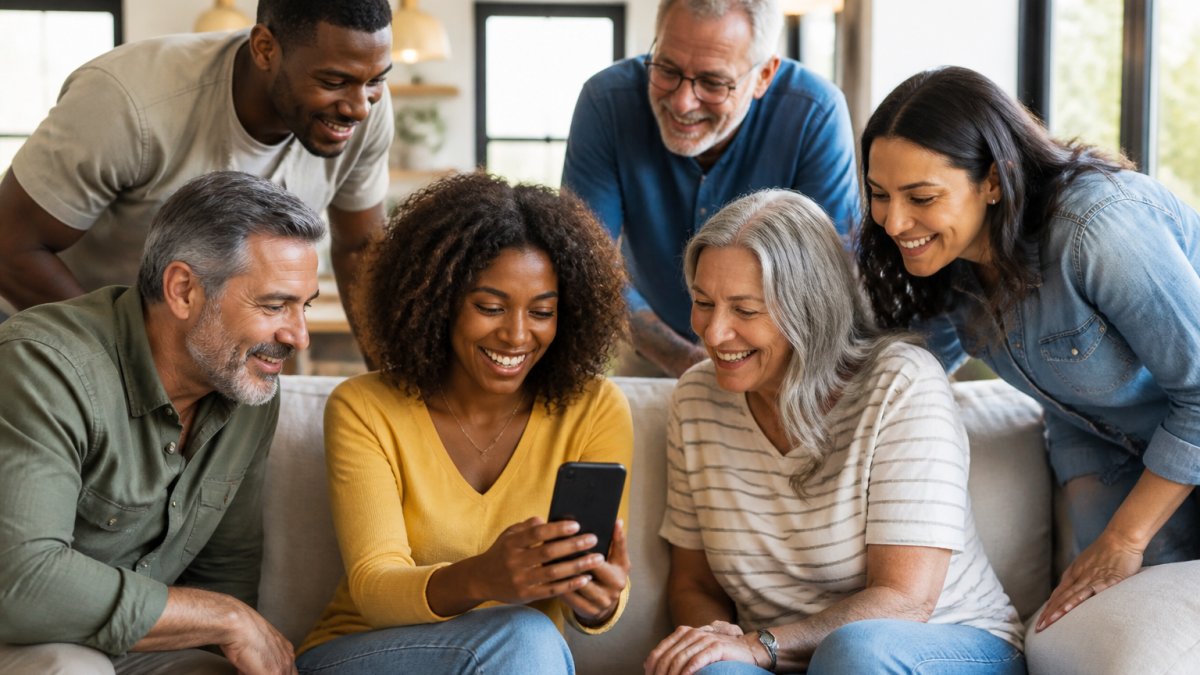
Social media works for health education because it’s interactive: people don’t just receive information, they ask questions, share experiences, and discuss with others, deepening engagement and understanding.
Different platforms serve different purposes: TikTok reaches younger audiences with short, entertaining content, Instagram combines visuals with health information, YouTube allows longer-form education, and podcasts build intimate connections through audio.
Engagement metrics reveal what content resonates: high shares indicate content audiences find valuable enough to pass along, and comments show which messages spark conversation, helping creators refine their approach continuously.
However, social media health information faces accuracy challenges. Misinformation spreads as quickly as accurate information. Anyone can post health claims without verification.
Building trust on social media requires consistency and transparency.
Health Communication Strategies for Behavior Change
Sharing health information differs from changing health behavior. People can understand a health message completely and still not change their behavior. Effective health communication strategies address this gap.
Behavior change requires more than information. It requires motivation, self-efficacy (belief that you can do it), and removal of barriers. Entertainment-based health communication can address all three.
Motivation increases when audiences see people like themselves succeeding. A character or celebrity who shares your background and challenges makes change feel possible.
Self-efficacy increases when audiences see specific steps and realistic outcomes. Vague advice doesn’t help.
Barrier removal happens when communication addresses specific obstacles. If people avoid health screening because they don’t know where to go, the message should include locations.
Entertainment-based communication excels at showing these elements through narrative.
Measuring Effectiveness: Evaluation Metrics and Outcomes
Most pop-culture health campaigns report reach and call it success. Reach tells you who saw the message; it does not tell you whether anyone understood it, remembered it, or acted. A defensible evaluation answers four questions in order: did the right people see it, did they comprehend it, did their attitudes or intentions shift, and did behavior or health outcomes change?
Build the measurement plan before launch
Decide your primary outcome first, because it determines everything else. If the goal is awareness, your primary metric is reach within the target segment. If the goal is behavior change, your primary metric is the behavior itself, measured against a comparison group. Write the plan down and get sign-off before content ships, retrofitting measurement after launch is the most common failure.
The metric stack
| Layer | What to measure | How to collect it |
|---|---|---|
| Reach | Unique viewers in the target segment; impressions by platform and demographic | Platform analytics, Nielsen-type audience data for TV/film, panel surveys |
| Engagement | Shares, saves, comments, completion rate, time on content | Platform analytics; qualitative coding of comments |
| Comprehension | Whether viewers correctly restated the health message; ability to act on it | Short post-exposure quiz; teach-back interviews; plain-language recall questions |
| Attitude and intention | Beliefs about the topic; intention to take the action | Pre/post survey with validated items; Likert scales |
| Behavior | Self-reported or observed action (screening booked, quitline called, appointment made) | Survey plus administrative data where available (e.g., call volume, appointment logs) |
| Health outcome | Clinical or public-health endpoint where feasible | Linked records, registry data, clinic reporting |
| Equity | Whether effects differ by race, ethnicity, income, language, disability, or rurality | Disaggregate every metric above by subgroup |
Use a comparison design, not a before-and-after alone
A pre/post survey with no comparison group cannot separate your campaign from everything else happening at the same time, a news cycle, a policy change, a seasonal trend. Where feasible, use a comparison group that did not see the content (a matched segment, a delayed-exposure group, or a different market). Even a modest comparison design dramatically strengthens your claim that the campaign caused the change.
Measure comprehension with teach-back, not satisfaction
Asking “did you like it?” measures entertainment, not learning. Use teach-back: after exposure, ask viewers to explain the main health message in their own words and to describe the next step they would take. Score responses for accuracy and completeness. This surfaces the gap between a message that felt clear to its creators and one an audience actually understood, a gap that is especially wide for audiences with limited health literacy.
Track equity outcomes explicitly
Aggregate results hide inequities. Disaggregate reach, comprehension, and behavior by race, ethnicity, income, primary language, disability status, and geography. A campaign can lift overall screening rates while widening the gap for the communities it most needs to reach. If a subgroup shows lower comprehension or lower action, that is a design signal, not a footnote.
Set realistic timelines
Attitude and intention shifts can appear within weeks of exposure. Behavior change typically takes months and depends on access, a viewer who intends to get screened still needs an appointment, transportation, and coverage. Health outcome change takes longer still. Plan measurement windows accordingly: short-term for comprehension and attitudes, medium-term for behavior, long-term for outcomes.
Reach is a leading indicator, not a result. A campaign that entertains millions but moves no one to act has not succeeded, measure comprehension, behavior, and equity, not just eyeballs.
Report what you learned, including what failed
Publish the results, including null and negative findings. The field learns more from a well-measured campaign that did not move behavior than from another reach report. Document the audience, the intervention, the resources, and the measured results so others can build on it, this is the concrete implementation evidence the topic most lacks.
Avoiding Misinformation and Ensuring Accuracy
Health misinformation spreads rapidly through entertainment and social media. A single inaccurate health claim can influence millions before corrections reach anyone.
Start with fact-checking. Before any health message reaches audiences, verify every claim with credible sources. Consult healthcare professionals who specialize in the topic. Check current clinical guidelines.
Work with qualified advisors. Healthcare providers, public health experts, and researchers can review your content and catch errors. They understand nuances that non-specialists miss.
Acknowledge uncertainty. Health science evolves. Treatments change. Recommendations update. When evidence is mixed or evolving, say so.
Correct errors quickly. If misinformation appears in your content, issue corrections immediately. Explain what was wrong and what is correct. This transparency maintains trust.
Educate audiences about evaluating health information. Teach them to ask: Who created this content? Do they have credentials? Is this based on research or opinion?
Accessibility and Inclusive Health Messaging
Health communication that reaches some audiences but excludes others fails. Effective health education reaches across age, ability, language, and cultural differences.
Accessibility considerations include:
- Captions and transcripts for video content
- Clear, simple language for all audiences
- Visual descriptions for people with vision loss
- Diverse representation in characters and creators
- Cultural relevance for different communities
- Multiple formats (video, text, audio, visual)
Captions serve multiple purposes. They help people who are deaf or hard of hearing. They help people watching in noisy environments. They help people learning English as a second language.
Representation matters because people see themselves in characters and creators. Health messages delivered by people who look like your audience resonate more.
Cultural relevance means understanding how different communities view health, family, authority, and decision-making. A health message that works for one cultural group might offend or confuse another. Consulting with community members during message development prevents this.
Multiple formats accommodate different learning styles and access needs. Some people learn best from video. Others prefer reading. Some need audio. Offering content in multiple formats ensures broader reach.
Conclusion: Connecting Pop Culture to Real Health Outcomes
Using pop culture to improve health literacy bridges the gap between entertainment and education. When done well, it reaches people who avoid traditional health information. It normalizes health conversations.
The framework we’ve covered, identifying your audience, selecting appropriate channels, developing accurate messages, testing with your community, and measuring results, transforms casual entertainment into intentional health education.
But intention matters most. Entertainment that prioritizes the story over accuracy harms. Media that reaches audiences but delivers misinformation does damage. Campaigns that measure only reach miss whether they actually changed health behavior.
When pop culture communication drives people toward evidence-based treatment and professional guidance, it fulfills its highest potential.
Start with your audience. Understand their media habits, their health concerns, and their barriers to action. Select entertainment channels they already trust. Develop messages they’ll understand and remember. Test before you launch.
Frequently Asked Questions
How can pop culture improve health literacy for patients who struggle with medical jargon?
Pop culture makes health information relatable by embedding it in stories, characters, and entertainment people already engage with. When a TV show depicts a realistic health condition or a celebrity discusses their wellness journey, it translates medical concepts into plain language and removes the intimidation factor. This approach helps patients understand their own health and feel more confident discussing it with healthcare professionals.
What are some real examples of health literacy examples from movies or television?
Medical dramas have shown accurate representations of conditions like diabetes, mental health crises, and cardiac events. Documentaries and talk shows featuring celebrities discussing their health journeys, from weight loss to hormone management, create public awareness and reduce stigma. Social media influencers partnering with healthcare professionals to explain vaccine safety or sexual health also serve as effective health education tools that reach younger audiences.
How do healthcare professionals know if a pop culture health message is accurate and won’t spread misinformation?
Fact-check the source: Is it based on clinical research or published guidelines? Verify the credentials of anyone delivering the message. Cross-reference claims against peer-reviewed studies and official health resources. Work with healthcare professionals and medical consultants during content creation to ensure accuracy. After launch, monitor audience reactions and be ready to correct any misunderstandings that emerge.
Can health communication strategies using pop culture actually change patient behavior?
Yes, when the message is credible, culturally relevant, and actionable. Research shows that health information delivered through trusted entertainment or celebrity voices increases message recall and motivation to change. The key is connecting the pop culture element to a clear behavior, not just raising awareness, but showing patients exactly what action to take next, whether that’s scheduling a consultation, taking a medication, or adopting a lifestyle change.
Health communication through entertainment works best when paired with access to qualified professional care. Ascend Vitality provides medically-supported programs and direct access to healthcare professionals for weight loss, hormonal health, and wellness treatments. Get started with Ascend Vitality and connect with the specialized care your health goals require.