BPC-157 vs TB-500 for Muscle Recovery: A Detailed Comparison
Last Updated: August 3, 2026
When athletes and fitness enthusiasts search for advanced recovery strategies, the comparison of BPC-157 vs TB-500 for muscle recovery consistently emerges as a critical decision point. Both peptides operate through distinctly different mechanisms, and choosing the wrong one means missing out on targeted benefits you actually need. This guide breaks down exactly how each peptide works, where they differ, and how to determine which one (or both) makes sense for your situation.
BPC-157 works best for localized tissue injuries (tendons, ligaments, muscle strains). TB-500 targets systemic recovery and inflammation across the entire body. The choice depends on whether your injury is specific or whole-body.
What is BPC-157 and How It Works for Muscle Recovery
BPC-157 is a synthetic 15-amino acid peptide derived from a protective compound naturally found in gastric juice. The name stands for “Body Protection Compound-157,” and it’s engineered to accelerate tissue repair at the site of injury.
BPC-157 stimulates angiogenesis (formation of new blood vessels), which floods damaged tissue with oxygen and nutrients. It also increases collagen synthesis, the structural protein that forms tendons, ligaments, and muscle tissue. Additionally, it modulates growth factors like VEGF and promotes cell migration to damaged areas.
What sets BPC-157 apart is its localized action. When administered near an injury site through subcutaneous injection, it concentrates healing activity in that specific region. A person with a rotator cuff tear would inject BPC-157 near the shoulder to maximize local tissue regeneration. This targeted approach means faster recovery for specific injuries, but it doesn’t address whole-body inflammation.
Research from NIH studies on peptide-based tissue repair indicates that localized peptide delivery produces stronger regenerative effects at the injury site compared to systemic administration. The half-life of BPC-157 is approximately 4-6 hours, which is why twice-daily dosing is necessary to maintain therapeutic levels.
BPC-157’s short half-life means consistency matters more than dose size. Missing doses disrupts the healing cascade. Set phone reminders if you’re using this peptide for injury recovery.
What is TB-500 and Its Role in Systemic Healing
TB-500 is a synthetic 43-amino acid peptide derived from thymosin beta-4, a naturally occurring protein involved in immune regulation and tissue repair. Unlike BPC-157’s localized action, TB-500 operates as a systemic healing agent that circulates throughout the body.
TB-500 upregulates actin regulation, allowing cells to move and reorganize. This makes it particularly effective for widespread inflammation, muscle atrophy from disuse, or recovery from systemic stress. An athlete recovering from a full-body training block or someone with general muscle wasting would benefit more from TB-500’s systemic approach.
Whole-body recovery benefits include reduced inflammatory markers across multiple tissues, improved cardiovascular recovery, and faster restoration of muscle mass after inactivity. TB-500 also supports collagen remodeling, but its strength lies in addressing inflammation and promoting cellular regeneration across larger areas.
The half-life of TB-500 is substantially longer than BPC-157 (approximately 2.5-3 hours), allowing for less frequent dosing. A typical TB-500 cycle runs 4-6 weeks with injections 2-3 times per week, compared to BPC-157’s daily protocol.
BPC-157 vs TB-500 for Muscle Recovery: Key Differences
The comparison table below captures the essential distinctions that determine which peptide suits your recovery need:
| Factor | BPC-157 | TB-500 | Winner For |
|---|---|---|---|
| Action Type | Localized tissue repair | Systemic inflammation reduction | Depends on injury scope |
| Best For | Specific tendon/ligament injuries | Full-body recovery, atrophy | Targeted vs. whole-body |
| Injection Frequency | Twice daily | 2-3x per week | TB-500 (easier compliance) |
| Half-Life | 4-6 hours | 2.5-3 hours | BPC-157 (longer acting) |
| Collagen Synthesis | Strong localized effect | Moderate systemic effect | BPC-157 |
| Angiogenesis | Rapid at injury site | Gradual systemic | BPC-157 (speed) |
| Cost Per Cycle | Pricing depends on quantity, dates, and delivery | Pricing depends on quantity, dates, and delivery | |
| Timeline to Results | 2-4 weeks | 3-6 weeks | BPC-157 |
A person with a torn ACL or rotator cuff should prioritize BPC-157’s localized regeneration. Someone recovering from overtraining syndrome, experiencing joint inflammation across multiple sites, or dealing with muscle atrophy should lean toward TB-500.
Don’t assume higher frequency equals better results. BPC-157 requires twice-daily dosing to maintain therapeutic levels, while TB-500’s longer half-life means more frequent injections actually waste the peptide. Match the dosing protocol to the peptide’s pharmacokinetics.
BPC-157 Dosage for Muscle Recovery: Protocols and Administration
The standard BPC-157 dosage for muscle recovery ranges from 250-500 micrograms per injection. Most practitioners recommend 250 mcg twice daily as the baseline, with some protocols increasing to 500 mcg twice daily for severe injuries.
Subcutaneous injection (into the fat layer beneath skin) delivers BPC-157 directly to nearby tissues and is preferred for localized injuries. Intramuscular injection (into muscle tissue) provides broader tissue penetration for deep injuries. For shoulder injuries, subcutaneous injection around the shoulder joint is standard. For knee injuries, many practitioners inject both subcutaneously around the joint and intramuscularly into the quadriceps.
Typical dosing follows a 4-8 week cycle. The first 4 weeks establish therapeutic levels and initiate the healing cascade. Weeks 5-8 consolidate gains and allow tissue remodeling to progress. Most people report noticeable improvement by week 3-4, with substantial recovery by week 6-8. After completing a cycle, a 2-4 week break is standard before considering another round.
Step-by-Step Reconstitution and Storage Protocol
Proper reconstitution is essential for peptide stability, bioavailability, and safety.
Materials needed:
- BPC-157 lyophilized powder (typically supplied in 5mg vials)
- Bacteriostatic water (pharmaceutical-grade, 0.9% sodium chloride with 0.9% benzyl alcohol)
- Sterile 1ml or 3ml syringe with 25-27 gauge needle
- Alcohol wipes (70% isopropyl alcohol)
- Insulin syringes (29-31 gauge) for drawing and injecting small volumes
- Refrigerator (2-8°C)
- Sharps disposal container
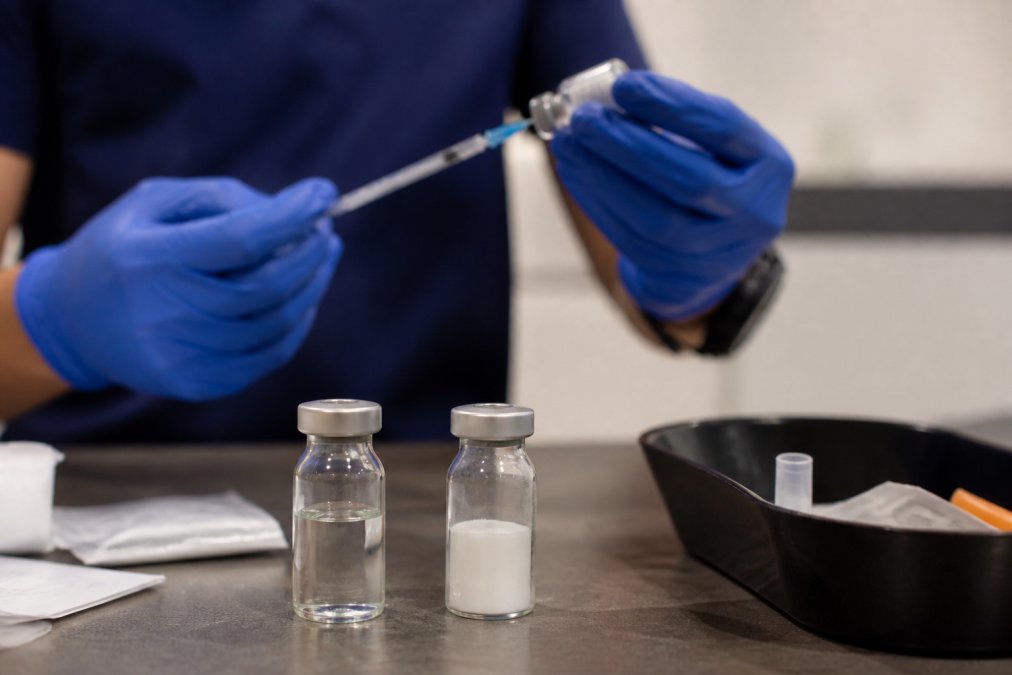
Reconstitution steps:
- Prepare your workspace. Clean a flat, dry surface with an alcohol wipe. Wash your hands thoroughly with soap and water. Gather all materials within arm’s reach.
- Calculate your desired concentration. A common approach is reconstituting a 5mg vial with 2ml of bacteriostatic water, yielding 2.5mg/ml (or 2,500 mcg/ml). This allows you to draw 0.1ml (100 mcg) or 0.2ml (200 mcg) with a standard insulin syringe. Use this formula: Desired concentration (mcg/ml) = (Vial amount in mcg) ÷ (Bacteriostatic water volume in ml).
- Draw bacteriostatic water. Using a sterile syringe and needle, draw the calculated volume of bacteriostatic water. Verify the volume by checking the syringe markings at eye level.
- Prepare the BPC-157 vial. Wipe the rubber stopper with an alcohol wipe. Let it air-dry for 10 seconds. Do not blow on it or touch it after wiping.
- Inject bacteriostatic water into the vial. Insert the needle through the rubber stopper at a slight angle. Slowly inject the bacteriostatic water. Do not inject forcefully, gentle, steady pressure prevents the powder from becoming aerosolized or clumping.
- Dissolve the powder. Remove the needle and syringe. Gently swirl the vial for 30-60 seconds until the powder is completely dissolved. The solution should be clear or slightly cloudy; if particles remain, continue swirling. Do not use the peptide if it remains cloudy after 2 minutes of gentle swirling, this indicates contamination or improper reconstitution.
- Verify the solution. Once dissolved, label the vial with the date, concentration (e.g., “2.5mg/ml”), and expiration date.
- Draw your dose. Using a fresh sterile syringe and insulin needle, draw your desired dose. For 250 mcg from a 2.5mg/ml solution, draw 0.1ml. For 500 mcg, draw 0.2ml. Always use a new needle for injection.
Storage and stability:
Reconstituted BPC-157 is stable for up to 30 days when stored in the refrigerator at 2-8°C. Do not freeze reconstituted peptide; freezing damages the peptide structure. Do not store at room temperature; room temperature accelerates degradation and increases contamination risk.
Unopened lyophilized BPC-157 powder is stable at room temperature for 12-24 months if kept in a cool, dry place away from direct sunlight. Once you reconstitute a vial, the 30-day clock starts regardless of usage frequency.
If your reconstituted BPC-157 develops cloudiness, discoloration, or an unusual odor after storage, discard it. These are signs of bacterial contamination or peptide degradation. Never inject a compromised solution.
Injection technique for localized delivery:
For maximum efficacy, inject BPC-157 as close to the injury site as safely possible. If treating a rotator cuff tear, inject subcutaneously into the shoulder region. If treating an ACL tear, inject around the knee joint (medial or lateral side). Use a 25-27 gauge needle for subcutaneous injection and a 25 gauge needle for intramuscular injection. Pinch the skin gently, insert the needle at a 45-degree angle for subcutaneous or 90-degree angle for intramuscular, inject slowly over 5-10 seconds, then withdraw and apply gentle pressure with an alcohol wipe for 10 seconds.
Rotate injection sites within the injury region to prevent lipodystrophy and fibrosis. If injecting twice daily, use different sites each time.
TB-500 Cycle Duration: Timing and Expected Outcomes
TB-500 cycles typically run 4-6 weeks with injections administered 2-3 times per week. A standard protocol uses 2mg per injection, though some protocols use 2.5mg per injection for more aggressive recovery.
The 2.5-3 hour half-life means TB-500 doesn’t accumulate the way BPC-157 does with twice-daily dosing. Instead, multiple doses per week trigger ongoing cellular repair signaling. Missing a single TB-500 injection has less impact than missing a BPC-157 dose because the repair cascade is already initiated.
Recovery timeline typically follows this pattern:
- Weeks 1-2: Initial inflammatory response modulation; some users report reduced joint pain and improved mobility
- Weeks 3-4: Noticeable improvements in recovery speed between training sessions; muscle soreness decreases
- Weeks 5-6: Significant gains in strength recovery and muscle endurance; systemic inflammation markers improve
- Post-cycle (weeks 7-12): Continued improvements as collagen remodeling progresses; benefits plateau around week 8-10
Most people see meaningful results by week 3-4, though the full benefit emerges by week 6. A 2-4 week break after completing a cycle allows your body to stabilize improvements before starting another round.
Peptide Injection Safety and Best Practices
Reconstitution with bacteriostatic water is non-negotiable for both peptides. Never use regular sterile water; it lacks the preservative needed to prevent bacterial growth. Always verify you’re purchasing pharmaceutical-grade bacteriostatic water.
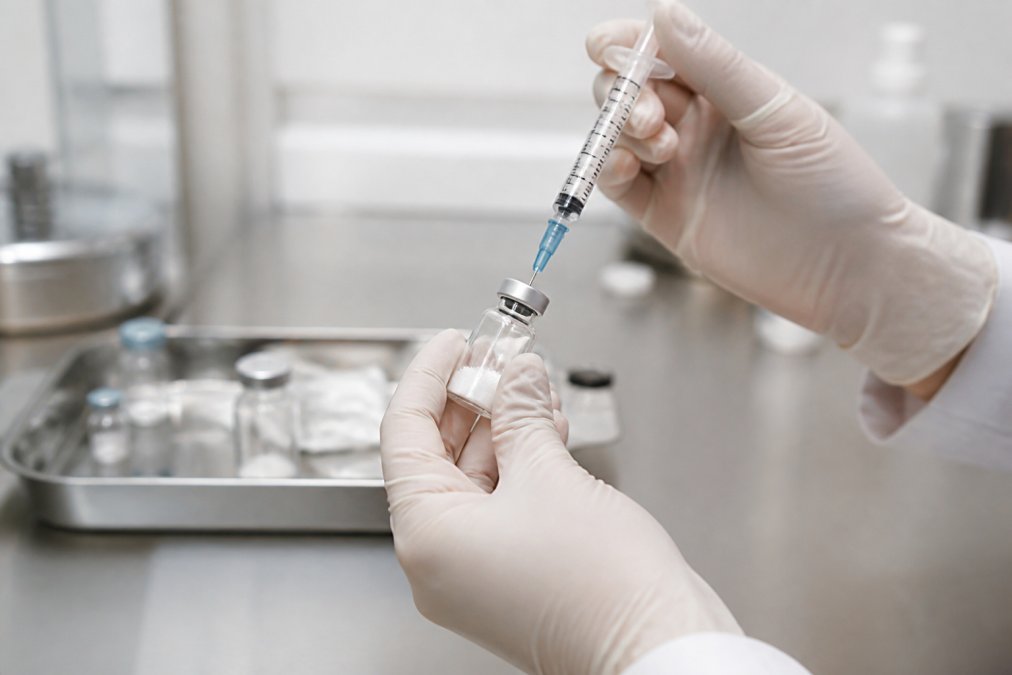
Use sterile syringes and needles for every injection. Swab the vial top with an alcohol wipe before each draw. Draw the peptide, then immediately replace the needle with a fresh sterile needle before injecting, this prevents coring (tiny rubber particles from the vial stopper entering the syringe). Store reconstituted peptides in the refrigerator at 2-8°C, never at room temperature.
Contraindications and Drug Interactions: A Detailed Safety Framework
Peptides like BPC-157 and TB-500 are research compounds, not FDA-approved medications, which means formal drug interaction studies are limited. However, several known interactions warrant caution:
Anticoagulants (warfarin, apixaban, dabigatran): Peptides promote angiogenesis, which increases vascular permeability and may potentiate bleeding risk. If you’re on warfarin or a direct oral anticoagulant, combining peptides could increase your bleeding risk, particularly with an active injury. Do not start peptide therapy without explicit approval from your anticoagulation physician. If approved, your INR or other coagulation markers may need more frequent monitoring.
Immunosuppressants (methotrexate, azathioprine, biologics like TNF inhibitors): TB-500’s immune-modulating effects could counteract prescribed immunosuppression. TB-500 works partly by regulating T-cell migration and inflammatory cytokine production. If you’re on immunosuppressants for autoimmune disease or post-transplant management, TB-500 could reduce the efficacy of your therapy or trigger a flare. Consult your rheumatologist or transplant specialist before starting either peptide.
Growth hormone or IGF-1 therapy: Combining peptides with other growth factors may create unpredictable synergistic effects. Both BPC-157 and TB-500 upregulate growth factor signaling. If you’re already using exogenous growth hormone or IGF-1, stacking peptides could amplify growth signaling in ways that haven’t been studied in humans. Discuss peptide addition with the provider managing your growth factor therapy.
NSAIDs during early healing phases: NSAIDs suppress the inflammatory response that peptides are trying to optimize. Using ibuprofen or naproxen during the first 2-4 weeks of BPC-157 or TB-500 therapy may reduce peptide efficacy. If pain management is necessary, acetaminophen is a safer alternative during the early healing window. After week 4, NSAIDs are less likely to interfere.
Corticosteroids (prednisone, dexamethasone): Systemic corticosteroids suppress immune function and collagen synthesis, both of which peptides enhance. If you’re on chronic corticosteroids, peptide therapy may be less effective. Local corticosteroid injections are less problematic than systemic steroids, but space corticosteroid and peptide injections at least 2 weeks apart.
Diabetes medications (metformin, insulin, GLP-1 agonists): No direct contraindication exists, but BPC-157 and TB-500 both influence glucose metabolism and angiogenesis. If you’re diabetic, monitor your blood glucose more closely during peptide therapy. Some users report improved insulin sensitivity, which could require dose adjustment. Work with your endocrinologist to adjust medications if needed.
Pregnancy and lactation: Neither BPC-157 nor TB-500 has been studied in pregnant or nursing women. Do not use these peptides if you are pregnant, planning to become pregnant, or actively breastfeeding.
Anyone on prescription medications should consult a healthcare provider before starting peptide therapy. Bring a list of all medications, supplements, and any recent injections to your consultation.
If you’re already on a contraindicated medication and want to try peptide therapy, do not simply stop your medication. Work with your prescribing physician to either (a) find a safer alternative medication, (b) temporarily pause peptide therapy, or (c) proceed with enhanced monitoring. Never self-manage this decision.
Rotate injection sites even when treating a specific injury. Injecting the exact same spot repeatedly can cause lipodystrophy (fat loss) or fibrosis (scar tissue). If treating a knee injury, alternate between the medial and lateral sides of the joint.
FDA Status of Research Peptides: What You Need to Know
BPC-157 and TB-500 hold a unique regulatory position in the United States. Neither peptide is FDA-approved for human use. The FDA classifies them as research chemicals, which means they cannot be legally sold for human consumption. However, they are legally available for research purposes through specialized suppliers.
Suppliers market these peptides “for research use only,” and individuals purchase them at their own risk. The FDA does not prevent possession for personal use, but it also provides no oversight of purity, sterility, or potency. This makes source verification critical, purchasing from reputable suppliers that provide third-party testing (Certificates of Analysis) is non-negotiable.
The evidence base comes from laboratory studies and animal models showing BPC-157 and TB-500 promote tissue repair, reduce inflammation, and accelerate healing. Human clinical trials are limited. Most human data comes from anecdotal reports, case studies, and observational data from athletes and practitioners.
According to FDA guidance on research peptides and regulatory status, peptides marketed for human use without FDA approval violate federal law. The agency has issued warning letters to companies making health claims about BPC-157 and TB-500. This underscores the importance of purchasing from suppliers that market these as research chemicals only, not as treatments or cures.
The Wolverine Stack: Combining BPC-157 and TB-500
The “Wolverine Stack” refers to using BPC-157 and TB-500 together during the same recovery cycle. The logic is compelling: localized tissue repair plus systemic inflammation reduction should theoretically accelerate overall recovery.
BPC-157 floods the injury site with new blood vessels and accelerates collagen synthesis locally. TB-500 simultaneously reduces systemic inflammation and promotes cellular migration across the entire body. Together, they create an environment where the injury site receives maximum local support while the rest of your body experiences reduced inflammatory interference.
A moderate ACL tear or rotator cuff strain benefits from stacking because the injury is significant enough to warrant both local and systemic support. A minor muscle strain might not justify the additional cost and complexity. Most people who stack use BPC-157 twice daily and TB-500 twice weekly, running both for 6-8 weeks simultaneously.
Expected outcomes from stacking include faster pain reduction (weeks 1-2), quicker return to training (weeks 3-4), and more complete tissue remodeling (weeks 5-8). Anecdotal reports suggest stacking produces faster recovery compared to either peptide alone, though controlled human studies don’t exist to verify this claim.
The main drawback of stacking is cost and injection frequency. You’re doubling your peptide expense and adding 10-12 injections per week to your protocol. For someone recovering from a minor injury, single-peptide therapy is more practical. For serious injuries or athletes in competitive seasons where every week of recovery matters, stacking makes sense.
Which Peptide Should You Choose for Your Recovery Goals
Your specific injury type determines the optimal choice. Tendon and ligament injury recovery demands BPC-157. Tendons and ligaments have poor blood supply, which is why they heal slowly. BPC-157’s angiogenesis and collagen synthesis directly address this problem. An ACL tear, rotator cuff strain, or Achilles tendinopathy all respond better to BPC-157’s localized action than TB-500’s systemic approach.
Muscle atrophy and general conditioning recovery leans toward TB-500. If you’ve taken time off training and lost muscle mass, or if you’re recovering from overtraining syndrome with widespread inflammation, TB-500’s systemic effects are more appropriate. Someone returning from a month of bed rest or recovering from burnout benefits more from TB-500 than from localized BPC-157.
Gastrointestinal health and inflammation represents a less obvious but important use case for BPC-157. The peptide was originally discovered in gastric juice and shows particular affinity for gut tissue repair. People with inflammatory bowel conditions sometimes use BPC-157 orally, though injectables are more bioavailable.
For complex cases involving multiple injury sites plus systemic inflammation, the Wolverine Stack makes sense. An athlete recovering from a serious knee injury while also dealing with widespread joint inflammation would benefit from both peptides working in parallel.
Don’t assume peptides replace physical therapy. Both BPC-157 and TB-500 accelerate healing, but they don’t replace the mechanical stimulus that physical therapy provides. Combine peptides with appropriate rehabilitation exercises for optimal results.
Consulting a Healthcare Provider About Peptide Treatments
Before starting BPC-157 or TB-500, a consultation with a qualified healthcare provider is essential, not optional. This is particularly important if you’re taking any medications, have underlying health conditions, or are pregnant.
A competent provider will:
- Review your medical history and current medications for contraindications
- Assess whether peptide therapy is appropriate for your specific injury
- Discuss the regulatory status and evidence base honestly
- Monitor your progress and adjust protocols if needed
- Identify any adverse reactions early
The challenge is finding a provider with actual experience using these peptides. Many conventional doctors are unfamiliar with them. Functional medicine practitioners, sports medicine specialists, and some regenerative medicine clinics have more experience. At Ascend Vitality, we connect patients with qualified providers who understand peptide protocols and can provide proper medical oversight.
Choosing between BPC-157 vs TB-500 for muscle recovery ultimately depends on your injury profile and recovery timeline. Localized injuries respond best to BPC-157’s targeted tissue repair. Systemic inflammation and muscle atrophy benefit from TB-500’s whole-body approach. For serious injuries where every week matters, combining both peptides creates a comprehensive recovery strategy. Work with a qualified healthcare provider to determine the right approach for your situation, and prioritize sourcing from suppliers with third-party testing to ensure safety and efficacy.
Frequently Asked Questions
What is the main difference between BPC-157 and TB-500 for muscle recovery?
BPC-157 primarily acts as a localized repair agent, targeting specific tissue damage through angiogenesis and cell migration at the injection site. TB-500, a thymosin beta-4 fragment, works systemically throughout the body to regulate inflammation and promote broad tissue regeneration. BPC-157 excels for acute tendon or ligament injuries, while TB-500 supports overall recovery and muscle conditioning. Your choice depends on whether you need targeted local healing or whole-body systemic support.
How long does it take to see results from BPC-157 dosage protocols for muscle recovery?
BPC-157 typically shows initial effects within 2-4 weeks of consistent administration, though full tissue regeneration can extend 8-12 weeks depending on injury severity. Most users report improved pain reduction and mobility within the first month. Results vary based on injection site, dosage frequency, and individual healing capacity. Subcutaneous injections near the injury site often produce faster localized results than intramuscular administration. Consistency with your protocol matters more than increasing dosage.
Is TB-500 more effective than BPC-157 for tendon injuries?
BPC-157 is generally considered more effective for acute tendon injuries because it concentrates at the injection site and directly stimulates collagen synthesis and tissue regeneration. TB-500 supports tendon healing through systemic inflammation reduction and cell migration, making it better for preventing future injury and supporting overall recovery. Many users combine both peptides in a ‘Wolverine Stack’ for synergistic effects: BPC-157 for immediate localized repair and TB-500 for systemic support and long-term conditioning.
What are the contraindications and drug interactions I should know about before using these peptides?
Before using BPC-157 or TB-500, disclose all medications to a healthcare provider, especially anticoagulants, immunosuppressants, and cancer medications, as peptides may interact with these. Avoid these peptides if you have active infections, cancer, or are pregnant or breastfeeding. Those with autoimmune conditions should consult a provider, as peptides modulate immune function. Always discuss your full medical history, including thyroid conditions and hormonal medications, before beginning any peptide protocol. Professional medical supervision is essential for safe use.
What does FDA status of research peptides mean for my ability to access BPC-157 or TB-500?
BPC-157 and TB-500 are not FDA-approved medications for human use in the United States. They are classified as research chemicals and sold only for laboratory research purposes. Access through legitimate channels requires a healthcare provider’s prescription and medical supervision. Some telemedicine providers, including services like Ascend Vitality, work with qualified physicians to offer these peptides under medical guidance. Always verify that any provider offering these treatments has proper medical oversight and that you understand the regulatory status and any associated risks.