Last Updated: October 12, 2026
How Dietary Changes Lower Blood Glucose Levels
Dietary changes to lower blood glucose levels work by changing what, how much, and when you eat. The goal is steady blood sugar instead of sharp spikes and crashes. Small, consistent food swaps often beat drastic overhauls. This guide walks through five steps, from building a meal plan to personalizing it with your own glucose readings.
Blood glucose is the amount of sugar circulating in your blood at any given moment. It rises after you eat carbohydrates and falls as insulin moves that sugar into your cells. When that system works poorly, levels stay high.
Here’s what most guides get wrong: they hand you a list of “good” and “bad” foods and stop there. Food lists don’t account for your body, your medications, or your daily schedule. A plan you can actually follow for months matters more than a perfect plan you abandon in two weeks.
Below, we show you exactly how to build that plan, step by step.
The single biggest lever for most people is not cutting carbs to zero. It’s improving carbohydrate quality, watching portion size, and spreading carbs evenly across the day.
What Your Blood Glucose Reading Actually Tells You
A blood glucose reading is a snapshot of your blood sugar at one moment, measured in milligrams per deciliter (mg/dL). A fasting reading reflects your baseline. A reading taken one to two hours after a meal shows how well your body handled that specific meal.
That second number is the useful one for changing your diet. It tells you how a food or meal affected you, not how it affected someone else.
Common targets many clinicians discuss:
- Fasting: often 80-130 mg/dL
- One to two hours after a meal: often under 180 mg/dL
Your own targets may differ. Ask your care team what range fits your situation. For general guidance, the CDC’s diabetes and prediabetes resources explains monitoring in plain terms.
Step 1: Build a Meal Plan for Blood Sugar Control
A meal plan for blood sugar control is a written weekly outline of meals and snacks that balances carbohydrates, protein, and fat across the day. Writing it down beats deciding in the moment, when hunger makes the call for you.
Start with a simple weekly template:
- Pick 3-4 breakfasts you like and rotate them
- Pick 4-5 lunches and 4-5 dinners
- Add 1-2 snack options
- Build your grocery list from that list alone
This takes about 30 minutes on a Sunday. It removes roughly 20 daily food decisions, which is where most plans fall apart.
A Simple Plate Method You Can Use Tonight
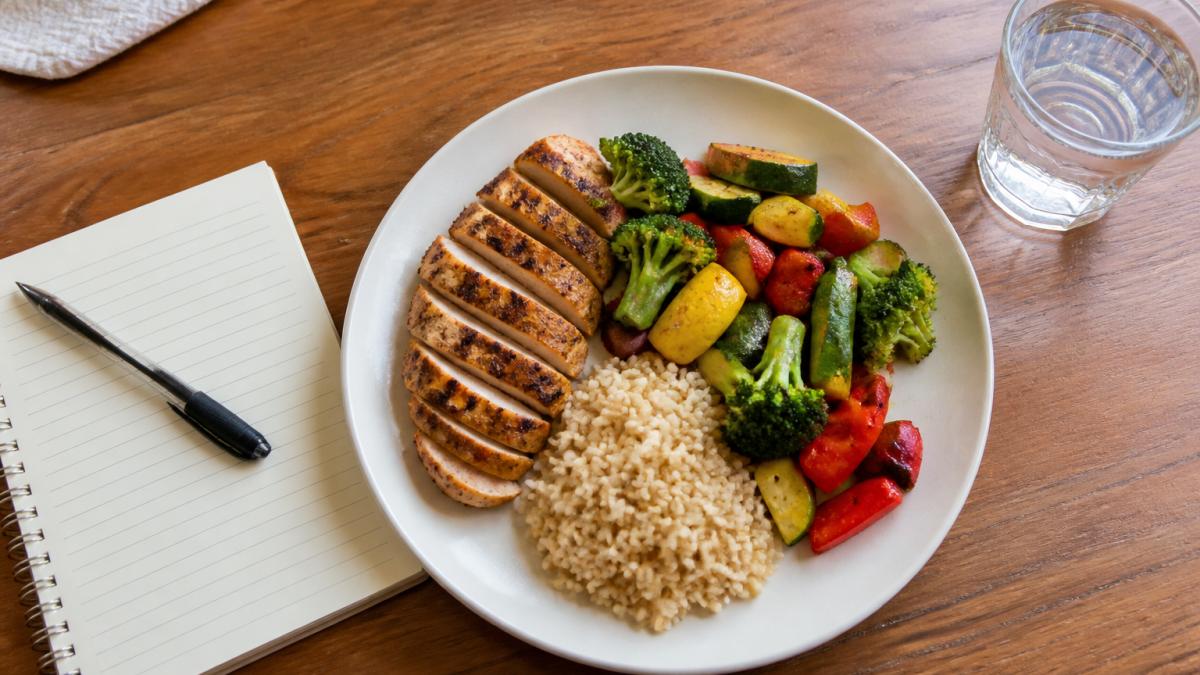
The plate method is the fastest way to control portions without counting anything. Fill half your plate with non-starchy vegetables, one quarter with protein, and one quarter with a higher-fiber carbohydrate.
For example:
- Half plate: salad, green beans, broccoli, or peppers
- Quarter plate: chicken, fish, eggs, tofu, or beans
- Quarter plate: brown rice, quinoa, or a small sweet potato
This works because vegetables and protein slow how fast glucose enters your bloodstream. You get the same plate size with a gentler rise afterward.
Serve your carbohydrate portion last. By the time you reach it, you’ve already eaten the foods that blunt the spike, and you’ll naturally take less.
What a Full Day Actually Looks Like
Most guides stop at the plate method. Here is a complete sample day with rough portions, built around about 45-60 grams of carbohydrate per meal and 15-20 grams per snack. Adjust these numbers with your care team, they are a starting point, not a prescription. Integrating healthy snack alternatives into your routine helps maintain consistent energy levels throughout the afternoon while preventing the glucose spikes often triggered by processed options.
Breakfast (about 45 g carb)
- 2 eggs scrambled with a handful of spinach
- 1 slice whole grain toast with 1 tablespoon peanut butter
- 1/2 cup plain Greek yogurt with 1/2 cup berries
- Coffee or unsweetened tea
Lunch (about 50 g carb)
- 4-5 oz grilled chicken or 1 cup beans
- 2 cups mixed salad with 1 tablespoon olive oil vinaigrette
- 1 cup roasted non-starchy vegetables
- 2/3 cup cooked brown rice or quinoa
Snack (about 15 g carb)
- 1 small apple with 1 tablespoon almond butter, or
- 1/4 cup hummus with cucumber and pepper strips
Dinner (about 50 g carb)
- 5 oz baked salmon or 4 oz lean beef
- 2 cups steamed broccoli and green beans
- 1 small sweet potato (about the size of your fist)
- Side salad with olive oil and vinegar
Evening snack (about 15 g carb, optional)
- 1/4 cup almonds, or
- 1/2 cup cottage cheese with a few cherry tomatoes
Simple Substitutions That Keep the Plan Flexible
You will not always have the exact food on the list. These swaps keep carbohydrate load roughly equal:
| Instead of | Swap in |
|---|---|
| 2/3 cup brown rice | 2/3 cup quinoa, farro, or barley |
| 1 slice whole grain toast | 1 small corn tortilla or 1/2 whole wheat English muffin |
| 1 small sweet potato | 1/2 cup butternut squash or 1/2 cup peas |
| 1 cup beans | 4 oz chicken, fish, or tofu (drops carb by ~30 g) |
| 1/2 cup berries | 1/2 cup diced melon or 1 small orange |
Build the Week in Three Passes
- Pass one, anchor the proteins. Choose 3-4 proteins you will actually cook (chicken, fish, eggs, tofu, beans) and assign them across the week.
- Pass two, layer vegetables. Pick two non-starchy vegetables per dinner and one per lunch. Frozen works and costs less.
- Pass three, slot carbohydrates. Add one measured carbohydrate to each meal. This is the step most people skip, and it is the one that controls the glucose curve.
A plan you can repeat for four weeks beats a perfect plan you abandon in four days. Keep the same breakfast and lunch for a week if that makes shopping easier, and rotate dinners.
Step 2: Choose Low Glycemic Foods Over Refined Carbohydrates
Low glycemic foods are foods that raise blood sugar slowly rather than quickly. They tend to be higher in fiber, less processed, and paired with protein or fat. Swapping refined carbohydrates for these is one of the most reliable dietary changes to lower blood glucose levels.
Managing Diabetes: Diet Changes
Yale Medicine
The clearest swaps:
- White rice → brown rice or quinoa
- White bread → whole grain or sprouted bread
- Sugary cereal → plain oats with nuts and berries
- Soda and juice → water, sparkling water, or unsweetened tea
Refined carbohydrates and added sugars hit your bloodstream fast. That speed is the problem, not the carbohydrate itself.
Non-Starchy Vegetables, Leafy Greens, and Fiber
Non-starchy vegetables and leafy greens should fill the largest share of your plate. They add volume, vitamins, and dietary fiber with very little effect on blood sugar.
Best choices:
- Leafy greens: spinach, kale, romaine, arugula
- Cruciferous: broccoli, cauliflower, Brussels sprouts
- Others: peppers, zucchini, green beans, tomatoes, cucumbers
Aim for at least one serving at lunch and dinner. Fiber slows digestion, which flattens the post-meal glucose curve. The USDA Dietary Guidelines notes that most adults fall short on fiber, and closing that gap supports better glucose control.
Step 3: Learn Carbohydrate Counting for Diabetes Management
Carbohydrate counting for diabetes management means tracking the grams of carbohydrate you eat so you can match them to your body’s needs. It gives you control that food lists alone can’t. But counting grams is only one of three levers. Quality and distribution matter just as much, and most guides cover only the first.
The Three Levers: Quantity, Quality, Distribution
Quantity is total grams of carbohydrate. This is what most people mean by “counting carbs.”
Quality is where those grams come from. Thirty grams from lentils and 30 grams from a sugary cereal are not the same meal. Fiber, protein, and fat slow digestion, so the same gram count produces a smaller and slower glucose rise.
Distribution is when you eat them. Six small carbohydrate portions across the day produce a flatter curve than two large ones, even when the daily total is identical.
A plan that ignores quality and distribution will fail even if the gram math is perfect.
Carb Counting Basics
- 15 grams of carbohydrate equals one “carb choice”
- Most women aim for 3-4 choices per meal; most men 4-5
- Snacks usually run 1-2 choices
- Read labels and measure portions for the first few weeks
You don’t need to count forever. Count closely for a month, and you’ll start estimating accurately by eye. Apps and food scales make the early weeks easier.
How to Read a Nutrition Label in 30 Seconds
- Check serving size first. A bottle may contain two or three servings, not one.
- Find Total Carbohydrate. That is the number that affects glucose.
- Look at Dietary Fiber directly below it. Subtract half the fiber grams from the total carb grams for a rough “net” estimate many clinicians use.
- Scan Added Sugars. Higher numbers mean a faster rise.
- Check Protein and Total Fat. If both are near zero, the carb load will hit quickly.
Example: a granola bar with 30 g total carb, 3 g fiber, and 12 g added sugar behaves very differently from 30 g of carb from 1 cup of black beans with 15 g fiber and 15 g protein.
Distributing Carbohydrates Across the Day
A common pattern that works well:
| Meal | Carb target | Example |
|---|---|---|
| Breakfast | 30-45 g | Oats with nuts and berries |
| Lunch | 45-60 g | Chicken, vegetables, 2/3 cup brown rice |
| Afternoon snack | 15-20 g | Apple with peanut butter |
| Dinner | 45-60 g | Salmon, vegetables, small sweet potato |
| Evening snack | 15 g (optional) | Cottage cheese or almonds |
This spreads roughly 150-200 g of carbohydrate across the day instead of loading it into two meals. The result is fewer and gentler post-meal peaks.
Quality: Same Grams, Different Curve
When you have a choice, favor carbohydrates that come with fiber, protein, or fat attached:
- Higher quality: beans, lentils, oats, barley, quinoa, whole fruit, starchy vegetables with skin
- Lower quality: white bread, white rice, sugary drinks, most breakfast cereals, candy
You do not have to eliminate the lower-quality options. Pair them with protein and fat, keep the portion small, and eat them alongside vegetables. A small portion of white rice with chicken and broccoli will spike glucose far less than the same rice eaten alone.
Skipping meals to “save” carbs for later backfires. It often causes a larger spike at the next meal, and if you take insulin or a sulfonylurea, it raises your risk of hypoglycemia.
When Counting Is Not Enough
Some people count carefully and still see high readings. Common reasons:
- The carbohydrate is low-fiber and eaten alone
- Portions drift upward over time without re-measuring
- Carbohydrates are clustered into one or two large meals
- Illness, stress, or poor sleep is raising baseline glucose
If your numbers stall, revisit quality and distribution before cutting grams further. A smaller, better-balanced plate often beats a stricter count.
Step 4: Pick Blood Sugar Friendly Snacks That Hold You Over
Blood sugar friendly snacks pair protein or fat with fiber, so they satisfy hunger without a sharp rise. The goal is to walk away full, not just fed.
Options that work well:
- Apple slices with peanut butter
- Plain Greek yogurt with berries
- A handful of almonds or walnuts
- Hummus with cucumber and pepper strips
- Hard-boiled eggs with a piece of whole grain toast
Nuts, berries, and beans earn their place here. They deliver fiber, healthy fats, and nutrients in a small package. Keep two or three of these pre-portioned at home and at work so the vending machine never wins.
Step 5: Personalize Your Plan Using Glucose Readings
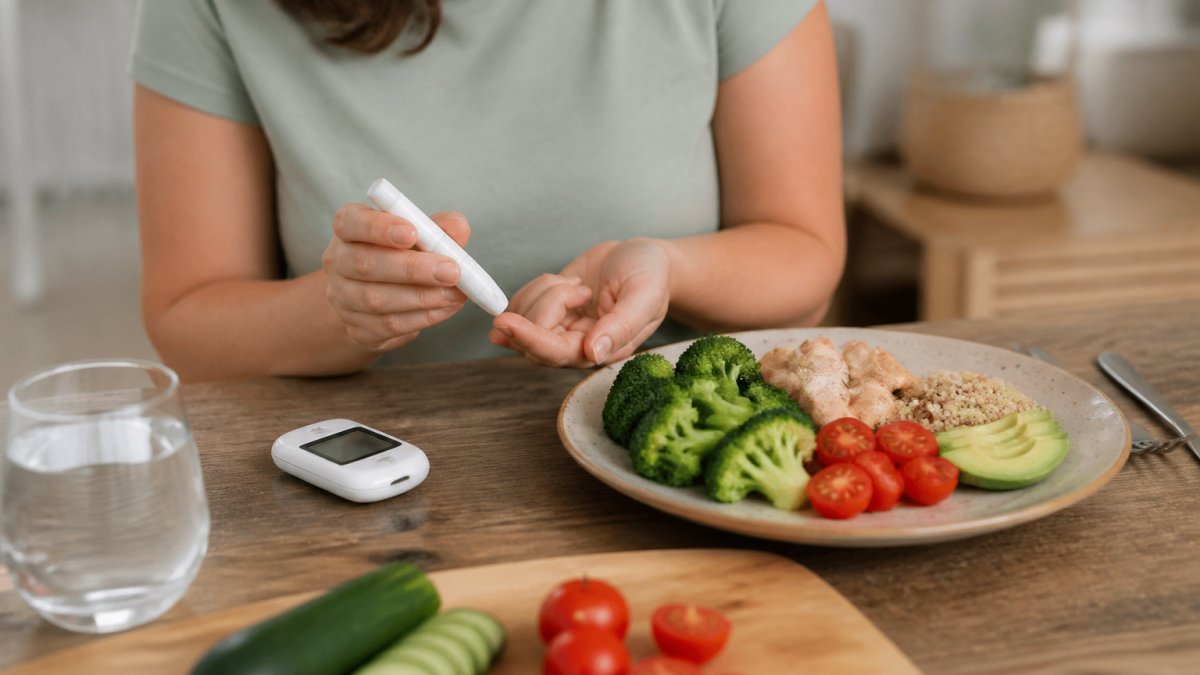
Personalizing with glucose readings turns a generic plan into yours. Two people can eat identical meals and see very different numbers.
How to do it:
- Check your glucose before a meal
- Check again one to two hours after
- Note the food, portion, and the rise
- Repeat for a week, then adjust portions of the foods that spike you most
A continuous glucose monitor makes this faster because it shows the full curve, not just two points. Many people find that a food they assumed was fine, like a specific cereal or a large fruit smoothie, is their biggest offender. You can only know by measuring.
Medication and Hypoglycemia Safety While You Change Your Diet
Changing your diet can change your medication needs, and that cuts both ways. Better food choices often lower blood sugar, which means a dose that was right before may now be too high.
Hypoglycemia is blood sugar that has dropped below your target range, often under 70 mg/dL. Symptoms include shakiness, sweating, confusion, and a fast heartbeat.
Keep fast-acting carbohydrate on hand:
- Glucose tablets
- 4 ounces of juice or regular soda
- Hard candy
Treat, recheck in 15 minutes, and repeat if needed. Then eat a small snack with protein.
Tell your care team before you make big dietary changes, especially if you take insulin or a sulfonylurea. They may need to adjust doses. The American Diabetes Association’s hypoglycemia guidance covers treatment steps in detail.
Common Mistakes That Stall Blood Sugar Progress
Most stalled progress traces back to a handful of fixable habits. Here are the ones we see most, with the fix for each.
| Mistake | What It Causes | The Fix |
|---|---|---|
| Cutting all carbs at once | Unsustainable, then rebound eating | Reduce portions gradually over weeks |
| Skipping breakfast | Bigger spike at lunch | Eat protein within 2 hours of waking |
| Drinking calories | Fast glucose spike, low fullness | Switch to water or unsweetened drinks |
| Ignoring portions | “Healthy” food still raises glucose | Measure for the first month |
| Never checking readings | No feedback, no adjustment | Test after meals for one week |
One more: relying on willpower instead of structure. A plan with pre-portioned snacks and a written menu needs far less willpower than deciding from scratch every day.
Conclusion
The hardest part of changing your diet isn’t knowing what to eat. It’s building a plan that fits your body, your medications, and your actual schedule, then sticking with it long enough to see results. Ascend Vitality connects you with specialized care pathways, providing targeted online care for weight loss, health, and hormones. They offer medically-supported programs and prescriptions delivered directly to you. They provide convenient access to treatments for specific female wellness needs and discreet solutions for men’s vitality and health concerns. Their care pathways pair you with clinicians who review your history, your medications, and your goals before recommending anything. Get started with Ascend Vitality and build a plan that works with your body, not against it.
Frequently Asked Questions
What should I eat to bring down glucose levels?
Focus on non-starchy vegetables, leafy greens, whole grains, beans, nuts, and healthy fats at each meal. These foods digest slowly and produce a gentler rise in blood glucose than refined carbohydrates. Pairing carbohydrates with protein or fat also blunts the post-meal spike. A meal plan for blood sugar control built around these choices, with consistent carbohydrate portions, tends to produce steadier readings than cutting carbs drastically or skipping meals.
How does a continuous glucose monitor help me personalize my diet?
A continuous glucose monitor (CGM) tracks glucose levels throughout the day, showing how specific meals, snacks, and activity affect your readings. Instead of guessing which foods spike your blood sugar, you can see the pattern within 1-2 hours after eating. This lets you adjust portion sizes, swap refined carbohydrates for low glycemic foods, or change meal timing based on your own data. Discuss CGM use with your healthcare provider, especially if you take insulin or medications that can cause hypoglycemia.
Is peanut butter a good choice for people managing diabetes?
Peanut butter can be a good choice when it fits your carbohydrate budget. It contains healthy fats, protein, and fiber, which slow digestion and help stabilize blood glucose. Choose natural peanut butter with minimal added sugars, and keep portions to about 2 tablespoons. Pairing it with a small apple or celery makes a blood sugar friendly snack that holds you over without a sharp spike. Check the label, since some brands add sugar or hydrogenated oils.
How many carbohydrates should I eat per meal?
There is no single number that works for everyone. Many people managing diabetes start with 45-60 grams of carbohydrates per meal and 15-20 grams per snack, but your target depends on your weight, activity level, medications, and glucose goals. Carbohydrate counting for diabetes works best when you track your readings alongside your intake and adjust with guidance from your healthcare team. Consistency in portion size often matters as much as the total amount.