
Last Updated: June 21, 2026
Making lifestyle changes to improve erectile dysfunction naturally is one of the most effective and underutilized approaches available to men today. Erectile dysfunction reflects underlying cardiovascular, metabolic, or psychological factors that respond directly to lifestyle modification. Below, we’ll show you exactly how to address each of those root causes, what realistic timelines look like, and a 30-day action plan you can start today.
The key insight most guides miss: treat ED as a systemic health signal rather than an isolated problem. The circulatory system, hormonal balance, and nervous system are deeply intertwined with sexual function.
Understanding Erectile Dysfunction and Lifestyle Factors
Erectile dysfunction affects a significant portion of men worldwide, with prevalence increasing with age. According to the National Institute of Diabetes and Digestive and Kidney Diseases, ED is more common in men with chronic conditions such as diabetes, hypertension, and cardiovascular disease, which points directly to the power of lifestyle-based intervention. ED is frequently a downstream consequence of modifiable health behaviors, and addressing those behaviors can produce measurable improvement in sexual function without medication.
How Blood Flow, Cardiovascular Health, and Vascular Disease Impact Sexual Function
Erectile function is fundamentally a vascular event. An erection requires adequate blood flow into the erectile tissue of the penis, which depends on healthy, flexible arteries and veins. Vascular disease, including atherosclerosis and hypertension, narrows and stiffens those vessels, reducing the blood flow needed for a firm erection.
Cardiologists sometimes describe ED as “the canary in the coal mine” for cardiovascular health. Men who develop ED in their 40s without an obvious psychological cause often have early-stage arterial disease that hasn’t yet produced chest pain or other cardiac symptoms. Metabolic syndrome, which combines abdominal obesity, insulin resistance, high blood pressure, and abnormal lipid levels, compounds this risk significantly.
The Role of Nitric Oxide and Erectile Tissue in Natural Improvement
Nitric oxide is the key molecular signal that triggers smooth muscle relaxation in the erectile tissue, allowing blood to fill the corpora cavernosa and produce an erection. Diet, exercise, and smoking status all directly influence nitric oxide availability. Physical activity increases nitric oxide production. Foods rich in dietary nitrates, such as leafy greens and beets, provide precursors for nitric oxide synthesis. Smoking degrades nitric oxide and damages the endothelial cells that produce it. This biochemical chain explains why lifestyle changes work at a mechanistic level.
Physical Activity and Exercises for Erectile Dysfunction
The single most evidence-backed lifestyle intervention for ED is regular physical activity. Aerobic exercise directly improves endothelial function, raises nitric oxide production, reduces body fat, and improves testosterone levels, addressing multiple root causes simultaneously. Many men who commit to a consistent exercise program report meaningful improvements in erectile function within 8 to 12 weeks.

Cardiovascular Exercise for Improved Blood Flow
Cardiovascular exercise should target the aerobic system specifically. Activities that elevate heart rate to 60-80% of maximum for sustained periods, such as brisk walking, jogging, cycling, swimming, or rowing, produce the greatest vascular benefits. Aim for at least 150 minutes of moderate-intensity aerobic activity per week, spread across four to five sessions.
Sustained aerobic effort signals the endothelium to produce more nitric oxide, reduces arterial stiffness, lowers resting blood pressure, and improves insulin sensitivity. Each of these effects independently supports better erectile function. Resistance training adds complementary benefit by raising testosterone and reducing visceral fat, but aerobic work should be the foundation.
Adding a 10-minute brisk walk after dinner each evening is one of the most underrated starting points. It improves post-meal blood sugar regulation and vascular tone without requiring gym access or equipment.
Pelvic Floor Exercises (Kegels) for Men: A Neglected but Effective Approach
Pelvic floor exercises, commonly called Kegels, can improve erectile function. The pelvic floor muscles, particularly the bulbocavernosus and ischiocavernosus muscles, play a direct mechanical role in achieving and maintaining erections. These muscles compress the veins that drain blood from the penis, helping trap blood in the erectile tissue and maintain rigidity. Weakness in these muscles contributes to venous leak, one of the less-discussed causes of ED.
How to perform pelvic floor exercises for ED:
- Identify the correct muscles by stopping urination midstream.
- Contract those muscles for 3 seconds, then fully relax for 3 seconds.
- Perform 10-15 repetitions per set.
- Complete 3 sets per day.
- Progress to 5-second holds as strength improves.
- Avoid holding your breath or contracting your glutes and abdomen.
Research cited by the NHS on pelvic floor exercises for men supports pelvic floor training as a legitimate therapeutic approach for erectile dysfunction. Give it at least 8 weeks before evaluating results.
Foods That Improve Erectile Dysfunction and Dietary Patterns
Diet shapes erectile function through multiple pathways: body weight, blood pressure, endothelial health, testosterone levels, and inflammatory load. The foods that improve erectile dysfunction are largely the same foods that protect cardiovascular health.
Mediterranean Diet and Nutrient-Dense Foods for Sexual Health
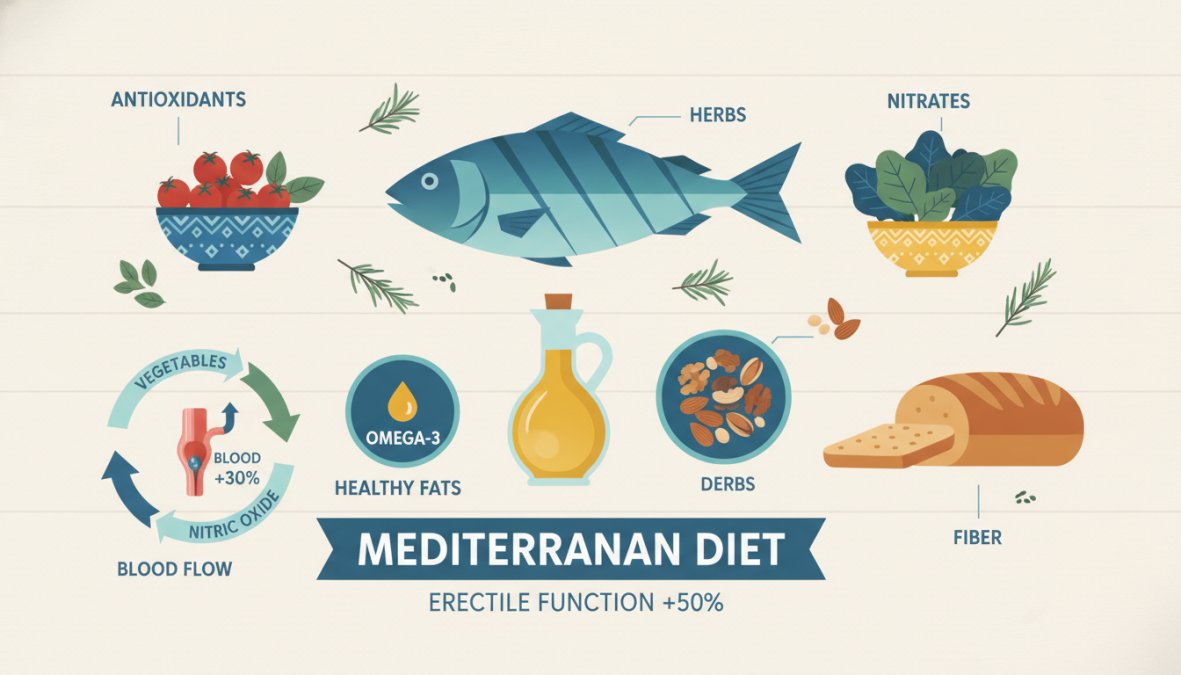
The Mediterranean diet is the most studied dietary pattern in relation to erectile function and cardiovascular health. It emphasizes vegetables, fruits, whole grains, legumes, fish, olive oil, and nuts, while limiting red meat, processed foods, and refined sugars.
Olive oil and nuts provide monounsaturated fats that support endothelial function. Leafy greens and beets are rich in dietary nitrates that boost nitric oxide. Fish provides omega-3 fatty acids that reduce arterial inflammation. Specific foods worth prioritizing include dark leafy greens (spinach, arugula, kale) for dietary nitrates, fatty fish (salmon, mackerel, sardines) for omega-3s, berries and pomegranate for antioxidants, nuts and seeds for arginine, and dark chocolate (70%+) for flavonoids. Reducing ultra-processed foods, sugar-sweetened beverages, and trans fats is equally important.
Panax Ginseng and Other Natural Supplements: Evidence and Cautions
Panax ginseng, sometimes called red ginseng, has the most consistent body of evidence among natural supplements for erectile dysfunction. It appears to support nitric oxide synthesis and may have direct effects on erectile tissue. Other supplements with some supporting evidence include L-arginine and maca root.
Natural supplements can interact with medications. L-arginine can lower blood pressure and may interact with nitrate medications. Panax ginseng may interact with blood thinners and diabetes medications. Always disclose supplement use to your healthcare provider before starting.
Weight Management and Metabolic Health
Obesity is one of the strongest modifiable risk factors for erectile dysfunction. Excess visceral fat actively disrupts the hormonal and vascular environment required for normal erectile function. Even modest weight loss, in the range of 5-10% of body weight, produces meaningful improvements in testosterone levels, blood pressure, and insulin sensitivity.

Body Mass Index, Obesity, and Sedentary Lifestyle Impact
Visceral adipose tissue converts testosterone to estrogen through aromatase activity, reducing the testosterone available for sexual function and libido. It also promotes chronic low-grade inflammation that damages endothelial cells and contributes to insulin resistance and hypertension. A sedentary lifestyle independently raises ED risk even in men with normal body weight. Breaking up prolonged sitting with short activity bouts throughout the day has vascular benefits that complement structured exercise.
Managing Diabetes and Hypertension Through Lifestyle Modification
Diabetes and hypertension are two of the most common underlying causes of erectile dysfunction. Both damage the small blood vessels and nerves that support erectile function, and both are highly responsive to lifestyle modification.
For men with type 2 diabetes or prediabetes, the combination of dietary change, weight reduction, and aerobic exercise can meaningfully improve blood sugar control. Hypertension management through lifestyle, including the DASH diet, sodium reduction, aerobic exercise, and stress management, reduces arterial stiffness and improves blood flow to erectile tissue. According to the American Heart Association’s guidance on hypertension and lifestyle, lifestyle modifications are recommended as first-line treatment for stage 1 hypertension before medication is introduced.
Sleep Quality, Stress Management, and Psychological Factors
Sleep and psychological factors are primary drivers for a substantial subset of men with ED, and addressing them can produce faster improvement than any dietary change.
Sleep Apnea, Sleep Hygiene, and Testosterone Restoration
Testosterone production is predominantly nocturnal. The majority of daily testosterone release occurs during deep sleep stages, specifically during REM sleep. Poor sleep quality directly suppresses testosterone production and disrupts the hormonal environment required for healthy libido and erectile function.
Sleep apnea is particularly relevant. Untreated sleep apnea causes repeated oxygen desaturation events throughout the night, which impairs testicular function and testosterone synthesis. Many men with ED and undiagnosed sleep apnea see significant improvement in sexual function after initiating CPAP therapy.
Basic sleep hygiene practices that support testosterone restoration include targeting 7-9 hours of sleep per night consistently, maintaining a fixed sleep and wake time, keeping the bedroom cool and dark, avoiding screens for at least one hour before bed, and limiting alcohol in the evening.
Performance Anxiety and Psychological Counseling: Breaking the Cycle
Performance anxiety is one of the most underappreciated drivers of erectile dysfunction, particularly in younger men. A single episode of ED can trigger a cycle of anticipatory anxiety that makes subsequent episodes more likely. Psychological counseling, including cognitive behavioral therapy (CBT) and sex therapy, is an effective intervention for ED with a significant psychological component. Many men have both a vascular component and a significant anxiety overlay, so treating only the physical side leaves half the problem unaddressed.
Smoking Cessation and Alcohol Reduction Strategies
Smoking is one of the most direct pharmacological assaults on erectile function. Nicotine causes acute vasoconstriction, reducing blood flow to erectile tissue immediately after smoking. Chronic smoking damages the endothelial lining of blood vessels, accelerates atherosclerosis, and degrades nitric oxide. Smoking cessation produces measurable improvement in erectile function for many men, with some improvement appearing within weeks of quitting.
Alcohol is more nuanced. Moderate alcohol intake (one to two drinks per day) does not appear to significantly harm erectile function. Heavy alcohol intake, however, suppresses testosterone production, damages the liver’s ability to metabolize hormones, and directly impairs the neurological signals required for erection. The practical target for men concerned about alcohol’s impact on sexual health is to keep intake below two standard drinks per day, with several alcohol-free days per week.
How Long to Reverse ED With Lifestyle Changes: Realistic Timeline
How long to reverse ED with lifestyle changes depends on the severity of the underlying cause, the consistency of the intervention, and whether contributing conditions like diabetes or sleep apnea are being simultaneously addressed.
Week-by-Week and Month-by-Month Expectations
Realistic timelines for lifestyle changes to improve erectile dysfunction naturally:
| Timeframe | What Changes | What to Expect |
|---|---|---|
| Weeks 1-2 | Reduced alcohol, better sleep, smoking cessation | Improved energy, better morning erections |
| Weeks 3-6 | Aerobic fitness improving, weight beginning to shift | Modest improvement in erection quality |
| Months 2-3 | Vascular function improving, testosterone stabilizing | More consistent erectile response |
| Months 4-6 | Sustained weight loss, cardiovascular adaptation | Significant improvement in many men |
| 6-12 months | Full metabolic and vascular adaptation | Maximum benefit from lifestyle alone |
Men with primarily psychological ED often see faster improvement, sometimes within weeks. Men with significant vascular disease or long-standing diabetes should expect a longer timeline and may benefit from combining lifestyle changes with medical support.
Medication Interaction Warnings and When to Seek Professional Help
Lifestyle changes work best as part of a comprehensive approach. Seek evaluation if ED develops suddenly, if it is accompanied by reduced libido or other hormonal symptoms, or if you have cardiovascular risk factors that have not been assessed.
Medication interactions are a real concern for men pursuing natural approaches alongside existing prescriptions. Men taking nitrate medications for heart conditions cannot safely use PDE5 inhibitors. Men on blood pressure medications may find that adding aggressive exercise and dietary sodium reduction lowers their blood pressure further than expected, requiring dose adjustment. Supplements including L-arginine, ginseng, and ginkgo biloba all carry interaction risks with common medications.
Lifestyle change and medical treatment are not competing approaches. The most effective outcomes come from combining both under qualified supervision, particularly for men with underlying cardiometabolic conditions.
Your 30-Day Lifestyle Action Plan for Natural ED Improvement
A structured 30-day plan makes the difference between intention and execution. The goal is not perfection but progressive habit installation.
Week 1: Foundation Building
Week 1 focuses on establishing the three highest-use behaviors before adding complexity.
- Set a consistent sleep and wake time and stick to it all seven days
- Walk briskly for 30 minutes every day
- Remove ultra-processed foods and sugar-sweetened beverages from the home
- Begin pelvic floor exercises: 3 sets of 10 three-second holds, twice daily
- If you smoke, set a quit date within this week and contact your doctor about cessation support
- Track alcohol intake honestly; aim for at least three alcohol-free days this week
Week 2-4: Progressive Integration and Habit Tracking
Once the foundation behaviors are stable, layer in additional interventions progressively.
Week 2:
- Increase aerobic exercise to 45 minutes, five days per week
- Add one Mediterranean-style meal daily
- Begin a simple stress management practice: 10 minutes of diaphragmatic breathing or meditation daily
- Progress pelvic floor holds to 5 seconds
Week 3:
- If sleep quality remains poor, complete a sleep apnea screening questionnaire and discuss with your doctor
- Add resistance training two days per week
- Evaluate whether psychological support would be beneficial
Week 4:
- Review what has changed: morning erection frequency, energy, mood, sleep quality
- Identify the one habit with the most friction and troubleshoot it specifically
- Set a 90-day continuation plan based on what is working
The men who sustain improvement from lifestyle changes are those who treat these behaviors as permanent health investments, not temporary fixes.
Conclusion: Sustainable Pathways to Urologic Health
Erectile dysfunction is not a life sentence, and for many men, it is a reversible condition when the right lifestyle changes are applied consistently. According to the Urology Care Foundation’s patient resources on erectile dysfunction, lifestyle modification is recommended as a first-line approach for many men with ED, particularly those with identifiable cardiovascular or metabolic risk factors. The path forward is clearer than most men realize.
Frequently Asked Questions
Can erectile dysfunction be reversed naturally through lifestyle changes?
Yes, erectile dysfunction can often be improved or reversed through lifestyle changes, particularly when ED is related to cardiovascular health, obesity, diabetes, or sedentary habits. Improving blood flow through exercise, adopting a Mediterranean diet, managing stress, and addressing sleep issues can restore sexual function. However, if ED persists after 3-6 months of consistent lifestyle modification, consult a healthcare provider to rule out underlying medical conditions or medication side effects.
How long does it take to see results from lifestyle changes for erectile dysfunction?
Most men notice initial improvements within 2-4 weeks of consistent lifestyle changes, though significant gains typically appear within 8-12 weeks. Cardiovascular exercise and weight loss show earlier benefits because they improve blood flow and nitric oxide production. Pelvic floor exercises may take 4-6 weeks to strengthen erectile tissue. Smoking cessation and stress reduction can show benefits within days to weeks. Full reversal of ED depends on severity, age, and underlying health conditions.
What foods help with erectile dysfunction most effectively?
Foods rich in nitric oxide precursors and antioxidants work best: leafy greens (spinach, arugula), fatty fish (salmon, sardines), nuts, dark chocolate, berries, and watermelon. The Mediterranean diet pattern, emphasizing olive oil, legumes, whole grains, and fresh produce, shows strong clinical evidence for improving sexual function. Avoid processed foods, excess sugar, and high-sodium items that damage blood vessels. Panax ginseng supplements show modest evidence in some studies but require caution with certain medications.
Do pelvic floor exercises (Kegels) really help erectile dysfunction in men?
Yes, pelvic floor exercises strengthen the bulbocavernosus muscle, which controls blood retention in erectile tissue and improves orgasm control. Men performing Kegels consistently for 4-6 weeks often report improved erection quality and duration. To perform: identify the muscle by stopping urination mid-stream, then contract for 3 seconds and release for 3 seconds. Start with 10 repetitions, 3 times daily, gradually increasing to 20-30 reps. Combine with cardiovascular exercise for best results.