Last Updated: July 8, 2026
What Is Physician-Led Telehealth Weight Loss?
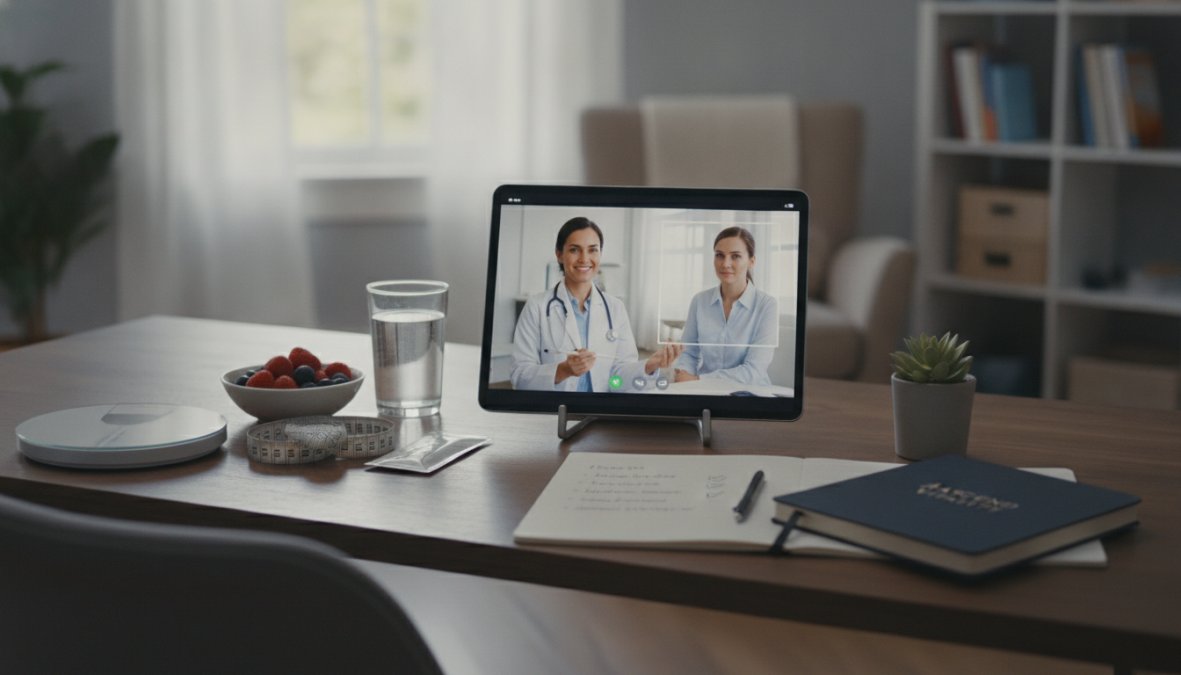
Physician-led telehealth weight loss combines clinical oversight, personalized treatment, and prescription medications delivered to your home. Unlike self-guided apps, this model connects you with board-certified doctors who evaluate your health history, metabolic markers, and goals through virtual consultations. They prescribe evidence-based interventions, from lifestyle modifications to FDA-approved medications, and monitor progress through remote patient monitoring systems.
What distinguishes this approach is accountability. You’re enrolled in a personalized treatment plan with regular follow-up care, medication adjustments, and behavioral health support, not following a generic program.
How Medical Weight Loss Programs Online Differ from Self-Guided Apps
Clinical Oversight and Accountability
Self-guided apps operate without medical supervision. Users set their own calorie targets and make medication decisions independently. A physician-led program reverses this: your doctor reviews baseline labs, establishes safe calorie deficits based on your metabolic rate, and monitors for contraindications before prescribing medication.
This oversight matters when complications arise. If you experience side effects, a physician can adjust your dose, switch medications, or identify underlying conditions. Real-time monitoring alerts your doctor to concerning trends before they become serious. When you check in with an app, you’re accountable to yourself; with a physician, you’re accountable to a medical professional who reviews adherence and adjusts your plan.
Prescription Access and Medication Management
The most significant advantage is access to weight loss medications, particularly GLP-1 receptor agonists like semaglutide and tirzepatide, which have demonstrated profound effects on appetite regulation. Self-guided apps cannot prescribe these; only licensed physicians can evaluate candidacy and manage prescriptions safely.
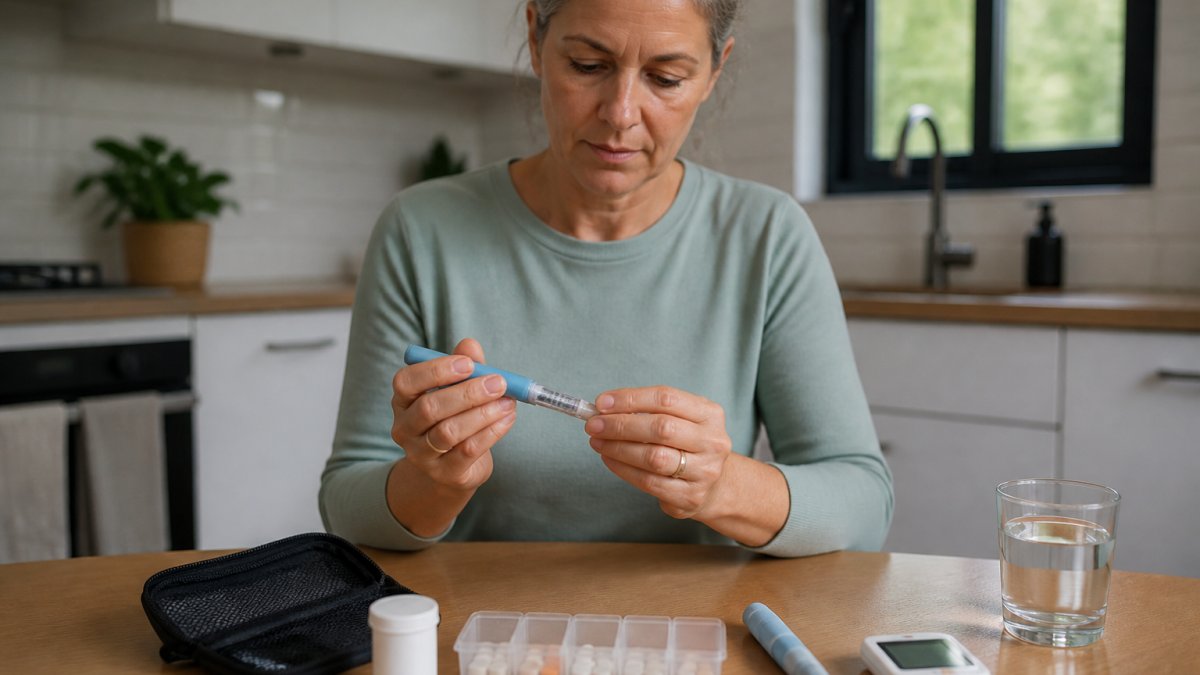
A physician assesses your cardiovascular health, kidney function, and medication interactions before prescribing. They establish dosing schedules, monitor for side effects, and adjust based on your response. They also provide guidance on injection technique, storage, and what to expect during initial treatment. Physicians can prescribe other evidence-based medications, phentermine, naltrexone-bupropion combinations, tailored to your metabolic profile and contraindications. This personalized pharmacology is impossible in an app-based model.
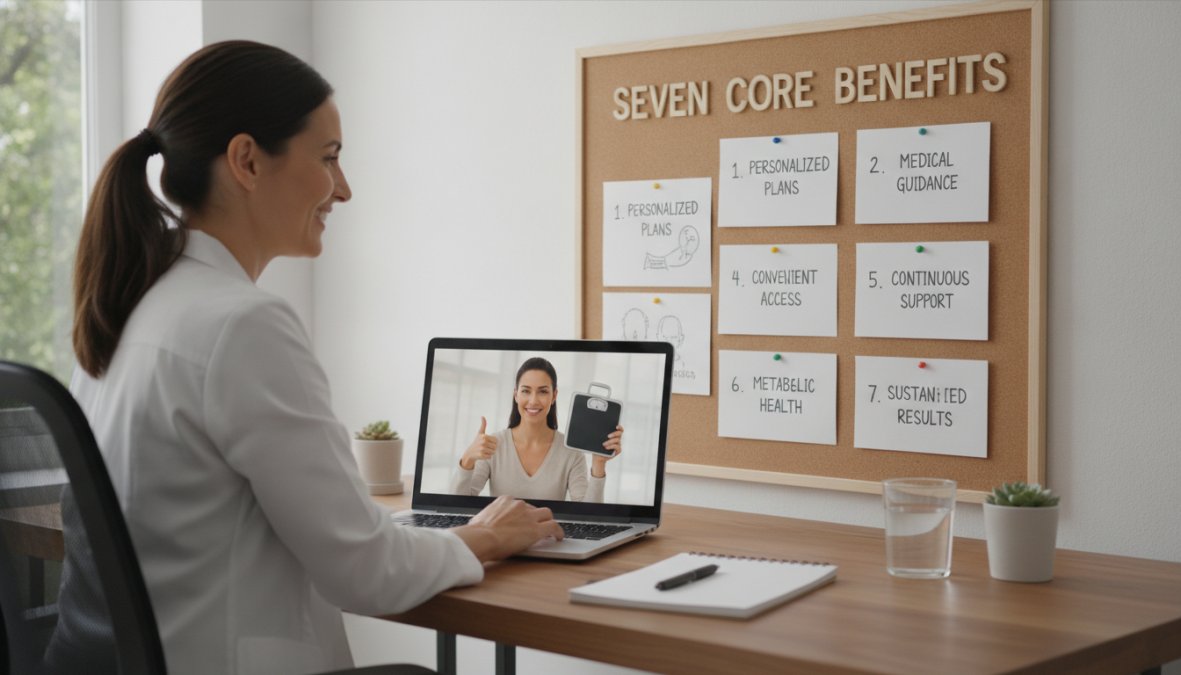
Seven Core Benefits of Physician-Led Telehealth Weight Loss
1. Medical Supervision and Patient Safety
Your doctor conducts a comprehensive baseline evaluation, reviewing your complete medical history, current medications, cardiovascular status, and metabolic markers. This assessment identifies contraindications before they become problems.
Rapid weight loss can trigger complications: gallstones, electrolyte imbalances, or metabolic adaptation. A physician monitors for these through regular check-ins and lab work when necessary. If complications emerge, your doctor adjusts your treatment plan immediately. Medical supervision also ensures weight loss medications don’t interact with your existing prescriptions, something self-guided users often discover only after experiencing adverse effects.
2. Access to GLP-1 Receptor Agonists and Weight Loss Medications
GLP-1 receptor agonists represent a paradigm shift in weight loss treatment. These medications work by increasing satiety, slowing gastric emptying, and improving glucose control. Patients using GLP-1s typically lose 15-22% of their body weight over 12-18 months, compared to 5-10% with lifestyle modification alone.
Only physicians can prescribe these medications. A telehealth doctor evaluates whether you meet criteria for GLP-1 therapy, determines the appropriate starting dose, establishes a titration schedule, and monitors your response. They manage common side effects through dose adjustments or supportive care. Access to medication transforms weight loss from a willpower problem into a medical intervention, removing a major barrier to success.
3. Remote Patient Monitoring and Real-Time Feedback
Telehealth programs use digital health platforms that track your weight, vital signs, dietary patterns, and medication adherence between appointments. Your doctor reviews this data continuously, not just during scheduled visits. If your weight plateaus, your physician notices and intervenes before significant regain occurs.
Real-time feedback accelerates learning. When you log food intake and see immediate feedback on calorie balance or nutrient gaps, you adjust behavior more quickly than with monthly check-ins. This continuous monitoring also catches medication side effects early, allowing your doctor to adjust your dose before you consider stopping treatment entirely.
4. Convenience and Accessibility for Chronic Disease Management
Telehealth eliminates geographic and time barriers that prevent many people from accessing weight loss care. You attend appointments on your schedule from home, work, or anywhere with internet access. This accessibility is especially valuable for people in rural areas, those with mobility limitations, or individuals with demanding schedules.
Accessibility also reduces treatment discontinuation. When appointments require travel or time off work, many people drop out. Remote care removes these friction points, improving adherence and outcomes.
5. Personalized Treatment Plans and Behavioral Health Support
Your treatment plan is built specifically for you, not a generic template. Your physician considers your metabolic rate, activity level, dietary preferences, and lifestyle constraints when designing your strategy. Behavioral health support addresses the psychological dimension of weight loss through nutrition counseling, health coaching, or mental health support to address emotional eating and stress management.
Personalization extends to medication selection. If you have a history of anxiety, your doctor might avoid stimulant-based drugs. If you have a family history of pancreatitis, they monitor GLP-1 use more closely. This individualization prevents one-size-fits-all failures and improves safety.
6. Long-Term Maintenance Strategies and Follow-Up Care
Weight loss is only the first phase; maintaining results long-term is the real challenge. Physician-led programs build maintenance into the treatment structure from the beginning. Your doctor discusses transition strategies during weight loss and continues monitoring after you’ve reached your goal weight.
Maintenance often requires ongoing medication. Many patients continue GLP-1 therapy long-term to prevent weight regain, with periodic dose adjustments. Your physician manages this ongoing treatment, monitoring for side effects and adjusting as needed. Follow-up care also addresses the metabolic adaptation that occurs during weight loss, when your body resists further weight loss through hormonal changes that increase hunger and decrease energy expenditure.
7. Integrated Health Coaching and Lifestyle Modification Guidance
Sustainable weight loss requires changes to eating patterns, physical activity, sleep, and stress management. Physician-led programs integrate health coaches who provide practical guidance tailored to YOUR specific situation. If you travel frequently for work, they help you maintain your program while eating in restaurants. If you struggle with emotional eating, they teach you alternative coping strategies.
Lifestyle modification also includes sleep optimization, stress reduction, and strength training, factors that directly impact weight loss success and metabolic health. Your coach or physician helps you prioritize these based on your current capacity.
Effectiveness of Virtual Weight Loss Programs: Clinical Evidence
Telehealth weight loss programs deliver measurable clinical outcomes. Patients in physician-led programs typically lose 10-15% of their body weight over 6-12 months, with many achieving significantly greater losses when using GLP-1 medications. These results compare favorably to traditional in-office programs and substantially exceed self-guided app outcomes.
Real-world data shows that patients who engage consistently with their programs, attending appointments, taking medications as prescribed, logging progress, achieve weight loss goals at rates above 70%. Dropout rates are lower than traditional programs, likely due to convenience and accessibility.
Cost of Physician Supervised Weight Loss: Understanding Your Investment
Telehealth weight loss programs vary in cost structure. Costs typically include the physician consultation fee, medication costs, and optional add-ons like health coaching or advanced monitoring. Unlike traditional weight loss clinics, telehealth programs often have lower overhead, which can translate to more affordable care.
Insurance Coverage and Reimbursement Nuances
Insurance coverage for telehealth weight loss varies significantly by plan, state, and treatment provided. Some insurance plans cover physician consultations for obesity management, especially when the patient has weight-related comorbidities like diabetes or hypertension. However, coverage for weight loss medications, particularly GLP-1s, remains inconsistent.
Medicare covers some weight loss medications and behavioral counseling for beneficiaries with obesity and related conditions, though coverage rules are specific. Many commercial plans cover GLP-1s for diabetes management but not for weight loss alone. Some plans require prior authorization or step therapy. Before starting a program, verify your specific coverage with your insurance plan and ask about out-of-pocket costs.
What Affects Pricing and How to Compare Value
Program pricing depends on the physician’s credentials, appointment frequency, whether medications are included, and the level of health coaching or monitoring. Value isn’t determined by price alone. A $200/month program with minimal oversight might deliver poor results, while a $400/month program with intensive monitoring and medication access might cost less per pound lost.
Some programs bundle medication costs into their fees; others charge separately. A program charging $150/month for physician visits but requiring you to pay $500-1000/month for GLP-1 medication costs substantially more than a program charging $400/month with medication included. Ask for a complete cost breakdown before enrolling.
Is Telehealth Weight Loss Safe? Data Privacy and Clinical Standards
Safety concerns about telehealth weight loss typically focus on remote medical supervision and health data security. Both are legitimate considerations.
HIPAA Compliance and Patient Data Protection
Legitimate telehealth weight loss programs operate under strict HIPAA regulations that protect your health information. Your personal data, medical history, weight, medications, and consultation notes are encrypted and stored securely. The program cannot share your information with third parties without your explicit consent.
When evaluating a program, verify their HIPAA compliance explicitly. Ask whether they use encrypted communication platforms for consultations and messaging. Confirm that their data storage meets HIPAA standards. Reputable programs provide detailed privacy policies and security certifications. Check whether the program has cyber liability insurance and a documented breach response plan.
Evidence-Based Standard of Care in Virtual Settings
Remote supervision doesn’t mean less rigorous care; it means different care. A physician conducting a telehealth consultation can obtain the same medical history, review the same lab results, and prescribe the same medications as an in-office physician. The main limitation is the physical exam, but for weight loss management, this limitation is minor since obesity care relies primarily on history, labs, and medication management.
The standard of care for telehealth weight loss is identical to in-office care: baseline evaluation, regular monitoring, medication safety oversight, and follow-up. Physicians practicing telehealth are held to the same licensing and malpractice standards as office-based physicians. Many major medical organizations now recognize telehealth as an appropriate delivery model for weight loss care.
Common Misconceptions About Telehealth Weight Loss
One widespread misconception is that telehealth programs are unregulated or less legitimate than traditional clinics. In reality, telehealth physicians are licensed, regulated, and held to identical standards as office-based physicians.
Another myth is that telehealth weight loss relies entirely on medication and ignores lifestyle change. Quality programs integrate medication with behavioral support, nutrition counseling, and activity guidance. Medication removes the appetite barrier, but sustainable weight loss still requires dietary and lifestyle changes.
Some people believe weight loss medications are dangerous or prescribed recklessly. In reality, GLP-1 medications have been used safely for diabetes management for decades. Physicians using them for weight loss follow careful protocols: baseline screening, appropriate patient selection, dose titration, and regular monitoring.
A final misconception is that telehealth weight loss is a quick fix. Sustainable weight loss typically takes 6-12 months, and many patients continue treatment for years. Realistic programs acknowledge this is a long-term commitment with gradual, consistent progress.
Getting Started: Your Virtual Consultation and Next Steps
Starting a telehealth weight loss program begins with an initial consultation. You’ll complete a health history questionnaire, including your weight history, previous weight loss attempts, current medications, and lifestyle factors. The physician reviews this information before your consultation.
During your first appointment, expect a thorough discussion of your weight loss goals, barriers to previous success, and medical history. The physician may order baseline labs, metabolic panel, lipid profile, thyroid function, to assess your metabolic health and identify contraindications to medication. You’ll establish realistic goals together, typically aiming for 1-2 pounds per week of weight loss.
After the consultation, the physician develops your personalized treatment plan, including dietary guidance, activity recommendations, medication prescription if appropriate, and a monitoring schedule. You’ll receive access to the program’s digital platform for logging progress, messaging your physician, and accessing educational resources. Your first follow-up appointment typically occurs 2-4 weeks later.
Success requires consistent engagement. Log your weight regularly, take medications as prescribed, attend your appointments, and communicate with your physician about challenges. Programs work best when you view them as partnerships: your physician provides expertise and oversight, but you do the work of changing habits and taking medications.
| Program Element | Purpose | Frequency |
|---|---|---|
| Physician consultation | Medical evaluation, treatment planning, medication management | Every 4-12 weeks |
| Remote monitoring | Weight tracking, medication adherence, side effect detection | Daily to weekly |
| Health coaching | Behavioral support, lifestyle guidance, barrier troubleshooting | Weekly to monthly |
| Lab work | Metabolic assessment, medication safety monitoring | Baseline and annually |
| Medication adjustment | Dose optimization, side effect management, treatment switching | As needed |
Telehealth weight loss represents a fundamental shift in how obesity care is delivered. The combination of physician oversight, medication access, remote monitoring, and behavioral support addresses the biological, behavioral, and medical dimensions of weight loss. For many people, this model removes barriers that prevented success with previous attempts.
The challenge most people face isn’t finding a weight loss program, it’s finding one that combines medical expertise with genuine accessibility and long-term support. Ascend Vitality specializes in exactly this: connecting patients with board-certified physicians who prescribe evidence-based treatments, monitor progress through digital health platforms, and provide ongoing support throughout your weight loss journey and beyond. With integrated health coaching, medication access, and personalized treatment plans, Ascend Vitality addresses the complete picture of sustainable weight loss. Get started today and discover how physician-led telehealth can transform your relationship with your weight and your health.
Frequently Asked Questions
How does physician-led telehealth weight loss work?
Physician-led telehealth weight loss connects you with licensed healthcare providers through virtual consultations. During your initial visit, the physician reviews your medical history, metabolic health, and weight loss goals to create a personalized treatment plan. This may include prescription medications like GLP-1 receptor agonists, lifestyle modification guidance, and behavioral health coaching. You receive ongoing remote patient monitoring with regular follow-up appointments, allowing your physician to adjust your treatment based on clinical outcomes and your progress.
What are the main benefits of physician-led telehealth weight loss compared to traditional dieting?
Physician-led programs offer medical supervision, evidence-based treatment plans, and access to prescription weight loss medications, advantages unavailable through self-guided dieting. You receive real-time monitoring and feedback from healthcare providers, personalized behavioral health support, and integrated health coaching. These medical weight loss programs online also provide accountability through follow-up care and long-term maintenance strategies, addressing not just weight loss but underlying metabolic health and chronic disease management.
Is telehealth weight loss safe and compliant with medical standards?
Yes, when delivered through reputable telehealth platforms with licensed physicians. Physician-led programs maintain the standard of care required in traditional settings, including HIPAA-compliant data protection and evidence-based clinical protocols. Your healthcare provider conducts thorough initial assessments, monitors for side effects, and adjusts medications as needed. The convenience of virtual care doesn’t compromise patient safety, it enhances accessibility while maintaining rigorous medical oversight and compliance with healthcare regulations.
Can I access weight loss medications like GLP-1s through telehealth?
Yes, one of the key benefits of physician-led telehealth is direct access to prescription weight loss medications, including GLP-1 receptor agonists. After a virtual consultation where your physician evaluates your medical history and BMI, they can prescribe appropriate medications delivered directly to you. This eliminates barriers to accessing these evidence-based treatments and allows your physician to monitor your response through remote patient monitoring, ensuring safe and effective use while adjusting dosages based on your clinical progress.