Last Updated: October 8, 2026
Why Comprehensive Blood Work Makes or Breaks TRT
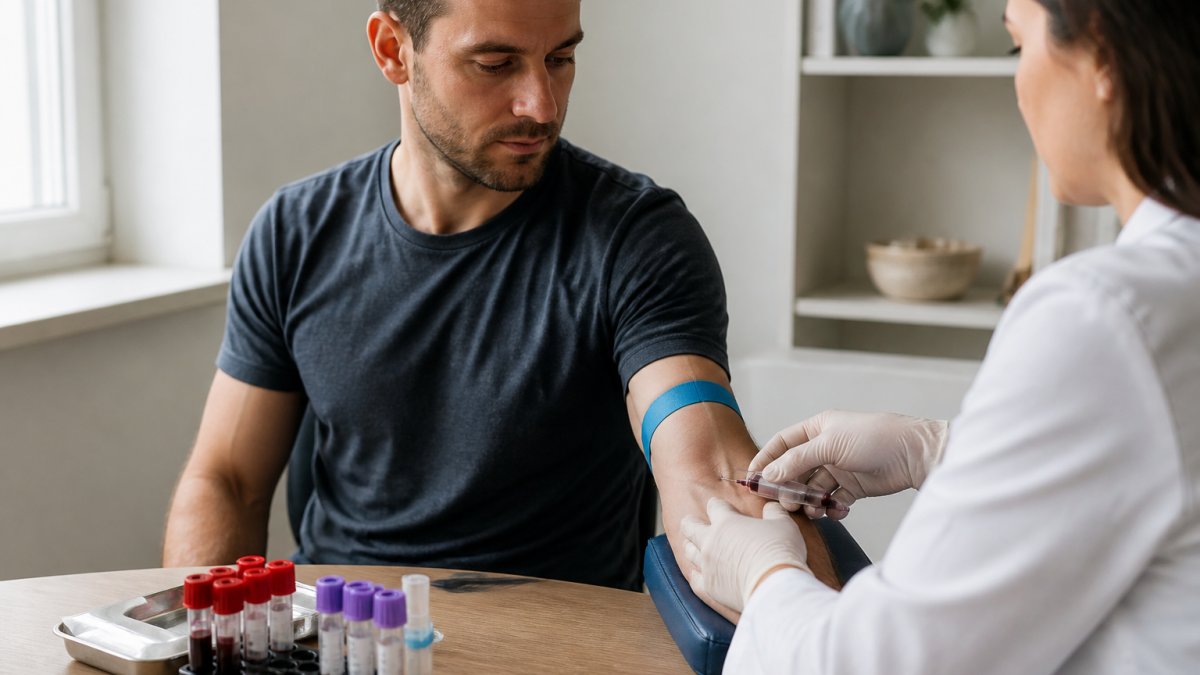
A TRT clinic with comprehensive blood work is a testosterone replacement therapy provider that draws and interprets a full lab panel before prescribing treatment, rather than relying on a single total testosterone reading. That distinction matters more than most patients realize.
Here is the problem with the shortcut approach. One number tells you almost nothing about why testosterone is low or how your body will respond to treatment. Total testosterone alone can look normal while free testosterone is suppressed.
The Endocrine Society’s clinical practice guideline on testosterone therapy is explicit on this point: diagnosis requires consistently low morning testosterone on at least two separate measurements, plus a clear picture of the symptoms and the systems behind them. A clinic that skips that work is not diagnosing anything.
So what separates a thorough provider from a fast one? Three things: the scope of the panel, who reads it, and what happens after treatment starts.
Comprehensive blood work is not an upsell. It is the diagnostic foundation that determines whether TRT is appropriate, what protocol fits, and how safely you can stay on it.
What Labs to Check Before TRT: The Complete Panel
A complete pre-treatment panel covers two categories: hormones that explain the cause of low testosterone, and safety markers that establish your baseline before anything changes. Skipping either category leaves your provider working blind. But a list of test names is not the same as understanding what those tests reveal. Below is what each marker actually tells a clinician, and how the results combine into a diagnosis.

Hormone Panel: Total Testosterone, Free Testosterone, SHBG, LH, FSH, Estradiol
Total testosterone measures all the testosterone in your blood, bound and unbound. It is the headline number, and the one most clinics stop at.
Free testosterone measures the fraction actually available for your body to use. Two men can share the same total testosterone and have very different free levels, which is why binding proteins matter.
SHBG, or sex hormone-binding globulin, is the protein that grabs testosterone and holds it. High SHBG means less free testosterone circulating, even when total levels look acceptable. Low SHBG does the opposite, it can make free testosterone look generous while total is unremarkable.
LH and FSH are the pituitary signals that tell your testes to work, and together they are the single most useful pair for locating the cause:
- Low or inappropriately normal LH and FSH alongside low testosterone points to a central (secondary) cause, the pituitary is not sending the signal. This pattern warrants evaluation for pituitary or hypothalamic issues before treatment.
- High LH and FSH alongside low testosterone points to a primary testicular cause, the pituitary is signaling loudly but the testes are not responding.
That distinction changes the entire treatment conversation, including whether a specialist referral is appropriate before any prescription is written.
Estradiol is estrogen, which men produce too. Testosterone converts into estradiol, and unbalanced levels can cause mood changes, water retention, and other side effects that patients often blame on the testosterone itself. Estradiol is also a marker worth watching in men carrying excess body fat, since adipose tissue drives conversion.
Safety Labs: CBC, PSA, Liver Enzymes, Lipid Panel, Hematocrit
Safety labs establish what “normal” looks like for you before treatment begins. Their value is in the baseline: a hematocrit or PSA reading taken before therapy is the reference point every later draw is compared against.
- CBC (complete blood count): Baseline red blood cell production, including hemoglobin and hematocrit together
- Hematocrit: The percentage of your blood made up of red cells; testosterone can raise this, and a rising trend is the most common reason a protocol gets adjusted
- PSA: Prostate-specific antigen, a baseline for prostate monitoring; meaningful interpretation depends on age and prior readings
- Liver enzymes: Testosterone passes through the liver, so function matters, particularly for men with existing liver conditions
- Lipid panel: Cholesterol and triglycerides, which therapy can shift, and which matter for overall cardiovascular risk assessment
How the Results Combine Into a Diagnosis
No single value diagnoses hypogonadism. A common pattern in well-run clinics is to weigh four things together: symptoms that are consistent and persistent, at least two low morning testosterone measurements, the LH/FSH pattern that locates the cause, and the safety baseline that determines whether treatment is appropriate at all. A low number with no symptoms is a different conversation than symptoms with a borderline number, and both are different from a clearly low number with a central pattern that needs a specialist look.
A clinic that orders only total testosterone is not running a comprehensive panel, no matter what the marketing says. Ask for the itemized list in writing before you pay, and ask which markers are repeated on a second draw before any diagnosis is made.
TRT Clinic Comparison: Five Providers with Comprehensive Blood Work
The five providers below publish different levels of detail about their testing, pricing, and follow-up.
| Provider | Testing Approach | Published Pricing | Follow-Up Detail | Best For |
|---|---|---|---|---|
| Ascend Vitality | Online care pathways with lab-driven review | Contact for current pricing | Ongoing monitoring built into care plan | Discreet online care across hormones, weight, and wellness |
| National Low T Clinic | Comprehensive hormone test, no fasting | $99 test; $270/month plan | Not specified in public materials | Priced testing before committing to care |
| Vyta | Lab-based treatment decisions | From $89/month | Not detailed publicly | Comparing online monthly pricing |
| Revive Low T | In-person exam with 51-analyte panel | $99 first visit; from $35/month | Insurance billing for labs and meds | Patients who want an in-person exam |
| TRT Nation | Online TRT care | Contact for pricing | Delivery methods discussed | Researching online delivery options |
Ascend Vitality: Online Care Pathways for Hormones and Weight
Ascend Vitality connects patients with specialized care pathways for weight loss, hormone health, and wellness, delivered through online consultations and prescriptions sent directly to you.
Our care pathways are built to address those together, with discreet packaging and confidential consultations for patients who value privacy.
Contact us directly for current pricing and to discuss which pathway fits your situation.
National Low T Clinic: $99 Testing and All-Inclusive Monthly Plans
National Low T Clinic publishes more pricing detail than most competitors, which is genuinely useful when you are comparison shopping. Their one-time comprehensive hormone test runs $99, requires no fasting, and results come back in 24 to 48 hours. Their all-inclusive monthly plan is listed at $270.
That transparency deserves credit. The gap is in the details: the public materials do not specify which individual tests the $99 panel includes, and they do not break down what the $270 monthly plan covers. Before enrolling, ask for both lists in writing.

Vyta: Lab-Driven Decisions with Transparent Monthly Pricing
Vyta positions itself as an online testosterone therapy service where treatment decisions rest on lab results. Pricing starts at $89 per month, and the company advertises that evaluation costs nothing for people who do not qualify for treatment.
That last detail is a smart structure, since it removes some risk from the initial step. The limitation is disclosure: public materials do not specify which blood tests are included, whether testing carries a separate cost, or how follow-up monitoring works once treatment begins. Those are exactly the questions to ask before enrolling.

Revive Low T: In-Person Exam with a 51-Analyte Lab Panel
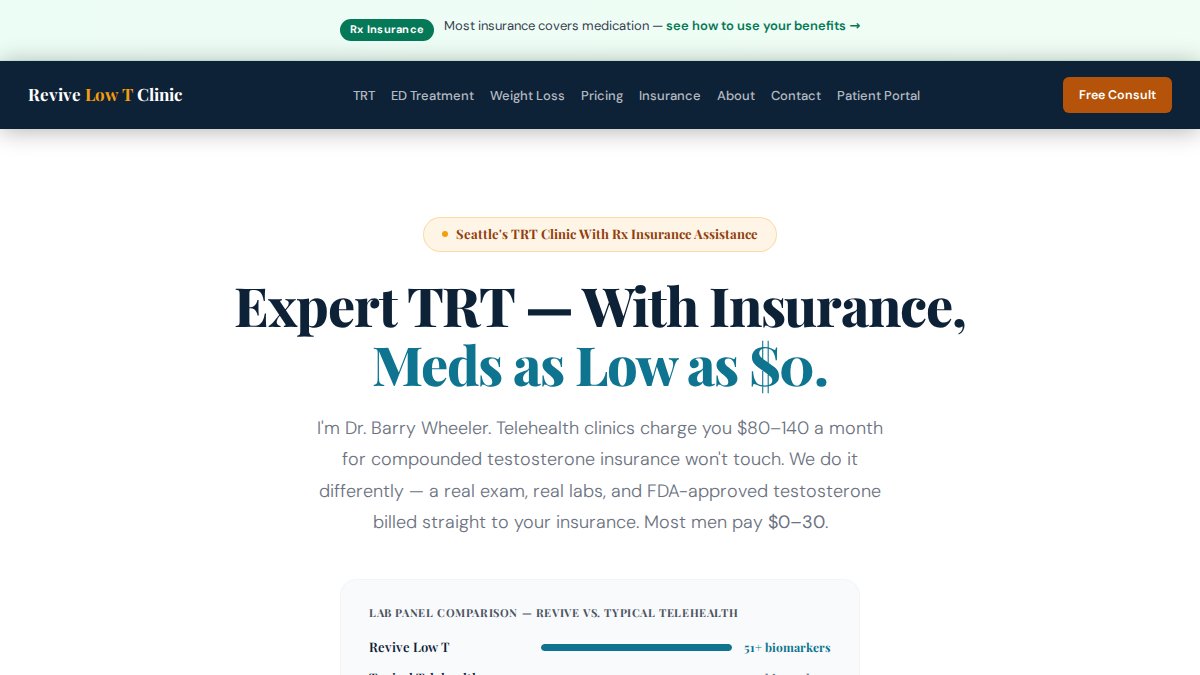
Revive Low T takes the opposite approach from the online-only providers. Their $99 first visit includes an in-person doctor exam and a 51-analyte lab panel, and plans start at $35 per month. Labs and medications are billed to insurance.
The 51-analyte figure is the most specific panel size any of these five providers publishes, and the in-person exam answers a real objection: some patients simply are not comfortable with a video-only evaluation for something this personal. What the public materials do not do is name the individual tests in that panel or clarify what insurance will actually cover for a given patient. Confirm both before your visit.
TRT Nation: Online Care Featured in Clinic Comparisons
TRT Nation offers online TRT care and appears in current clinic comparison content that discusses pricing and delivery methods. That third-party coverage is useful for orientation, though it is not a substitute for the clinic’s own disclosures.
The supplied comparison describes upfront lab costs across the clinics it reviews as ranging widely, but it does not isolate TRT Nation’s individual lab fee, and it does not verify which blood tests are included. If you are evaluating TRT Nation, request the itemized panel and total cost directly.

What Labs to Check While on TRT: Follow-Up Panels Explained
Follow-up testing is where a TRT program either stays safe or drifts. Baseline labs tell you where you started. Monitoring labs tell you what treatment is actually doing to your body.
Testosterone, Estradiol, and Hematocrit: The Core Three
These three form the backbone of every follow-up panel.
Total and free testosterone confirm your levels are landing in a therapeutic range rather than overshooting it. Estradiol tracks conversion and helps explain side effects like mood shifts or fluid retention. Hematocrit is the one to watch most carefully: testosterone stimulates red blood cell production, and when hematocrit climbs too high, blood becomes thicker and cardiovascular strain increases.
That is not a reason to avoid treatment. It is a reason to monitor, which is precisely what separates a supervised program from a self-managed one.
PSA, Lipids, and Liver Enzymes: Ongoing Safety Checks
PSA monitoring matters for prostate health, particularly in older patients. Lipid panels track cholesterol and triglyceride changes. Liver enzymes confirm your liver is handling the medication without strain.
These are not one-time checks. They are the recurring safety net that lets your provider adjust your protocol before small shifts become real problems.
Schedule follow-up labs at a consistent time of day, ideally morning, and avoid drawing right after intense exercise or poor sleep. Timing consistency makes your results comparable from one panel to the next, which is what lets your provider spot real trends.
TRT Blood Work Monitoring: Frequency, Timing, and What to Track
TRT blood work monitoring follows a predictable rhythm at most well-run clinics, and the schedule exists for good reason. Early testing catches problems while they are still adjustable. What most clinic pages leave out is what the numbers actually mean once they come back, which is the part that determines whether your protocol stays safe.
| Phase | Typical Timing | What Gets Checked |
|---|---|---|
| Baseline | Before treatment | Full hormone panel plus safety labs |
| Early follow-up | Weeks after starting | Testosterone, estradiol, hematocrit |
| Ongoing monitoring | Regular intervals | Core three plus PSA, lipids, liver |
| Annual review | Once yearly | Full panel and protocol reassessment |
Timing matters as much as frequency. Testosterone levels fluctuate through the day, so drawing at the same time each visit keeps your results comparable. Providers typically want levels checked at a consistent point in your injection or application cycle, since a trough reading and a peak reading tell different stories. A trough drawn just before your next dose and a peak drawn a day after will not look like the same patient.
What the Numbers Actually Tell You
Most practitioners do not treat a single out-of-range value as an emergency. They look at direction and rate of change against your own baseline. A hematocrit that has climbed steadily across two draws is a different signal than one that bounced up once after a bout of dehydration. The same logic applies to PSA and lipids.
- Testosterone: The goal is a level that resolves symptoms without overshooting into a range that drives side effects. Two men can feel best at different numbers, which is why symptoms and labs are read together.
- Estradiol: Tracked alongside testosterone because conversion rises with dose and body fat. Symptoms like mood shifts, water retention, or nipple sensitivity are the reason to look, not a number in isolation.
- Hematocrit: The marker most likely to force a protocol change. When it rises above the reference range, providers commonly reduce dose, adjust injection frequency, or in some cases recommend a blood donation before continuing. This is a monitoring decision, not a reason to abandon treatment.
- PSA: Interpreted against your own baseline and age. A meaningful rise from your starting point prompts a conversation, sometimes with a urology referral, before therapy continues.
- Lipids and liver enzymes: Watched for shifts that would change cardiovascular or hepatic risk assessment over the long term.
Symptoms Belong in the Same Conversation as the Labs
What to actually track: the numbers, yes, but also how you feel. Energy, sleep quality, mood, libido, and physical performance belong in the same conversation as your lab values. A provider who only looks at the chart is missing half the picture. A common pattern is a patient whose testosterone is in range but who still reports fatigue, at which point sleep, thyroid, and iron status become worth checking rather than simply raising the dose.
Fertility and Contraindications: The Conversation Competitors Skip
Testosterone therapy suppresses LH and FSH, which is the same signaling that drives sperm production. Men who want to preserve or restore fertility need that discussed before the first injection, not after. Options exist, including holding off on TRT, using adjunct medications to maintain testicular function, or banking sperm, but they require a plan made in advance. A clinic that never raises fertility is not giving you the full picture.
Certain conditions also make testosterone therapy risky or require careful management, including active prostate cancer, significantly elevated hematocrit, untreated sleep apnea, and severe heart failure. Some are absolute contraindications; others require monitoring and specialist input. The FDA’s prescribing information for testosterone products outlines the risks patients should discuss with a qualified provider, including cardiovascular considerations and the importance of monitoring red blood cell counts.
Patients on other medications, particularly thyroid treatment or anticoagulants, need their provider to review interactions before starting. That review is a conversation, not a checkbox.
Monitoring is not a formality, it is the mechanism that keeps treatment safe and adjustable. Ask your provider what thresholds would change your protocol, and get the answer before you start.
Pricing and Insurance: What Comprehensive Blood Work Really Costs
Cost is where TRT shopping gets murky, because providers bundle testing into wildly different structures. Some fold labs into a monthly fee. Some charge separately. Some bill insurance. Some do not.
The published figures from the providers above give you a starting map: a $99 one-time hormone test at National Low T Clinic, plans starting at $35 per month at Revive Low T with labs billed to insurance, and monthly pricing from $89 at Vyta. One clinic comparison describes upfront lab costs across the clinics it reviewed as ranging broadly, which tells you the spread is real and worth investigating before you commit.
Here is the question that cuts through the confusion: ask for the total first-year cost, itemized. That means the consultation fee, the lab panel charge, medication, follow-up testing, and any administrative fees, listed separately. A clinic that cannot produce that breakdown in writing is telling you something.
The cheapest advertised price is rarely the cheapest total cost. Compare the full first-year figure, including every lab draw, before choosing a provider.
Safety Monitoring and Contraindications: What Every TRT Patient Should Know
TRT is not appropriate for everyone, and any clinic that skips this conversation is a red flag. Certain conditions make testosterone therapy risky or require careful management, including active prostate cancer, significantly elevated hematocrit, untreated sleep apnea, and severe heart failure. Some are absolute contraindications; others require monitoring and specialist input.
The FDA’s prescribing information for testosterone products outlines the risks that patients should discuss with a qualified provider, including cardiovascular considerations and the importance of monitoring red blood cell counts.
Safety monitoring is not a formality. It is the mechanism that catches problems early. Rising hematocrit, changing PSA, or shifting lipid values are all manageable when they are caught on a scheduled lab draw. They are considerably harder to address when nobody is looking.
Patients on other medications, particularly thyroid treatment or anticoagulants, need their provider to review interactions before starting. That review is a conversation, not a checkbox.
Questions to Ask Before Choosing a TRT Clinic
Bring this list to every consultation. The answers separate a real program from a prescription mill.
- Which specific tests are included in your initial panel, itemized?
- Who reviews my results, and what are their credentials?
- What is my total first-year cost, broken down by category?
- How often do you run follow-up labs, and which markers do you track?
- What happens if my hematocrit or PSA rises above range?
- Do you accept insurance for labs, medications, or visits?
- How do you handle treatment adjustments if my symptoms do not improve?
- What is your process if I want to stop treatment?
A clinic that answers all eight clearly is worth your time. A clinic that deflects even two is not.
Conclusion: Choosing the Right TRT Clinic with Comprehensive Blood Work
The difference between a good TRT program and a bad one comes down to one question: does the provider test thoroughly, interpret carefully, and monitor continuously? Everything else, pricing, convenience, packaging, is secondary to that.
At Ascend Vitality, we connect patients with specialized online care pathways for hormone health, weight management, and wellness, with prescriptions delivered directly to you and discreet, confidential consultations throughout. If you are tired of guessing why your energy, mood, or vitality has slipped, start with the labs, then build the plan. Get started with Ascend Vitality.
Frequently Asked Questions
What blood tests should a TRT clinic run before starting treatment?
A comprehensive panel should include total testosterone, free testosterone, SHBG, LH, FSH, and estradiol to confirm low testosterone and identify the cause. Safety labs like CBC, PSA, liver enzymes, lipid panel, and hematocrit establish your baseline before treatment. Some clinics publish panel sizes, such as Revive Low T’s stated 51-analyte lab panel. Ask any clinic exactly which tests are included before you commit.
What labs should be checked while on TRT?
Follow-up panels typically measure total testosterone, free testosterone, estradiol, and hematocrit to confirm your levels stay in range. PSA, lipid panel, and liver enzymes track safety over time. The exact schedule depends on your protocol and provider. TRT blood work monitoring usually starts around 6 to 12 weeks after you begin treatment, then adjusts based on your results.
How often should blood work be done during TRT?
Most providers check labs 6 to 12 weeks after starting treatment, then every 3 to 6 months once levels stabilize. If your dose changes or you add a new medication, testing happens sooner. Your provider sets the schedule based on your symptoms, lab results, and how long you have been on therapy. Ask your clinic for its monitoring protocol before you enroll.
Does a TRT clinic need to review blood work before prescribing treatment?
Yes. A responsible TRT clinic reviews comprehensive blood work before prescribing. Testosterone levels, SHBG, LH, and FSH help confirm low testosterone and rule out other causes. Safety labs like PSA, hematocrit, and liver enzymes identify contraindications. Clinics that skip this step or prescribe without lab review put patients at unnecessary risk. Ask how the clinic handles lab review and who interprets your results.
How can I compare TRT clinics that offer lab testing?
Compare four things: which tests are included, who reviews the results, how often monitoring happens, and what the total cost covers. National Low T Clinic publishes a $99 comprehensive hormone test with results in 24 to 48 hours. Vyta advertises pricing starting at $89 per month. Revive Low T lists a $99 first visit with a 51-analyte panel. Ask each clinic for an itemized list of included tests and follow-up costs.