
5 Best Hormone Therapy Options for Men in 2026
Last Updated: July 28, 2026
According to the American Urological Association, approximately one in four men over age 30 have low testosterone levels that may warrant clinical attention. Understanding the 5 best hormone therapy options for men has become essential for those experiencing fatigue, reduced libido, or mood changes associated with andropause. At Ascend Vitality, we specialize in connecting men with targeted hormone therapy pathways that match their lifestyle, medical needs, and preferences. This guide breaks down the most effective treatment methods available today, helping you make an informed decision about which option aligns best with your health goals.
Understanding Testosterone Replacement Therapy (TRT) and Hormone Imbalance
Testosterone Replacement Therapy is a medical treatment designed to restore testosterone levels in men whose bodies produce insufficient amounts of this critical hormone. When the endocrine system fails to produce adequate testosterone, symptoms cascade across multiple body systems, affecting sexual function, muscle development, bone density, and mental health.
A clinical diagnosis requires blood work confirming serum testosterone levels below 300 ng/dL, typically measured in the morning when testosterone naturally peaks. Some men benefit dramatically from hormone optimization, while others find that lifestyle modifications, improved sleep, exercise, and stress management, address their symptoms without pharmaceutical intervention. Starting TRT without confirmed hypogonadism can suppress your body’s natural testosterone production and create long-term dependency.
Low Testosterone Symptoms: Recognizing When You Need Help
Physical signs of andropause include persistent erectile dysfunction, reduced muscle mass despite consistent training, increased body fat particularly around the midsection, and declining bone density. Mental symptoms, depression, brain fog, anxiety, and loss of motivation, often go unrecognized as hormone-related.
Fatigue becomes many men’s most disruptive symptom. Unlike normal tiredness that improves with rest, low testosterone fatigue persists regardless of sleep duration. Workouts feel harder, recovery takes longer, and motivation to exercise disappears. Libido changes range from mild disinterest to complete loss of sexual function. Some men experience hot flashes, night sweats, accelerated hair loss, or gynecomastia as their testosterone-to-estrogen ratio shifts.
If you experience multiple symptoms simultaneously lasting more than 4-6 weeks, blood work is warranted. Do not self-diagnose based on symptoms alone; some conditions mimicking low testosterone (thyroid dysfunction, sleep apnea, depression) respond to entirely different treatments.
5 Best Hormone Therapy Options for Men: A Detailed Comparison
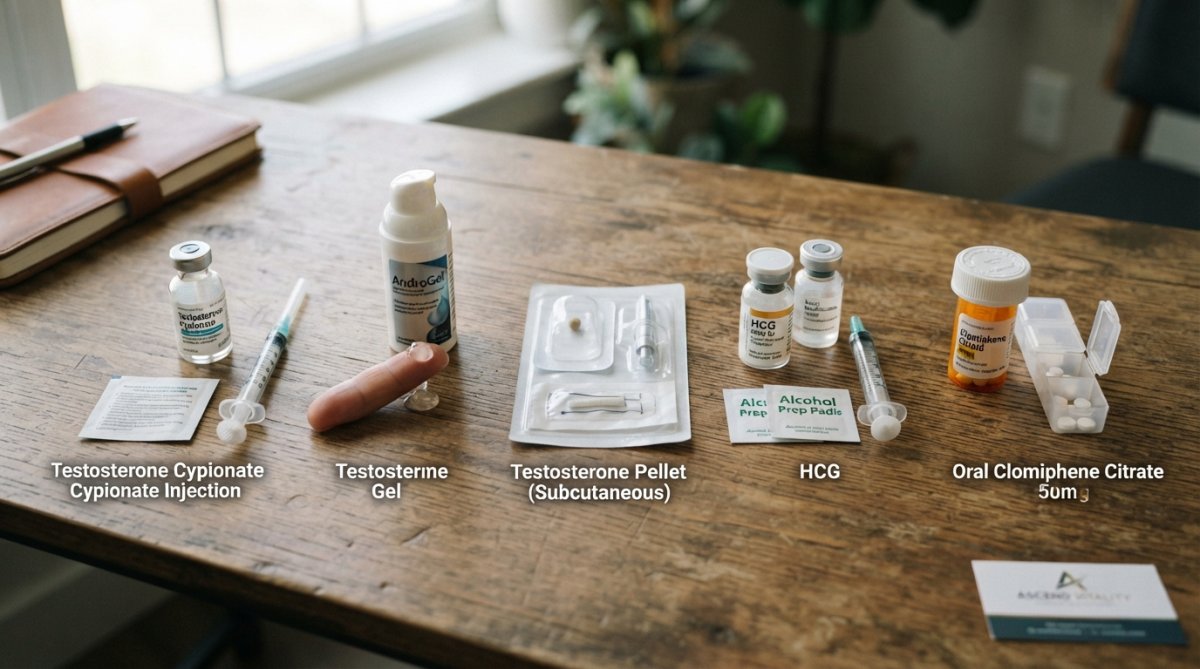
The 5 best hormone therapy options for men differ significantly in convenience, cost, effectiveness, and long-term sustainability. Your choice depends on lifestyle factors, needle comfort, desired dosing frequency, and access to medical monitoring.
| Delivery Method | Frequency | Testosterone Stability | Needle Required | Typical Cost Range |
|---|---|---|---|---|
| Intramuscular Injection | Weekly-Biweekly | Variable peaks/troughs | Yes | $28-$100/month |
| Topical Gel/Cream | Daily | Steady throughout day | No | $60-$200/month |
| Transdermal Patch | Every 2-3 days | Moderate stability | No | $80-$150/month |
| Intranasal Gel | Three times daily | Steady if consistent | No | $100-$180/month |
| Implantable Pellets | Every 3-6 months | Very stable, consistent | Yes (insertion) | $650-$2,000 per cycle |

Option 1: Injectable Testosterone (Intramuscular Injections)
Intramuscular injections represent the most cost-effective and widely prescribed form of testosterone replacement therapy. Depo-Testosterone (testosterone cypionate) is administered directly into muscle tissue, typically the glute or thigh, where it’s slowly absorbed into the bloodstream. Most men inject weekly or every two weeks. Self-administration after proper training means no ongoing office visits for medication delivery, though regular blood work remains essential.
Testosterone cypionate has a half-life of approximately 8 days, creating peaks and troughs in hormone levels. Some men thrive on this pattern and report feeling energized after injection, while others experience mood swings or energy crashes as levels decline. Dosing typically ranges from 100-200mg per week.
Advantages include the lowest cost among all delivery methods, generic testosterone cypionate can cost as little as $28 per month, and easy dosage adjustment based on blood work. Once trained, administration takes less than two minutes. Testosterone injections have been studied extensively for over 70 years, giving clinicians deep understanding of expected outcomes.
If you choose injections, request both 25-gauge and 27-gauge needles. The thinner 27-gauge causes less tissue trauma and discomfort, though it takes slightly longer to inject.
Drawbacks include injection anxiety for some men and fluctuating hormone levels that can trigger mood swings or energy variations. Oil-based testosterone can occasionally cause sterile abscesses if injection technique is poor.
Option 2: Topical Gels and Creams for Daily Application
Topical testosterone gels and creams offer needle-free application with relatively stable hormone levels throughout the day. AndroGel and similar products absorb through the skin, delivering testosterone gradually. Most men apply 5-10 grams daily to clean, dry skin on the shoulders, upper arms, or abdomen. The gel dries within 5-15 minutes.
The primary advantage is steady hormone delivery without peaks and troughs. Men using topical gels report more stable energy, mood, and sexual function. There’s no injection anxiety, and dosage adjustments are simple.
However, topical therapy carries a significant risk: transference to partners and children. If you apply testosterone gel to your shoulder and your partner hugs you before the gel fully dries, they absorb testosterone through their skin. In women, this can cause virilization. In children, even incidental contact can trigger premature puberty. This risk requires careful application timing, thorough hand washing, and clear communication with household members.
Cost typically ranges from $60-$200 monthly. Men with sensitive skin sometimes experience irritation or rashes at the application site. If you swim frequently or sweat heavily, the gel may wash off before full absorption.
Option 3: Transdermal Patches and Intranasal Testosterone
Transdermal patches deliver testosterone through the skin via a reservoir system that releases hormone steadily over 24 hours. Patches are typically applied to the scrotum, abdomen, back, or arm and replaced every 2-3 days. This method provides excellent hormone stability without the peaks and troughs of injections.
The convenience factor is high: apply a patch every 2-3 days and forget about it. Hormone levels are predictable and steady. The adhesive is waterproof, so you can shower and swim without concern.
Skin irritation represents the most common complaint. Many men develop redness, itching, or localized allergic reactions at the application site. Rotating application sites helps minimize this. The adhesive may fail in hot, humid climates or during intense exercise. Cost ranges from $80-$150 monthly.
Intranasal testosterone gel offers a newer alternative that avoids skin contact entirely. Applied three times daily inside the nostril, it delivers rapid absorption through the nasal mucosa. This method eliminates transference risk and skin irritation concerns. However, intranasal application requires discipline; missing doses disrupts hormone stability more dramatically than with patches or gels. Some men experience nasal irritation or epistaxis with regular use. Cost typically runs $100-$180 monthly.
Patches and intranasal methods excel for men prioritizing hormone stability and consistent daily function. The trade-off is less flexibility for dose adjustment and higher sensitivity to missed applications.
Option 4: Implantable Pellets for Long-Acting Therapy
Testopel pellets represent the longest-acting testosterone delivery system available. Small cylindrical pellets containing crystalline testosterone are surgically implanted under the skin, typically in the hip or buttock, where they dissolve slowly over 3-6 months. A single procedure provides hormone replacement for an entire season, eliminating the need for daily, weekly, or biweekly administration.
The insertion procedure is minor and performed in an office setting under local anesthesia. A small incision is made, a trocar is inserted, and 4-6 pellets are deposited beneath the skin. Recovery takes 3-5 days. Once healed, the pellets are completely undetectable.
Hormone delivery from pellets is exceptionally stable. Men on pellet therapy report excellent mood stability, consistent energy, and predictable sexual function. The three-to-six-month window means fewer medical appointments and zero risk of missed doses.
The primary disadvantage is cost. Each pellet insertion cycle runs $650-$2,000, significantly more than other methods. Additionally, dosage adjustments are inflexible. If you experience side effects or your hormone needs change, you cannot simply reduce your dose; you must wait for the pellets to dissolve or have them surgically removed. Some men experience pellet extrusion, where pellets work their way out through the incision site before fully dissolving.
Option 5: Telehealth-Based TRT Programs with Personalized Protocols
Online telehealth platforms have fundamentally transformed access to testosterone replacement therapy, particularly for men in rural areas or those with scheduling constraints. Companies like TRT Nation, Fountain TRT, Defy Medical, PeterMD, Viking Alternative Medicine, and Hone Health connect patients with licensed physicians who specialize in hormone optimization.
The telehealth model typically works as follows: You complete an online health questionnaire and arrange lab work through a partner network. Bloodwork results are reviewed by a licensed endocrinologist or urologist who prescribes a personalized TRT protocol. Medications are shipped directly to your home in discreet packaging. Follow-up consultations occur via video, and repeat lab work is scheduled at appropriate intervals.
Ascend Vitality specializes in connecting men with these simplified care pathways, offering medically-supported programs that deliver testosterone replacement directly to your door. The advantage lies in accessibility: no waiting months for a urology appointment and no explaining your situation to multiple staff members.
Pricing varies significantly across platforms. TRT Nation offers flat-rate pricing starting around $99 monthly, including medication, supplies, and unlimited consultations. Fountain TRT ranges from $99-$199 monthly. Defy Medical averages $200-$250 monthly in the first year. PeterMD charges $99-$149 monthly. Viking Alternative Medicine offers all-inclusive pricing starting around $99 monthly. Hone Health’s membership starts at $135 monthly with separate medication costs beginning around $28 monthly for injections.
Verify that physicians reviewing your case hold appropriate certifications from the American Board of Urology, American Board of Internal Medicine, or American Academy of Anti-Aging Medicine. Quality telehealth programs order baseline labs before starting therapy, then schedule follow-up testing at 6 weeks, 12 weeks, and periodically thereafter. They track not only testosterone levels but also hematocrit, prostate-specific antigen (PSA), liver function, and lipid panels.
Benefits of TRT: What Research Shows About Outcomes
Testosterone replacement therapy produces measurable improvements across multiple body systems when appropriately dosed and monitored. Sexual function improvements often manifest first, with many men reporting improved erectile quality within 2-4 weeks. Libido increases substantially, and sexual satisfaction typically reaches pre-decline levels within 8-12 weeks.
Muscle mass and strength gains become apparent around 8-12 weeks of consistent therapy. Testosterone stimulates protein synthesis in muscle tissue, allowing faster recovery from training and greater hypertrophy response to resistance exercise. Body composition improves as testosterone increases metabolic rate and promotes fat loss, particularly in the abdominal region. Bone density increases measurably over 12-24 months.
Energy and cognitive function improve substantially for most men. Fatigue resolves, mental clarity improves, and motivation returns. Mood stabilizes, with depression and anxiety often diminishing significantly. Sleep quality frequently improves, creating a positive feedback loop.
Expect gradual improvements over 12-24 weeks rather than dramatic overnight changes. The first improvements (sexual function, energy) typically appear within 4-8 weeks. Muscle and bone changes require months of consistent therapy combined with appropriate training and nutrition.
Risks and Side Effects: What You Need to Monitor
Testosterone replacement therapy carries real risks that warrant honest discussion and ongoing medical monitoring. Some research suggests that TRT may increase heart attack and stroke risk in certain populations. Men with existing cardiovascular disease, uncontrolled hypertension, or significant risk factors should approach TRT cautiously and work closely with a cardiologist.
Hematocrit elevation represents a measurable side effect that requires monitoring. Testosterone stimulates red blood cell production, and excessive elevation can increase blood viscosity and clot risk. Hematocrit above 54% warrants intervention, either dose reduction or blood donation. Regular lab work is essential for safe therapy.
Testosterone doesn’t cause prostate cancer, but it may accelerate growth of existing cancer cells. Men with a personal or strong family history of prostate cancer should obtain baseline PSA testing and digital rectal examination before starting TRT. PSA should be monitored annually during therapy.
Acne commonly develops or worsens during testosterone therapy, particularly in men with a history of acne. Hair loss accelerates in genetically predisposed men. Gynecomastia can occur if testosterone aromatizes excessively to estrogen. Mood changes sometimes occur, ranging from increased aggression to emotional volatility.
Fertility effects warrant consideration if you’re planning to father children. Exogenous testosterone suppresses your body’s natural testosterone production and sperm production. Many men become azoospermic within weeks of starting TRT. This is reversible, sperm production typically resumes 6-12 months after stopping therapy, but it’s not immediate.
Choosing the right hormone therapy option requires honest assessment of your lifestyle, medical needs, and preferences. Each method offers distinct advantages and trade-offs. Injectable testosterone provides cost-effectiveness and dosage flexibility but requires comfort with needles. Topical gels offer steady hormone delivery without needles but demand daily application and careful attention to transference risks. Patches and intranasal options excel for men prioritizing convenience and stability. Implantable pellets suit those willing to invest significantly for maximum simplicity. Telehealth programs democratize access to specialized care regardless of your location.
Ascend Vitality connects you with specialized care pathways that match your specific situation, offering medically-supported TRT programs with direct medication delivery and ongoing physician monitoring. By working with board-certified specialists through simplified online platforms, you gain access to the same quality of hormone optimization that previously required multiple office visits and pharmacy coordination. Start by scheduling a consultation to discuss which delivery method aligns with your health goals and daily routine.
Frequently Asked Questions
What are the main differences between testosterone replacement therapy (TRT) delivery methods?
TRT delivery methods vary in frequency, convenience, and how they affect serum testosterone levels. Intramuscular injections (typically testosterone cypionate) are given every 1-2 weeks and are the most affordable. Topical gels and creams require daily application and offer steady hormone release. Transdermal patches provide consistent levels with minimal daily effort. Intranasal testosterone avoids needles entirely. Implantable pellets last 3-6 months but require a minor procedure. Each method has different cardiovascular and hematocrit monitoring requirements, making choice dependent on your lifestyle and medical history.
How quickly do the benefits of TRT appear, and what should I expect first?
Most men notice initial improvements in mood, energy, and libido within 2-4 weeks of starting TRT, though serum testosterone levels stabilize on your delivery method’s schedule. Muscle mass and bone density gains typically emerge over 3-6 months with consistent therapy and exercise. Erectile function improvements often follow within 4-8 weeks. However, individual results vary based on baseline testosterone levels, age, overall health, and adherence to treatment. Regular blood panels help your endocrinologist or urologist monitor progress and adjust dosing.
What are the main risks and side effects I should monitor while on TRT?
Key risks include elevated hematocrit levels (thickened blood), cardiovascular strain, and prostate-related concerns. Common side effects include acne, hair loss, mood swings, and sleep disruption. Long-term cardiovascular impact remains an area of ongoing research; regular monitoring through blood panels and clinical follow-ups is essential. Prostate health requires PSA testing and digital rectal exams. Some men experience suppressed fertility during therapy. Working with an endocrinologist ensures proper monitoring of these factors and helps mitigate risks through dosage adjustment and lifestyle interventions.
Can I use lifestyle changes to increase testosterone naturally alongside TRT?
Yes, lifestyle medicine complements TRT significantly. Prioritize 7-9 hours of quality sleep, as sleep deprivation lowers testosterone production. Resistance training and high-intensity interval exercise boost natural testosterone and enhance TRT benefits. Manage stress through meditation or yoga, since chronic stress elevates cortisol and suppresses testosterone. Optimize nutrition with adequate protein, zinc, and vitamin D. Limit alcohol and avoid obesity, both of which impair hormone balance. These interventions work synergistically with your prescribed therapy, improving overall endocrine system function and outcomes.
How do I know if an online TRT provider is legitimate and credentialed?
Verify that the platform connects you with licensed physicians (MDs or DOs) who specialize in hormone therapy or urology, not just nurse practitioners. Check for transparent credentialing information on their website and ask about their prescribing doctors’ qualifications. Legitimate providers require comprehensive blood panels and clinical diagnosis before prescribing, not just a questionnaire. They should offer ongoing monitoring of biomarkers like hematocrit and PSA, plus regular follow-up consultations. Avoid platforms that promise results without testing or skip medical history review. Ascend Vitality and similar telehealth services should clearly disclose their physician credentials and clinical protocols.