
Last Updated: July 29, 2026
What Is Hormone Replacement Therapy and Why Women Seek Alternatives
Hormone replacement therapy (HRT) has been a standard medical treatment for menopause symptoms for decades, but its safety profile has become increasingly scrutinized over the past two decades. According to research published by the National Institutes of Health, natural alternatives to hormone replacement therapy have gained significant traction among women seeking relief from hot flashes, night sweats, mood swings, and other menopausal symptoms without the potential cardiovascular and cancer risks associated with traditional HRT.
At Ascend Vitality, we understand that women facing menopause want options that align with their personal health values while delivering real symptom relief. Traditional HRT works by supplementing the body’s declining estrogen and progesterone levels with synthetic or bioidentical hormones. While effective for many, HRT carries documented risks including increased risk of blood clots, stroke, and certain cancers, concerns that have driven millions of women to explore natural alternatives to hormone replacement therapy that address root causes rather than simply replacing hormones.
The decision to avoid conventional HRT often stems from personal preference, family history of hormone-sensitive cancers, or previous adverse reactions to hormone therapy. Women increasingly want to understand what evidence-based natural options exist, how they work, and whether they can genuinely manage menopause symptoms without pharmaceutical intervention. Below, we’ll show you exactly how to evaluate the most promising natural alternatives, what the research actually says about their effectiveness, and how to match specific remedies to your individual symptoms.
Most women don’t realize that symptom severity varies dramatically by person. A remedy that works brilliantly for one woman’s hot flashes may do nothing for another’s mood swings. The key is identifying which symptoms bother you most, then targeting those specifically rather than taking a broad-spectrum supplement that addresses everything.
Natural Alternatives to HRT: A Comparison of Top Options
When evaluating natural alternatives to hormone replacement therapy, you’re choosing between several distinct categories: single-herb remedies, multi-ingredient proprietary formulas, phytoestrogen-rich foods and supplements, lifestyle interventions, and complementary therapies like acupuncture. Each category works through different mechanisms, some mimic estrogen at the cellular level, others support the body’s own hormone production, and still others address underlying imbalances in stress hormones or gut health.
The research landscape for these alternatives is mixed but growing. Some remedies like black cohosh and red clover have been studied in multiple clinical trials, while others rely primarily on traditional use and anecdotal evidence. The most honest assessment is that natural alternatives to hormone replacement therapy can provide meaningful relief for many women, but they typically require patience, consistent use, and often a trial-and-error approach to find what works for your unique physiology.
Quick Comparison Table
| Remedy Category | Best For | Timeline to Results | Key Consideration |
|---|---|---|---|
| Black Cohosh | Hot flashes, night sweats | 4-8 weeks | Mixed research; liver safety concerns in rare cases |
| Red Clover | Overall menopause symptoms | 6-12 weeks | Isoflavone content varies by brand |
| Phytoestrogens (food-based) | Long-term symptom prevention | 8+ weeks | Works best as lifestyle foundation, not quick fix |
| Proprietary blends (Estroven, Amberen) | Multiple symptoms simultaneously | 2-4 weeks | Convenient; results vary widely by individual |
| Bioidentical hormones | Symptom relief with lower risk profile | 2-4 weeks | Still hormonal; requires medical supervision |
| Lifestyle changes (diet, exercise, sleep) | Foundational support for all symptoms | 2-6 weeks | Most underutilized despite strong evidence |
| Acupuncture | Hot flashes, mood, sleep quality | 4-12 weeks | Requires multiple sessions; insurance coverage varies |
1. Plant-Based Supplements: Herbal Remedies for Menopause Symptoms
Herbal remedies represent the longest-established category of natural alternatives to hormone replacement therapy, with some dating back centuries in traditional Chinese and Ayurvedic medicine. The advantage of single-herb supplements is simplicity, you’re targeting one active compound rather than hoping a complex formula hits your specific issue. The disadvantage is that research quality varies dramatically, and effectiveness is often inconsistent across users and brands.
Black Cohosh, Red Clover, and Isoflavones
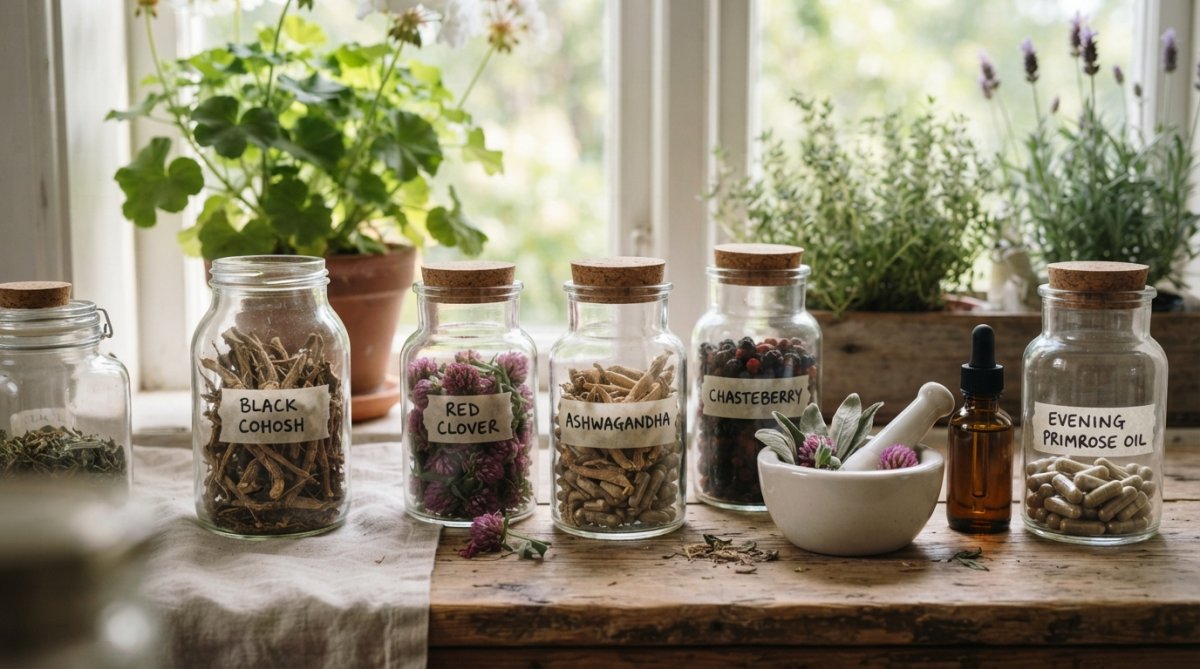
Black cohosh is perhaps the most researched herbal remedy for menopause, with studies showing mixed but sometimes positive results for hot flash reduction. The plant contains compounds called triterpenes that may interact with serotonin receptors in the brain, potentially explaining its effect on vasomotor symptoms. However, research quality varies, some trials show meaningful improvement while others find it no better than placebo. The honest takeaway: black cohosh helps some women significantly, helps others modestly, and doesn’t help others at all.
Red clover contains isoflavones, plant compounds with weak estrogenic activity that can bind to estrogen receptors in the body. Unlike taking synthetic estrogen, isoflavones are selective, they activate some estrogen receptors while leaving others untouched, theoretically providing symptom relief with lower cancer risk. Studies on red clover show modest benefits for hot flashes and night sweats, typically appearing after 6-12 weeks of consistent use. The critical variable is isoflavone content, quality varies dramatically between brands, and many products contain far less active ingredient than their labels suggest.
NOW Foods Black Cohosh Root offers standardized extract at an affordable price point, starting around $10-$15 for 90 capsules. The standardization matters because it guarantees consistent potency across batches. However, the research on black cohosh’s liver safety has raised concerns in rare cases, making it unsuitable for women with existing liver conditions or those taking multiple medications that stress liver function.
Black cohosh has been linked to rare cases of liver toxicity. If you have a history of liver disease, hepatitis, or take medications metabolized by the liver (including statins, blood thinners, or other supplements), consult a healthcare provider before starting. Stop immediately if you develop unexplained abdominal pain, dark urine, or yellowing of skin or eyes.
Other Botanical Options: Dong Quai, Maca Root, and Chasteberry
Dong quai, a traditional Chinese medicine herb, has been used for centuries to support female reproductive health and hormone balance. The mechanism remains unclear, but some research suggests it may contain compounds that interact with estrogen pathways. Studies are limited and results mixed, some show modest improvement in menopausal symptoms while others find no benefit over placebo. Dong quai is often used as part of a broader herbal formula rather than alone, which makes isolating its individual effect difficult.
Maca root, a Peruvian plant traditionally used to enhance fertility and sexual function, has gained popularity among menopausal women seeking to address libido decline and vaginal dryness alongside hot flashes. Pure Encapsulations Maca-3 concentrates the active compounds and is marketed specifically for sexual function and energy support. Research on maca for menopause is limited but promising, some studies show improvements in sexual satisfaction and mood in postmenopausal women. Results typically appear after 4-8 weeks of consistent use. The trade-off: maca doesn’t address hot flashes directly, making it best suited for women whose primary concern is sexual health and energy rather than vasomotor symptoms.
Chasteberry (Vitex), traditionally used to support progesterone levels and menstrual regularity, has seen renewed interest among perimenopausal women experiencing irregular cycles and mood swings. Gaia Herbs Vitex Berry uses fair-trade certified chasteberry in vegan capsules, around $25-$30 for a one-month supply. However, research on chasteberry specifically for menopause is sparse. It works better for women in perimenopause (when hormones are fluctuating) than for postmenopausal women whose hormone levels have stabilized at a new baseline. One important caution: some women report severe mood swings, anxiety, or heart palpitations with chasteberry, suggesting it’s not universally well-tolerated.
2. Phytoestrogens and Plant-Based Alternatives to Estrogen
Phytoestrogens are plant compounds that structurally resemble human estrogen and can bind to estrogen receptors in the body. The most studied phytoestrogens are isoflavones (found in soy and red clover), lignans (found in flaxseeds and sesame seeds), and coumestans (found in alfalfa and clover sprouts). The theory is compelling: consuming foods rich in phytoestrogens provides weak estrogenic activity without the risks of pharmaceutical estrogen.
The evidence is more complicated than marketing suggests. Isoflavone-rich diets do show some benefit for hot flashes in population-level studies, but individual results vary enormously. A woman consuming 50-100 mg of isoflavones daily from soy products might see significant hot flash reduction, while her friend eating the same foods sees nothing. This variability reflects differences in gut bacteria composition, some women’s microbiomes convert plant isoflavones into active metabolites, while others don’t. This is why phytoestrogen-based approaches work best as long-term lifestyle foundations rather than quick-fix supplements.
Femarelle Recharge uses a patented soy and flaxseed extract called DT56a that functions as a selective estrogen receptor modulator (SERM). Unlike broad-spectrum phytoestrogens, SERMs target specific estrogen receptors while avoiding others, theoretically providing symptom relief without stimulating breast or uterine tissue. Research on Femarelle shows improvements in hot flashes, night sweats, and mood swings within 30 days, with additional benefit to bone density. Pricing runs approximately $35-$50 for a one-month supply. The trade-off: Femarelle is still technically estrogenic, making it unsuitable for women with estrogen-sensitive breast cancer history.
Phytoestrogens work best as part of a dietary pattern rather than isolated supplements. A woman eating whole soy foods, ground flaxseeds, and sesame seeds daily will likely see better results than someone taking an isoflavone pill while eating a processed diet. Food-based phytoestrogens also provide fiber and micronutrients that support overall menopause resilience.
3. Proprietary Formulas: Multi-Symptom Relief Supplements
When a woman has multiple overlapping menopause symptoms, hot flashes, night sweats, mood swings, and sleep disruption, targeting each with separate single-herb remedies becomes impractical. Multi-ingredient proprietary formulas attempt to address this by combining several research-backed botanicals plus vitamins and minerals that support hormone metabolism.
Estroven Complete Multi-Symptom Menopause Relief uses rhapontic rhubarb root extract, a plant-based ingredient clinically shown to reduce hot flashes and night sweats while supporting mood and energy. The formula is drug-free, hormone-free, soy-free, and gluten-free, making it suitable for women with dietary restrictions or sensitivities. At $22.28 for 28 caplets (one-month supply), it’s among the most affordable multi-symptom options. Research shows results appearing in as little as 28 days, though individual timelines vary. The limitation: rhapontic rhubarb is less studied than black cohosh or red clover, so the evidence base is smaller.
Amberen Menopause Relief takes a different approach, using a proprietary blend of amino acids, succinates, vitamin E, and minerals designed to regulate hormone production rather than mimic estrogen. The formula is 100% herb-free and hormone-free, appealing to women who want to avoid botanical compounds entirely. Clinical studies claim improvement in 12 menopause symptoms within 30 days. Pricing runs approximately $30-$40 for a one-month supply. However, Amberen contains monosodium L-glutamate (MSG), which some users prefer to avoid, and research on the formula’s core ingredients is less strong than for established botanicals.
MenoLabs MenoFit combines probiotics with herbal extracts, vitamins, and minerals, a holistic approach recognizing that gut health influences hormone metabolism and symptom severity. The inclusion of 25 billion CFUs of probiotics addresses the growing evidence that menopause dysbiosis (imbalanced gut bacteria) contributes to hot flashes, mood swings, and weight gain. At approximately $49.99 for a one-month supply, it’s pricier than single-herb options, but the multi-system approach appeals to women seeking comprehensive support. The trade-off: MenoLabs lacks the strong independent clinical trials that Estroven and Amberen can cite, relying more on internal research and user testimonials.
Estroven, Amberen, and Femarelle: How They Differ
Estroven positions itself as the science-backed mainstream choice, with rhapontic rhubarb as its hero ingredient and claims of clinical testing. The formula is straightforward: one active botanical plus supporting micronutrients. Amberen differentiates by avoiding botanicals entirely, appealing to women skeptical of herbal medicine or concerned about herb-drug interactions. Femarelle stands apart by using a patented SERM technology that mimics estrogen’s selective action on specific tissues. Each represents a different philosophy, botanical tradition, biochemical support, or targeted hormone modulation.
The practical difference: Estroven works best for women wanting a simple, affordable botanical approach. Amberen suits women wanting to avoid all herbs and prefer amino acid-based support. Femarelle appeals to women seeking maximum symptom relief and willing to accept mild hormonal activity in exchange. None is universally “best”, the right choice depends on your symptom profile, budget, and comfort with different remedy categories.
4. Bioidentical Hormones vs HRT: Understanding the Distinction
Bioidentical hormones are synthesized compounds that match the molecular structure of hormones produced by the human body, estradiol, progesterone, and testosterone. This differs from conventional HRT, which uses conjugated estrogens derived from pregnant mare urine (Premarin) or synthetic progestins that don’t perfectly match human progesterone.
The bioidentical argument is compelling: if the hormone molecule is identical to what your body produces, it should work like your natural hormones without the excess or imbalance created by synthetic alternatives. Some practitioners and patients report better tolerance and fewer side effects with bioidentical hormones compared to conventional HRT. However, the FDA and major medical organizations including the American College of Obstetricians and Gynecologists emphasize that bioidentical hormones still carry the same risks as conventional HRT, increased clot risk, potential cancer risk, and cardiovascular effects, because the risk comes from the hormonal activity itself, not the source or structure.
The honest assessment: bioidentical hormones represent a middle path between conventional HRT and purely natural alternatives. They provide stronger symptom relief than herbal remedies but with potentially lower risk than synthetic HRT, though the risk reduction is not absolute. Bioidentical hormones require medical supervision, prescription, and regular monitoring, they’re not a natural alternative but rather a modified conventional approach.
Ascend Vitality offers medically-supported hormone programs that include evaluation by qualified practitioners and access to bioidentical hormone prescriptions delivered directly to you. This bridges the gap between wanting natural approaches and needing effective symptom management. The advantage over standard HRT is individualized dosing, compounding flexibility, and practitioner oversight specifically trained in hormone optimization.
Bioidentical hormones work best for women whose symptoms are severe enough to significantly impact quality of life, who have tried natural alternatives without sufficient relief, and who want medical oversight during their menopause transition. They’re not a “natural” option, but they represent a more targeted and potentially safer alternative to conventional HRT.
5. Lifestyle Changes for Menopause Symptom Management
The most underutilized natural alternatives to hormone replacement therapy are the ones that cost nothing: diet modification, exercise, sleep optimization, and stress reduction. Research consistently shows that these foundational changes reduce menopause symptom severity by 30-50%, yet most women never try them before jumping to supplements or HRT.
Diet, Exercise, Sleep, and Stress Reduction
Diet influences menopause symptoms through multiple pathways. Phytoestrogen-rich whole foods (soy, flaxseeds, sesame seeds) provide weak estrogenic activity. High-fiber diets support estrobolus circulation, the reabsorption of estrogen in the gut. Avoiding trigger foods that worsen hot flashes (spicy foods, alcohol, caffeine, hot beverages) can reduce symptom frequency by 20-40% in responsive women. Plant-forward eating patterns also support the gut bacteria diversity needed to metabolize phytoestrogens effectively.
Exercise delivers dual benefits: it directly reduces hot flash frequency and severity while also improving sleep quality, mood, and stress resilience, all factors that amplify menopause symptoms when neglected. Aerobic exercise (150 minutes per week) shows the strongest evidence, but resistance training and yoga both demonstrate benefit. The mechanism likely involves thermoregulation improvements and endorphin production rather than direct hormone effects.
Sleep disruption during menopause creates a vicious cycle, night sweats wake you, poor sleep worsens mood and stress hormones, elevated stress hormones trigger more hot flashes. Breaking this cycle through sleep hygiene (cool bedroom, consistent schedule, limiting screen time before bed) often produces the fastest symptom improvement. Some women find that addressing sleep first, through melatonin, magnesium, or behavioral changes, reduces other symptoms naturally as sleep quality improves.
Stress reduction through meditation, breathwork, or yoga shows measurable effects on hot flash frequency. Research suggests that slow, deep breathing (6 breaths per minute) can reduce hot flash severity in the moment, while regular meditation practice reduces overall frequency. This likely reflects the strong connection between the nervous system and thermoregulation, chronic stress keeps the body in sympathetic overdrive, lowering the threshold for vasomotor symptoms.
6. Complementary Therapies: Acupuncture and Mind-Body Approaches
Acupuncture, derived from traditional Chinese medicine, involves inserting thin needles into specific body points to rebalance energy flow and hormone function. Research on acupuncture for menopause shows mixed results, some studies demonstrate meaningful reduction in hot flashes and night sweats, while others find effects equivalent to placebo. The variability likely reflects differences in practitioner skill, treatment frequency, and individual responsiveness.
The practical reality: acupuncture works well for some women and not at all for others, with no reliable way to predict who will respond. Initial sessions typically cost $100-$300, with follow-up visits at $70-$160. Most practitioners recommend weekly sessions for 8-12 weeks to assess effectiveness. If acupuncture helps you, the benefit extends beyond symptom relief, patients often report improved sleep, mood, and overall sense of well-being.
Mind-body approaches including cognitive behavioral therapy (CBT), mindfulness-based stress reduction (MBSR), and guided imagery show stronger research support than acupuncture for menopause symptom management. CBT specifically targets the catastrophic thinking patterns that can amplify hot flash perception and emotional distress. MBSR teaches acceptance and non-reactivity to symptoms rather than fighting them. These approaches require commitment, typically 8-week programs with home practice, but produce lasting benefits that extend beyond menopause.
The advantage of mind-body approaches: they address the psychological amplification of physical symptoms. A woman who panics during a hot flash experiences it as more severe and disruptive than one who observes it without judgment. These therapies teach the latter skill.
Safety, Drug Interactions, and When to Consult a Healthcare Professional
Natural doesn’t mean risk-free. Many herbal remedies interact with medications, affect bleeding risk, or carry contraindications for specific health conditions. Black cohosh can stress the liver. Red clover may increase bleeding risk with anticoagulants. St. John’s Wort reduces effectiveness of birth control pills and many psychiatric medications. Ginseng can raise blood pressure and interact with blood thinners.
Before starting any herbal supplement, consult with a healthcare provider who understands both conventional medicine and botanical pharmacology. This is especially critical if you take multiple medications, have liver or kidney disease, are on blood thinners, or have a history of hormone-sensitive cancer.
Drug-Herb Interaction Checker and Personalized Symptom Matching
The most common mistake women make is treating menopause as a one-size-fits-all condition. A remedy that addresses hot flashes brilliantly may do nothing for mood swings, and vice versa. Effective natural approaches require matching specific symptoms to specific remedies rather than taking a broad-spectrum supplement hoping it helps.
Start by identifying your top 2-3 symptoms: Are hot flashes your primary concern, or is insomnia? Are mood swings more disruptive than physical symptoms? Is vaginal dryness affecting sexual function? Once you’ve prioritized, you can target remedies specifically:
- Hot flashes and night sweats: Black cohosh, red clover, Estroven, or Femarelle
- Mood swings and anxiety: Chasteberry, magnesium, or mind-body approaches
- Insomnia: Magnesium, valerian root, or sleep hygiene optimization
- Vaginal dryness and low libido: Maca root, Vitanica FemVitality, or systemic hormone approaches
- Brain fog and energy: Ginseng, B vitamins, or exercise consistency
For drug-herb interactions, consult with a clinical herbalist or pharmacist trained in botanical medicine. Many conventional pharmacists lack training in herbal interactions, while herbalists without pharmaceutical knowledge may miss critical drug-supplement conflicts. The ideal is a practitioner with training in both domains.
Quality Control and Third-Party Testing Standards
Not all supplements are created equal. The supplement industry is less regulated than pharmaceuticals, meaning quality, potency, and purity vary dramatically between brands. A bottle labeled “500 mg red clover extract” might contain the claimed amount or 20% of it. Some supplements contain contaminants including heavy metals, pesticides, or undeclared ingredients.
Third-party testing by organizations like NSF International, USP (United States Pharmacopeia), or ConsumerLab.com provides independent verification that a product contains what the label claims and is free of contaminants. Look for these certifications on the label. Products bearing these seals cost slightly more but provide assurance that you’re getting what you paid for.
When evaluating a supplement brand, check whether they publish third-party test results on their website. Reputable companies make this information easily accessible. If a company refuses to share test results, that’s a red flag.
Evidence-Based vs. Anecdotal Remedies: What the Research Actually Shows
The challenge with natural menopause remedies is distinguishing between what has genuine research support and what relies on anecdotal testimonials. A remedy might help 30% of users magnificently while doing nothing for the other 70%, that’s real, but it’s not the same as a remedy that works for most people.
Strong evidence exists for: black cohosh (mixed but some positive trials), red clover isoflavones (modest benefit for hot flashes), phytoestrogen-rich diets (population-level benefit), exercise (strong evidence for symptom reduction), sleep optimization (strong evidence), and stress reduction (moderate to strong evidence). These have been studied in multiple trials with reasonable methodology.
Moderate evidence exists for: maca root (some positive studies but limited sample sizes), acupuncture (mixed results but some positive trials), magnesium supplementation (reasonable evidence for sleep and mood), and cognitive behavioral therapy (good evidence but requires practitioner skill).
Weak or anecdotal evidence exists for: dong quai (limited studies, mostly positive anecdotes), some proprietary blend formulas (manufacturer-funded research only), and various other botanical combinations marketed for menopause. This doesn’t mean they don’t work, it means they haven’t been adequately studied in rigorous trials.
The honest approach: start with remedies backed by stronger evidence (red clover, black cohosh, lifestyle changes), give them adequate time (8-12 weeks), and only move to lesser-studied options if those don’t help. Keep a symptom log to track what actually improves your symptoms rather than relying on intuition or marketing claims.
Beware of anecdotal evidence presented as proof. One woman’s testimonial that a supplement “changed her life” doesn’t mean it will work for you. Menopause symptoms fluctuate naturally, some improve over time regardless of treatment. Proper evaluation requires comparing your symptoms before and after starting a remedy, ideally with objective measures like tracking hot flash frequency rather than relying on subjective feeling.
How to Choose the Right Natural Alternative to HRT for Your Needs
The decision tree starts with severity. If your menopause symptoms are mild and manageable, lifestyle changes alone may be sufficient. If they’re moderate and affecting quality of life but not severe, targeted herbal remedies or proprietary supplements are reasonable first choices. If they’re severe and disruptive, you may need bioidentical hormones or conventional HRT despite preferring natural approaches, sometimes the symptom burden justifies the medical intervention.
Next, identify your primary symptoms. A woman whose main complaint is hot flashes should prioritize black cohosh or red clover. A woman struggling with mood swings and irritability might benefit more from stress reduction and magnesium. Someone experiencing vaginal dryness and low libido should explore maca root or bioidentical hormone cream. Matching remedy to symptom increases success rates dramatically.
Consider your timeline and tolerance for trial-and-error. Natural remedies typically require 4-12 weeks to show benefit, whereas HRT works within days to weeks. If you need rapid relief, natural alternatives may frustrate you. If you’re willing to experiment and be patient, natural approaches often work.
Evaluate your health context. If you have a personal or family history of breast cancer, hormone-sensitive conditions, or liver disease, certain remedies become contraindicated. If you take multiple medications, drug-herb interactions become a critical consideration. If you have severe symptoms, natural remedies alone may be insufficient.
Finally, consider the evidence-to-effort ratio. Red clover requires daily consumption for months with modest but real benefits. Acupuncture requires weekly appointments and significant expense. Lifestyle changes require sustained effort but produce broad benefits. Proprietary supplements are convenient but results vary. HRT is effective and convenient but carries documented risks. Choose the approach that matches your values, timeline, and commitment level.
Conclusion: Finding Your Path Forward Without HRT
Navigating menopause without hormone replacement therapy is entirely possible for many women, but it requires moving beyond the idea that a single supplement will solve everything. The most successful approaches combine targeted herbal remedies for specific symptoms, foundational lifestyle changes that reduce overall symptom burden, and professional guidance to ensure safety and appropriate monitoring.
If you’re exploring natural alternatives to hormone replacement therapy and feeling overwhelmed by options, Ascend Vitality provides medically-supported pathways that help you evaluate which approaches match your individual symptom profile and health history. Their practitioners can review your current medications and supplements to identify potential interactions, guide you through evidence-based natural options, and escalate to bioidentical or conventional hormone therapy if natural approaches prove insufficient, ensuring you’re never stuck with symptoms that could be effectively treated.
The goal isn’t ideological purity around “natural” versus “medical.” The goal is finding what actually works for your body while maintaining safety and quality of life during this significant life transition. Start with the strongest evidence, give interventions adequate time, track results objectively, and adjust based on what your experience reveals.
Ready to explore natural alternatives to hormone replacement therapy with professional guidance? Ascend Vitality’s specialized care pathways connect you with practitioners trained in both conventional medicine and evidence-based natural approaches, delivering personalized recommendations and, when needed, prescriptions for bioidentical hormones, all with the convenience of online consultations and discreet home delivery. Get started today and discover which approach works best for your unique menopause journey.
Frequently Asked Questions
What are the most effective natural alternatives to hormone replacement therapy?
The most researched natural alternatives to HRT include black cohosh, red clover (containing isoflavones), phytoestrogen-rich supplements, and proprietary formulas like Estroven and Amberen. Lifestyle modifications, including regular exercise, dietary changes, stress reduction, and improved sleep, also provide measurable relief from hot flashes and night sweats. Effectiveness varies by individual; some women respond well to herbal remedies for menopause, while others benefit more from complementary therapies like acupuncture. Consulting a healthcare professional helps identify which approach aligns with your specific symptoms and health history.
How do phytoestrogens and isoflavones help with menopause symptoms?
Phytoestrogens are plant compounds that mimic estrogen’s effects by binding to estrogen receptors in the body. Isoflavones, found in red clover and soy, are a type of phytoestrogen that may help regulate hot flashes and night sweats by supporting the endocrine system. Unlike bioidentical hormones or traditional HRT, phytoestrogens do not raise systemic estrogen levels, making them a lower-risk option for women who cannot or prefer not to use hormone therapy. Research shows mixed but promising results, with some clinical trials demonstrating symptom improvement within 4-12 weeks of consistent use.
Are herbal remedies for menopause safe, and what about drug interactions?
Most herbal remedies are generally safe when used as directed, but they can interact with medications, particularly blood thinners, antidepressants, and hormone-sensitive medications. St. John’s Wort, for example, can reduce the effectiveness of birth control and certain psychiatric medications. Before starting any supplement, consult your healthcare provider, especially if you take other medications. Third-party testing from organizations like NSF or USP ensures quality and purity. Some women experience mild side effects like stomach upset or headaches; discontinue use and seek medical advice if serious reactions occur.
How do lifestyle changes for menopause symptoms compare to supplements and HRT?
Lifestyle changes, regular aerobic and strength-training exercise, a diet rich in whole grains and phytoestrogen-containing foods, stress management, and 7-9 hours of quality sleep, can reduce hot flashes and night sweats by 20-30% in many women. While less dramatic than HRT, these changes have no side effects and improve overall health. Many women combine lifestyle modifications with supplements for hormonal balance or natural alternatives to HRT for optimal results. Starting with lifestyle interventions is often recommended as a first-line approach before considering supplements or medical consultation.
What makes Ascend Vitality different from other online hormone care platforms?
Ascend Vitality offers specialized care pathways tailored specifically to female wellness and hormonal health, with medically-supported programs that include direct prescriptions delivered to your door. Unlike general telemedicine platforms, Ascend Vitality focuses on targeted hormone management with discreet packaging and qualified provider oversight. The platform addresses the full spectrum of options, from natural alternatives to HRT to prescription-based solutions, allowing you to explore evidence-based approaches with professional guidance. Pricing and specific program details are available on their website, where you can discuss your individual needs and medical history with their care team.