Last Updated: April 12, 2026
BPC-157 Cost at a Glance: Our Verdict on Value
According to Southern Care Anesthetics (2026), BPC-157 costs under physician supervision start at $425 per month, while research-grade vials can be sourced for as little as $20-$30 per unit. The Ascend Vitality team has analyzed the full pricing spectrum for this peptide, from raw research chemical purchases to medically supervised peptide therapy programs, so you can make an informed decision about what you’re actually paying for. This guide breaks down every pricing tier, explains what drives the cost differences, and helps you determine which sourcing pathway makes sense for your situation. The gap between a $35 four-week cycle and a $425 monthly program is not arbitrary; it reflects significant differences in oversight, purity verification, and legal standing.
BPC-157 cost varies by a factor of 10x or more depending on whether you purchase research-grade vials online or enroll in a physician-supervised peptide therapy program. The price difference reflects real differences in quality assurance, legal standing, and clinical support.
What Is BPC-157 (Body Protection Compound-157)?
Body Protection Compound-157 is a synthetic peptide derived from a protective protein found in gastric juice, consisting of 15 amino acids and studied primarily for its tissue repair and regenerative properties. It does not yet have FDA approval for human use, which means all pricing estimates in the current market are based on research-grade sourcing or comparable drug benchmarks.
How This Synthetic Peptide Works in the Body
BPC-157 works primarily by promoting angiogenesis, the formation of new blood vessels, which accelerates healing in tendons, ligaments, muscles, and gastrointestinal tissue. It also modulates nitric oxide production and growth hormone receptor expression, which contributes to its anti-inflammatory and regenerative effects. Research suggests it supports GI integrity by protecting the gut lining, making it a subject of interest for gastrointestinal dysfunction as well as musculoskeletal regeneration. The peptide operates through multiple pathways simultaneously, which is why it attracts interest across performance medicine, longevity therapy, and pain management contexts.
Research Chemical vs. Prescribed Peptide Therapy: A Key Distinction
This distinction drives the largest pricing differences in the market. Research peptide suppliers sell BPC-157 for laboratory use only, explicitly not for human consumption, as noted by PeptideSearch (2026). Prescribed peptide therapy, by contrast, involves physician supervision, compounding pharmacy sourcing, and clinical oversight. The research chemical route is cheaper but operates in a legal and quality gray area. The prescribed route costs significantly more but comes with potency verification, purity testing, and a licensed provider managing your dosage protocol.
BPC-157 Benefits: What the Research Actually Shows
Most published research on BPC-157 comes from animal studies, which is important context for evaluating any benefit claims. That said, the mechanistic evidence is compelling enough that performance medicine practitioners and longevity therapy clinics have incorporated it into their protocols.
Tissue Repair, Tendons, and Musculoskeletal Regeneration
BPC-157 benefits for musculoskeletal regeneration are among the most studied in preclinical literature. Animal models consistently show accelerated healing of tendon-to-bone injuries, ligament tears, and muscle damage following BPC-157 administration. The peptide appears to upregulate growth hormone receptors locally at the injury site, enhancing the body’s own repair signals. For athletes managing chronic tendon issues or recovering from acute injuries, this mechanism is the primary draw. What most guides miss is that the route of administration matters here: subcutaneous injection near the injury site tends to produce stronger localized effects than oral capsules for musculoskeletal applications.
Gut Health and Gastrointestinal Dysfunction Relief
Oral BPC-157 is particularly relevant for gastrointestinal dysfunction because the peptide can act locally along the GI tract when swallowed. Preclinical studies show protective effects against ulcers, inflammatory bowel conditions, and intestinal permeability issues. The peptide appears to support GI integrity by modulating inflammatory cytokines and promoting mucosal healing. A 4-week cycle for gut healing starts at $35.00 according to The Peptide Catalog (2026), making this one of the more accessible entry points for those exploring BPC-157 benefits in a digestive health context.
Chronic Inflammation, Angiogenesis, and Accelerated Healing
The anti-inflammatory and angiogenesis-promoting effects of BPC-157 make it a candidate for chronic inflammation management beyond acute injuries. By stimulating new blood vessel formation, the peptide improves nutrient and oxygen delivery to damaged tissue, which is the underlying mechanism for its accelerated healing reputation. This is also why it appears in longevity therapy protocols targeting systemic inflammation, not just localized injuries. A common mistake is assuming BPC-157 is only for athletes; its systemic anti-inflammatory profile makes it relevant for anyone dealing with persistent inflammatory conditions.

Breaking Down the BPC-157 Cost: Every Pricing Tier Explained
The BPC-157 cost landscape has three distinct tiers, each with different quality controls, legal frameworks, and total expenditures. Understanding where a price point falls in this hierarchy is essential before purchasing.
Research-Grade Vial Pricing (Per Vial and Per Box)
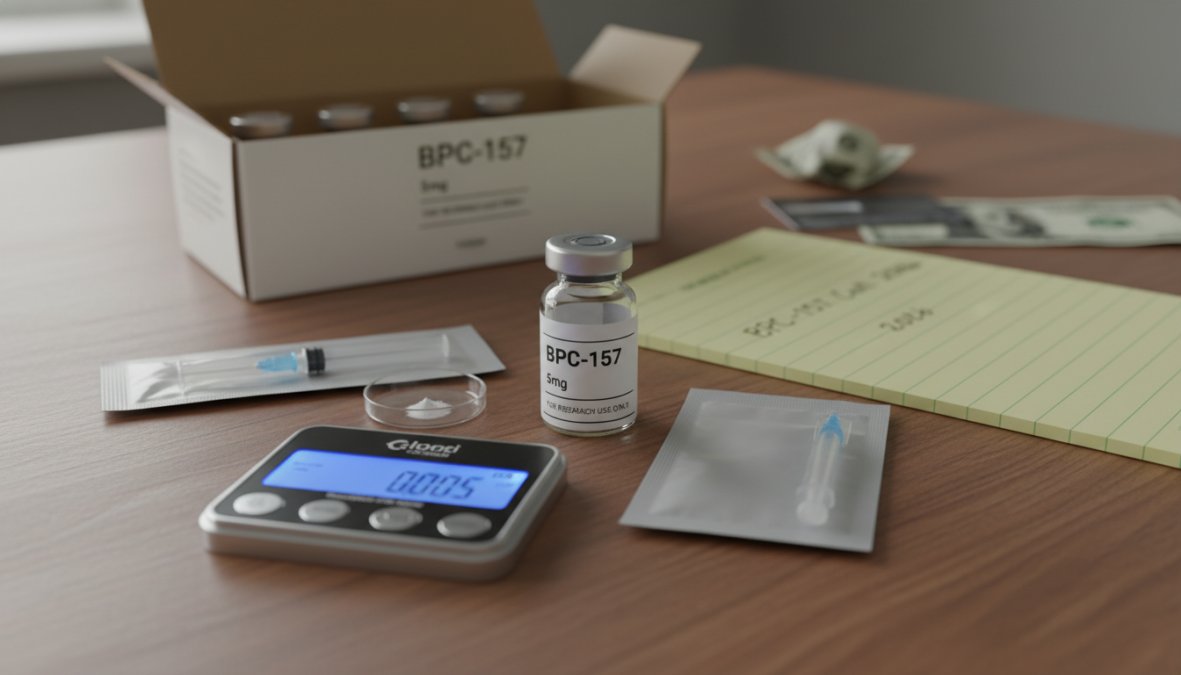
Research-grade BPC-157 is sold by peptide suppliers as a lyophilized powder in vials, typically in 5mg or 10mg sizes. According to Edge Peptides (2026), a 10mg vial in a 10-vial box costs $20 per vial. A 5mg vial from individual research suppliers typically runs around $30, as reported by Southern Care Anesthetics (2026). These prices are for laboratory use only, and quality varies significantly between suppliers. Without independent lab testing, there is no guarantee the vial contains what the label claims in terms of potency and purity.
| Format | Size | Price Per Unit | Source |
|---|---|---|---|
| Single vial (research grade) | 5mg | ~$30 | Southern Care Anesthetics, 2026 |
| Box purchase (10 vials) | 10mg each | $20/vial | Edge Peptides, 2026 |
| 4-week cycle kit | Gut/minor injury | $35.00 | The Peptide Catalog, 2026 |
| Physician-supervised program | Monthly | $425+ | Southern Care Anesthetics, 2026 |
4-Week Cycle Costs for Gut Healing or Minor Injury
A structured 4-week BPC-157 cycle for gut healing or a minor injury starts at $35.00 according to The Peptide Catalog (2026). This entry-level pricing typically covers a single course of research-grade peptide at a standard dosage protocol. It is the most affordable way to trial the compound, though it comes with the same caveats as all research chemical sourcing: no physician oversight, no purity guarantee from a licensed pharmacy, and legal ambiguity around personal use. For someone managing a minor soft tissue injury or exploring gut health applications, this tier represents the lowest financial barrier to entry.
Physician-Supervised Peptide Therapy Monthly Costs
Physician-supervised peptide therapy for BPC-157 starts at $425 per month (Southern Care Anesthetics, 2026). This figure includes the cost of the compounded peptide from a licensed pharmacy, provider consultations, and ongoing monitoring. Some telemedicine platforms bundle labs, follow-up appointments, and the peptide itself into a flat monthly fee, while others charge separately for each component. The BPC-157 cost at this tier is substantially higher, but you receive a verified product, a tailored dosage protocol, and medical oversight. For anyone with a complex health history or using BPC-157 alongside other medications, this tier is the appropriate choice.
BPC-157 Dosage: How Much Do You Need and What Does It Cost?
Dosage directly determines your total monthly spend, and the range in clinical and research contexts is wide enough to create significant cost variation.
Microgram (mcg) vs. Milligram (mg) Dosing Explained
BPC-157 dosage is typically expressed in micrograms (mcg) rather than milligrams (mg) for individual injections. Common research protocols use 200-500 mcg per injection, administered once or twice daily. To put that in context, a single 5mg vial contains enough peptide for 10-25 daily injections at standard dosing, depending on the protocol. Oral capsule dosing often uses higher milligram amounts because bioavailability is lower through the GI tract compared to subcutaneous injection. The real difference between mcg and mg dosing comes down to route: injectable protocols use smaller amounts with greater systemic effect, while oral protocols use larger amounts to compensate for digestive degradation.
How Dosage Frequency Affects Your Total Monthly Spend
A once-daily injection protocol at 250 mcg will consume a 5mg vial in approximately 20 days. At $30 per vial for research-grade peptide, that works out to roughly $45-$50 per month in peptide costs alone, before bacteriostatic water, syringes, and other supplies. A twice-daily protocol doubles that consumption, pushing monthly peptide costs to $90-$100 at the research chemical tier. Under physician supervision, the bpc 157 cost per month is fixed at the program rate regardless of exact dosage, which can make the higher-priced tier more predictable for budgeting purposes.
When calculating total BPC-157 cost for injectable protocols, add $15-$25 per month for bacteriostatic water, insulin syringes, and alcohol swabs. These ancillary costs are rarely mentioned in headline pricing but are required for safe administration.
BPC-157 Injection vs. Oral Capsules: Cost and Delivery Differences
The choice between injection and oral administration affects both efficacy and total cost. Neither format is universally superior; the right choice depends on the target condition.
Subcutaneous Injection: Potency, Purity, and Price Implications
Subcutaneous injection delivers BPC-157 directly into systemic circulation with high bioavailability, making it the preferred route for musculoskeletal applications where localized and systemic effects are both desired. Injection-grade peptide requires stricter purity standards, which is reflected in pricing at the physician-supervised tier. Research-grade injectable peptide carries higher risk because reconstitution errors, contamination, and incorrect dosing are all possible without clinical guidance. The BPC-157 cost for injectable research peptide is lower per unit, but the risk profile is correspondingly higher without physician supervision.
Oral BPC-157 Capsules: Convenience at a Cost?
Oral capsules trade some bioavailability for significant convenience. The peptide survives gastric acid better than most peptides due to its structural stability, which is why oral administration is particularly relevant for gastrointestinal dysfunction. Capsule pricing tends to be slightly higher than equivalent injectable peptide because of the encapsulation process and the need for higher per-dose amounts to achieve comparable effects. In practice, a monthly supply of oral BPC-157 capsules from a research supplier typically costs $40-$70, placing it between the cheapest injectable options and physician-supervised programs.
BPC-157 Side Effects and What They Mean for Long-Term Costs
The reported BPC-157 side effects in animal studies are minimal, which is part of its appeal. Nausea, dizziness, and injection site irritation are the most commonly reported effects in anecdotal human use. No serious adverse events have been documented in published research to date, though the absence of large-scale human clinical trials means the long-term safety profile is genuinely unknown.
The thing nobody tells you about BPC-157 side effects is that the cost implications are indirect rather than direct. If side effects occur, you may need additional medical consultations, which adds to your total expenditure. More significantly, purchasing from unverified research chemical suppliers introduces the risk of receiving an impure or mislabeled product, which creates health risks that carry their own financial consequences. Physician-supervised peptide therapy programs build monitoring into the program cost, which is one concrete justification for the higher BPC-157 cost at that tier.
Purchasing BPC-157 from unverified online suppliers without independent certificate of analysis (COA) documentation creates real contamination risk. Impure peptide can cause adverse reactions that a standard side effects profile does not predict. Always verify COA documentation before purchasing any research peptide.
Comparing BPC-157 Suppliers: Quality, Lab Testing, and Price
Not all BPC-157 suppliers operate at the same quality standard. Price alone is a poor proxy for quality in this market.
What to Look for in a Reputable Peptide Supplier
A reputable research peptide supplier should provide:
- Third-party certificate of analysis (COA) from an independent lab
- High-performance liquid chromatography (HPLC) purity testing results
- Mass spectrometry confirmation of peptide identity
- Clear labeling of peptide concentration per vial
- Transparent sourcing information for the raw peptide
- Explicit “for research use only” labeling (required for legal compliance)
Suppliers that cannot provide independent COA documentation should be avoided regardless of price. The research chemical market for peptides has documented cases of underdosed or misidentified compounds, and without lab verification, you have no way to confirm what you are actually purchasing.
Does a Higher Price Mean Better Quality?
Not automatically. A higher BPC-157 cost from a research supplier does not guarantee superior purity compared to a cheaper competitor if neither provides independent lab verification. The price-quality relationship is more reliable at the physician-supervised tier, where compounding pharmacies operate under regulatory oversight and must meet pharmaceutical-grade standards. Within the research chemical market, quality is determined by the supplier’s testing practices, not their price point. Some mid-priced suppliers with rigorous independent testing outperform premium-priced suppliers who rely only on in-house quality checks.
BPC-157 Legality, FDA Status, and Why It Matters for Pricing
BPC-157 is not commercially available as an FDA-approved drug. As PeptideSearch (2026) notes, pricing estimates for the compound are based on comparable drugs and research-grade market rates because no approved commercial product exists as a benchmark. The FDA has not evaluated BPC-157 for safety or efficacy in humans, which places it in a regulatory gray area for personal use.
This legal status directly affects pricing in two ways. First, it prevents insurance coverage, meaning 100% of the BPC-157 cost is out-of-pocket regardless of the sourcing pathway. Second, it limits the physician-supervised market to providers operating under compounding pharmacy frameworks, which adds complexity and cost to the supply chain. The research chemical designation means suppliers can legally sell the compound for laboratory purposes while explicitly disclaiming any human use application. Understanding this framework is essential for anyone evaluating where to purchase and what legal exposure they are accepting.
BPC-157 Stacks: The Wolverine Stack with TB-500 and Added Costs
The Wolverine Stack, a combination of BPC-157 and TB-500 (Thymosin Beta-4), is one of the most discussed peptide combinations in performance medicine and recovery communities. TB-500 complements BPC-157 by promoting systemic tissue repair and reducing inflammation through a different mechanism, and the two peptides are believed to have synergistic effects on accelerated healing.
Adding TB-500 to a BPC-157 protocol increases total cost substantially. TB-500 research vials typically run $40-$80 per vial depending on concentration, and standard stacking protocols use both peptides simultaneously over a 4-8 week cycle. A full Wolverine Stack cycle at the research chemical tier can cost $100-$200 for the peptides alone, while a physician-supervised stacking protocol could push monthly costs to $600-$900 or more. Anyone budgeting for this combination should treat the individual BPC-157 cost as just one component of a larger total expenditure.
Where to Buy BPC-157: Telemedicine vs. Research Chemical Suppliers
Two sourcing pathways exist, and they serve different buyer profiles.
Telemedicine platforms connect patients with licensed providers who can prescribe compounded BPC-157 through a licensed pharmacy. This pathway is legal, medically supervised, and appropriate for anyone who wants physician oversight of their dosage and protocol. The BPC-157 cost through telemedicine starts at $425 per month and may include consultation fees. Platforms like Ascend Vitality operate in this space, connecting patients with specialized care pathways for hormone and health optimization, with prescriptions delivered directly. For anyone approaching BPC-157 as part of a broader longevity therapy or performance medicine program, the telemedicine model provides the clinical framework that self-directed research chemical purchasing cannot.
Research chemical suppliers sell BPC-157 online for laboratory use only, with pricing starting around $20-$30 per vial. This pathway is cheaper and accessible without a prescription, but it carries legal ambiguity, quality uncertainty, and no medical oversight. It is appropriate for actual laboratory research contexts and is explicitly not intended for human consumption per supplier labeling requirements.
The decision between these pathways is not purely financial. It reflects your risk tolerance, your health context, and whether you are approaching BPC-157 as a research interest or a personal health intervention.
Is BPC-157 Worth the Cost? Who Should Consider Peptide Therapy
The value calculation for BPC-157 depends entirely on your goals, your health situation, and which pricing tier you are evaluating.
For individuals with chronic tendon injuries, persistent GI dysfunction, or inflammatory conditions that have not responded to standard treatments, the potential upside of BPC-157 is meaningful enough to justify the cost at either tier. For someone managing a minor acute injury, the $35 four-week cycle at the research chemical tier represents a low-cost experiment, though the quality and legal caveats apply.
The BPC-157 cost at the physician-supervised tier is most justified for:
- Anyone with a complex health history or concurrent medications
- Individuals who want verified potency and purity from a licensed pharmacy
- Those using BPC-157 as part of a structured longevity therapy or performance medicine program
- Anyone stacking BPC-157 with other peptides like TB-500 who needs professional protocol management
The research chemical tier is most appropriate for actual laboratory research contexts. In practice, many individuals use it for personal recovery applications, but they do so accepting the quality and legal risks that come with unverified research peptide sourcing.
If you are considering physician-supervised peptide therapy, ask the provider specifically whether their BPC-157 is sourced from an FDA-registered compounding pharmacy and whether they provide the COA from that pharmacy. This single question separates credible providers from those operating with less rigorous sourcing standards.
Conclusion
The biggest challenge with BPC-157 is that the most affordable options carry the most uncertainty, while the most credible options require a significant monthly commitment. For individuals who want medically supervised peptide therapy with verified quality, physician oversight, and prescriptions delivered directly, Ascend Vitality offers specialized care pathways that connect patients with targeted health and hormone programs. Their telemedicine model provides access to medically supported programs without requiring in-person clinic visits, making physician-supervised peptide therapy more accessible than traditional clinic models. Get started with Ascend Vitality and access the structured, medically supported framework that research chemical sourcing cannot provide.
Frequently Asked Questions
1. What is the average cost of BPC-157?
BPC-157 cost varies widely depending on the source and form. Research-grade vials can cost as little as $20 per vial when bought in a 10-vial box, while a 5mg vial from online suppliers may start around $30. A 4-week cycle for gut healing or minor injury starts at approximately $35, while physician-supervised peptide therapy can reach $425 per month. The format, supplier, and level of medical oversight are the biggest price drivers.
2. How does BPC-157 dosage affect the total monthly cost?
BPC-157 dosage directly impacts how quickly you use each vial, which determines your monthly spend. Higher-frequency dosing protocols, common for musculoskeletal recovery or chronic inflammation, will consume more product per cycle. Since vials are priced per milligram (mg), a higher daily microgram (mcg) dose means more vials per month. Under physician supervision, your dosage plan is factored into the overall program cost, typically starting at $425 monthly.
3. Is BPC-157 legal to buy, and does legal status affect pricing?
BPC-157 is not FDA-approved and is not yet commercially available as a prescription drug. Most online suppliers sell it as a research chemical for laboratory use only, not for human consumption. This regulatory gray area means pricing is based on research-grade market rates rather than pharmaceutical standards. Buying through a telemedicine provider or longevity clinic typically costs more but includes physician supervision, which adds a layer of safety and legitimacy.
4. What is the difference in cost between BPC-157 injections and oral capsules?
BPC-157 injections, typically subcutaneous, are generally considered more bioavailable than oral capsules, and research-grade injectable vials can start around $20-$30 each. Oral BPC-157 capsules may be priced similarly per cycle but are often used specifically for gut health and gastrointestinal dysfunction rather than systemic tissue repair. Injection-based protocols under physician supervision tend to carry higher program costs, often $425 or more per month, reflecting added oversight and compounded formulations.
5. Do higher-priced BPC-157 products mean better quality?
Not automatically. Price alone is not a reliable indicator of purity or potency. The most important quality markers are independent third-party lab testing (certificate of analysis), verified peptide purity levels, and supplier transparency. A $20-per-vial product from a reputable supplier with published lab results may be more trustworthy than a premium-priced product without verification. Always prioritize suppliers who provide documented purity testing over those competing solely on price.