
Last Updated: August 29, 2026
Understanding Cellular Repair and Why It Slows After 50
Cellular repair is the body’s natural process of fixing damaged cells, clearing out dysfunctional components, and regenerating new tissue. After age 50, this process becomes significantly less efficient. Your cells accumulate more damage, your mitochondria lose their ability to generate energy effectively, and your body struggles to clear out senescent cells, those zombie cells that no longer divide but continue to damage surrounding tissue.
This slowdown isn’t inevitable. It’s the result of specific biological changes that respond to targeted interventions. Understanding what happens at the cellular level after 50 is the foundation for reversing it.
At Ascend Vitality, we work with patients who want to address aging at its root cause rather than treating symptoms. The strategies in this guide reflect what we’ve learned from helping adults optimize their cellular health through medically-supported protocols.
Cellular senescence and its impact on aging
Cellular senescence is the state where cells stop dividing but refuse to die. These senescent cells accumulate with age and secrete inflammatory compounds that damage neighboring healthy cells. By age 50, you’ve accumulated enough of these cells that their collective damage becomes noticeable, joint stiffness, reduced recovery time, slower wound healing, and decreased energy (peer-reviewed research).
The inflammatory cascade triggered by senescent cells accelerates aging across every system. Your skin loses elasticity. Your joints become stiffer. Your cognitive function slows. Your immune system becomes less responsive to threats while simultaneously overreacting to harmless stimuli.
The good news: senescent cells respond to specific interventions. Caloric restriction, certain supplements, and targeted exercise can trigger your body to clear these cells out. The process isn’t fast, but it’s measurable. Most people report noticeable improvements in energy, joint mobility, and recovery speed within 8-12 weeks of consistent intervention.
The role of stem cells in aging
Stem cells are your body’s repair crew. They differentiate into specialized cells to replace damaged tissue, maintain organ function, and support regeneration. After 50, your stem cell population declines significantly, and the remaining stem cells become less responsive to repair signals.
This explains why recovery takes longer. A 25-year-old can damage muscle tissue during training and repair it within 48 hours. A 55-year-old with the same training stimulus needs 72-96 hours because fewer stem cells are available and they’re responding more slowly.
Optimizing stem cell function requires three things: adequate signaling molecules (which come from exercise and proper nutrition), reduced inflammation (which inhibits stem cell activation), and sufficient recovery time (which allows differentiation to occur). NAD+ therapy and peptide treatments work partly by enhancing stem cell responsiveness to these signals.
Step 1: Activate Autophagy Through Intermittent Fasting
Autophagy is your cells’ waste disposal system. It breaks down damaged organelles, clears out misfolded proteins, and recycles cellular components. After 50, autophagy becomes sluggish. Your cells accumulate junk that should have been cleared out, leading to dysfunction and accelerated aging.
Intermittent fasting is the most reliable way to activate autophagy. When you extend the fasting window beyond 12-14 hours, your body shifts from using glucose for energy to breaking down stored fat and cellular components. This metabolic state triggers autophagy in most tissues within 16-18 hours of fasting (peer-reviewed research).
Start with a 14-hour fast (eating window from noon to 8 PM, for example). After two weeks, extend to 16 hours. Most people tolerate 16:8 fasting (16 hours fasting, 8-hour eating window) indefinitely. Some respond better to 5:2 protocols (eating normally five days, restricting to 500-600 calories two non-consecutive days).
Track your response. Energy levels typically dip in week one, then improve significantly by week three. Joint pain often decreases noticeably. Mental clarity improves. These are signs autophagy is active.
Start fasting during a period when you’re not under major stress or training intensely. Your cortisol is already elevated during stress; adding fasting stress can backfire. Wait for a calmer period, establish the habit, then maintain it through busier times.
Step 2: Optimize Mitochondrial Efficiency With Targeted Exercise
Mitochondria are your cells’ power plants. They convert nutrients into usable energy (ATP). After 50, your mitochondrial density decreases and the remaining mitochondria become less efficient. This explains the fatigue, reduced exercise capacity, and slower recovery most people experience.
Exercise is the most powerful stimulus for mitochondrial adaptation. Resistance training triggers mitochondrial biogenesis (the creation of new mitochondria). Aerobic activity improves mitochondrial efficiency and oxidative capacity.

Strength training and aerobic exercise benefits
Strength training twice weekly (Monday and Thursday, for example) is sufficient to maintain muscle and trigger mitochondrial adaptation. Focus on compound movements: squats, deadlifts, chest presses, rows. Three sets of 6-10 repetitions per exercise, resting 2-3 minutes between sets. This intensity is necessary to recruit the muscle fibers that respond most strongly to training stimulus.
Aerobic activity three times weekly, 30-45 minutes of moderate intensity (where you can speak but not sing), improves mitochondrial efficiency without the recovery demands of high-intensity work. Walking, cycling, swimming, or rowing all work. Consistency matters more than intensity for this population.
The combination matters. Strength training without aerobic work leaves your mitochondrial oxidative capacity underdeveloped. Aerobic work without strength training fails to maintain muscle mass. Together, they create the metabolic environment where cellular repair accelerates.
Recovery is non-negotiable. Your mitochondria adapt during rest, not during exercise. Sleep deprivation, chronic stress, and inadequate nutrition all suppress mitochondrial adaptation. This is where most people fail, they do the exercise but skip the recovery.
Training through persistent joint pain or illness delays recovery and increases injury risk. At 50+, training smart beats training hard. One missed workout won’t derail progress. One injury can cost months of progress.
Step 3: Build a Nutrient-Dense Diet for Cellular Health
Your cells require specific raw materials to repair themselves. After 50, nutrient absorption declines, so the density of your diet becomes critical. You can’t eat the same volume as you did at 30 and expect the same nutrient delivery.
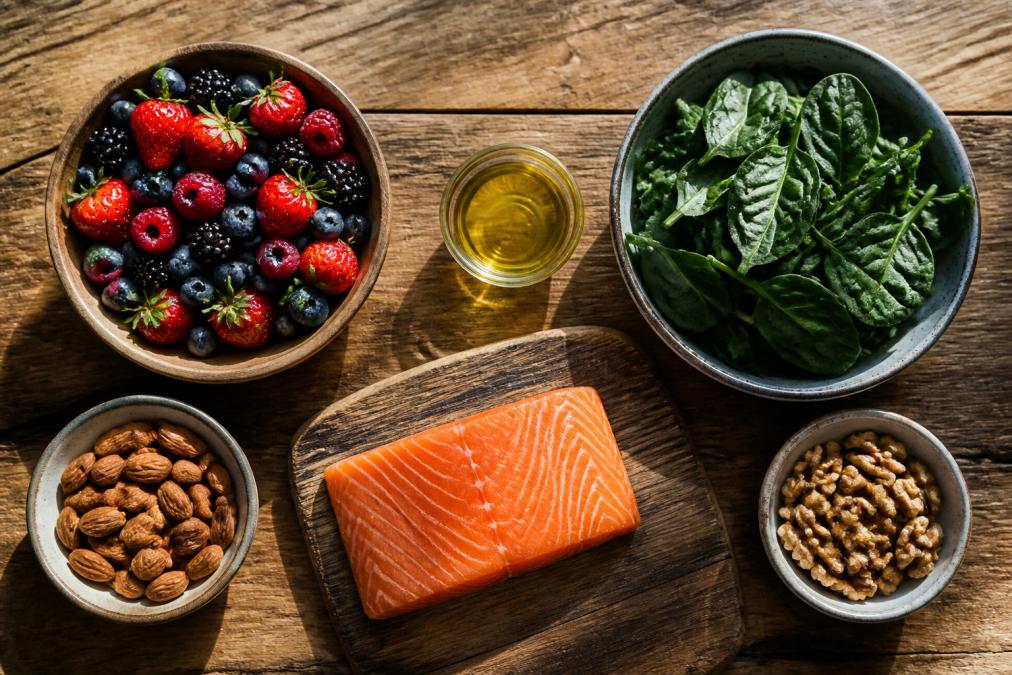
Focus on foods with high micronutrient-to-calorie ratios: fatty fish (salmon, mackerel, sardines), leafy greens (spinach, kale, arugula), cruciferous vegetables (broccoli, Brussels sprouts, cabbage), berries, nuts, seeds, and high-quality protein sources.
Anti-inflammatory foods and antioxidants
Chronic inflammation accelerates cellular aging. Your diet either reduces it or amplifies it. Anti-inflammatory foods contain compounds that suppress inflammatory pathways: omega-3 fatty acids (from fish and flax), polyphenols (from berries, dark chocolate, olive oil), and sulfur compounds (from cruciferous vegetables).
Antioxidants neutralize free radicals, unstable molecules that damage cell membranes and DNA. After 50, your antioxidant defenses weaken, making dietary antioxidants more important. Blueberries, dark chocolate (70% cacao or higher), green tea, and colorful vegetables are reliable sources.
Practical structure: build each meal around a protein source, fill half your plate with vegetables (variety of colors), add a fat source (olive oil, nuts, avocado), and include a starch only if you’ve trained that day. This approach naturally creates nutrient density without calorie excess. autophagy nutrition principles.
Most people over 50 benefit from supplementing vitamin D (1,000-2,000 IU daily), magnesium (300-400 mg), and omega-3 fatty acids if fish intake is low. These address common deficiencies that impair cellular repair.
Step 4: Prioritize Sleep Hygiene and Recovery Processes
Sleep is when your body performs most of its cellular repair. During deep sleep, your pituitary gland releases growth hormone, your parasympathetic nervous system dominates, and your glymphatic system clears out metabolic waste from your brain. After 50, sleep architecture deteriorates, you spend less time in deep sleep and wake more frequently.
Consistent sleep timing is more important than total duration. Going to bed at 10 PM and waking at 6 AM every day, even weekends, creates a stable circadian rhythm that improves sleep quality and cellular repair efficiency.
Temperature matters. Your core body temperature needs to drop 2-3 degrees Fahrenheit to initiate sleep. A cool bedroom (65-68°F) facilitates this. A warm bedroom suppresses it.
Light exposure in the morning (within 30 minutes of waking) sets your circadian rhythm forward, making evening sleep easier. Light exposure after 8 PM suppresses melatonin and delays sleep onset. Use blue-light filters on screens after sunset or wear blue-light blocking glasses.
Alcohol and caffeine both disrupt sleep architecture, even if they don’t prevent you from falling asleep. Caffeine after 2 PM typically impairs sleep quality. Alcohol before bed increases nighttime waking and reduces deep sleep time.
Most people over 50 need 7-9 hours of sleep nightly for optimal cellular repair. Less than 7 hours suppresses mitochondrial adaptation from exercise and accelerates aging markers.
Sleep is where cellular repair happens. You can’t out-supplement poor sleep or out-exercise sleep deprivation. Fix sleep first, then layer in other interventions.
Understanding the Benefits of NAD+ Therapy
NAD+ (nicotinamide adenine dinucleotide) is a coenzyme present in every cell. It’s essential for energy production, DNA repair, and activating sirtuins, proteins that regulate cellular aging and longevity. After 50, NAD+ levels decline by 50% or more, which impairs all three functions.
NAD+ therapy restores these levels through supplementation or intravenous administration. Research shows NAD+ therapy improves mitochondrial function, enhances DNA repair, activates autophagy, and reduces inflammation. Many patients report improved energy, better mental clarity, and faster recovery from exercise.
The most common approach is oral NAD+ precursors like nicotinamide riboside (NR) or nicotinamide mononucleotide (NMN). Typical doses range from 250-1,000 mg daily. Some practitioners recommend cycling: 30 days on, 14 days off, to prevent tolerance.
Intravenous NAD+ therapy delivers higher doses directly into the bloodstream, bypassing digestion. This approach produces faster results but requires clinical administration. At Ascend Vitality, we work with patients to determine whether oral or IV NAD+ therapy fits their specific situation, timeline, and health profile.
Response varies. Some people notice improvements within days. Others require 4-6 weeks of consistent use. Energy, mental clarity, and exercise recovery are the most commonly reported improvements.
Peptide Therapy for Anti-Aging and Cellular Repair
Peptides are short chains of amino acids that function as signaling molecules. Specific peptides trigger stem cell activation, enhance growth hormone release, reduce inflammation, and improve mitochondrial function. After 50, your body produces fewer of these signaling peptides, which slows cellular repair.
Peptide therapy uses synthetic versions of these natural molecules to restore signaling. Common peptides include sermorelin (stimulates growth hormone release), BPC-157 (enhances tissue repair and reduces inflammation), and Thymosin Alpha-1 (supports immune function and cellular repair).
Sermorelin is administered as a subcutaneous injection, typically 100-200 mcg before bed. It works by signaling your pituitary gland to release more growth hormone naturally, it doesn’t introduce synthetic hormone. Most people tolerate it well, with minimal side effects.
BPC-157 is injected subcutaneously or taken orally. It accelerates healing of damaged tissue, reduces inflammation, and supports mitochondrial function. Typical dosing is 250-500 mcg daily. Response is often noticeable within 2-4 weeks.
Safety and contraindications of peptide treatments
Peptides are generally well-tolerated, but they’re not appropriate for everyone. Anyone with a personal or family history of cancer should discuss peptide therapy carefully with their physician, as peptides that enhance growth hormone can theoretically promote cancer cell growth in susceptible individuals.
Thyroid conditions, uncontrolled hypertension, and active infections require medical supervision before starting peptide therapy. Pregnancy and breastfeeding are contraindications for most peptides.
Peptides are prescription medications in the United States. They require medical oversight, proper dosing, and monitoring. This is where working with a qualified practitioner matters. Ascend Vitality connects you with physicians who specialize in peptide therapy and understand the specific protocols that work best for cellular repair after 50.
Side effects are typically mild: injection site reactions (redness, slight swelling), temporary water retention, or mild joint discomfort as healing accelerates. Serious adverse events are rare when peptides are prescribed and monitored appropriately.
Common Mistakes to Avoid When Improving Cellular Repair
Most people fail at cellular repair not because they choose the wrong strategies, but because they abandon them too early or combine them incorrectly.
Mistake 1: Starting too aggressively. Beginning a 20-hour fast, intense training program, and three supplements simultaneously overwhelms your system. Start with one intervention, typically intermittent fasting or exercise, establish it for 4 weeks, then add another. This approach is slower but sustainable.
Mistake 2: Prioritizing supplements over fundamentals. NAD+ therapy and peptides amplify the effect of good sleep, exercise, and nutrition. They don’t replace them. If you’re sleeping 5 hours nightly and sedentary, supplements won’t produce results. Fix the fundamentals first.
Mistake 3: Ignoring recovery. Exercise damages tissue. Cellular repair happens during recovery. Training hard without adequate sleep, nutrition, and rest days suppresses adaptation and accelerates aging markers. More training is not the answer; better recovery is.
Mistake 4: Expecting linear progress. Cellular repair follows a non-linear trajectory. You’ll see improvements in weeks 1-3, a plateau in weeks 4-6, then another jump in weeks 7-10. Many people quit during the plateau, thinking the intervention stopped working. Plateaus are normal. Consistency through them produces breakthrough results.
Mistake 5: Neglecting individual variation. What works for your friend may not work for you. Some people respond dramatically to fasting; others need a different approach to activate autophagy. Some tolerate peptides perfectly; others experience side effects. Work with a practitioner who adjusts based on your response, not a generic protocol.
Hormonal Influence on Cellular Repair and Regeneration
Hormones are master regulators of cellular repair. After 50, hormone production declines, testosterone, estrogen, DHEA, and growth hormone all decrease. This hormonal shift is partly responsible for the slowdown in cellular repair.
Testosterone supports mitochondrial function, muscle protein synthesis, and stem cell activation. In men, testosterone typically declines 1% annually after age 30. By 50, many men have levels that impair cellular repair.
Estrogen supports mitochondrial efficiency and has anti-inflammatory effects. In women, the menopause transition causes estrogen to drop 80-90%, which accelerates cellular aging and increases inflammation.
Growth hormone stimulates stem cell proliferation and mitochondrial biogenesis. It declines significantly after 50, which explains slower recovery and reduced muscle-building capacity.
DHEA supports immune function, mitochondrial efficiency, and has anti-inflammatory effects. It declines more steeply than other hormones after 50.
Hormone optimization, whether through lifestyle interventions, bioidentical hormone replacement, or peptide therapy that enhances natural hormone production, is often necessary for optimal cellular repair after 50. This is where individualized medical guidance becomes critical. Ascend Vitality works with patients to assess hormone status, understand how it’s affecting their specific situation, and implement appropriate interventions.
Conclusion: Your Cellular Repair Plan After 50
Cellular repair after 50 is achievable. It requires addressing the specific biological changes that occur with age: activating autophagy, optimizing mitochondrial function, providing cellular building blocks, ensuring adequate recovery, and often restoring hormonal signaling that declines with age.
The challenge most people face isn’t knowing what to do, it’s implementing it consistently while managing other life demands. Ascend Vitality specializes in creating medically-supported cellular repair plans tailored to your specific situation, health history, and goals. We connect you with physicians who understand peptide therapy, NAD+ optimization, and hormone-informed approaches to cellular regeneration. Rather than generic protocols, you get a plan that accounts for your individual biology, existing medications, and health status. Research on peptide therapy for aging suggests that personalized approaches can lead to better outcomes than one-size-fits-all strategies. Get started with Ascend Vitality and build your cellular repair protocol today.
Frequently Asked Questions
What is the role of NAD+ in cellular repair after 50?
NAD+ is a coenzyme critical for DNA repair, mitochondrial function, and activating sirtuins, proteins that regulate cellular aging. NAD+ levels naturally decline with age, slowing cellular repair processes. Replenishing NAD+ through supplementation or lifestyle changes can help restore these repair mechanisms and support cellular rejuvenation in aging adults.
How do supplements for cellular health actually work?
Supplements for cellular health work by providing building blocks or cofactors your cells need for repair. Antioxidants combat oxidative stress, coenzyme Q10 supports mitochondrial energy production, and senolytics target senescent cells. The most effective approach combines supplements with lifestyle changes like exercise and fasting, as supplements alone cannot overcome poor diet or inactivity.
Can cellular damage from aging be reversed?
Partial reversal is possible through consistent lifestyle and medical interventions. Autophagy clears damaged cellular components, stem cell treatments can regenerate tissue, and peptide therapy stimulates growth factors. However, decades of accumulated damage cannot be fully erased. The goal is slowing senescence, restoring function, and preventing further decline rather than achieving complete reversal.
Is peptide therapy for anti-aging safe for people on other medications?
Peptide safety depends on your specific health profile and current medications. Some peptides may interact with thyroid medications, blood pressure drugs, or diabetes treatments. A qualified healthcare provider must review your full medication list before starting peptide therapy. Ascend Vitality’s online consultation process includes medication screening to identify potential interactions before treatment begins.
Sources:
National Institute on Aging research on cellular senescence
American Heart Association guidelines on exercise for adults over 50
Sleep Foundation recommendations for sleep and aging