

Last Updated: June 18, 2026
Pop culture influence on medical perceptions is one of the most consequential and underexamined forces shaping how people understand their own health. At Ascend Vitality, we work with patients every day who arrive with expectations shaped not by clinical evidence but by what they watched last week on streaming. The gap between fictional medicine and clinical reality is not a minor inconvenience. It actively changes patient behavior, distorts risk perception, and in some cases delays or prevents people from seeking appropriate care. Below, we’ll break down exactly how this influence operates, where it causes the most damage, and what patients can do about it.
The throughline running through all of this: media does not just reflect public health attitudes. It manufactures them.
How Pop Culture Influence on Medical Perceptions Actually Works
Pop culture influence on medical perceptions operates through a well-documented cognitive mechanism: the brain processes vivid, emotionally compelling narratives with many of the same neural pathways it uses for real experiences. This is not a metaphor. Repeated exposure to fictional medical scenarios builds a mental model of how medicine works, what doctors do, and what patients should expect, regardless of whether those scenarios are accurate.
The mechanism has a name in communication research: narrative transportation. When a viewer becomes absorbed in a story, their critical faculties relax. They are not fact-checking the dialogue in a medical drama. They are feeling it. And feelings, as any clinician will tell you, drive health decisions far more reliably than facts.
The Gap Between Fictional Narratives and Clinical Reality
Fictional narratives in medical entertainment are built for dramatic tension, not clinical accuracy. A real emergency department visit for chest pain involves triage queues, waiting rooms, and a battery of standardized tests spread over hours. A television emergency department resolves the same scenario in twelve minutes with a genius physician delivering a monologue about the patient’s life choices.
The practical consequence is a patient population with systematically distorted expectations. Many patients expect faster diagnoses, more expressive physician communication, and more dramatic treatment interventions than clinical reality provides. When reality falls short of the fictional standard, patient trust erodes, not because the care was bad, but because the benchmark was wrong.
Why the Brain Treats Dramatic Stories Like Real Evidence
The brain’s tendency to treat narrative like evidence is not a flaw. It is an ancient feature. Humans evolved to learn from stories before they evolved to parse statistical abstracts. A compelling account of a symptom, treatment, or outcome carries emotional weight that a clinical guideline simply cannot match.
This is why a single dramatic storyline about a misdiagnosed cancer patient can shift public behavior toward self-diagnosis and second-guessing physicians, while years of public health campaigns struggle to move the needle. Stories win. The question is whether the stories being told are doing useful work.
A common mistake patients make is treating emotional resonance as a proxy for medical accuracy. The more compelling a health narrative feels, the more skepticism it deserves, not less. Dramatic storytelling is optimized for engagement, not evidence.
Medical Accuracy in Television Shows: Where Drama Wins Over Science
Most medical dramas on television prioritize narrative momentum over clinical accuracy, and the evidence for this is not subtle. Procedures are compressed, diagnoses are intuitive rather than systematic, and rare conditions appear at frequencies that would make any epidemiologist wince.
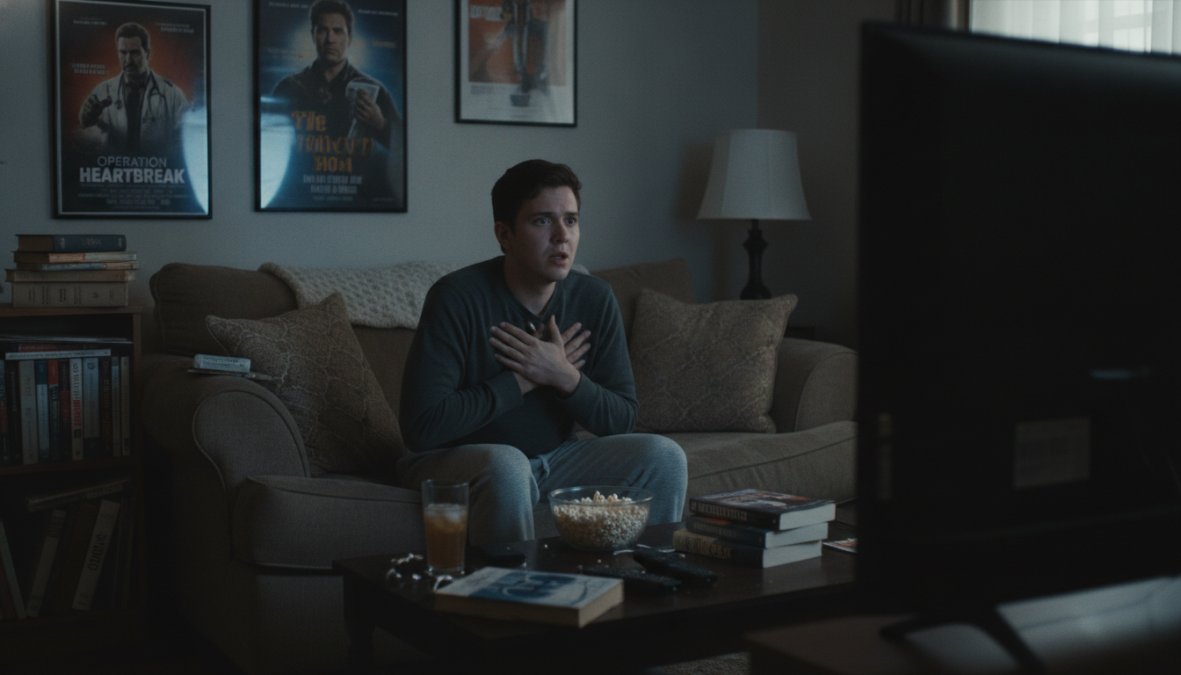
Medical accuracy in television shows has been examined by healthcare professionals for decades, and the consensus is consistent: entertainment value and clinical fidelity are in fundamental tension. Showrunners know this. They hire medical consultants not to make shows accurate but to make them plausible enough that audiences do not complain.
The ‘CSI Effect’ and Unrealistic Diagnostic Expectations
The ‘CSI Effect’ is the documented phenomenon where exposure to forensic and medical procedural dramas leads audiences to develop unrealistic expectations about diagnostic speed, certainty, and technological capability. Originally observed in jury behavior, where jurors expected forensic evidence that simply did not exist in most criminal cases, the same pattern applies directly to medical settings.
Patients who consume heavy volumes of medical procedural content often arrive expecting immediate imaging, rapid genetic testing, and definitive diagnoses within a single visit. When a physician recommends watchful waiting or a referral to a specialist over several weeks, the gap between expectation and reality can feel like negligence rather than appropriate clinical judgment.
According to research documented by the Journal of the American Medical Association on media and patient expectations, patient satisfaction scores are partly influenced by whether the clinical experience matches prior media-formed expectations. This creates a perverse incentive: physicians who practice medicine the way television depicts it may score higher on satisfaction surveys, even when that approach is clinically inferior.
The impact of medical dramas on patient behavior extends to self-diagnosis. Patients who recognize a symptom cluster from a television storyline frequently arrive convinced they have the condition portrayed, requiring physicians to spend significant consultation time addressing the fictional diagnosis before addressing the actual clinical picture.
Impact of Medical Dramas on Patient Behavior and Healthcare Decisions
The impact of medical dramas on patient behavior is measurable and multidirectional. Some effects are broadly positive: storylines about cancer screening, HIV testing, and mental health treatment have demonstrably increased public engagement with those services in the weeks following broadcast. Others are harmful, driving unnecessary emergency department visits, antibiotic demands, and resistance to evidence-based treatment plans.

What most analyses of pop culture influence on medical perceptions miss is that the effect is not uniform across demographics. Patients with lower baseline health literacy are more susceptible to narrative-driven belief formation. Patients with higher health literacy can still be influenced, but they tend to engage with media health content more critically. This has direct implications for health equity, a point we return to later.
The behavioral pathway typically runs as follows: media exposure creates a belief or expectation, that belief shapes how a patient interprets their own symptoms, and the interpretation drives a healthcare decision. The decision might be to seek care earlier (positive), to self-treat (negative), to demand a specific treatment (variable), or to avoid a recommended intervention because a fictional character had a bad outcome (negative).
Pop culture does not just inform patients about medicine. It shapes the emotional frame through which they interpret medical advice. A physician recommending a treatment that a patient watched fail on television faces a credibility deficit that has nothing to do with the clinical evidence.
Stereotypes in Medical Media and Their Real-World Consequences
Stereotypes in medical media are not incidental. They are structural. The heroic solo diagnostician, the incompetent hospital administrator, the overly emotional nurse, the dismissive specialist: these archetypes appear repeatedly because they generate reliable dramatic tension. The problem is that repeated exposure normalizes them as accurate representations of how healthcare systems work and who deserves trust within them.
Stereotypes in medical media also encode racial, gender, and class biases that have documented real-world consequences. Research from the National Institutes of Health on implicit bias in healthcare has consistently shown that media representations influence implicit bias among both patients and healthcare providers. Patients from marginalized groups who see themselves consistently portrayed as non-compliant, dramatic, or secondary characters in medical narratives internalize messages about whose pain is taken seriously.
Mental Health Stigma and How Entertainment Shapes Public Attitudes
Mental health representation in entertainment has historically been catastrophic. Characters with schizophrenia are violent. Characters with depression are either romanticized or comic relief. Addiction is a moral failing rather than a chronic condition. These portrayals persist because they are dramatically convenient, not because they reflect clinical reality.
Mental health stigma reduction is one area where the evidence for pop culture influence on medical perceptions cuts both ways. Harmful portrayals increase stigma and reduce help-seeking behavior, particularly among men and among communities where mental health discussions are already culturally constrained. But accurate, humanizing portrayals have measurable positive effects. Public health researchers have documented increases in mental health service inquiries following television storylines that portray therapy and medication in realistic, non-stigmatizing ways.
The entertainment industry has begun to recognize this responsibility. Some productions now work closely with mental health organizations to ensure accurate representation. The results, while imperfect, represent a meaningful shift in how mental illness is depicted in mainstream media.
Social Media, TikTok, and the New Frontier of Pop Medicine
Short-form video has fundamentally changed the architecture of health misinformation. Where medical dramas influence viewers over seasons of accumulated narrative, a single TikTok video can reach millions of people in 48 hours with a health claim that has no clinical basis whatsoever.
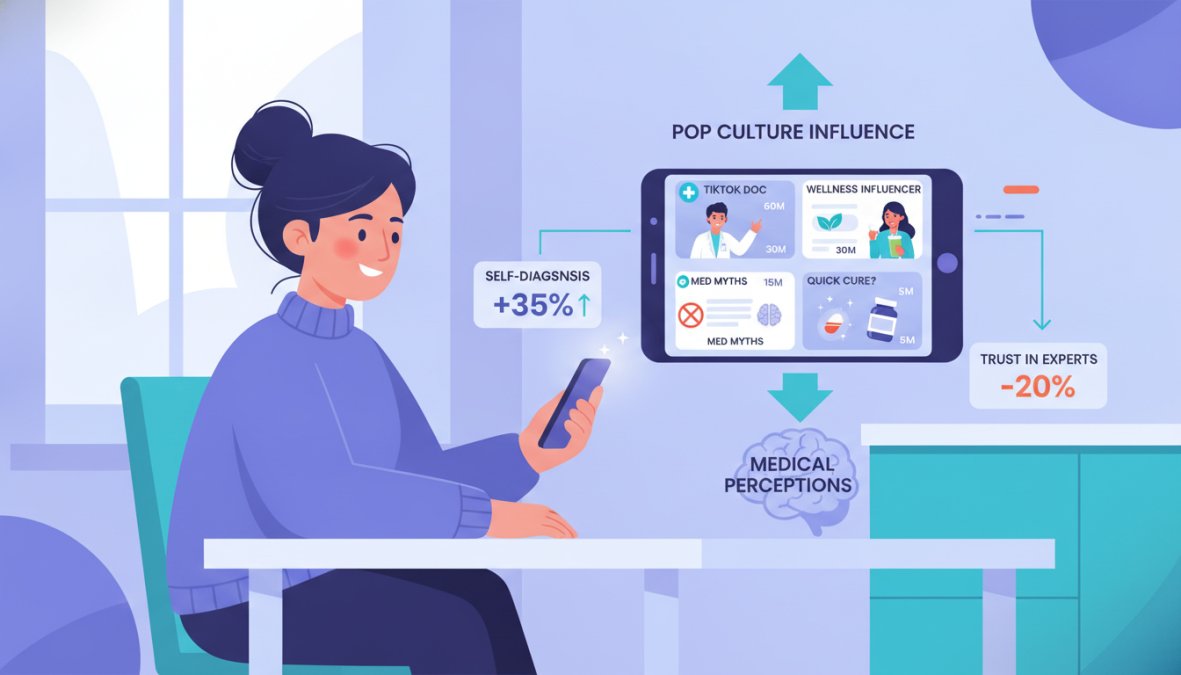
Pop culture influence on medical perceptions has found its most efficient delivery mechanism in social media. The algorithmic logic of these platforms rewards engagement, not accuracy. A video claiming that a common medication causes a dramatic side effect will outperform a video explaining the actual risk profile of that medication every time, because fear and novelty drive clicks more reliably than nuance.
Short-Form Video and the Spread of Medical Misinformation
Short-form video platforms have created a new category of health influencer: the person with lived experience and a large following, presenting personal anecdotes as generalizable medical truth. This is not inherently malicious. Many of these creators genuinely believe they are helping their audiences. The problem is structural.
Medical misinformation spreads through short-form video via several distinct pathways:
- Anecdotal generalization: “This supplement cured my [condition]” presented as universal evidence
- Mechanism fabrication: plausible-sounding but invented explanations for how a treatment works
- Authority mimicry: visual cues like lab coats, medical settings, or clinical-sounding language used by non-clinicians
- Selective citation: real studies cited out of context to support claims the studies do not actually support
- Algorithm amplification: accurate corrections receive less engagement than the original misinformation, so they reach fewer people
According to the World Health Organization’s guidance on infodemic management, health misinformation during public health events spreads faster than accurate information across social platforms. The same dynamic applies to everyday health content outside of crisis contexts.
Health Equity Concerns in Viral Health Trends
Viral health trends do not affect all populations equally. Communities with lower access to primary care are more likely to rely on social media as a primary health information source. This means the populations most vulnerable to medical misinformation are also the ones with the fewest institutional resources to correct it.
Health equity concerns in this space go beyond misinformation. Viral wellness trends frequently center the health practices of affluent, predominantly white demographics and present them as universal. The practical result is that health advice optimized for one socioeconomic context gets applied across very different circumstances, sometimes with harmful outcomes.
Body Image, the ‘Barbie Effect,’ and Pop Culture’s Weight on Health Outcomes
The relationship between pop culture and body image represents one of the most extensively documented areas of media influence on health outcomes. The ‘Barbie Effect’ refers to the documented phenomenon where exposure to idealized, physically unrealistic representations of the human body shifts self-perception and, consequently, health behavior.
This effect is not limited to eating disorders, though the connection there is well-established. Body image distortion driven by media consumption influences exercise behaviors, supplement use, cosmetic procedure demand, and willingness to seek medical care for conditions perceived as body-related. Patients who feel shame about their bodies are less likely to undergo recommended screenings and less likely to disclose relevant symptoms to their physicians.
The emergence of GLP-1 medications in mainstream media coverage has added a new dimension to this dynamic. Pop culture narratives about weight loss medications shift rapidly between celebration and moral panic, and neither extreme serves patients well. Accurate, evidence-based health communication about weight management, of the kind Ascend Vitality provides through its medically-supported programs, requires actively countering the noise generated by viral cultural narratives.
Patients navigating body image concerns influenced by media should ask their healthcare provider specifically about evidence-based options rather than treatments they have seen promoted online. The clinical landscape for weight management has changed significantly in recent years, and the most effective options are rarely the ones with the largest social media presence.
Pandemic Portrayal in Pop Culture and Its Effect on Risk Perception
Pandemic narratives in film and television have a documented effect on public risk perception that became impossible to ignore during the COVID-19 pandemic. Audiences who had consumed pandemic disaster films arrived at the real event with pre-formed mental models: of rapid societal collapse, of government incompetence, of heroic individual scientists racing against time.
Some of these mental models were directionally useful. Public willingness to take pandemic preparedness seriously is higher among populations with greater exposure to pandemic fiction. But pandemic portrayal in pop culture also generates specific distortions. Fictional pandemics resolve. They have third-act turning points. Real public health emergencies are grinding, ambiguous, and resistant to narrative closure.
The practical consequence was a population that expected a clear resolution timeline, became frustrated and suspicious when none materialized, and was vulnerable to alternative narratives that offered the satisfying story arc that reality was not providing. Risk perception shaped by pop culture is not just about overestimating danger. It is about expecting danger to behave like a story.
As documented by the Lancet’s research on infodemic and COVID-19 public behavior, the parallel spread of misinformation alongside accurate public health guidance during the pandemic represented a distinct threat to health outcomes, one that pop culture had inadvertently helped create the conditions for.
When Pop Culture Gets It Right: Positive Interventions in Health Communication
The relationship between entertainment and public health is not exclusively adversarial. Positive pop culture interventions in health communication represent a genuinely underappreciated tool in the public health arsenal.
Entertainment-education, the deliberate embedding of health messages in popular media, has a strong evidence base. Storylines addressing HIV testing, colorectal cancer screening, organ donation, and mental health treatment have all generated measurable increases in public engagement with those health behaviors. The mechanism is the same as for harmful influence, but running in a productive direction: narrative transportation, emotional resonance, and behavior change.
The most effective positive interventions share common characteristics. They present health behaviors as normal rather than exceptional. They show realistic barriers and realistic pathways through them. They avoid the false resolution of fictional medicine while still providing narrative satisfaction. And they are developed in genuine partnership with healthcare professionals, not just approved by a consultant who reviewed the final script.
Digital media has expanded the toolkit significantly. Short documentary content, patient narrative series, and evidence-based health creators on social platforms represent a new generation of health communication that can compete with misinformation on its own terrain.
Patient-Side Strategies: Navigating Pop Culture Influence on Medical Perceptions
Patients are not passive recipients of media influence. The pop culture influence on medical perceptions can be actively managed with the right framework. Most guides on this topic address the problem from the perspective of public health communicators or media producers. Here is the perspective that actually matters to the individual patient.
The single most important shift is recognizing that emotional resonance and medical accuracy are independent variables. A health claim can feel compelling and be completely wrong. It can feel boring and be clinically essential. Training yourself to notice when you are responding emotionally to health information, rather than evaluating it critically, is the foundational skill.
Ascend Vitality’s approach to patient care is built around exactly this challenge: connecting patients with specialized, evidence-based care pathways that cut through the noise of media-driven health trends and provide medically-supported programs grounded in clinical evidence rather than cultural momentum.
A Practical Framework for Evaluating Health Claims from Media
Use this checklist when evaluating any health claim encountered through entertainment, social media, or news coverage:
- Source check: Is the claim attributed to a named healthcare professional or peer-reviewed research, or to a personal story or anonymous source?
- Mechanism check: Does the explanation of how the treatment or condition works align with basic biology, or does it require accepting claims that contradict established science?
- Generalizability check: Is this claim based on one person’s experience, a small study, or large-scale clinical evidence?
- Conflict of interest check: Does the person making the claim benefit financially from your believing it?
- Replication check: Has this finding been reproduced by independent researchers, or does it rely on a single source?
- Platform check: Is this information coming from a platform optimized for engagement (social media) or for accuracy (peer-reviewed journals, established health institutions)?
- Urgency check: Is the claim creating a sense of urgency or fear that might override careful evaluation?
A useful secondary resource for evaluating health claims is the Health on the Net Foundation’s certification standards, which provides criteria for assessing the reliability of online health information.
The framework above is not a guarantee of accuracy. It is a friction mechanism. Adding deliberate evaluation steps between media exposure and health decisions creates space for critical thinking to operate where emotional response would otherwise run unchecked.
The most effective patient strategy [for managing](/best-online-programs-for-managing-perimenopause-weight-gain/) pop culture influence on medical perceptions is not media avoidance. It is developing the habit of asking “how do they know this?” before accepting any health claim, regardless of how emotionally compelling the source.
Patients today face a genuine challenge: the volume of health information generated by pop culture, social media, and entertainment far exceeds what any individual can critically evaluate without a framework. Ascend Vitality exists to bridge that gap, connecting patients with evidence-based care pathways for weight loss, hormones, and overall health that are grounded in clinical evidence rather than trending narratives. Through medically-supported programs and direct access to qualified healthcare providers, Ascend Vitality cuts through the noise so patients can make decisions based on what the evidence actually supports. Get started with Ascend Vitality and access care that meets you where you are, not where the algorithm wants you to be.
Frequently Asked Questions
How does media representation affect patient expectations in real healthcare settings?
Pop culture influence on medical perceptions often leads patients to arrive at appointments with expectations shaped by fictional narratives rather than evidence-based medicine. Medical dramas routinely compress diagnosis timelines and dramatize procedures, which can cause patients to distrust slower, more methodical clinical processes. This mismatch affects patient trust and can reduce adherence to realistic treatment plans. Healthcare professionals increasingly report spending consultation time correcting misconceptions rooted in entertainment rather than clinical reality.
What is the ‘CSI effect’ in medicine, and why does it matter?
The CSI effect, originally coined in legal contexts, describes how forensic and medical television shows inflate public expectations of diagnostic speed and precision. Viewers of shows like House or Grey’s Anatomy often expect instant lab results, rare diagnoses, and dramatic recoveries. This skews health literacy by making standard, evidence-based medicine appear inadequate. The impact of medical dramas on patient behavior is well documented in this area, with patients sometimes pushing for unnecessary tests or second opinions based on dramatized portrayals.
Can pop culture actually improve public health awareness?
Yes. Positive pop culture interventions have demonstrably raised awareness around issues like cancer screening, mental health stigma reduction, and sexual health. Storylines in mainstream television have prompted measurable upticks in public health inquiries following broadcast. Narrative medicine research suggests that emotionally resonant stories improve health communication more effectively than clinical pamphlets alone. The key distinction is whether the portrayal prioritizes dramatic tension or accurate health education, as both can coexist when creators consult healthcare professionals during production.
How should patients critically evaluate health information they encounter in pop culture?
Patients can apply a simple framework: identify the source type (entertainment vs. journalism vs. clinical), check whether claims align with recognized medical bodies, and flag anything that promises rapid or miraculous results. For social media specifically, look for credentials on the creator’s profile and cross-reference with established health education resources. Discussing media-sourced health claims with a qualified provider before acting on them is the most reliable safeguard against medical misinformation shaping real healthcare decisions.
How do stereotypes in medical media contribute to health inequities?
Stereotypes in medical media, such as underrepresentation of certain demographics as patients or the portrayal of specific conditions as affecting only particular groups, can distort public perception and reinforce medical bias. When audiences rarely see certain populations receiving care or being taken seriously in fictional narratives, it can discourage those groups from seeking treatment. This contributes to broader health equity gaps, as media consumption shapes both patient behavior and, indirectly, the assumptions healthcare professionals may carry into clinical interactions.