Last Updated: June 19, 2026
Rural Americans drive an average of 60 miles to reach a specialist, and for many, that trip simply doesn’t happen. Finding the best telehealth services for rural areas has become one of the most consequential healthcare decisions a rural resident can make in 2026. This guide breaks down the top platforms by real-world usability, connectivity requirements, and the specific health needs they serve best. The key insight most comparison guides ignore: what happens when your internet is unreliable and your insurance coverage is unclear.
Telehealth is not one-size-fits-all, and for rural patients, the wrong platform can be just as inaccessible as a clinic 90 miles away.
Why Telehealth Matters for Rural Healthcare Access
Telehealth is the delivery of clinical healthcare services through digital communication technology, enabling patients to consult with providers via video, phone, or secure messaging without traveling to a physical facility.
For rural populations, this distinction is critical. Rural health disparity is a documented crisis. According to the Rural Health Information Hub’s overview of rural healthcare access, rural communities face physician shortages, hospital closures, and dramatically higher rates of chronic disease compared to urban counterparts. Long-distance travel to see a specialist is not just inconvenient; it’s a barrier that causes people to delay or skip care entirely.
Telehealth changes this calculus. A patient managing diabetes in a county without an endocrinologist can now connect with a specialist virtually. A rural resident experiencing depression can access therapy without the stigma of walking into a small-town clinic. Remote patient monitoring devices can transmit vital signs daily, catching deterioration before it becomes an emergency.
The digital divide remains a real obstacle, as broadband access in rural areas lags significantly behind urban coverage. But the gap is closing, and platforms adapted to rural infrastructure realities are genuinely transforming healthcare delivery in underserved regions.
[Telehealth for](/telehealth-for-hormone-replacement-therapy/) rural patients isn’t just about convenience. It’s the difference between receiving care and going without it. The platform you choose determines whether virtual care actually reaches you.
Best Telehealth Services for Rural Areas: Top Platforms Compared
Choosing among the best telehealth services for rural areas requires examining what each platform actually delivers for patients with limited broadband, complex insurance situations, and specific clinical needs.
| Platform | Best For | Phone Option | Low-Bandwidth Friendly | Key Specialty |
|---|---|---|---|---|
| Ascend Vitality | Weight loss, hormones, wellness | Yes | Yes | Specialized care pathways |
| Teladoc Health | Chronic disease management | Yes | Partial | General + specialist care |
| Doctor On Demand | 24/7 urgent care | No | No (video required) | Urgent + primary care |
| MDLIVE | Low-bandwidth, urgent + behavioral | Yes | Yes | Urgent + mental health |
| Talkspace | Mental health support | No | Yes (text-based) | Therapy + psychiatry |
| Amwell | Rural health systems | Yes | Partial | Hybrid care integration |
1. Ascend Vitality: Specialized Care Pathways for Weight Loss and Wellness
Ascend Vitality is the top pick for rural residents seeking medically-supported weight loss, hormone management, and targeted wellness programs. The platform connects patients with specialized care pathways that go beyond what a general telehealth service provides, with prescriptions and treatments delivered directly to the patient’s door.
This matters enormously for rural areas. Endocrinologists and metabolic health specialists are among the scarcest providers in rural counties. Ascend Vitality fills that gap directly, offering targeted online care for weight loss, health, and hormones without requiring a patient to locate a specialist within driving distance. Prescriptions are fulfilled and delivered directly to the patient, eliminating the need to coordinate with a local pharmacy that may not stock specialized medications.
Best for: Rural patients managing weight, hormonal health, or men’s and women’s wellness concerns who need specialist-level care without specialist-level travel.
2. Teladoc Health: Comprehensive Virtual Care with Chronic Disease Management
Teladoc Health provides 24/7 access to general medical and mental health providers, with integrated care delivery that connects rural patients to specialists nationwide. Its remote patient monitoring programs for chronic conditions like diabetes and hypertension are particularly relevant for rural populations, where chronic disease rates are elevated and follow-up care is difficult to maintain.
Home-delivered medical devices for tracking vitals extend the platform’s reach into daily disease management. The limitation: cost and availability vary significantly based on insurance coverage and employer plans.
Best for: Patients managing multiple chronic conditions who need a broad specialist network and structured remote monitoring.
3. Doctor On Demand: 24/7 Urgent Care Without Long-Distance Travel
Doctor On Demand delivers immediate value: a board-certified physician available around the clock, without driving to an urgent care center. For rural residents hours from the nearest ER, this access to on-demand urgent care can prevent unnecessary emergency department use for serious but non-life-threatening conditions.
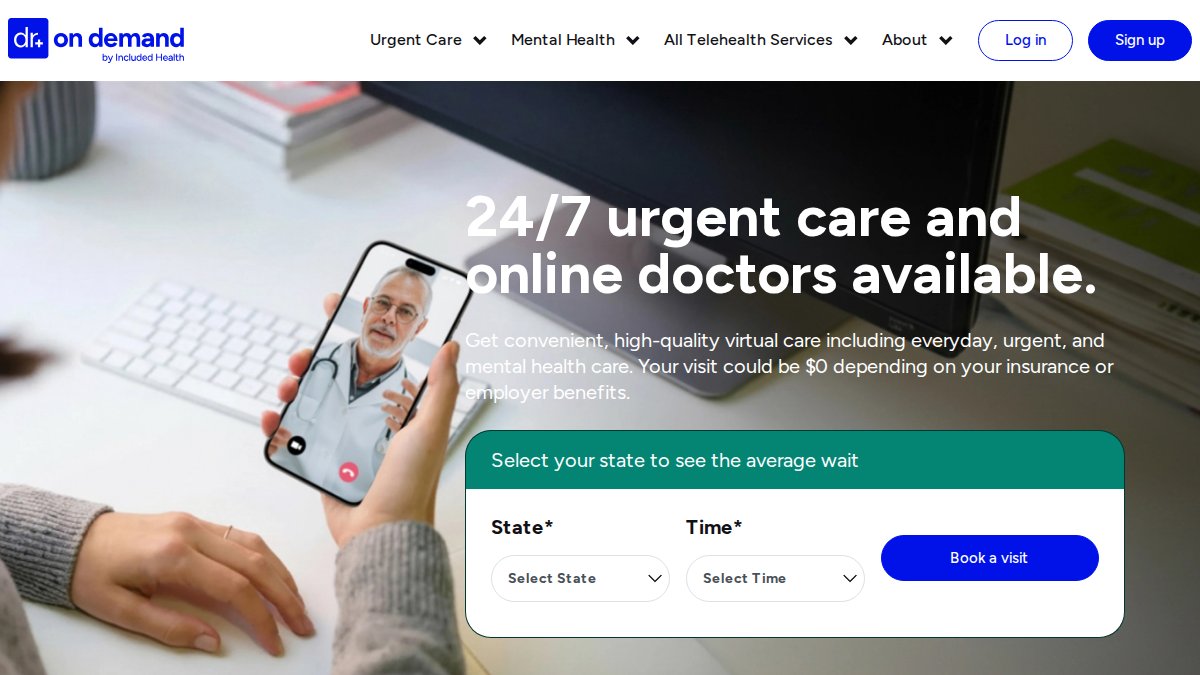
The platform handles prescription management with direct pharmacy fulfillment. The critical caveat: Doctor On Demand requires reliable internet for video consultations. There is no phone-only option. Patients with inconsistent broadband should test their connection before relying on this platform.
Best for: Rural residents with stable broadband who need immediate access to physicians for non-emergency medical issues.
4. MDLIVE: Flexible Phone and Video Options for Low-Bandwidth Areas
MDLIVE is the most practical choice for patients dealing with unreliable connectivity. The platform offers flexible access via both phone and video, which is a genuine differentiator for rural telehealth. When a video connection drops, a phone consultation with a board-certified physician still delivers clinical value.
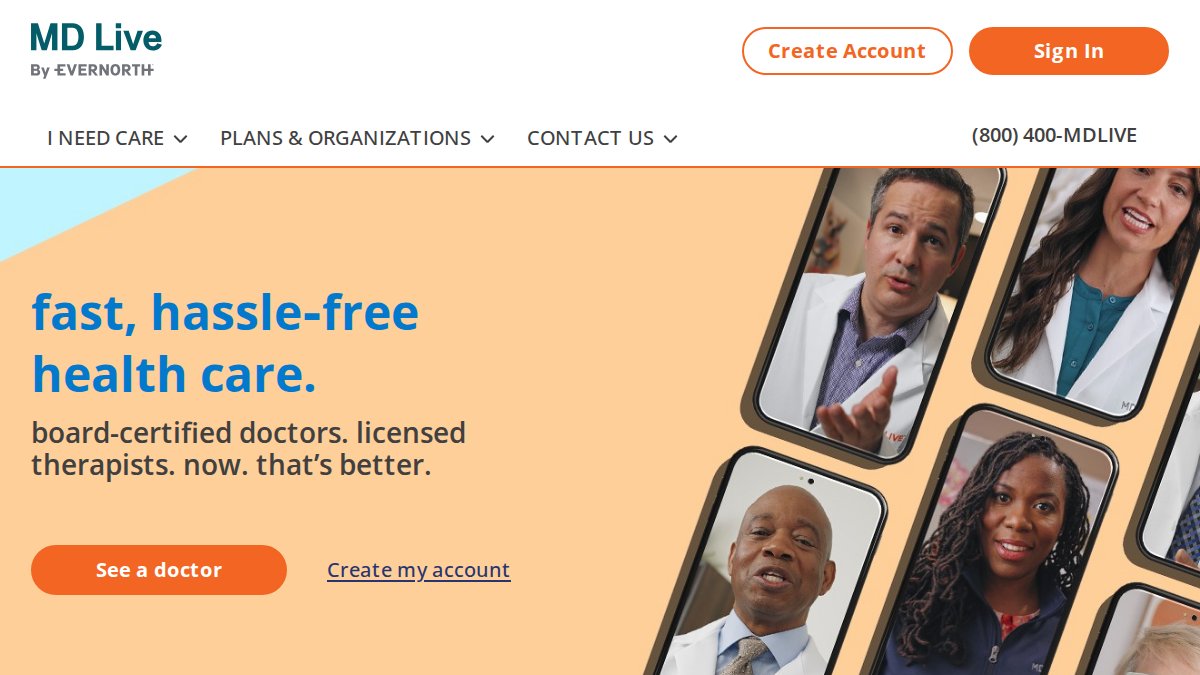
The service covers urgent care, behavioral health including therapy and psychiatry, and routine wellness screenings. Prescriptions are sent directly to local pharmacies. Initial visits for certain services may require video in specific states, so patients should confirm their state’s requirements before assuming phone-only access is available.
Best for: Rural patients in areas with inconsistent broadband who need both urgent care and ongoing behavioral health support.
If your internet connection is unreliable, ask a telehealth platform directly whether phone-only consultations are available in your state before your first appointment.
5. Talkspace: Mental Health Support for Underserved Populations
Rural mental health access is one of the most acute healthcare gaps in the United States. Talkspace addresses this through asynchronous messaging therapy, which doesn’t require a stable video connection for every interaction. Patients can communicate with licensed therapists on their own schedule, which is particularly valuable in rural areas where work schedules are irregular and privacy at home can be limited.
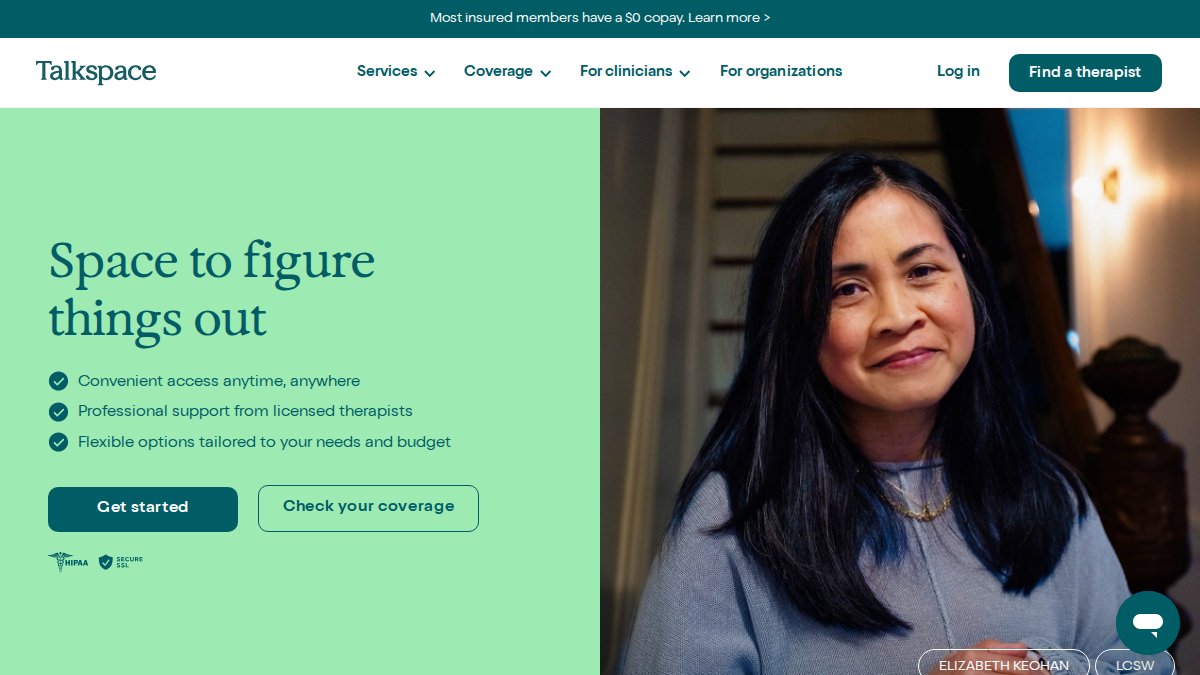
Live video sessions with licensed therapists and psychiatrists are also available, along with programs for depression, anxiety, and PTSD. The important limitation: Talkspace is not a substitute for emergency psychiatric care.
Best for: Rural residents seeking ongoing mental health support, particularly those who value the discretion and flexibility of asynchronous messaging.
6. Amwell: Hybrid Care Models for Rural Health Systems
Amwell is primarily enterprise-focused, partnering with health systems rather than serving individual consumers directly. For rural patients, access typically comes through a rural hospital or health system that has integrated the platform into its care delivery infrastructure.
This hybrid care model allows rural hospitals to extend specialist access without building expensive in-house infrastructure. The platform supports telehealth carts and specialized medical devices in clinical settings, enabling tele-specialty consultations at rural facilities.
Best for: Rural health systems and critical access hospitals looking to expand specialty care access for their patient populations.
Telehealth for Low Bandwidth: Optimizing Rural Connectivity
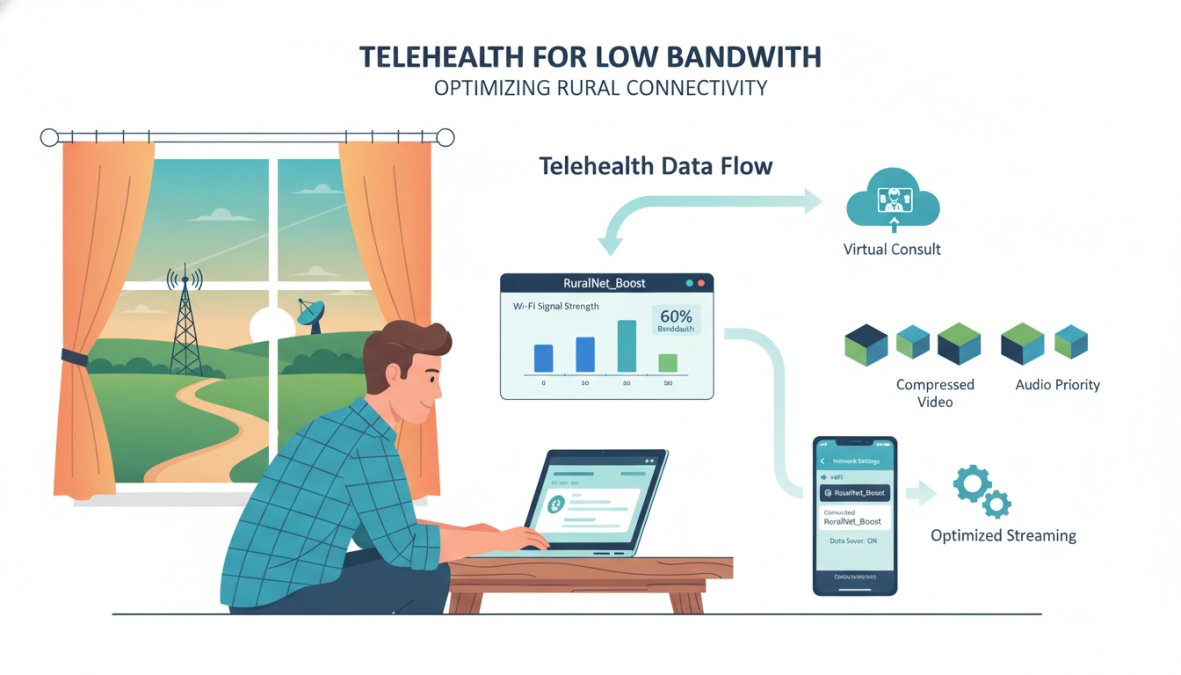
Connectivity is where rural telehealth falls apart most often. Telehealth for low bandwidth is not just a technology problem; it’s a platform selection and preparation problem.
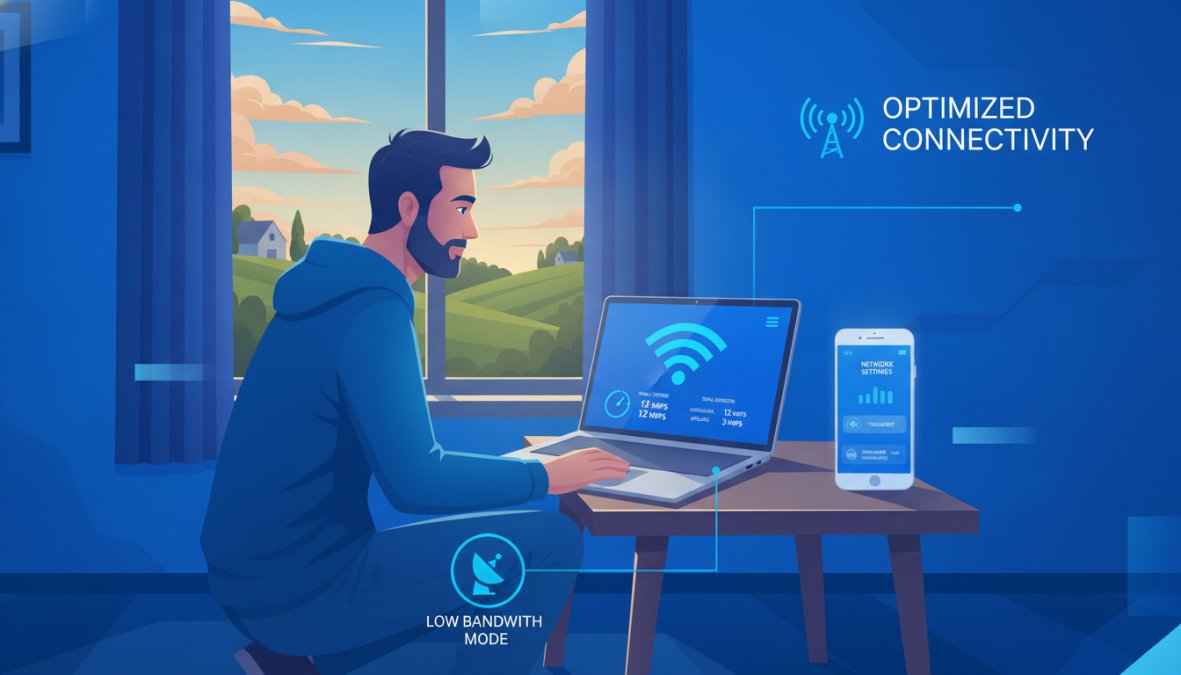
Platform selection: Choose phone-compatible platforms like MDLIVE or text-based options like Talkspace when broadband is unreliable. Video requires substantially more bandwidth than audio-only or messaging consultations.
Connection optimization steps before your appointment:
- Close all other applications and browser tabs before connecting
- Move to the room closest to your router or modem
- If using cellular data, check signal strength and switch to 4G or 5G if available
- Restart your router 10 minutes before the appointment
- Use a wired ethernet connection instead of Wi-Fi if your device supports it
- Reduce video quality in the platform’s settings if the option exists
Satellite internet considerations: Services like Starlink have expanded rural broadband access significantly. Latency can still cause issues for real-time video, but it’s generally sufficient for telehealth calls. Test a video call before your first appointment.
When video fails: Ask your provider in advance whether a phone call can substitute if video drops. Many platforms allow this mid-session.
How to Prepare for a Telehealth Appointment in Rural Settings
Preparation is the variable that separates a productive telehealth visit from a wasted one. Rural patients often have less margin for error: rescheduling may mean waiting weeks.
Before the appointment:
- Confirm your platform is compatible with your device
- Test your internet connection speed (aim for at least 1 Mbps upload for video)
- Download the platform’s app and create your account at least 24 hours in advance
- Gather your current medications, dosages, and any recent lab results
- Write down your three primary concerns in order of priority
- Confirm your insurance information is loaded into the platform
- Identify a quiet, private space with good lighting for the call
During the appointment:
- State your most important concern first
- Ask the provider to clarify any instructions before the call ends
- Confirm how prescriptions will be sent and to which pharmacy
After the appointment:
- Request a visit summary or after-visit notes if the platform provides them
- Note the timeline for any follow-up actions the provider recommended
Never assume your telehealth platform automatically shares records with your primary care physician. In rural areas where care coordination is already fragmented, you may need to manually request that visit notes be forwarded.
Telehealth Insurance Coverage for Rural Residents: What You Need to Know
Telehealth insurance coverage for rural residents has improved substantially, but the landscape remains complicated enough to catch patients off guard.
Coverage rules vary by insurance type, state, and platform. Medicare covers many telehealth services for rural beneficiaries, including e-visits and virtual check-ins, though specific eligible services have shifted over recent policy cycles. Rural Medicare patients should verify current coverage rules annually.
Key questions to ask before your first visit:
- Does my insurance cover telehealth visits with this specific platform?
- Is there a difference in cost between a video visit and a phone-only visit?
- Does my plan require a referral for specialist telehealth consultations?
- Are mental health telehealth sessions covered under my behavioral health benefits?
- Will I pay my standard copay, or is there a separate telehealth cost-sharing structure?
Medicaid coverage for telehealth is determined at the state level, meaning a service covered in one state may not be covered in a neighboring state. Direct-to-consumer platforms like those offering weight management may operate outside traditional insurance networks entirely. Clarify upfront whether a platform accepts insurance or operates on a self-pay model.
Benefits of Remote Patient Monitoring for Chronic Disease Management
Remote patient monitoring uses connected devices to collect patient health data outside clinical settings and transmit it to healthcare providers for ongoing assessment and intervention.
For rural chronic disease management, this capability is transformative. Patients with diabetes, hypertension, heart failure, or COPD often require frequent data collection to manage their conditions effectively. Without remote monitoring, those patients either make frequent trips to a clinic or go without the data their providers need.
Platforms like Teladoc Health include home-delivered medical devices for tracking vitals as part of their chronic care programs. A rural patient with hypertension can have their blood pressure readings reviewed by a provider daily, with automated alerts triggering intervention when readings fall outside safe ranges.
Patients who use connected monitoring devices tend to have better medication adherence, earlier detection of deterioration, and fewer preventable hospitalizations. For rural hospitals operating on thin margins, preventing even a small number of avoidable admissions has significant financial implications.
Overcoming Barriers to Telehealth Access in Underserved Rural Communities
The barriers to telehealth access in rural areas are real, but they’re not insurmountable.
Digital health literacy: Many rural patients, particularly older adults, are unfamiliar with telehealth platforms. Choose platforms with simple interfaces and use available setup support. Many platforms offer onboarding calls or tutorial videos.
Device access: Not every rural household has a computer or tablet. Smartphones are more widely available, and most major telehealth platforms have functional mobile apps. Phone-only options through platforms like MDLIVE eliminate the device barrier entirely.
Provider distrust: Rural communities often have strong relationships with local providers and may distrust remote physicians they’ve never met. Hybrid care models like those Amwell enables through rural health systems integrate telehealth into existing trusted care relationships.
Social determinants: Transportation, childcare, and work schedule flexibility affect whether patients can engage with even virtual care. Asynchronous options like Talkspace’s messaging therapy directly address schedule barriers.
Health information technology infrastructure at rural hospitals: Critical access hospitals often lack the technology infrastructure to support advanced telehealth. Platforms designed for rural health centers are closing this gap by providing integrated hardware and software solutions.
Choosing the Right Telehealth Service for Your Rural Healthcare Needs
The best telehealth services for rural areas match your specific clinical needs, your connectivity reality, and your insurance situation.
If your primary need is weight management, hormone health, or men’s and women’s wellness: Ascend Vitality is the clear choice. The specialized care pathways, direct prescription delivery, and condition-specific focus fill a gap that general telehealth platforms don’t address.
If you manage multiple chronic conditions and need broad specialist access: Teladoc Health’s integrated care delivery and remote patient monitoring programs make it the strongest option, provided your insurance covers it.
If you need immediate urgent care and have reliable internet: Doctor On Demand’s 24/7 access to board-certified physicians handles non-emergency medical issues without requiring a trip to the nearest clinic.
If your broadband is unreliable: MDLIVE’s phone-and-video flexibility is the most practical choice.
If mental health support is your priority: Talkspace’s asynchronous messaging model is built for the reality of rural life, including irregular schedules, limited privacy, and social stigma that can make in-person therapy feel impossible in a small community.
If you’re a rural health system administrator: Amwell’s hybrid care enablement model and integration with existing hospital workflows make it the most relevant enterprise option for expanding specialist access at the system level.
A common mistake is choosing a platform based on brand recognition rather than fit. Match the platform to your actual situation, not to which name you’ve heard most often.
Rural healthcare access remains one of the hardest problems in American medicine, and no single telehealth platform solves all of it. For patients with specific needs around weight management, hormonal health, and targeted wellness, Ascend Vitality offers specialized care pathways, medically-supported programs, and direct prescription delivery that general telehealth services don’t replicate. Access the specialist-level care your health requires without the barrier of long-distance travel.
Frequently Asked Questions
What are the best telehealth services for rural areas with poor internet?
Services like MDLIVE and Doctor On Demand offer phone-based consultations alongside video options, making them ideal for low-bandwidth rural areas. Platforms optimized for rural connectivity typically use lower-bandwidth video compression and provide phone alternatives. Check whether your chosen telehealth service supports phone-only visits before signing up, as this removes dependency on broadband infrastructure entirely.
Does insurance cover telehealth appointments for rural patients?
Many insurance plans cover telehealth services, but coverage varies significantly by plan and state. Medicare and Medicaid expanded telehealth coverage in recent years, particularly benefiting rural populations. Contact your insurance provider directly to confirm coverage for specific telehealth services. Some platforms like Teladoc Health integrate with employer and insurance plans, making navigation easier for rural residents seeking reimbursement.
What equipment do I need for a telehealth appointment in a rural area?
Minimum requirements depend on the platform: a smartphone, tablet, or computer with a camera and microphone for video visits, or just a phone for audio-only consultations. Ensure you have stable internet (even basic broadband works for most services). A quiet, private space for the appointment is essential. Some rural telehealth platforms like CureCompanion provide portable diagnostic kits, but most consumer services require only basic consumer devices.
How does remote patient monitoring benefit rural patients with chronic diseases?
Remote patient monitoring allows rural patients to track chronic conditions like diabetes and hypertension from home, reducing frequent trips to distant healthcare facilities. Platforms like Teladoc Health provide automated alerts when vitals fall outside safe ranges, enabling early intervention. This approach improves clinical outcomes while reducing travel burden and healthcare costs for underserved populations in rural areas managing long-term conditions.