

Last Updated: June 23, 2026
GLP-1 receptor agonists like semaglutide (Wegovy) and tirzepatide (Zepbound) have changed the clinical landscape for obesity management, but medication alone rarely delivers the full picture. The lifestyle changes to enhance glp-1 medication results you make alongside treatment are what separate modest outcomes from lasting transformation. At Ascend Vitality, we work with patients navigating medically-supported weight loss programs every day, and the pattern is consistent: those who pair their GLP-1 therapy with deliberate behavioral changes lose more weight, preserve more muscle, and sustain results far longer. Below, we’ll show you exactly how to structure those changes, section by section, so you’re not guessing.
Here’s what most guides get wrong: they treat GLP-1 medications as a passive intervention. You take the injection, appetite drops, calories fall, weight follows. The reality is more demanding and more rewarding.
Understanding GLP-1 Medications as a Tool, Not a Cure
GLP-1 receptor agonists are a clinical intervention that works by mimicking the glucagon-like peptide-1 hormone your gut naturally releases after eating. This mechanism slows gastric emptying, signals satiety to the brain, and improves insulin sensitivity, all of which reduce caloric intake without requiring willpower. But the medication creates a window of opportunity, not a permanent solution.
The distinction matters enormously. Appetite regulation through GLP-1 therapy reduces the friction of eating less, but it does not teach the body how to use calories better, build muscle, manage stress, or establish sustainable habits. Patients who stop medication without having built those foundations frequently regain a significant portion of lost weight within months. That’s not a medication failure. It’s a lifestyle gap.
Think of semaglutide or tirzepatide as scaffolding. It holds things in place while you build something structural. The lifestyle changes to enhance GLP-1 medication results are the structure itself.
GLP-1 medications reduce appetite and improve glycemic control, but they cannot build muscle, fix sleep, or rewire emotional eating patterns. The medication creates the conditions for change; your habits determine how permanent that change becomes.
Lifestyle Changes to Enhance GLP-1 Results: The Foundation
Why Lifestyle Matters Alongside Medication
Most people starting GLP-1 therapy experience significant appetite suppression within the first few weeks. The instinct is to eat as little as possible and ride the wave. This is one of the most common and consequential mistakes in GLP-1 weight loss.
Severe caloric restriction without adequate protein and physical activity leads to muscle loss alongside fat loss. The result is a lower resting metabolic rate, which makes future weight maintenance harder. Patient adherence to structured lifestyle protocols directly correlates with better body composition outcomes and cardiometabolic biomarker improvements over time.
The Three Pillars of Success
Effective lifestyle modification during GLP-1 therapy rests on three pillars:
- Nutrition quality over quantity – prioritizing nutrient density and protein intake rather than simply eating less
- Resistance-based physical activity – preserving and building lean muscle mass throughout the fat loss phase
- Behavioral and psychological habits – addressing emotional eating, sleep, stress, and the long-term relationship with food
Each pillar reinforces the others. Neglect one and the other two become significantly less effective.
Protein Intake for GLP-1 Users: Preserving Muscle While Losing Fat
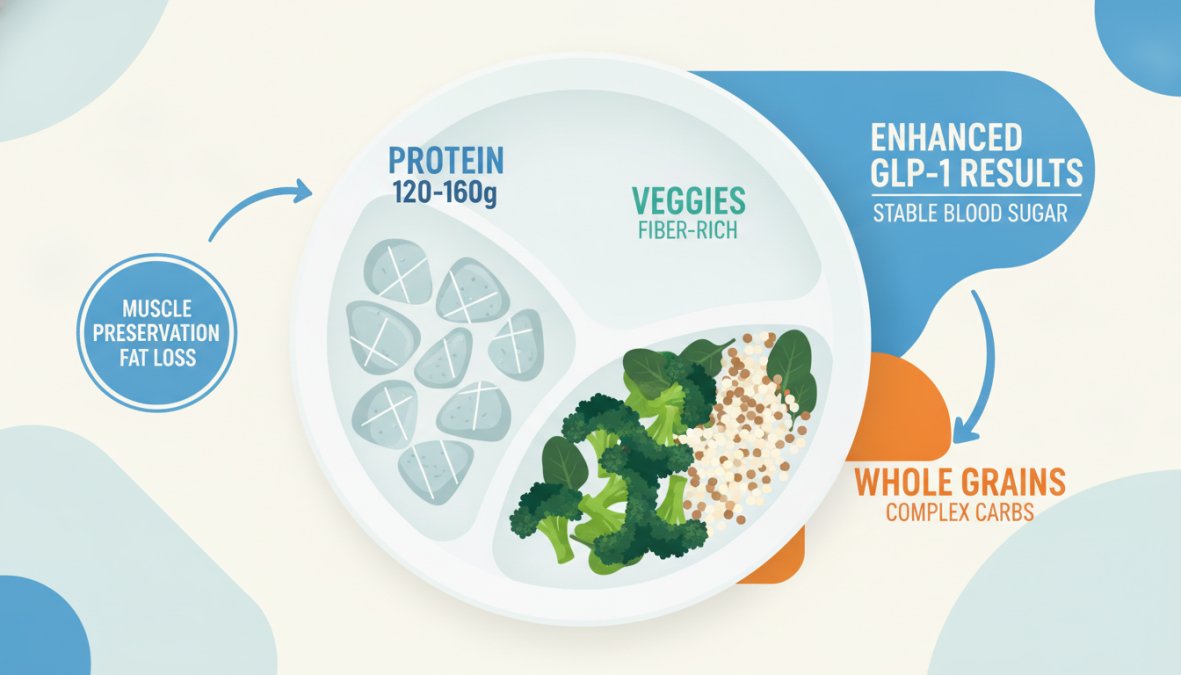
Protein intake for GLP-1 users is the single most important nutritional variable during active weight loss therapy. GLP-1 medications create a caloric deficit by reducing appetite, but the body in a deficit will break down both fat and muscle for energy unless protein intake is sufficient to signal muscle preservation.
Calculating Your Protein Needs
A general framework used in clinical weight management settings targets protein intake at roughly 1.2 to 1.6 grams per kilogram of body weight per day during active fat loss. For a person weighing 90 kilograms (approximately 200 pounds), that translates to 108 to 144 grams of protein daily.
The challenge with GLP-1 therapy is that reduced appetite makes hitting these targets genuinely difficult. Many patients find they feel full after very small portions. Prioritizing protein at the start of every meal, before vegetables or carbohydrates, is a practical strategy to ensure protein needs are met even when overall food volume is low.
According to dietary protein guidelines for weight management from the Academy of Nutrition and Dietetics, adequate protein during caloric restriction is essential for preserving lean body mass and supporting metabolic function.
Protein-Rich Foods That Work With Reduced Appetite
Not all protein sources are equally practical when appetite is suppressed. Dense, high-volume foods become difficult to finish. Prioritize:
- Greek yogurt and cottage cheese (high protein, low volume, easy to eat)
- Eggs and egg whites (versatile, fast-digesting)
- Grilled chicken breast or canned fish (lean, satiating)
- Protein shakes (useful when solid food feels unappealing)
- Edamame and legumes (plant-based options with good protein density)
Avoid relying heavily on processed protein bars with high sugar content. They undermine glycemic control, which GLP-1 therapy is actively improving.
Managing GLP-1 Side Effects With Diet: Nausea and Digestive Comfort
Managing GLP-1 side effects with diet is a practical skill, not a medical afterthought. Gastrointestinal distress, particularly nausea, vomiting, and constipation, is the most common reason patients reduce doses or discontinue therapy prematurely. Most of these side effects are manageable with specific dietary adjustments.

Foods That Minimize Gastrointestinal Distress
The core principle here is simple: high-fat foods and highly processed foods dramatically worsen nausea on GLP-1 medications. Fat slows gastric emptying further, compounding the medication’s own effect and creating prolonged discomfort.
Foods that tend to minimize gastrointestinal distress:
- Bland, low-fat options: plain rice, oatmeal, boiled potatoes, bananas
- Ginger tea or ginger chews (well-documented for nausea relief)
- Small, frequent meals rather than large ones
- Cooked vegetables over raw (easier on the digestive system)
- Lean proteins prepared without heavy oils or sauces
Foods to avoid during the adjustment phase:
- Fried foods and anything with high saturated fat content
- Spicy dishes
- Alcohol (which also impairs insulin sensitivity)
- Carbonated beverages (worsen bloating)
- Ultra-processed snacks with artificial additives
Eating high-fat meals while on semaglutide or tirzepatide can trigger intense nausea and vomiting that lasts several hours. Patients who learn this the hard way often reduce their dose unnecessarily, limiting the medication’s long-term efficacy.
Hydration and Meal Timing Strategies
Dehydration compounds nausea and is surprisingly common on GLP-1 therapy because reduced appetite often extends to reduced thirst. Target at least 2 to 2.5 liters of water daily, sipping consistently rather than drinking large amounts at once.
Meal timing also matters. Eating within two hours of a scheduled dose tends to worsen side effects for some patients. Spacing meals to smaller, more frequent intervals throughout the day, rather than two or three large meals, reduces peak gastric load and improves tolerance.
Strength Training on Semaglutide: Building Resilient Body Composition
Here’s the part most guides either bury or skip entirely: strength training on semaglutide is not optional if you care about body composition. It is the primary mechanism for preserving and building lean muscle during a GLP-1-induced caloric deficit.
Why Resistance Exercise Matters on GLP-1 Therapy
Fat loss without resistance training produces a phenomenon clinicians sometimes call “skinny fat”: lower body weight, but a higher proportion of body fat relative to muscle. This is metabolically unfavorable. Muscle tissue is metabolically active, meaning it burns more calories at rest than fat tissue. Losing it while losing fat accelerates the metabolic slowdown that makes weight regain likely.
According to physical activity guidelines for adults from the U.S. Department of Health and Human Services, adults benefit from at least two days per week of muscle-strengthening activities targeting all major muscle groups. For GLP-1 users, this is a floor, not a ceiling.
Practical Training Adjustments for Appetite Suppression
Reduced caloric intake affects energy availability for training. A few practical adjustments:
- Train at moderate intensity initially. High-intensity sessions on very low caloric intake increase injury risk and recovery time.
- Prioritize compound movements. Squats, deadlifts, rows, and presses recruit multiple muscle groups, making limited gym time more efficient.
- Time protein intake around training. Consuming protein within two hours post-workout supports muscle protein synthesis even in a caloric deficit.
- Track strength, not just weight. Maintaining or increasing lifting capacity is a reliable indicator that muscle is being preserved.
Cardio remains valuable for cardiometabolic health and metabolic rate, but it should complement, not replace, resistance work.
GLP-1 Weight Loss Plateau Strategies: Breaking Through Stalls
Plateaus are a normal and predictable feature of any weight loss process, including GLP-1 therapy. Understanding why they happen prevents the panic that leads patients to abandon effective protocols.
Why Plateaus Happen and When They’re Normal
As body weight decreases, the body’s total daily energy expenditure decreases proportionally. The caloric deficit that produced rapid early weight loss narrows over time. This is metabolic adaptation, and it happens to everyone regardless of medication use.
GLP-1 weight loss plateau strategies should address this adaptation rather than fight it. The plateau is not the medication failing. It is the body recalibrating to a new set point.
A plateau lasting two to four weeks is generally normal. Beyond that, a structured review of nutrition and activity is warranted.
Adjusting Nutrition and Activity to Restart Progress
The most effective GLP-1 weight loss plateau strategies involve targeted adjustments rather than drastic changes:
| Strategy | What to Adjust | Expected Impact |
|---|---|---|
| Protein audit | Increase daily protein by 20-30g | Preserves muscle, slightly raises metabolic rate |
| Resistance training volume | Add one additional training session per week | Increases energy expenditure and muscle stimulus |
| Processed food reduction | Eliminate ultra-processed snacks | Improves insulin sensitivity and reduces caloric density |
| Sleep optimization | Target 7-9 hours consistently | Reduces cortisol, supports fat metabolism |
| Meal timing review | Shift to smaller, more frequent meals | Reduces gastric load, may improve satiety signals |
Avoid the instinct to dramatically cut calories further. At already-reduced intake levels, further restriction risks muscle loss and micronutrient deficiencies.
Nutritional Priorities: Nutrient Density Over Calorie Counting
The biggest shift in mindset for GLP-1 users is this: because you are eating significantly less, every calorie has to work harder. Nutrient density, the concentration of vitamins, minerals, and beneficial compounds per calorie, becomes the primary nutritional metric.
Micronutrient Deficiencies and Prevention
Reduced food volume creates real risk for micronutrient deficiencies that most patients and even some clinicians overlook. The nutrients most commonly affected during GLP-1-induced caloric restriction include:
- Iron – particularly relevant for premenopausal women
- Vitamin B12 – absorption can be impaired with reduced food intake
- Vitamin D and calcium – critical for bone density during weight loss
- Magnesium – depleted by stress and poor dietary variety
- Zinc – important for immune function and wound healing
A comprehensive multivitamin is a reasonable baseline, but targeted supplementation based on bloodwork is more precise. Regular lab monitoring, which Ascend Vitality integrates into its medically-supported weight loss programs, helps catch deficiencies before they become clinical problems.
Request a full micronutrient panel at your three-month check-in on GLP-1 therapy. Deficiencies in iron, B12, and vitamin D are common at this stage and are easily corrected once identified.
Foods to Avoid: Processed Items and High-Fat Triggers
Ultra-processed foods undermine GLP-1 therapy on multiple levels. They are calorie-dense without providing meaningful nutrients, they worsen gastrointestinal distress, and they tend to spike blood glucose in ways that counteract the medication’s glycemic control benefits.
The practical rule: if a food has more than five ingredients and most of them are unrecognizable, it has no place in a GLP-1 nutrition plan. This is not about perfection. It is about ensuring that reduced caloric intake is coming from foods that support the body rather than stress it.
Psychological Relationship With Food: Building Sustainable Habits
The appetite suppression from GLP-1 medications is powerful, but it does not resolve the psychological relationship with food. This is the section most clinical guides skip, and it is arguably where long-term success is won or lost.
Mindful Eating and Satiety Cues
GLP-1 therapy enhances satiety signaling, but patients still need to learn to read those signals. Many people have spent years overriding satiety cues, eating past fullness out of habit, social pressure, or emotional need. The medication creates a stronger signal, but the habit of ignoring it can persist.
Mindful eating practices, specifically eating slowly, removing distractions during meals, and pausing mid-meal to assess hunger level, help patients reconnect with genuine satiety. As documented in mindful eating research from the Harvard T.H. Chan School of Public Health, eating more slowly is consistently associated with reduced caloric intake and improved satiety recognition.
The lifestyle changes to enhance GLP-1 medication results that stick are the ones built on awareness, not restriction.
Addressing Emotional Eating and Food Triggers
Emotional eating is a learned response to stress, boredom, anxiety, or reward. GLP-1 medications reduce physical hunger but do not eliminate emotional hunger. Patients who do not address this distinction often find that as the medication’s novelty fades, old patterns reassert themselves.
Practical approaches:
- Keep a brief food-mood journal for two weeks to identify trigger patterns
- Identify two or three non-food responses to common emotional triggers (a short walk, a phone call, a specific breathing exercise)
- Work with a therapist or behavioral coach if emotional eating is a significant driver of weight gain history
This is not a character flaw to be ashamed of. It is a behavioral pattern to be systematically replaced.
Sleep, Stress, and Metabolic Health: The Often-Overlooked Factors
Poor sleep and chronic stress are metabolic saboteurs that no medication fully compensates for. This is where lifestyle changes to enhance GLP-1 medication results extend well beyond food and exercise.
Sleep deprivation elevates cortisol, the primary stress hormone, which directly promotes fat storage around the abdomen and increases appetite for high-calorie foods. It also impairs insulin sensitivity, working against the glycemic control benefits that GLP-1 therapy provides. Adults who consistently sleep fewer than seven hours per night show measurably worse metabolic markers compared to those who sleep seven to nine hours.
Chronic psychological stress operates through the same cortisol pathway. High stress states increase cravings for processed, high-fat, and high-sugar foods, precisely the foods that worsen GLP-1 side effects and undermine fat loss.
Practical targets for sleep and stress management:
- Establish a consistent sleep and wake time, even on weekends
- Reduce screen exposure in the 60 minutes before bed
- Incorporate a daily stress-reduction practice: even ten minutes of deep breathing or walking has measurable cortisol-lowering effects
- Limit caffeine after noon if sleep onset is difficult
These are not soft lifestyle suggestions. They are metabolic interventions with direct impact on body composition and cardiometabolic biomarkers.
Post-Medication Maintenance: Sustaining Results After GLP-1 Therapy
The question nobody asks at the start of GLP-1 therapy is: what happens when I stop? It should be the first question.
Transitioning Off Medication While Preserving Weight Loss
Post-medication maintenance is where the lifestyle foundation built during active therapy proves its value. Patients who have established consistent resistance training, high-protein eating patterns, adequate sleep, and stress management skills transition off GLP-1 medications with significantly better outcomes than those who relied solely on appetite suppression.
The transition should be gradual where clinically appropriate, with dose tapering rather than abrupt discontinuation. During this phase, monitoring hunger signals closely and adjusting food choices to compensate for reduced satiety support is critical. This is not the time to experiment with processed foods or abandon training.
Long-Term Lifestyle Anchors for Cardiometabolic Health
The goal of GLP-1 therapy, framed correctly, is to use the medication window to install habits that support cardiometabolic health indefinitely. The lifestyle changes to enhance GLP-1 medication results during active treatment become the maintenance protocol after it.
Long-term anchors that consistently support weight maintenance and metabolic health include:
- Weekly resistance training (minimum two sessions, ideally three)
- Daily protein targets maintained as a non-negotiable eating habit
- Regular lab monitoring for glucose, lipids, and micronutrient levels
- Sleep consistency as a metabolic priority, not an afterthought
- Ongoing psychological support for food relationship issues
According to long-term weight loss maintenance research from the National Weight Control Registry, individuals who maintain significant weight loss share consistent behavioral patterns: regular physical activity, consistent breakfast consumption, frequent self-monitoring, and low television viewing. These patterns map directly onto the lifestyle framework built during GLP-1 therapy.
The medication changes the trajectory. The habits determine where you land.
Sustaining weight loss after GLP-1 therapy requires more than a prescription. It requires a structured lifestyle framework that works with the medication during treatment and carries forward after it ends. Ascend Vitality offers medically-supported weight loss programs that integrate targeted online care, prescription management, and ongoing clinical oversight to help patients build exactly that framework. If you are ready to get more from your GLP-1 therapy, get started with Ascend Vitality and build the habits that make your results last.
Frequently Asked Questions
What lifestyle changes should I make while on GLP-1 medication to maximize results?
Focus on three key areas: nutrition (prioritize nutrient-dense, protein-rich foods while avoiding processed items), physical activity (combine strength training with regular movement to preserve muscle), and behavioral habits (practice mindful eating, manage stress, and prioritize sleep). These lifestyle changes to enhance GLP-1 results work synergistically with the medication’s appetite-suppressing effects to create sustainable weight loss and improved metabolic health.
How much protein should I eat as a GLP-1 user to prevent muscle loss?
Aim for 0.8-1.0 grams of protein per pound of your goal body weight daily. This protein intake for GLP-1 users becomes critical because reduced appetite can make hitting protein targets challenging. Distribute protein across meals (20-30g per meal) and choose sources like eggs, fish, Greek yogurt, and lean poultry that are easier to tolerate when appetite is suppressed. Pair protein with strength training to maximize muscle preservation.
What foods help manage nausea and digestive issues on GLP-1 therapy?
Managing GLP-1 side effects with diet means choosing bland, low-fat, easily digestible foods: bone broth, white fish, rice, plain vegetables, and lean proteins. Avoid fried, greasy, and spicy foods that trigger gastrointestinal distress. Eat slowly, stay hydrated between meals, and eat smaller portions more frequently. Ginger tea and peppermint can help settle nausea naturally.
How do I break through a weight loss plateau while taking GLP-1 medication?
GLP-1 weight loss plateau strategies include: reviewing your caloric intake (you may be eating more than you realize despite reduced appetite), increasing strength training intensity to build muscle and boost metabolism, varying cardio routines, ensuring adequate sleep and stress management, and checking for micronutrient deficiencies. If plateaus persist beyond 4 weeks, consult your prescribing provider about dosage or medication adjustments.