Table of Contents
- Why Blood Sugar Monitoring Matters When Taking GLP-1 Agonists
- How GLP-1 Receptor Agonists Affect Blood Glucose and Insulin
- GLP-1 Blood Sugar Monitoring: Choosing Your Testing Method
- Creating a Blood Sugar Log for GLP-1 Medication
- Understanding GLP-1 and Hypoglycemia Risk
- Interpreting Your Readings and When to Contact Your Provider
- Laboratory Monitoring: A1C, Fasting Glucose, and Follow-Up Testing
- Monitoring During Sick Days, Reduced Intake, and Medication Changes
- Frequently Asked Questions
Last Updated: October 15, 2026
Why Blood Sugar Monitoring Matters When Taking GLP-1 Agonists
Blood sugar monitoring GLP-1 agonist therapy is essential for staying safe and getting the best results from your medication. GLP-1 receptor agonists like semaglutide and tirzepatide help your body control blood glucose, but you still need to track what’s happening to catch problems early.
Regular monitoring reveals patterns: how your body responds to the medication and when readings go too high or too low. That data helps your doctor adjust your dose or timing.
Many people skip monitoring, assuming the medication handles everything. That’s a mistake. Even on strong medications, blood glucose shifts with food, stress, sleep, and activity, and monitoring spots those changes before they become serious.
At Ascend Vitality, we work with patients on GLP-1 medications who want to understand their progress.
Start monitoring before you notice problems. The goal is prevention, not reaction. Regular checks give your provider real data to make smarter adjustments.
How GLP-1 Receptor Agonists Affect Blood Glucose and Insulin
GLP-1 receptor agonists are medications that mimic a natural hormone your gut produces when you eat. They work in several ways to lower blood glucose and help with weight management.
These medications slow how fast food moves through your stomach, so glucose enters the bloodstream more slowly and blood sugar doesn’t spike as high after meals. They also tell your pancreas to release more insulin when blood glucose is high, then stop when glucose drops back down, a smart response that helps prevent hypoglycemia (low blood sugar).
GLP-1 agonists also act on your brain to reduce hunger and cravings, helping you eat less without feeling deprived. Slower digestion, better insulin control, and reduced appetite together create a powerful effect on blood glucose.
The key point: these medications improve your body’s natural glucose control system, they don’t replace it. Your pancreas still needs to work, and your blood glucose still responds to food and activity. That’s why monitoring matters.
GLP-1 agonists don’t eliminate blood sugar problems, they give your body better tools to manage them. Monitoring shows you how well those tools are working.
GLP-1 Blood Sugar Monitoring: Choosing Your Testing Method
You have two main ways to check blood glucose on GLP-1 medication: finger-stick testing with a glucose meter or continuous glucose monitoring with a sensor. The real question isn’t which device is “better”, it’s which method and checking schedule fit your medication, diabetes status, and daily routine.
Finger-Stick Testing and Glucose Meters
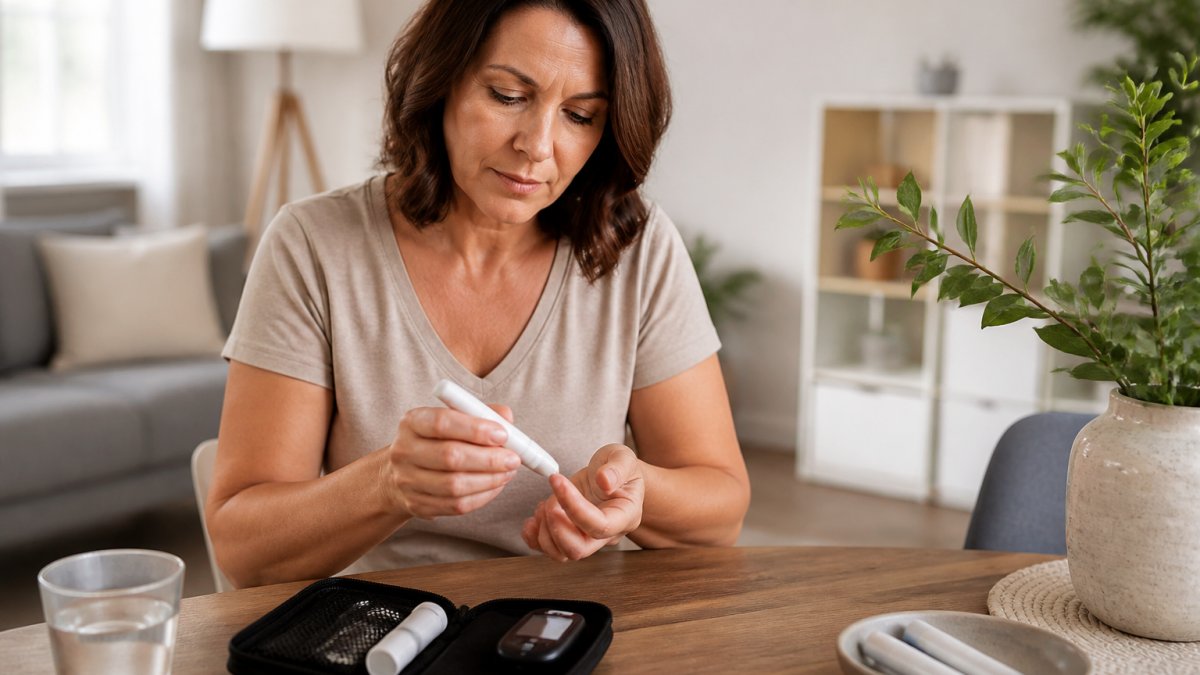
Finger-stick testing is straightforward: prick your finger with a small lancet, put a drop of blood on a test strip, and the meter reads your glucose in seconds.
It works well for checking specific times: when you wake up, before meals, two hours after eating, or when you feel shaky or tired. Most meters are affordable and give an immediate answer.
The downside: you only see snapshots. Check once a day and you miss the other 23 hours, and you can’t see trends without writing everything down. For people on GLP-1 medication, finger-stick testing is useful but often not enough.
Continuous Glucose Monitor and GLP-1 Use
A continuous glucose monitor (CGM) is a small sensor worn on your arm or abdomen. It checks glucose every few minutes, sends readings to your phone or a receiver, and alerts you if glucose goes too high or too low.
CGMs show the full picture: how glucose rises and falls throughout the day, and patterns finger sticks would never catch. Many people on GLP-1 medication find this invaluable for understanding how the drug is working and how food and activity affect their glucose.
The trade-off is cost and convenience. CGMs cost more than finger-stick meters, though insurance often covers them for people on certain diabetes medications, and you must change the sensor every 7 to 14 days depending on brand. Some find the constant data stressful; others find it helpful.
A Practical Checking Schedule by Situation
The right schedule depends on why you’re taking the medication and what else is in your regimen. Use this as a starting framework, then confirm specifics with your prescriber.
If you take a GLP-1 for weight management and do not have diabetes: Low blood sugar risk is low when the GLP-1 is used alone. Many practitioners suggest fasting glucose a few mornings a week plus a post-meal reading once or twice weekly to spot trends. Multiple daily checks usually aren’t needed unless you also take insulin or a sulfonylurea.
If you take a GLP-1 for type 2 diabetes without insulin or a sulfonylurea: A common pattern is a fasting check each morning plus a two-hour post-meal check after your largest meal. On days you change your dose, add a before-bed check for the first week.
If you take a GLP-1 plus insulin: Your schedule needs to be tighter. Many clinicians recommend checking fasting, before each meal, and before bed, plus any time you feel low symptoms. With mealtime insulin, you may also check two hours after eating.
If you take a GLP-1 plus a sulfonylurea (such as glipizide or glyburide): Check fasting and before bed at minimum, and add a mid-afternoon check, since sulfonylureas can cause lows several hours after a dose.
If you are starting a new GLP-1 or increasing your dose: Increase checks for the first one to two weeks. A common approach is fasting, one post-meal, and before bed. This window is when your glucose is most likely to shift.
If you use a CGM: You still need a schedule for reviewing data, not just wearing the sensor. Spend a few minutes each evening on the day’s trend line, and review the weekly report before any dose change or provider visit. Confirm unexpected readings with a finger stick, since CGMs can lag behind rapid glucose changes. Consistent data collection relies on securing your CGM sensor firmly to your skin so that environmental factors or movement do not compromise the accuracy of your daily glucose trends.
Match your method to your risk. A CGM suits people starting a new GLP-1, those on insulin or a sulfonylurea, or anyone with unpredictable patterns. Finger-stick testing at set times is often enough for people whose glucose is stable and who take a GLP-1 alone.
CGM Versus Finger Stick: How to Decide
If you are choosing between the two, weigh these factors:
- Cost and coverage: Finger-stick meters and strips are generally the lower-cost option. CGM coverage varies by plan and by whether you have a diabetes diagnosis.
- How often you need to act on readings: If you adjust insulin or another glucose-lowering drug based on your numbers, a CGM’s trend arrows and alerts can be more useful than isolated snapshots.
- How you handle data: If constant numbers make you anxious, a meter used at set times may be easier to live with.
- How stable your glucose is: Stable, predictable readings favor a meter. Frequent swings favor a CGM.
Whichever you choose, the goal is the same: enough data to see patterns and catch problems early, without so much checking that it disrupts your life.
Creating a Blood Sugar Log for GLP-1 Medication
A blood sugar monitoring GLP-1 log records your glucose readings, times, food, and how you felt. It sounds simple, but it’s one of your most powerful tools.
Start by writing down:
- The date and time of each reading
- Your glucose number
- What you ate in the last two hours
- Your activity level (rested, light activity, exercise)
- How you felt (energetic, tired, shaky, hungry)
- Any medication changes or doses you took
After two to three weeks, patterns emerge: which foods spike your glucose, how exercise lowers it, and how stress or poor sleep affects readings. That information is gold for your provider.
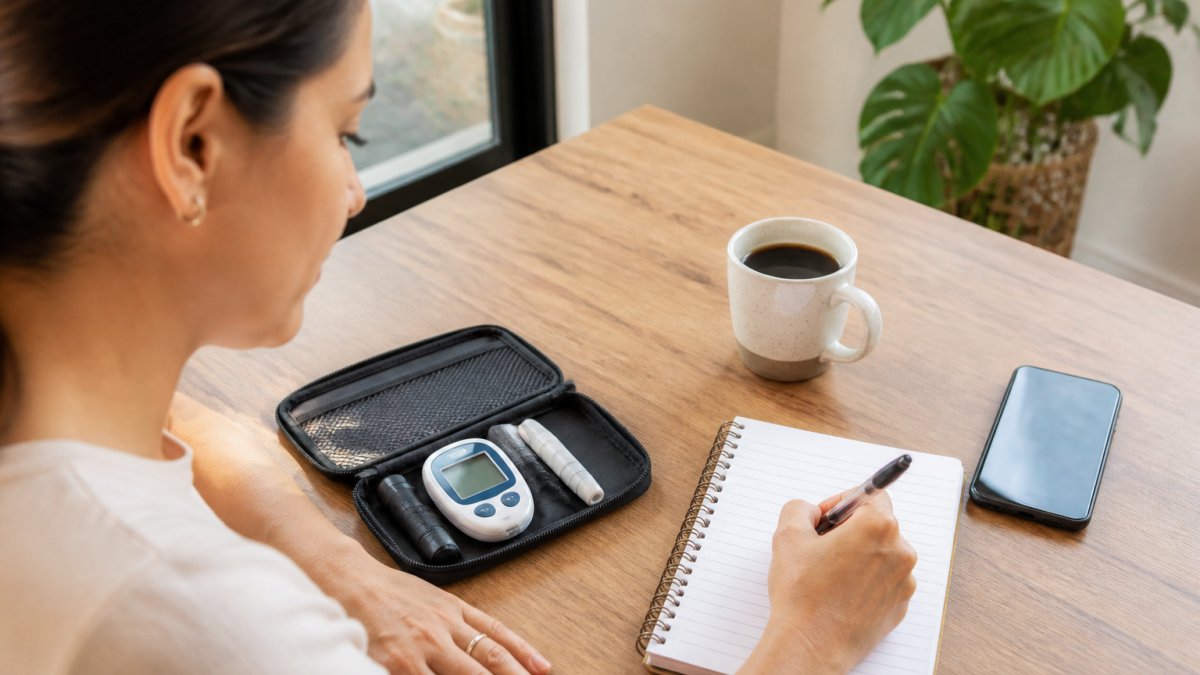
Many people log readings automatically, your CGM or meter may sync with your phone, saving time and reducing errors, but a simple notebook works too. Consistency matters more than method.
Share your log at each visit. It shows exactly how you’re responding to the medication and helps your provider decide whether your dose needs adjusting. Without this data, they’re guessing.
Understanding GLP-1 and Hypoglycemia Risk
Hypoglycemia is low blood sugar. It feels like shakiness, sweating, rapid heartbeat, confusion, or intense hunger. Severe hypoglycemia can cause seizures or loss of consciousness.
GLP-1 agonists alone rarely cause hypoglycemia. The medication only triggers insulin release when your glucose is already elevated. Once glucose drops to normal, the medication stops signaling your pancreas to release more insulin. This built-in safety feature is why GLP-1 agonists are considered low-risk for low blood sugar.
But the risk changes with other medications. A GLP-1 agonist plus insulin or a sulfonylurea (an older diabetes drug) raises hypoglycemia risk, since those medications can lower glucose too much, especially if you skip meals or exercise hard without eating first.
Risk also rises if you cut food intake sharply. Many people eat less on a GLP-1 because they feel fuller, normal and often desired, but dropping suddenly from 2,500 to 1,200 calories a day can send glucose dangerously low, especially if you also take insulin.
The key is awareness. Know the signs of low blood sugar, carry fast-acting carbs (glucose tablets, juice, or candy), check your glucose if you feel shaky or confused, and tell your provider if you’re eating much less or have had any low episodes.
If you take GLP-1 medication plus insulin or a sulfonylurea, your hypoglycemia risk is real. Never skip meals or fast without talking to your provider first. Have a plan for what to do if your glucose drops too low.
Interpreting Your Readings and When to Contact Your Provider
Your glucose readings tell a story, but you need to know how to read it, and, just as important, what to do next. This section gives you both the numbers and an action plan.
What the Numbers Mean
Fasting glucose is your first-morning reading after at least 8 hours without food. Normal is below 100 mg/dL; consistently above 130 mg/dL may mean your medication needs adjustment.
Post-meal glucose is the reading two hours after eating. Healthy is below 140 mg/dL; readings that stay above 180 mg/dL after meals suggest the medication isn’t working well enough at that time of day.
Glucose patterns matter more than single readings. One high reading isn’t a crisis, but glucose that’s high at the same time daily or keeps climbing throughout the day is worth reporting.
Hypoglycemia is any reading below 70 mg/dL. Mild lows (60-70 mg/dL) need attention. Severe lows (below 54 mg/dL) are emergencies. (Source: American Diabetes Association’s guidelines on continuous glucose monitoring)
How to Respond to a Low Reading (Below 70 mg/dL)
If you can check and treat yourself, follow the standard “15-15” approach:
- Take 15 grams of fast-acting carbohydrate, for example, 4 glucose tablets, 4 ounces (about half a cup) of juice or regular soda, or 1 tablespoon of sugar or honey.
- Wait 15 minutes.
- Recheck your glucose.
- If it is still below 70 mg/dL, repeat the 15 grams and wait another 15 minutes.
- Once your glucose is back above 70 mg/dL, eat a small snack with protein and carbohydrate if your next meal is more than an hour away.
Don’t use fatty candy like chocolate as first treatment, fat slows absorption. If you cannot swallow, are confused, or lose consciousness, it’s a medical emergency: a bystander should call 911, and you should not be given food or drink by mouth.
How to Respond to a High Reading
A single high reading usually isn’t an emergency. Check whether you ate recently, are sick, or missed a dose. Drink water, since dehydration pushes readings higher, and recheck in a couple of hours.
Seek urgent care if glucose is very high with symptoms like deep or rapid breathing, fruity-smelling breath, nausea and vomiting, confusion, or extreme thirst and urination, these can signal a serious condition.
How to Respond to Rapidly Changing Readings
If glucose swings high one hour and low the next, don’t chase each number with food or medication on your own. Log the readings with times and what you ate or did, then contact your provider, rapid swings usually point to a dose or timing issue needing clinical input.
Why Combination Therapy Raises Your Risk
GLP-1 agonists alone rarely cause hypoglycemia, because they only prompt insulin release when glucose is already elevated. But that safety feature changes when you add certain medications.
If you take a GLP-1 plus insulin, your insulin dose may now be too high as the GLP-1 improves glucose control. If you take a GLP-1 plus a sulfonylurea such as glipizide or glyburide, the sulfonylurea can drive glucose down regardless of your GLP-1. In both cases, your prescriber may need to lower the insulin or sulfonylurea dose when you start or increase the GLP-1. Never change that on your own, but do ask.
If you take a GLP-1 plus insulin or a sulfonylurea, your low blood sugar risk is real, and it can rise when you eat less, skip meals, or exercise harder than usual. Carry fast-acting carbohydrate at all times, and ask your prescriber whether your other medication doses should be adjusted.
When to Contact Your Provider
Contact your provider if:
- Your fasting glucose stays above 150 mg/dL for more than three days
- You have more than two readings below 70 mg/dL in a week
- Your glucose is unpredictable or swinging wildly (high one hour, low the next)
- You feel shaky, confused, or unwell even when your glucose looks normal
- You’ve made changes to food or activity but your readings haven’t improved in two weeks
- You are eating much less than usual or have been vomiting, which can change both your glucose and your medication needs
Your provider can’t help if they don’t know what’s happening. Don’t wait for your next appointment. Call or message them through your patient portal if something seems wrong.
Laboratory Monitoring: A1C, Fasting Glucose, and Follow-Up Testing
Your meter shows real-time readings; laboratory tests show your provider the bigger picture of glucose control over weeks and months.
A1C (also called HbA1c) measures your average glucose over the past two to three months as a percentage. Normal is below 5.7%; for type 2 diabetes, the target is usually 7% to 8%. When you start a GLP-1 medication, A1C often drops significantly within three months.
Fasting glucose is a lab measurement of your glucose after you’ve fasted overnight. It’s similar to your home fasting reading but done in a lab. A normal fasting glucose is below 100 mg/dL.
Your provider will also check kidney and liver function, GLP-1 agonists are safe for most people, but a baseline confirms the medication isn’t affecting these organs. They may check your thyroid too, since certain GLP-1 medications have a small theoretical link to thyroid issues.
You’ll typically have these labs done:
- Before you start the medication (baseline)
- Three months after you start (to see if it’s working)
- Every six to twelve months after that (to monitor long-term response)
Don’t skip these appointments. The labs tell your provider whether to keep, increase, or change your dose, and they catch side effects early.
Monitoring During Sick Days, Reduced Intake, and Medication Changes
Your glucose can shift unexpectedly when your routine changes. Knowing how to monitor during these times keeps you safe.
Sick days are tricky. A cold, flu, or infection releases stress hormones that raise glucose, even if you eat less because you feel awful. Check every two to four hours if possible, and contact your provider if glucose stays above 240 mg/dL or you feel very unwell.
Reduced food intake happens naturally on GLP-1 medication because you feel fuller, but eating much less can drop your glucose, especially if you also take insulin. Monitor before meals and before bed. If lows increase, eat a small snack or ask your provider about adjusting your dose.
Medication changes, a new GLP-1 dose, an added medication, or stopping something, can affect glucose. Increase monitoring for one to two weeks after any change, and write down readings and symptoms so your provider can judge whether it’s working.
Dehydration is often overlooked but important: it can make glucose readings falsely high. Drink enough water, especially on hot days or when exercising, roughly half your body weight in ounces per day.
Monitoring blood sugar while taking GLP-1 agonists isn’t complicated, but it requires attention and consistency. Regular home checks, a written log, and periodic lab work give your provider the complete picture to keep you safe and help you reach your goals. At Ascend Vitality, we help patients navigate medication management. Start with the method that fits your life, finger-stick testing, continuous monitoring, or both, and commit to sharing your data with your provider. That partnership is what makes GLP-1 therapy work best.
Frequently Asked Questions
Do you need to check your blood sugar while taking a GLP-1 agonist?
Yes, regular blood sugar monitoring is important when taking a GLP-1 receptor agonist, especially if you also take insulin or other medications that lower blood glucose. Even if you take only a GLP-1 agonist, monitoring helps you understand how the medication affects your blood sugar patterns and ensures your glucose control is stable. Your prescriber will recommend a testing schedule based on your individual situation, medications, and diabetes type.
How often should you monitor blood sugar on a GLP-1 medication?
Testing frequency depends on your medications and diabetes management plan. If you take only a GLP-1 agonist for type 2 diabetes, you may check fasting glucose and post-meal readings 2-4 times per week. If you also take insulin or sulfonylureas, daily testing or continuous glucose monitoring is typically recommended to detect low blood sugar early. Your prescriber will set a schedule tailored to your needs.
What symptoms of low blood sugar should you watch for while taking a GLP-1?
Hypoglycemia symptoms include shakiness, sweating, rapid heartbeat, dizziness, hunger, irritability, and difficulty concentrating. Some people experience tingling around the mouth or blurred vision. Symptoms can develop quickly, so it’s important to recognize them early. If you suspect low blood sugar, check your glucose immediately if possible. Keep fast-acting carbohydrates (juice, glucose tablets, or candy) nearby and report frequent low episodes to your prescriber.
Can GLP-1 agonists cause low blood sugar?
GLP-1 agonists alone rarely cause hypoglycemia because they only stimulate insulin release when blood glucose is elevated. However, when combined with insulin or sulfonylureas, the risk of low blood sugar increases significantly because these medications can lower glucose even when it’s already low. This is why combination therapy requires closer monitoring and why your prescriber may adjust doses. Always discuss your full medication list with your healthcare provider.