

Last Updated: June 1, 2026
Choosing the right telehealth company has become one of the most consequential healthcare decisions consumers make. Virtual care now spans everything from urgent care visits and chronic condition management to mental health therapy and specialized hormone treatments. At Ascend Vitality, we analyzed the leading telehealth platforms to give you a clear, unbiased breakdown of what each one actually delivers. Below, we cover pricing, features, HIPAA compliance, and the angles most comparison guides skip entirely: insurance-specific filtering, out-of-pocket cost transparency, and how to integrate virtual care with your existing primary care provider.
The telehealth landscape has matured significantly. Platforms no longer compete solely on convenience. They compete on clinical depth, data privacy, and whether they accept your insurance. That distinction matters enormously when you’re comparing a $25 consultation fee against a $99 per-visit charge.
Top Telehealth Company Picks at a Glance: Quick Comparison Table
The best telehealth company for you depends on your primary need, your insurance situation, and how much clinical depth you require.
| Platform | Starting Price | Best For | Insurance Accepted | 24/7 Access |
|---|---|---|---|---|
| Ascend Vitality | Contact for pricing | Hormones, weight loss, wellness | No | No |
| Teladoc Health | $89/visit (self-pay) | Broad insurance + on-demand care | Yes | Yes |
| MDLIVE | Varies by plan | Full virtual clinic experience | Yes | Yes |
| Doctor On Demand | $99/urgent care visit | Price transparency | Yes (incl. Medicare) | Yes |
| Lemonaid Health | $25/consultation | Fast, affordable prescriptions | Limited | No |
| Hims & Hers | Varies by plan | Discreet lifestyle treatments | Limited | No |
| BetterHelp | $70-$100/week | Largest therapy network | No | No |
| Talkspace | $65/week | Therapy with insurance support | Yes | No |
| Doxy.me | Free (basic tier) | HIPAA-compliant provider platform | N/A (provider tool) | N/A |
If insurance coverage is your top priority, Teladoc Health and MDLIVE offer the broadest compatibility. If you want specialized care for hormones or weight loss without navigating a general health platform, Ascend Vitality is the more focused option.
Best Telehealth Providers of 2026: Full Breakdown
A person sitting comfortably at home on a couch, having a video consultation on a laptop with a doctor visible on the screen, warm natural lighting

The telehealth market is crowded, but most platforms cluster into a few distinct categories: general urgent care, mental health specialty, direct-to-consumer prescription services, and specialized wellness. Knowing which category you need eliminates most of the confusion.
Ascend Vitality, Best for Hormones, Weight Loss, and Specialized Wellness
Ascend Vitality is a specialized telehealth company focused on targeted care pathways for weight loss, hormonal health, and specific wellness needs for both men and women. Unlike general-purpose platforms that treat every condition the same way, Ascend Vitality connects patients with medically-supported programs and delivers prescriptions directly to them.
The platform offers discreet solutions for men’s vitality concerns and dedicated pathways for female wellness, making it a better fit than a broad urgent care service for anyone dealing with hormone imbalances, weight management challenges, or related conditions. Prescriptions are delivered directly to you, which removes the friction of pharmacy visits.
Best for: Anyone seeking specialized, ongoing care for hormones or weight loss rather than episodic urgent care visits.
Pros:
- Targeted care pathways instead of generic consultations
- Prescription delivery directly to patients
- Separate programs for men’s and women’s wellness needs
Cons:
- Not designed for general urgent care or primary care needs
- No free tier or per-visit pricing model

Teladoc Health, Best for Broad Insurance Coverage and 24/7 On-Demand Care
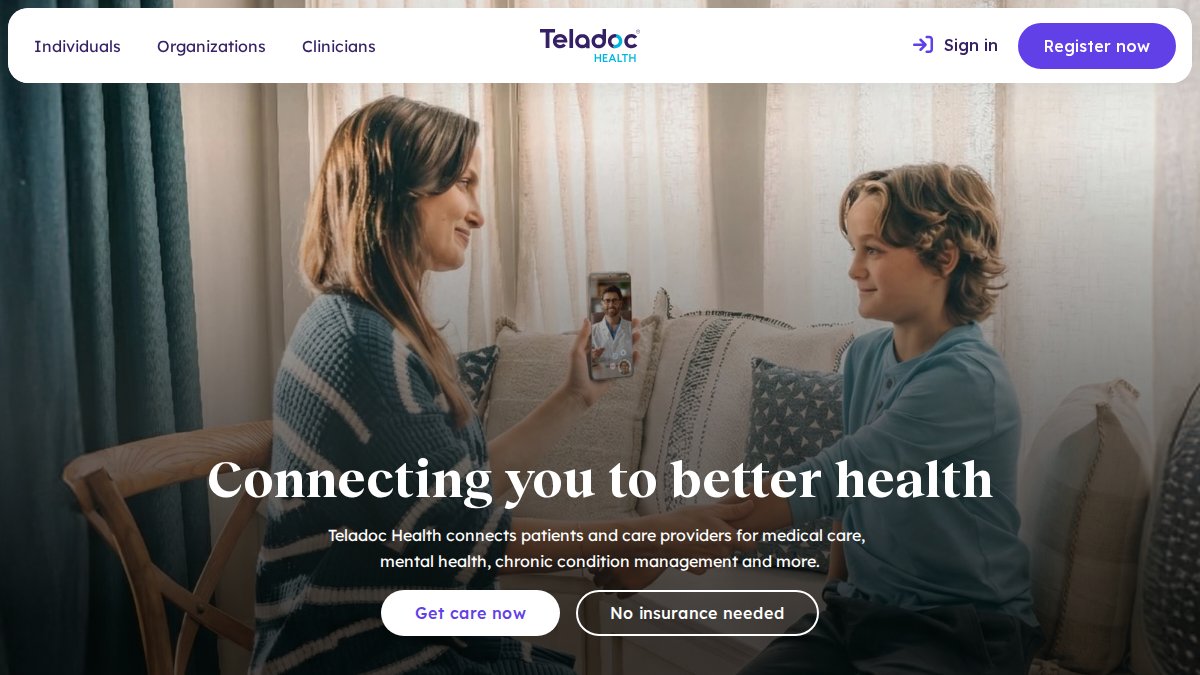
Few platforms match Teladoc Health’s sheer breadth. The platform offers 24/7 on-demand access to board-certified physicians, integrated mental health services including talk therapy and psychiatry, chronic condition management programs, and one of the widest insurance network compatibilities in the industry. Self-pay visits start at $89, but most users with major health plans pay significantly less.
The honest limitation: Teladoc’s chronic condition management and specialty services often require specific insurance coverage to unlock. Without it, costs climb quickly.
Best for: Insured individuals who want a single platform covering urgent care, mental health, and chronic conditions.
Pros:
- Extensive provider network across specialties
- Strong integration with major health plans
Cons:
- Full feature access often gated behind specific insurance plans
MDLIVE, Best for Comprehensive Virtual Clinic Experience
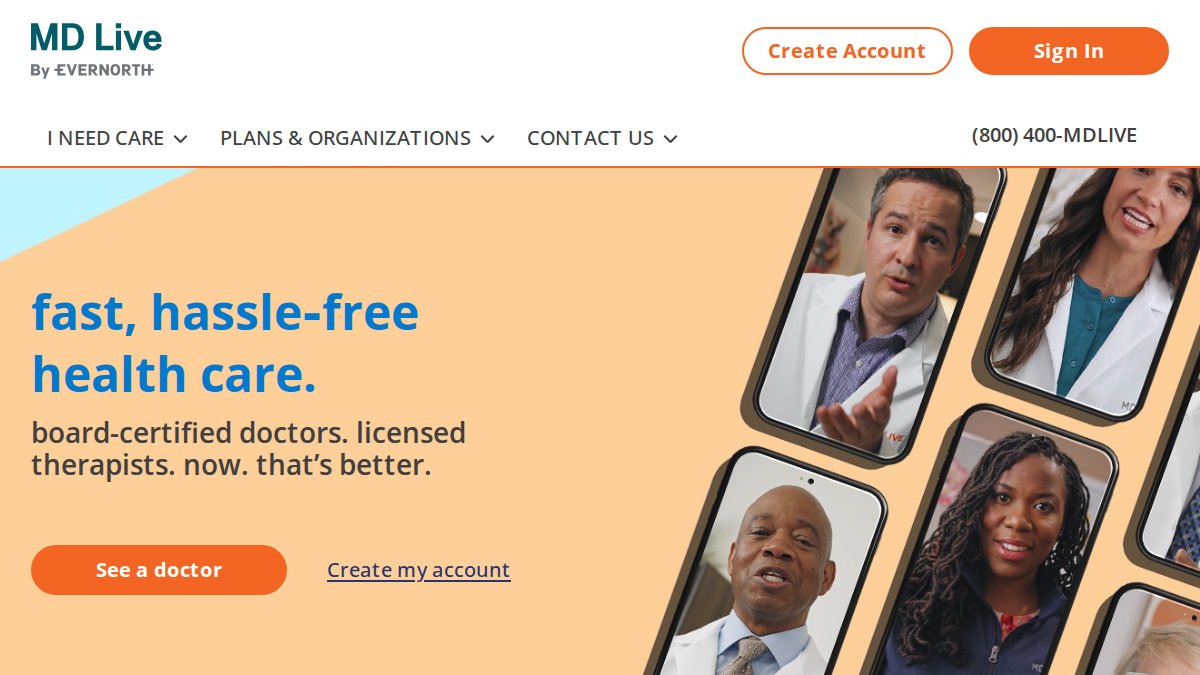
What separates MDLIVE from most competitors is the ability to choose your own provider, which matters more than most reviews acknowledge. The platform runs 24/7/365, covers urgent care, primary care, dermatology, and behavioral health, and routes prescriptions directly to local pharmacies. Mental health services extend to patients as young as 10.
Pricing varies by insurance plan, which makes MDLIVE harder to evaluate on cost alone without knowing your coverage. That said, the clinical breadth here is genuinely impressive for a virtual-only service.
Best for: Patients who want a comprehensive virtual clinic and the ability to select their own doctor.
Pros:
- Provider choice within the platform
- Covers physical and mental health under one roof
Cons:
- Not appropriate for emergencies or life-threatening situations
Doctor On Demand, Best for Out-of-Pocket Cost Transparency
Doctor On Demand shows you the price before you book. That sounds obvious, but it’s rarer than it should be in the telehealth space. Urgent care visits start at $99, and the platform accepts Medicare Part B alongside major commercial insurance. There are no subscription fees, and you can choose your own provider.
The notable limitation: psychiatrists on the platform cannot prescribe controlled substances, which rules it out for certain mental health treatment plans.
Best for: Self-pay patients and Medicare users who want full price visibility before committing to a visit.
Pros:
- Upfront cost disclosure before scheduling
- Medicare Part B accepted
Cons:
- Psychiatrists cannot prescribe controlled substances
Lemonaid Health, Best for Fast, Affordable Prescription Access
At $25 per consultation, Lemonaid Health is the most affordable entry point on this list for straightforward prescription needs. The platform uses questionnaire-based consultations to handle conditions like UTIs, acne, hair loss, and similar non-complex issues efficiently. Free medication shipping is included.
The trade-off is clinical scope. Lemonaid is not built for complex or chronic conditions. If your need is simple and recurring, it’s hard to beat at this price point.
Best for: Patients who need fast, low-cost prescriptions for common, well-defined conditions.
Pros:
- $25 consultation fee is among the lowest available
- Free medication shipping
Cons:
- Limited to non-complex, specific health conditions
Hims & Hers, Best for Discreet Lifestyle and Wellness Treatments
Hims & Hers built its model around asynchronous consultations, personalized prescription treatment plans, and discreet shipping. The platform covers sexual health, hair loss, weight loss, and mental health, primarily through ongoing subscription plans rather than one-off visits.
This is not a general primary care replacement. The platform excels at specific lifestyle and wellness categories where discretion and convenience matter most. In-app messaging provides ongoing clinical support between prescription refills.
Best for: Individuals who want private, convenient access to treatments for specific wellness conditions on a subscription basis.
Pros:
- Asynchronous model removes scheduling friction
- Discreet packaging and delivery
Cons:
- Not suitable for general primary care or acute illness
Doxy.me, Best for Healthcare Providers Needing a HIPAA-Compliant Platform
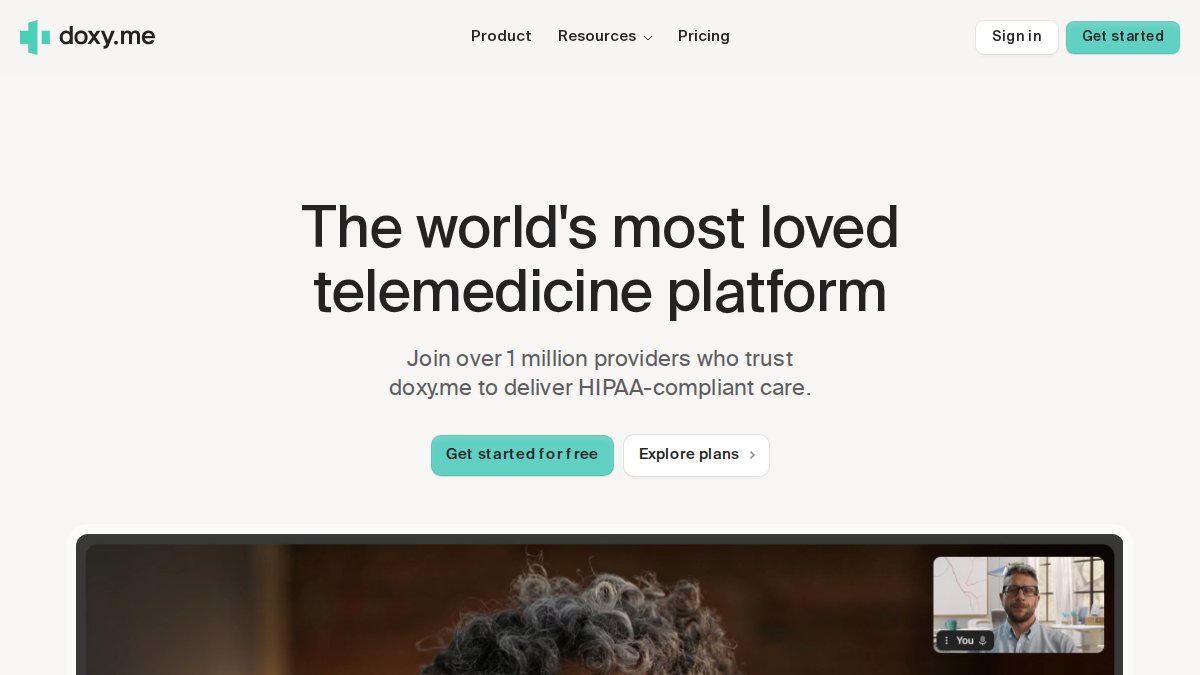
Doxy.me serves a different audience entirely. It’s a browser-based telehealth platform built for healthcare providers, not patients searching for care. No software download is required for either party. The platform is HIPAA, GDPR, and PIPEDA compliant, integrates with existing EMR/EHR systems, and offers a free tier for individual practitioners.
The limitation is scope: Doxy.me lacks the advanced practice management features found in larger clinical suites. For a solo practitioner or small clinic needing a simple, secure video visit solution, it’s an excellent starting point.
Best for: Individual practitioners and small clinics needing a compliant, low-friction video visit tool.
Pros:
- Free basic tier available
- No patient account or download required
Cons:
- Limited practice management functionality
Best Telehealth Apps for Mental Health: Therapy and Psychiatry Options
Mental health telehealth operates differently from general virtual care. The best telehealth apps for mental health prioritize therapist matching quality, communication flexibility, and whether the platform accepts insurance for ongoing sessions.

BetterHelp, Largest Network of Licensed Therapists
BetterHelp is the largest online therapy platform by therapist count, with over 30,000 licensed therapists available. Weekly subscriptions run $70-$100 and include live sessions via video, phone, or chat, plus unlimited messaging with your assigned therapist. Group webinars and journaling tools add supplementary support.
The significant drawback: BetterHelp does not accept insurance directly. For patients without employer-sponsored mental health benefits, the monthly cost adds up quickly. That said, the therapist switching process is straightforward, which reduces the friction of finding a good match.
Best for: People who prioritize therapist variety and flexible communication formats over insurance billing.
Talkspace, Flexible Asynchronous Messaging with Insurance Support
Talkspace takes a different approach to mental health telehealth by centering the experience around asynchronous messaging. Subscriptions start at $65/week billed monthly, and the platform accepts insurance from several major providers, which meaningfully lowers the effective cost for many users.
The platform also offers psychiatry and medication management, plus in-app clinical progress tracking. For patients who find scheduled video sessions logistically difficult, the messaging-first model removes a real barrier to consistent care.
Best for: Individuals who want ongoing mental health support with insurance billing and communication flexibility.
When comparing mental health telehealth platforms, check whether the platform accepts your specific insurance plan before signing up. Coverage varies significantly even within the same insurer depending on your plan tier.
Cost of Telehealth Visits: What to Expect With and Without Insurance
The cost of a telehealth visit is not a single number, it is a function of your insurance carrier, your plan tier, the visit type, and which platform you use. Most comparison guides publish a single self-pay rate and move on. This section does something different: it breaks down costs by insurance carrier compatibility, by visit type, and by what you will actually pay out of pocket if you are uninsured or on a high-deductible health plan (HDHP).
Self-Pay Rate Reference by Platform and Visit Type
The table below reflects publicly listed self-pay rates for the most common visit types. Insured patients typically pay their standard copay or coinsurance instead, which can reduce costs to zero on some plans.
| Platform | Urgent Care (Self-Pay) | Therapy Session (Self-Pay) | Psychiatry / Med Management | Subscription Option |
|---|---|---|---|---|
| Teladoc Health | ~$89/visit | ~$99/session | ~$299 first visit | No |
| MDLIVE | Varies by plan | ~$108/session | ~$284 first visit | No |
| Doctor On Demand | $99/visit | $129/session | $299 first visit | No |
| Lemonaid Health | $25/consultation | Not offered | Not offered | No |
| Hims & Hers | Not applicable | ~$200+/month | Not offered | Yes |
| BetterHelp | Not applicable | $70-$100/week | Not offered | Yes |
| Talkspace | Not applicable | $65-$100/week | ~$249 first visit | Yes |
| Ascend Vitality | Contact for pricing | Not applicable | Not applicable | Program-based |
These rates reflect publicly available self-pay pricing as of mid-2026 and can change. Always confirm current pricing directly on the platform before booking. Subscription platforms calculate cost per week but bill monthly, so multiply accordingly when comparing against per-visit alternatives.
Insurance Coverage and Affordability: How to Filter by Your Carrier
The most actionable approach to insurance filtering is to start with your insurer’s own provider directory, not the telehealth platform’s marketing page. Carrier-level compatibility breaks down as follows based on publicly available network information:
Aetna: Teladoc Health is Aetna’s embedded telehealth partner for most commercial plans. Members with Aetna coverage should check their member portal first, many already have Teladoc access at no additional cost beyond their standard copay.
Blue Cross Blue Shield (BCBS): BCBS plan compatibility varies significantly by state affiliate. MDLIVE is the preferred telehealth partner for many BCBS affiliates, but this is not universal. Patients on BCBS plans should verify through their specific state affiliate’s member portal rather than assuming MDLIVE is covered.
UnitedHealthcare: UnitedHealthcare members typically access telehealth through the UnitedHealth Virtual Visits program, which is powered by Optum. Teladoc is also accepted on many UHC commercial plans. Mental health services may route through Optum’s behavioral health network separately.
Cigna: Cigna members can often access MDLIVE and Teladoc through their plans, though behavioral health telehealth is frequently managed through Evernorth (Cigna’s health services division). Talkspace has insurance agreements with several Cigna plans for therapy.
Humana: Humana members should check the Humana member portal for telehealth benefits. Teladoc is a common partner, and some Humana Medicare Advantage plans include telehealth benefits that go beyond standard Medicare Part B coverage.
Medicare Part B: Doctor On Demand is one of the few consumer-facing telehealth platforms that explicitly accepts Medicare Part B for video consultations. Teladoc and MDLIVE also accept Medicare Advantage plans, though coverage depends on the specific plan. Original Medicare Part B covers many telehealth services when provided by an eligible provider, but coverage rules have evolved since the COVID-19 public health emergency flexibilities.
Medicaid: Telehealth coverage under Medicaid varies by state. Most states now cover some form of telehealth under Medicaid, but the covered services, eligible providers, and reimbursement rates differ substantially. Patients on Medicaid should contact their state Medicaid office or managed care organization directly.
If your employer provides health insurance, log into your benefits portal or call the member services number on the back of your insurance card before signing up for any telehealth platform. Many large employers have pre-negotiated telehealth access through Teladoc or MDLIVE that is already included in your benefits at no additional cost, a fact that is easy to miss during open enrollment.
Out-of-Pocket Cost Transparency: What Each Platform Actually Discloses
For uninsured patients and those on high-deductible health plans who have not yet met their deductible, out-of-pocket cost is the primary decision variable. Here is how each major platform performs on transparency before you commit:
Doctor On Demand is the clearest performer. The platform displays exact visit costs before you enter payment information. There are no subscription requirements and no hidden fees. This makes it the most useful option for patients who want to comparison-shop a single visit.
Lemonaid Health offers a flat $25 consultation fee for its questionnaire-based visits, with no ambiguity. Medication costs are separate and depend on the prescription, but the consultation fee itself is fixed and disclosed upfront.
Teladoc Health and MDLIVE both require you to enter your insurance information before displaying your actual cost. Without insurance, self-pay rates are available on their websites, but the checkout flow is designed around insured patients. This creates friction for self-pay users trying to compare costs quickly.
BetterHelp and Talkspace use weekly subscription pricing billed monthly. The effective per-session cost depends on how frequently you use the service. A patient who attends one session per week on BetterHelp at $85/week pays $85 per session. A patient who attends two sessions per week pays roughly $42.50 per session, a meaningful difference that the subscription framing obscures.
Hims & Hers bundles consultation fees into subscription plan pricing, making it difficult to isolate the cost of any single clinical interaction. This model works well for patients who want ongoing treatment plans but makes cost comparison against per-visit platforms nearly impossible.
HDHP and HSA/FSA Compatibility
Patients on high-deductible health plans who have not met their deductible pay the full negotiated rate for telehealth visits, not the self-pay rate. This negotiated rate is often lower than the published self-pay price but higher than a standard copay. The practical implication: if you are mid-year on an HDHP and have not met your deductible, a telehealth visit through your insurer’s preferred platform (Teladoc via Aetna, for example) will cost more than the $25 Lemonaid consultation for a simple prescription need.
Health Savings Account (HSA) and Flexible Spending Account (FSA) funds can generally be used to pay for telehealth visits, including therapy sessions, as long as the visit is for a qualifying medical purpose. Subscription-based therapy platforms like BetterHelp and Talkspace may qualify when the subscription is for ongoing mental health treatment, but retain your receipts and consult your HSA/FSA administrator if you are uncertain about a specific platform.
According to KFF Health Insurance Coverage data, the share of insured adults with access to telehealth benefits has grown substantially, but gaps remain for patients on certain Medicaid plans and those in rural areas with limited broadband access.
Telehealth Platform Features That Actually Matter for Patients

Most telehealth platform feature lists bury the details that actually affect your experience. Synchronous visits (live video consultations) and asynchronous visits (messaging-based care) represent fundamentally different care models, and choosing the wrong one creates friction. Synchronous care suits urgent needs and complex discussions; asynchronous care works well for prescription refills, follow-ups, and ongoing mental health support.
Other features worth evaluating before you sign up: prescription routing directly to pharmacies or your home, secure messaging between appointments, appointment availability windows, and whether the platform offers on-demand care or requires scheduling in advance. But the two features most patients underweight, and that most comparison guides skip entirely, are data privacy architecture and how well the platform integrates with your existing primary care provider. Both are covered in depth below.
HIPAA Compliance and Data Privacy: What to Actually Verify Before Signing Up
Every legitimate telehealth company operating in the United States is legally required to comply with HIPAA. That baseline requirement is not a differentiator, it is the floor. What separates platforms on privacy is what happens above that floor, and most patients never check.
Here is a practical framework for evaluating any telehealth platform’s privacy posture before you enter sensitive health information:
1. End-to-End Encryption for Video and Messaging
HIPAA requires that protected health information (PHI) be encrypted in transit and at rest, but it does not mandate end-to-end encryption specifically. End-to-end encryption means that only you and your provider can read the communication, not the platform’s servers, not a third-party analytics tool, and not a data breach attacker who intercepts traffic. Look for explicit statements about end-to-end encryption in the platform’s security documentation, not just a general claim of HIPAA compliance.
Doxy.me, which is built specifically for healthcare providers, publishes detailed technical documentation on its encryption architecture and holds HIPAA, GDPR, and PIPEDA compliance simultaneously, a higher bar than most consumer-facing platforms. For consumer platforms, Teladoc and MDLIVE both publish security whitepapers, though the level of technical detail varies.
2. Third-Party Tracking on Patient-Facing Portals
This is the privacy issue nobody talks about in telehealth comparisons. Many telehealth platforms embed third-party analytics tools, advertising pixels, session recording software, or behavioral analytics trackers, on their patient-facing web portals and mobile apps. These tools do not capture your clinical records, so they do not technically violate HIPAA. But they can capture the fact that you visited a page about a specific condition, how long you spent reading about a treatment, or what you searched for within the platform.
In 2022 and 2023, several major telehealth companies faced regulatory scrutiny and FTC enforcement actions related to sharing user health data with advertising platforms. The FTC’s action against certain telehealth and prescription platforms established that sharing health-related behavioral data with advertising networks, even without sharing clinical records, can constitute an unfair or deceptive practice.
What to do: Before entering any health information, open the platform’s privacy policy and search for the terms “advertising,” “marketing,” “analytics,” and “third party.” Look for explicit statements that health data is not used for advertising purposes. If the privacy policy is vague on this point, treat it as a yellow flag.
3. Data Retention Policies
HIPAA requires covered entities to retain medical records for a minimum of six years from the date of creation or the date it was last in effect, whichever is later. State laws may require longer retention periods. What HIPAA does not dictate is how long a platform retains behavioral data, app usage logs, or account information after you close your account.
Before signing up for a subscription-based telehealth platform, check the privacy policy for account deletion and data retention terms. A platform that retains your health-related data indefinitely after account closure presents a different risk profile than one that purges records on a defined schedule.
4. Business Associate Agreements (BAAs)
If you are a healthcare provider evaluating a telehealth platform for your practice, rather than a patient, the existence of a signed Business Associate Agreement is non-negotiable. A BAA is a HIPAA-required contract between a covered entity (your practice) and any vendor that handles PHI on your behalf. Doxy.me, Teladoc for Providers, and most enterprise-grade telehealth platforms provide BAAs as a standard part of their provider agreements. If a vendor declines to sign a BAA, that is a hard disqualifier.
5. What Patients Have the Right to Request
Under HIPAA, patients have the right to request a copy of their health records, request corrections to inaccurate records, and receive an accounting of disclosures, a log of who has accessed or received their PHI. According to HHS guidance on telehealth privacy, these rights apply to telehealth providers in the same way they apply to in-person providers. If a telehealth platform makes it difficult to request your records or does not respond to a records request within the HIPAA-required 30-day window, that is a compliance concern worth escalating.
Avoid assuming that a telehealth app’s presence in the Apple App Store or Google Play Store indicates HIPAA compliance. App stores do not audit for HIPAA compliance. The responsibility for verifying a platform’s compliance rests with the patient or provider using it. Always review the platform’s privacy policy and security documentation independently.
Platform-by-Platform Privacy Snapshot
| Platform | Explicit E2E Encryption Claim | BAA Available | Third-Party Ad Data Policy | Account Deletion Option |
|---|---|---|---|---|
| Teladoc Health | Yes (published security docs) | Yes (provider accounts) | States no sale of PHI | Yes |
| MDLIVE | Yes | Yes (provider accounts) | States no sale of PHI | Yes |
| Doctor On Demand | Yes | Yes (provider accounts) | States no sale of PHI | Yes |
| BetterHelp | Yes | N/A (consumer only) | Has faced prior scrutiny; review current policy | Yes |
| Talkspace | Yes | N/A (consumer only) | States no sale of PHI | Yes |
| Doxy.me | Yes (HIPAA + GDPR + PIPEDA) | Yes (standard) | No patient-facing consumer data collected | Yes |
| Hims & Hers | Yes | N/A (consumer only) | Review current privacy policy | Yes |
For any platform not listed above, the fastest privacy check is to search “[platform name] privacy policy” and look for the phrase “we do not sell your personal information” or equivalent language. Then search “[platform name] FTC” or “[platform name] data breach” to surface any prior regulatory actions before you sign up.
Integrating Telehealth With Your Existing Primary Care Provider
A common mistake is treating telehealth as a replacement for your primary care provider (PCP) rather than a complement to it. The better model: use telehealth for urgent needs, prescription refills, and between-visit support while maintaining a relationship with a local PCP for annual exams, diagnostic services requiring physical examination, and specialist referrals that require in-person evaluation.
The integration gap that most virtual care platforms have not fully solved is bidirectional record sharing. Here is how the current landscape actually works:
What telehealth platforms can send to your PCP: Most platforms, including MDLIVE and Teladoc, generate a visit summary or after-visit note that you can download from your patient portal and share with your PCP. Some platforms allow you to designate a PCP and will route visit summaries automatically, but this depends on whether your PCP’s practice uses a compatible EHR system and has opted into receiving external records.
What telehealth platforms typically cannot access: Unless you manually upload records or your telehealth provider has a formal data-sharing agreement with your PCP’s health system, the telehealth provider is working only from what you tell them. They cannot see your full medication history, prior lab results, imaging reports, or specialist notes from your in-person care. This is not a minor limitation, it is a genuine clinical risk for patients managing complex or chronic conditions.
Practical steps to bridge the gap:
- After every telehealth visit, download your visit summary and upload it to your PCP’s patient portal (MyChart, FollowMyHealth, or whichever system your PCP uses).
- Before a telehealth visit for a condition your PCP has previously treated, request a records summary from your PCP’s office and have it ready to reference during the virtual consultation.
- If you are prescribed a new medication via telehealth, inform your PCP at your next visit so it can be added to your official medication list.
- Ask your telehealth platform whether it supports FHIR (Fast Healthcare Interoperability Resources) data exchange, the federal standard for EHR interoperability. Platforms that support FHIR can, in principle, share structured clinical data with compatible EHR systems, though adoption is still uneven across the industry.
The platforms that have made the most progress on PCP integration are the enterprise-facing versions of Teladoc and MDLIVE, which offer health system partnerships that include bidirectional record sharing. For individual consumers using the direct-to-consumer versions of these platforms, the integration is more manual and depends on your own initiative to share records between providers.
How to Choose the Right Telehealth Company for Your Needs
The right telehealth company depends on four variables: your primary care need, your insurance situation, your preference for synchronous versus asynchronous care, and whether you need ongoing or episodic support.
Use this decision framework:
- For specialized hormone or weight loss care: Ascend Vitality’s targeted pathways and direct prescription delivery make it the most focused option for these specific needs.
- For insured urgent care and chronic condition management: Teladoc Health or MDLIVE offer the broadest coverage and 24/7 access.
- For mental health therapy with insurance: Talkspace is the clearest option. For maximum therapist choice without insurance, BetterHelp wins on network size.
- For affordable, fast prescription access: Lemonaid Health at $25 per consultation is hard to beat for non-complex conditions.
- For price transparency on a per-visit basis: Doctor On Demand shows costs upfront and accepts Medicare.
- For healthcare providers needing a compliant video platform: Doxy.me’s free tier is a legitimate starting point.
According to American Telemedicine Association resources, patients who match their telehealth platform to their specific care need report higher satisfaction than those who default to the most advertised option.
Patients managing ongoing conditions like hormone imbalances or weight loss who want a medically-supported program rather than episodic urgent care visits.
How to Start a Telehealth Company: A Practical Overview
Starting a telehealth company requires navigating three distinct layers: regulatory compliance, clinical workforce, and technology infrastructure. Most new entrants underestimate the first and overestimate the third.
Regulatory compliance means obtaining the appropriate business licenses, ensuring all prescribing providers hold valid state licenses in the states you serve, and building HIPAA-compliant data infrastructure from day one. State telehealth laws vary significantly; prescribing rules in particular differ across state lines.
Clinical workforce involves recruiting board-certified physicians, licensed therapists, or psychiatrists depending on your service model. Many telehealth startups use a hybrid model: full-time medical directors with part-time clinical contractors to manage patient engagement volume.
Technology infrastructure for a telehealth platform requires, at minimum, a HIPAA-compliant video consultation layer, secure messaging, prescription routing, and patient record management. Doxy.me and similar tools handle the video layer. EHR integration adds significant complexity and cost.
The practical reality: most successful telehealth companies launch in a single specialty vertical (mental health, weight loss, sexual health) rather than attempting to compete with Teladoc’s breadth from day one. Specialization allows tighter clinical workflows, clearer patient acquisition messaging, and more manageable regulatory scope.
Finding the right virtual care solution is harder than it looks, largely because most comparison guides treat all telehealth platforms as interchangeable. Ascend Vitality is built specifically for patients who need targeted, ongoing support for hormones, weight loss, and specialized wellness, with medically-supported programs and direct prescription delivery rather than generic urgent care. If your needs fall into those categories, get started with Ascend Vitality and access care pathways designed around your specific health goals rather than a one-size-fits-all consultation model.
Frequently Asked Questions
How do I choose a reputable telehealth company?
Start by confirming the platform employs board-certified physicians and licensed therapists, and that it is HIPAA compliant. Check whether it accepts your insurance plan, discloses out-of-pocket costs upfront, and covers your specific health needs, whether that is urgent care, chronic condition management, mental health, or specialized wellness. Reading verified patient reviews and confirming prescription support is available for your condition are also practical steps before committing.
Are telehealth companies covered by insurance?
Many telehealth companies accept major commercial insurance plans. Platforms like Teladoc Health and MDLIVE have broad insurance network compatibility, while Talkspace accepts several major providers for mental health services. Doctor On Demand also accepts Medicare Part B. However, coverage varies widely by plan and provider. Always verify your specific insurance coverage directly with the telehealth company before your first visit to avoid unexpected out-of-pocket costs.
How much does it cost to use a telehealth company without insurance?
Self-pay costs of telehealth visits vary significantly by platform and service type. Based on the providers reviewed here, urgent care visits range from roughly $25 (Lemonaid Health) to $99 (Doctor On Demand) per consultation. Mental health subscriptions through platforms like BetterHelp run approximately $70-$100 per week billed monthly, while Talkspace starts around $65 per week. Specialty or condition-specific platforms like Hims & Hers price by treatment plan. Always check for transparent pricing before scheduling.
What telehealth platform features should I look for?
Key telehealth platform features to evaluate include HIPAA compliance for data privacy, availability of synchronous video consultations and asynchronous secure messaging, prescription support with home delivery, 24/7 on-demand care access, and integration with your existing primary care provider. For mental health needs, look for licensed therapists and psychiatrists with flexible session formats. Employer benefits integration and clinical progress tracking are valuable extras for long-term patient engagement and chronic condition management.
What is the difference between a telehealth company and a traditional doctor’s office?
A telehealth company delivers medical care remotely via video consultation, secure messaging, or asynchronous visits, eliminating the need for in-person appointments. Traditional doctor’s offices offer hands-on physical exams and access to on-site diagnostic services that virtual care cannot replicate. Telehealth excels for primary care consultations, mental health therapy, prescription renewals, and chronic condition management. It is generally not suitable for emergencies or conditions requiring physical examination or in-office procedures.
Is it safe to use a telehealth company for medical advice?
Yes, when the platform employs board-certified physicians and licensed therapists and operates under HIPAA-compliant infrastructure, telehealth is considered safe for a wide range of non-emergency conditions. Reputable telehealth companies use encrypted video consultations and secure messaging to protect patient data. However, telehealth is not a replacement for emergency care or complex diagnostic services. Always verify provider credentials and confirm the platform’s compliance standards before sharing personal health information.