
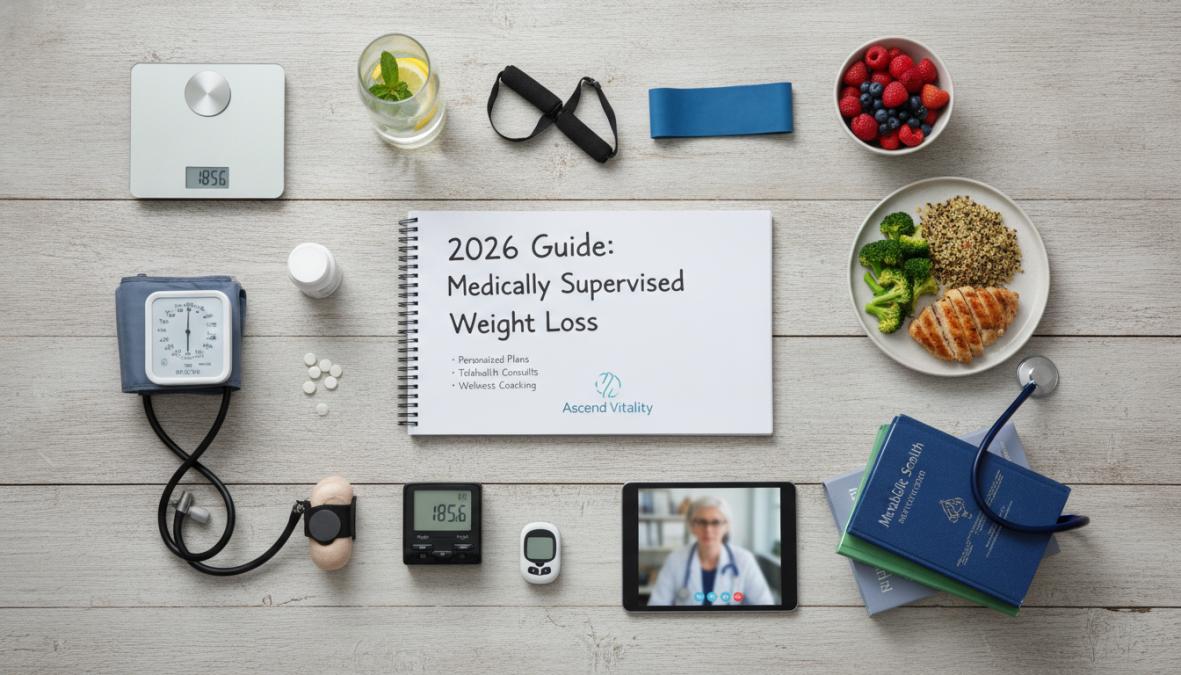
Medically Supervised Weight Loss Programs: 2026 Guide
Last Updated: July 15, 2026
Medically supervised weight loss programs have evolved dramatically, moving beyond simple calorie-counting into comprehensive treatment systems combining prescription medications, behavioral coaching, and personalized nutrition plans. At Ascend Vitality, we’ve tracked GLP-1 medications as a game-changer, fundamentally shifting how physicians approach obesity treatment. Understanding how these programs work and what separates effective ones from mediocre options matters more now than ever.
The difference between successful and failed weight loss programs comes down to three factors: physician-led accountability, addressing psychological barriers to weight loss, and offering realistic long-term maintenance strategies. Obesity is a chronic disease requiring ongoing medical management, not a willpower problem requiring a temporary diet.
Below, we’ll walk you through how medically supervised weight loss programs work, what to expect during your first clinic visit, the role of GLP-1 medications in modern treatment, and how to evaluate whether a program will work for your situation.
What Are Medically Supervised Weight Loss Programs?
Medically supervised weight loss programs are structured treatment systems where licensed physicians, registered dietitians, and behavioral health specialists work together to help patients achieve sustainable weight loss. Unlike commercial diet programs or fitness apps, these programs involve clinical oversight, medical testing, and prescription medications when appropriate. Obesity is a metabolic disease, not a character flaw, and it responds to medical intervention.
According to CDC data on obesity and chronic disease management, obesity significantly increases risk for type 2 diabetes, cardiovascular disease, and certain cancers. A medically supervised approach treats the condition itself rather than just the symptoms. The program typically includes an initial comprehensive health assessment, ongoing lab work to monitor metabolic markers, regular check-ins with medical providers, and adjustments to treatment based on your response.
What separates medically supervised programs from gym memberships or self-directed dieting is clinical structure. Your physician actively monitors your health, adjusts medications, manages underlying conditions affecting weight (like thyroid dysfunction or insulin resistance), and intervenes if complications arise.
Medically supervised weight loss programs treat obesity as a chronic disease requiring ongoing clinical management, not as a temporary problem solved by willpower alone.
How Medically Supervised Weight Loss Programs Work
The Multidisciplinary Team Approach
Your success depends on coordinated care from multiple specialists working toward the same goal. A typical team includes a physician (internist, family medicine doctor, or bariatrician), a registered dietitian, a behavioral health specialist or health coach, and sometimes an exercise physiologist.
The physician manages your overall health, prescribes medications, monitors lab work, and adjusts treatment based on progress. The registered dietitian creates your personalized nutrition plan and teaches sustainable eating. The behavioral therapist addresses psychological drivers of overeating, stress eating, emotional eating, food addiction patterns, which are often the real obstacles to weight loss.
Research from American Medical Association guidance on obesity treatment emphasizes that multidisciplinary teams produce better outcomes than single-provider models. Patients working with a coordinated team lose more weight and maintain it longer. The synergy matters: your dietitian’s meal plan reinforces what your behavioral therapist teaches about emotional eating; your physician’s medication management supports the dietary changes your team is implementing.
Initial Health Screening and Personalized Assessment
Before any weight loss program begins, you’ll undergo a comprehensive health evaluation that goes far deeper than stepping on a scale. This assessment establishes your baseline health status, identifies contraindications to specific medications, and reveals underlying conditions contributing to weight gain.
Your initial screening typically includes:
- Medical history review: past weight fluctuations, family history of obesity and metabolic disease, previous weight loss attempts, and medications you’ve tried
- Physical examination: vital signs, body composition analysis, and assessment for obesity-related complications
- Laboratory testing: fasting glucose, lipid panel, thyroid function, liver and kidney function
- Body mass index (BMI) calculation: determining whether you meet clinical criteria for treatment
- Psychological readiness assessment: evaluating your motivation and any mental health factors affecting success
This upfront investment prevents wasted time and resources. If your weight gain is driven primarily by thyroid dysfunction, treating the thyroid becomes the priority. If you have a history of eating disorders, the program will be modified accordingly.
The initial assessment should take 1-2 hours and feel thorough. If your first appointment is rushed or skips the psychological evaluation, that’s a red flag about program quality.
GLP-1 Weight Loss Programs and Prescription Medications
GLP-1 agonists (glucagon-like peptide-1 receptor agonists) have transformed medical weight loss treatment. These medications, semaglutide (Ozempic, Wegovy), tirzepatide (Zepbound, Mounjaro), and liraglutide (Saxenda), work by mimicking a hormone that regulates appetite and blood sugar. They reduce hunger, increase feelings of fullness, and slow gastric emptying, making you naturally eat less without constant willpower battles.
The difference between GLP-1 medications and traditional weight loss drugs is significant. Older medications like phentermine worked primarily through stimulation, often causing jitteriness and dependency concerns. GLP-1 agonists work physiologically, addressing the actual mechanism driving overeating rather than just suppressing appetite through stimulation. Most patients report that hunger simply diminishes and food cravings fade.
However, GLP-1 medications aren’t magic. They work best combined with behavioral modification and nutritional counseling. Patients who take the medication but don’t address eating patterns often regain weight once they stop. The medication removes the hunger barrier, making change possible, but behavioral work still matters.
GLP-1 medications can cause nausea, vomiting, and gastrointestinal side effects, especially during dose escalation. Some patients experience fatigue or muscle loss if adequate protein intake isn’t maintained. These side effects are usually temporary but require monitoring and patient education.
Other medications used in medically supervised programs include phentermine (a stimulant for short-term use), naltrexone/bupropion (Contrave), and orlistat (Xenical). Your physician will select based on your medical history, contraindications, and previous medication responses.
What to Expect at a Weight Loss Clinic: Your First Visit
Walking into a weight loss clinic for the first time can feel vulnerable. Understanding what to expect helps reduce anxiety and lets you focus on the clinical work ahead.
Medical Evaluation and Lab Work
Your first appointment typically begins with detailed paperwork: health history, medication list, family history, and lifestyle questions. Then you’ll meet with the physician for a thorough physical exam, not a five-minute weigh-in, but a complete assessment.

You’ll have fasting lab work drawn to assess glucose, lipids, liver function, kidney function, and thyroid status. You’ll be weighed, measured, and have your body composition assessed. The physician will discuss your weight loss goals, review your medical history for medication contraindications, and explain treatment options. If you have diabetes, GLP-1 medications might be emphasized because they improve both weight and blood sugar control. If you have anxiety, stimulant-based medications might be avoided.
Nutrition Counseling and Meal Planning
After the physician assessment, you’ll meet with the registered dietitian. This is where the practical work of eating differently begins. The dietitian will assess your current eating patterns, identify barriers to healthier choices, and create a personalized meal plan.
The approach varies by program. Some use structured meal plans with specific portions and food lists. Others teach macronutrient balance and let you choose foods within those parameters. The best programs teach you to eat real food sustainably, not to depend on meal replacement shakes indefinitely.
The dietitian will discuss your food preferences, cultural eating patterns, budget constraints, and cooking ability. A meal plan that ignores these realities won’t be followed. Expect to discuss current eating patterns and triggers, nutritional needs, meal structure and timing, protein intake (especially important on GLP-1 medications to prevent muscle loss), hydration, and how to handle social eating.
Physician Supervised Weight Loss Program Components
Behavioral Modification and Health Coaching
Weight loss is ultimately a behavioral problem. You can have the best medication, meal plan, and doctor, but if you don’t change how you eat and move, you won’t succeed long-term. Behavioral modification addresses the psychological drivers of overeating.

Common behavioral strategies include:
- Self-monitoring: tracking food intake, weight, and exercise, which increases awareness and accountability
- Stimulus control: removing tempting foods from your environment, eating at the table rather than in front of screens
- Cognitive restructuring: identifying and changing distorted thoughts about food
- Emotional regulation: learning to cope with stress, boredom, and negative emotions without turning to food
- Social support: building accountability through group sessions, coaching calls, or online communities
- Relapse prevention: identifying high-risk situations and developing strategies to handle them
A health coach or behavioral therapist will work with you to identify which strategies matter most for your situation. If you’re an emotional eater, emotion-regulation skills become the focus.
The most effective behavioral programs use accountability mechanisms and regular check-ins, not because shame drives change, but because awareness drives behavior change. Weekly contact with your coach produces better outcomes than monthly check-ins.
Ongoing Clinical Supervision and Accountability
Medical weight loss isn’t a “do it yourself” program. You’ll have regular contact with your care team, typically starting with weekly or bi-weekly visits, then spacing out as you stabilize.
During these visits, your provider will monitor your weight progress and adjust treatment if needed, review your food logs and meal adherence, assess medication side effects, recheck lab work periodically, address barriers or challenges, and celebrate progress. This ongoing supervision ensures safety, provides accountability, and allows for dynamic adjustments. If you’re not losing weight despite adherence, your provider can change medications or investigate underlying issues. If you’re losing too fast, they can adjust to ensure sustainable loss.
The frequency of contact typically decreases over time. You might start with weekly visits, move to bi-weekly after 12 weeks, then monthly after 6 months.
Cost of Medical Weight Loss: Pricing and Insurance Navigation
The cost of medically supervised weight loss programs varies dramatically based on what’s included, your location, and whether insurance covers any portion. Understanding the cost structure upfront prevents surprise bills.
Program costs typically include initial comprehensive assessment, ongoing provider visits, medications, lab work and monitoring, and online tools or apps for tracking. Some programs charge a flat monthly fee that includes everything. Others charge separately for visits, labs, and medications. Insurance coverage varies; some plans cover physician visits and lab work but not medications; others cover GLP-1 medications only if you have diabetes or a BMI above a certain threshold.
Telehealth programs typically cost less than in-person clinics because overhead is lower. Programs in major metropolitan areas often cost more than those in rural areas. Rather than guessing, contact programs directly for current pricing and ask about insurance verification.
The most important question isn’t “What’s the cheapest program?” but “What program offers the components I need at a price I can sustain?”
Long-Term Weight Loss Maintenance Strategies
Weight loss is the easy part. Keeping the weight off is where most programs fail. Research shows that without active maintenance strategies, most people regain 30-50% of lost weight within one year and 80% within five years. Programs that succeed long-term build maintenance into the treatment plan from day one.
Effective maintenance strategies include:
- Continued medication use: Many patients benefit from staying on GLP-1 medications indefinitely, similar to how diabetics stay on diabetes medications. The medication is ongoing management of a chronic condition.
- Structured eating patterns: You maintain the eating patterns you developed during active weight loss through continued meal tracking, protein intake, or portion guidelines.
- Regular physical activity: Most successful maintainers exercise 200+ minutes per week.
- Ongoing behavioral support: Continued contact with your health coach, even if less frequent, helps prevent relapse.
- Regular monitoring: Weighing yourself weekly or bi-weekly and having periodic check-ins catch weight regain early.
- Lifestyle integration: Changes that worked during active weight loss must become permanent lifestyle changes.
Programs that publish long-term success data, five-year or ten-year follow-up, are worth considering. Programs that report sustained weight loss at five years are doing something right.
Who Is an Ideal Candidate for Medically Supervised Programs?
Not everyone needs a medically supervised program. Understanding whether you’re a good candidate helps you make an informed decision.
Ideal candidates typically have:
- BMI of 30 or higher, or BMI of 27+ with obesity-related complications
- Previous failed weight loss attempts
- Underlying medical conditions affected by weight (diabetes, hypertension, sleep apnea, joint problems)
- Psychological barriers to weight loss (emotional eating, food addiction patterns, binge eating)
- Metabolic complications (insulin resistance, thyroid dysfunction, hormonal imbalances)
- Medication side effects from other drugs causing weight gain
- Need for accountability and structure
Conversely, you might not need a medically supervised program if your weight is in a healthy range, you have only 10-15 pounds to lose with no obesity-related health conditions, you’re highly motivated and have succeeded with self-directed approaches, or you have significant financial constraints.
Psychological Readiness: Are You Ready for Success?
Technical readiness for a weight loss program is easy to assess. Psychological readiness is harder but equally important.
Psychological readiness includes:
- Realistic expectations: You understand weight loss takes time and requires ongoing effort
- Intrinsic motivation: You’re doing this for yourself, not because someone else thinks you should
- Willingness to change eating patterns: You’re genuinely ready to eat differently
- Ability to tolerate discomfort: Weight loss requires tolerating hunger, cravings, and the discomfort of changing lifelong habits
- Commitment to the process: You understand the program requires regular visits, food tracking, exercise, and behavioral work
- Openness to behavioral work: You’re willing to examine your relationship with food and work on changing patterns
- Support system: You have people who will support your efforts or are willing to build that support through the program community
If you’re not psychologically ready, starting a program usually leads to poor adherence and failure. The best programs assess psychological readiness upfront.
Common Mistakes to Avoid in Medical Weight Loss
Expecting medication to do all the work. GLP-1 medications are powerful tools but work best combined with behavioral change and nutritional modification. The medication removes the hunger barrier, making change possible, but you still have to do the work.
Not eating enough protein. When appetite decreases, some people reduce overall food intake without maintaining adequate protein. This leads to muscle loss, which slows metabolism. Aim for 25-30% of calories from protein, especially on GLP-1 medications.
Stopping too soon. Weight loss is usually fastest in the first 3-6 months, then plateaus. Plateaus are normal and usually temporary. Continuing through the plateau usually leads to renewed progress.
Skipping the behavioral work. You can’t out-diet your psychology. If you don’t address why you overeat, you’ll struggle even with medication and a perfect meal plan.
Abandoning the program after reaching your goal. Weight maintenance requires ongoing effort. Most people who stop all program involvement regain weight.
Choosing a program based on price alone. A cheaper program you can’t afford to continue isn’t a bargain. A program that costs more but includes comprehensive support might be the better investment.
Not addressing underlying medical issues. If your weight gain is driven by thyroid dysfunction, untreated sleep apnea, or medication side effects, treating the weight without addressing the cause is ineffective.
Comparing your progress to others. Weight loss rate varies dramatically based on genetics, starting weight, medications, and individual metabolism. Track your own progress instead.
| Component | What It Includes | Why It Matters | Typical Frequency |
|---|---|---|---|
| Medical evaluation | Physician assessment, lab work, health screening | Identifies underlying conditions, ensures safety, establishes baseline | Initial + periodic monitoring |
| Nutrition counseling | Personalized meal plan, food education, portion guidance | Creates sustainable eating patterns, addresses dietary barriers | Initial + monthly or bi-weekly |
| Behavioral therapy | Emotional eating work, habit change, coping strategies | Addresses psychological drivers of overeating, prevents relapse | Initial + weekly or bi-weekly |
| Medication management | Prescription weight loss drugs, dose adjustments, monitoring | Reduces hunger, increases satiety, manages side effects | Initial + ongoing supervision |
| Health coaching | Accountability, progress tracking, obstacle problem-solving | Maintains adherence, catches issues early, provides support | Weekly to monthly |
| Lab monitoring | Periodic blood work, metabolic markers, health screening | Tracks improvements in diabetes, lipids, liver/kidney function | Every 3-6 months |
Medical weight loss programs work because they address obesity as a chronic disease requiring ongoing clinical management. The most successful programs combine prescription medications (particularly GLP-1 agonists), personalized nutrition planning, behavioral modification, and regular physician oversight. Ascend Vitality connects patients with specialized care pathways designed for weight loss, providing medically-supported programs and prescriptions delivered directly to you. If you’re ready to address your weight with professional support, Ascend Vitality’s approach combines clinical supervision with the convenience of online care, helping you access the multidisciplinary team and medications you need without the barriers of traditional clinic visits.
Frequently Asked Questions
What is the difference between a medically supervised weight loss program and a commercial diet?
Medically supervised weight loss programs provide physician oversight, clinical supervision, and personalized plans based on health screening and metabolic assessment. They often include prescription medications, registered dietitian counseling, and behavioral therapy. Commercial diets typically lack medical supervision, professional health coaching, and pharmacotherapy options. Medical programs address comorbidities and chronic disease management, while commercial programs focus primarily on calorie restriction or point-based systems without clinical assessment.
Are GLP-1 weight loss programs covered by insurance?
GLP-1 medication coverage varies significantly by insurance plan and whether the medication is prescribed for diabetes or obesity treatment. Many insurance providers cover GLP-1 agonists for type 2 diabetes but require prior authorization or may exclude weight loss-only indications. Some medically supervised programs offer full insurance navigation support to help determine coverage. Costs and copays depend on your specific plan. Contact your insurance provider or work with your program’s insurance team for accurate coverage details and out-of-pocket costs.
How long does it take to see results from a medically supervised weight loss program?
Results vary based on your starting weight, program intensity, medication use, and adherence. Many patients experience initial weight loss within 4-8 weeks through behavioral modification and nutritional counseling. Those using prescription medications like GLP-1 agonists may see accelerated results. However, sustainable weight loss typically progresses at 1-2 pounds per week. Long-term success depends on maintaining lifestyle changes and preventing weight regain through structured support, ongoing clinical supervision, and personalized maintenance strategies beyond the initial program phase.
What happens if I regain weight after completing a medically supervised weight loss program?
Weight regain is common without long-term maintenance strategies. Successful programs include weight loss maintenance planning, extended clinical supervision, and ongoing health coaching. Many provide periodic check-ins and behavioral support to help you sustain results. If regain occurs, reconnecting with your physician-led team allows for reassessment, medication adjustments, and renewed behavioral counseling. Viewing medical weight loss as a long-term health intervention rather than a short-term fix, with continued accountability and personalized support, significantly improves sustained weight management and metabolic health outcomes.
Do I need to be at a certain BMI to qualify for a medically supervised weight loss program?
BMI requirements vary by program and insurance coverage. Most medical weight loss programs accept patients with a BMI of 27 or higher with comorbidities, or 30+ regardless of health conditions. However, some programs are more flexible and consider overall metabolic health, chronic disease management needs, and individual health goals rather than strict BMI cutoffs. A comprehensive health screening and physician consultation determines your eligibility. Programs focus on whether medical intervention will improve your health outcomes, not just a single BMI number.