
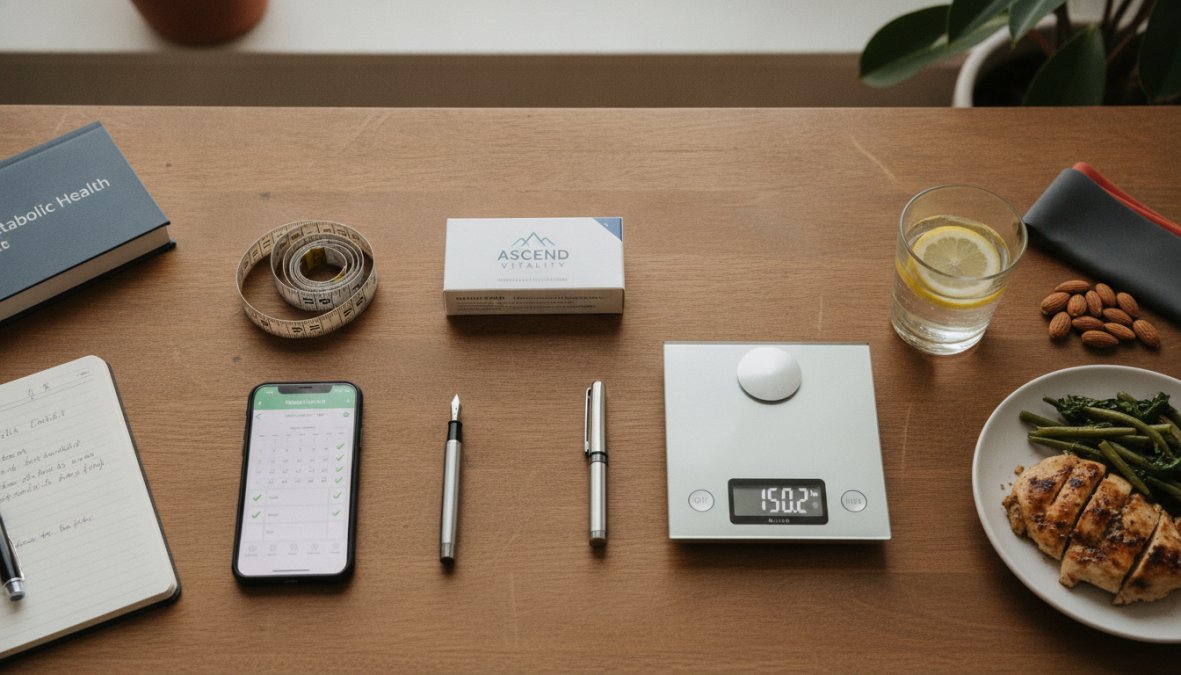
10 Best Practices for GLP-1 Weight Maintenance
Last Updated: July 18, 2026
Maintaining weight loss after GLP-1 therapy requires a fundamentally different approach than the initial weight loss phase. Many people succeed in dropping pounds while on medication, only to regain the weight when they stop or reduce their dose. This guide from Ascend Vitality covers the 10 best practices for GLP-1 weight maintenance that bridge the gap between pharmacotherapy and sustainable lifestyle habits. Below, we’ll show you exactly how to preserve your results long-term by focusing on muscle preservation, metabolic health, and behavioral patterns that stick.
The transition from active weight loss to maintenance is where most programs fail. According to research on GLP-1 receptor agonist outcomes, the critical window for establishing maintenance habits is during the first 6-12 months of therapy. This article explores the 10 best practices for GLP-1 weight maintenance that practitioners and patients should prioritize to prevent post-GLP-1 rebound.
1. Prioritize Protein Intake for Muscle Preservation
Protein is non-negotiable during GLP-1 weight maintenance because GLP-1 medications slow gastric emptying and reduce appetite, which means you’re eating less overall. Without intentional protein focus, your body will break down muscle tissue along with fat, leaving you weaker and with a slower metabolism.
Aim for 25-35 grams of protein per meal, distributed across three meals plus snacks. This matters because muscle tissue burns more calories at rest than fat tissue. When you preserve muscle mass during weight loss, your resting metabolic rate stays higher, making long-term weight maintenance easier.
Most GLP-1 users underestimate their protein needs because their reduced appetite makes hitting targets feel impossible. Start with a protein shake or Greek yogurt immediately after your injection day, when nausea is highest, liquid protein is easier to tolerate than solid food.
Protein sources that work well with GLP-1 medications include eggs, fish, lean poultry, cottage cheese, and plant-based options like tofu and lentils. The key is choosing foods that are easy on your stomach while delivering adequate amino acids. Research on body composition during weight loss shows that adequate protein intake (0.7-1.0 grams per pound of goal body weight) preserves lean muscle mass better than lower-protein diets.
Track your protein intake for at least 4 weeks to establish baseline awareness. Many people are surprised to find they’re only hitting 40-60 grams daily when they need 80-120 grams. Once you hit your target consistently, you can rely on intuition rather than constant tracking.
2. Master Hydration Strategies During Maintenance
Dehydration is one of the most underestimated side effects of GLP-1 medications. These drugs slow stomach emptying, which can reduce your thirst cues, meaning you might not feel thirsty even when your body needs fluids. Poor hydration worsens nausea, reduces metabolic function, and makes it harder to distinguish hunger from thirst.
Aim for 3-4 liters of water daily, spread throughout the day in small amounts. Drinking large quantities at once is counterproductive on GLP-1 medications because your stomach empties slowly. Instead, sip water consistently: 8 ounces every 30 minutes during waking hours works better than chugging a liter at lunch.
Electrolyte balance matters as much as water volume. Many GLP-1 users experience electrolyte imbalances from reduced food intake and increased water consumption. Add electrolyte powder to your water 2-3 times daily, particularly on injection days or when experiencing nausea. Sodium, potassium, and magnesium depletion can trigger fatigue, headaches, and heart palpitations.
Monitor your hydration status by checking urine color, pale yellow indicates adequate hydration, while dark yellow signals dehydration. Keep a water bottle visible as a reminder. Some people set phone alarms every hour to prompt drinking, especially during the first month of establishing the habit.
Avoid drinking water immediately before or with meals, this can increase bloating and nausea on GLP-1 medications. Wait at least 30 minutes after eating to resume drinking water.
3. Build a Sustainable GLP-1 Diet Plan
The best GLP-1 diet plan focuses on nutrient-dense whole foods rather than ultra-processed alternatives. Your reduced appetite is an asset, use it to eliminate empty-calorie foods and prioritize foods that deliver maximum nutrition per bite.
A sustainable GLP-1 diet plan centers on these food categories: lean proteins, non-starchy vegetables, healthy fats, and whole grains in small portions. Avoid foods that trigger nausea or cause digestive distress. Keep a food journal for 2 weeks to identify your personal triggers, these vary significantly between individuals.
Meal structure matters more than calorie counting. Eat 3 small meals (200-300 calories each) plus 1-2 snacks rather than forcing yourself to eat larger meals that cause discomfort. This approach stabilizes blood sugar, maintains energy, and prevents the “feast-famine” cycle that triggers overeating when appetite returns.
| Meal Type | Protein | Vegetables | Healthy Fat | Example |
|---|---|---|---|---|
| Breakfast | 20-25g | Optional | 5-10g | Eggs + toast + avocado |
| Lunch | 25-30g | 2+ cups | 10-15g | Grilled chicken + broccoli + olive oil |
| Dinner | 25-30g | 2+ cups | 10-15g | Baked salmon + asparagus + almonds |
| Snack | 10-15g | , | 5g | Greek yogurt or nuts |
Plan meals 3 days in advance. This prevents impulsive choices and ensures you have easy-to-digest options available. Meal delivery services designed for GLP-1 users, like Factor and Clean Eatz Kitchen, can reduce decision fatigue while ensuring nutritional balance.
The difference between successful and unsuccessful weight maintenance comes down to whether you treat GLP-1 as a temporary tool or as a bridge to permanent habit change. Your diet plan should be one you can sustain indefinitely, not just while on medication.
4. Implement GLP-1 Exercise Recommendations for Long-Term Results
Physical activity during GLP-1 weight maintenance serves two purposes: preserving muscle mass and establishing behavioral patterns that persist after you stop medication. The CDC guidelines recommend 150 minutes of moderate aerobic activity per week plus 2 days of strength training. For GLP-1 users, this breaks down into manageable daily targets rather than intense weekly sessions.
Moderate activity means you can talk but not sing during exercise, think brisk walking, cycling, swimming, or light jogging. Strength training 2 days per week preserves the muscle mass that GLP-1 medications don’t protect automatically. Focus on compound movements: squats, deadlifts, push-ups, and rows. These recruit multiple muscle groups and deliver more metabolic benefit than isolation exercises.
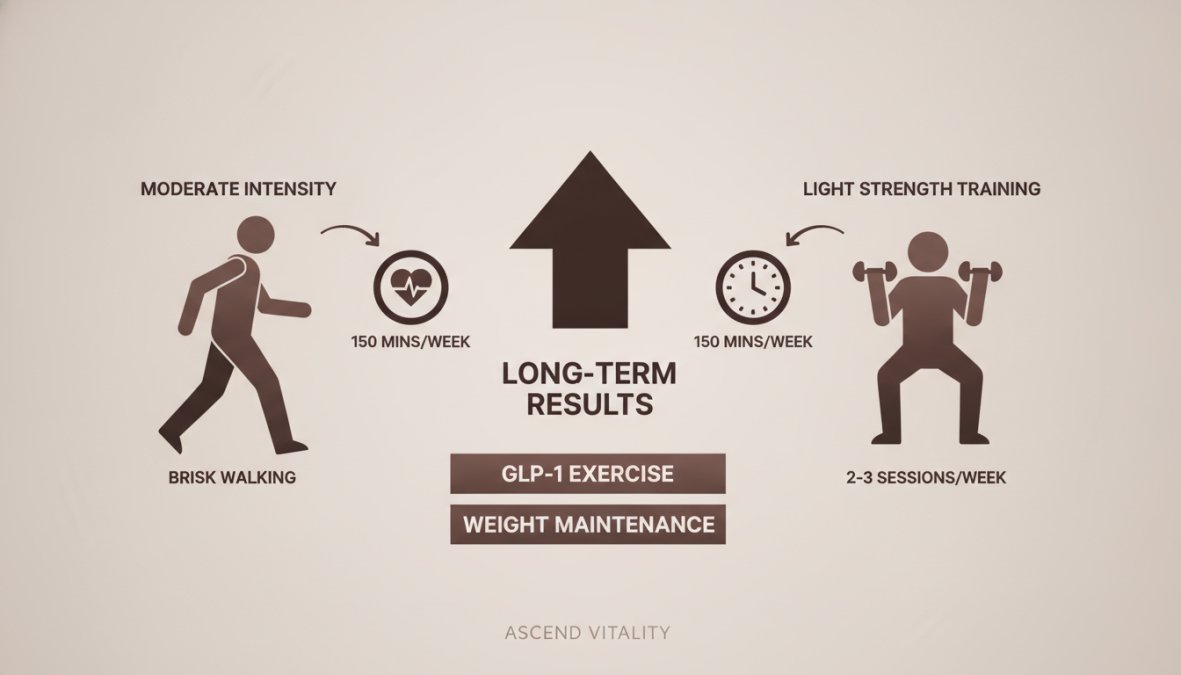
Start conservatively if you’re new to exercise. Many GLP-1 users experience fatigue, especially on injection days. A realistic first month might look like 3 days of 20-minute walks plus 1 day of light strength training. Build from there once your body adapts. Pushing too hard too fast leads to burnout and injury.
The timing of exercise matters on GLP-1 medications. Exercise 2-3 hours after eating, when your stomach has partially emptied. Exercising on a full stomach increases nausea risk. Avoid intense workouts within 4 hours of your injection, your body needs recovery energy.
Track your exercise consistency rather than intensity. Missing one workout is a blip; missing three in a row signals a pattern shift. The goal is building exercise into your identity, not achieving peak performance. People who maintain weight loss long-term view exercise as non-negotiable self-care, not punishment for eating.
5. Optimize GLP-1 Lifestyle Changes for Sustained Success
Lifestyle changes extend far beyond diet and exercise. Sleep quality, stress management, and social habits all influence weight maintenance success. Poor sleep (less than 6-7 hours nightly) increases hunger hormones and decreases satiety signals, making weight regain more likely even with adequate protein and activity.
Establish a consistent sleep schedule: same bedtime and wake time daily, even weekends. This stabilizes circadian rhythm and improves sleep quality. Most people need 7-9 hours nightly; on GLP-1 medications, aim for the higher end of that range because your body is processing metabolic changes.
Stress management directly impacts weight stability. Chronic stress elevates cortisol, which promotes fat storage, particularly around the midsection. Identify your stress response: some people stress-eat, others stress-restrict. Either pattern derails maintenance. Practice stress management techniques that work for you, meditation, journaling, exercise, or talking with friends.
Social eating situations are where most GLP-1 users struggle during maintenance. Before attending meals with others, eat a small protein-rich snack so you’re not arriving hungry. This gives you flexibility to participate socially without overeating.
Track lifestyle factors alongside weight. If your weight creeps up despite consistent diet and exercise, examine sleep quality, stress levels, and medication timing. Often, a 2-3 pound increase correlates with a week of poor sleep or high stress, not actual fat gain. Understanding these patterns prevents panic and unnecessary medication adjustments.
6. Master Dose Reduction and Spacing Strategies
Many people remain on the same GLP-1 dose indefinitely, which isn’t necessary and can increase side effects. Once you’ve reached your goal weight and established maintenance habits (typically 6-12 months), work with your provider to explore dose reduction or spacing out injections.
Dose reduction strategies vary by medication. Some people move from weekly to every-10-day injections. Others reduce their weekly dose by 0.25 mg increments. The goal is finding the minimum effective dose that maintains your weight without excessive side effects.
Spacing out doses requires careful monitoring. Reduce your dose by one step, then maintain that dose for 4 weeks while tracking weight, appetite, and side effects. If weight remains stable and appetite is manageable, you’ve found your maintenance dose. If weight creeps up more than 3-5 pounds, return to your previous dose.
| Phase | Duration | Dose Adjustment | Monitoring Focus |
|---|---|---|---|
| Active Loss | 3-6 months | Titrate to therapeutic dose | Weight loss, side effects |
| Plateau | 2-4 months | Maintain dose | Habit establishment |
| Transition | 4-8 weeks | Reduce by 0.25 mg or extend interval | Weight stability |
| Maintenance | Ongoing | Minimum effective dose | Monthly weight check |
Some people discover they can maintain weight on a lower dose than they thought necessary. Others find that even small reductions trigger appetite increases. There’s no universal “maintenance dose”, it’s individual and requires experimentation.
Never adjust your dose without provider guidance. Rapid dose changes can trigger significant appetite swings that derail your progress. Work with your healthcare team, whether that’s your primary care doctor or a specialized service like Ascend Vitality that offers ongoing medication management.
7. use Tracking and Monitoring Tools for Accountability
Tracking creates awareness, and awareness drives behavior change. You don’t need to track forever, but 8-12 weeks of consistent tracking during the maintenance transition establishes baseline patterns you can reference later.
Dedicated GLP-1 tracking apps like MeAgain and Shotsy simplify medication adherence, side effect logging, and progress monitoring. MeAgain’s five food-logging methods (photo scan, barcode, voice, search, quick-add) accommodate different preferences and reduce friction. Shotsy excels at generating doctor-ready PDF reports of doses, side effects, and weight trends, useful if you’re working with a telehealth provider.
For body composition tracking, smart scales like Withings Body Comp provide more insight than standard scales. They measure weight, body fat percentage, muscle mass, bone mass, and water percentage. Tracking these metrics separately prevents discouragement when weight stays stable but body composition improves (muscle gain + fat loss).
Continuous glucose monitors (CGMs) like those included with Signos reveal how specific foods affect your metabolic response. This personalized data helps identify which foods to prioritize and which trigger blood sugar spikes that undermine fat loss. A 2-4 week CGM trial during the maintenance phase can clarify your individual metabolic patterns.
| Tool | Best For | Key Feature | Cost Range |
|---|---|---|---|
| MeAgain | Comprehensive GLP-1 tracking | Five food-logging methods | Subscription |
| Shotsy | Doctor communication | PDF export for providers | Subscription |
| Withings Scales | Body composition | Muscle + fat + water tracking | $130-500 one-time |
| Signos | Metabolic insights | CGM + dietitian support | $100/month |
Start with whichever tool aligns with your priorities. If you struggle with medication adherence, choose a medication-focused app. If you want to understand your body’s response to food, try a CGM. If you’re motivated by seeing muscle preservation, invest in a smart scale.
8. Understand GLP-1 Microdosing for Maintenance Phase
Microdosing refers to using very small doses of GLP-1 medications, often 0.125 mg or less weekly, to maintain weight loss without the side effects of therapeutic doses. This approach works for some people but requires careful medical supervision and isn’t appropriate for everyone.
GLP-1 microdosing is most effective for people who’ve already established strong maintenance habits through diet and exercise. The medication provides a modest appetite suppression boost rather than serving as the primary weight management tool. If you’re still relying heavily on medication to control appetite, you’re not ready to microdose.
The transition to microdosing typically happens 12+ months into maintenance, after you’ve proven you can sustain weight loss with lifestyle habits. Work with your provider to create a microdosing protocol: start at your current dose, then reduce by 0.125 mg every 4 weeks while monitoring weight.
Some people find microdosing sustainable long-term, they take a tiny dose indefinitely to maintain weight loss. Others use it as a bridge to eventually stopping medication altogether. Neither approach is inherently better; it depends on your individual response and preferences.
Microdosing isn’t a shortcut or a way to avoid building maintenance habits. It’s a tool for people who’ve already done the work and want minimal pharmacological support to stay stable.
9. Build Social Support and Community Systems
Weight maintenance succeeds or fails based on your social environment. People surrounded by others prioritizing health maintenance sustain weight loss better than isolated individuals. This doesn’t mean you need to find a GLP-1-specific support group (though those exist), but it does mean being intentional about your social ecosystem.
Identify 2-3 people in your life who understand your weight maintenance goals and can provide non-judgmental support. These might be family members, friends, or online community members. Tell them explicitly what you need: accountability check-ins, encouragement during difficult weeks, or simply someone to talk to about the challenges.
Many people find online communities around GLP-1 medications invaluable. Platforms like Reddit communities, Facebook groups, and Discord servers dedicated to weight loss and GLP-1 medications provide peer support from people navigating identical challenges. Hearing that others struggle with appetite return after dose reduction or experience similar side effects normalizes the experience and reduces isolation.
Consider working with a therapist or coach who specializes in behavioral weight management. This is particularly valuable if you have a history of yo-yo dieting or disordered eating patterns. A professional can help you identify triggers, develop coping strategies, and address the psychological aspects of weight maintenance that medication doesn’t touch.
Schedule regular check-ins with your support system, weekly or biweekly, rather than waiting until you’re in crisis. Consistency prevents small weight fluctuations from becoming major regains.
10. Create a Cost-Effective Long-Term Maintenance Plan
GLP-1 medications are expensive, and long-term maintenance requires planning for sustainability. Many people focus on the medication cost and overlook the other expenses: doctor visits, lab work, monitoring tools, and potentially meal delivery services.
Start by calculating your true monthly cost. Include medication (whether covered by insurance or paid out-of-pocket), telehealth visits (if using services like Ascend Vitality), any tracking apps or devices, and meal planning tools. Then identify where you can reduce costs without sacrificing results.
Generic or biosimilar versions of GLP-1 medications are becoming available, which may lower costs. Discuss this with your provider, biosimilars are FDA-approved and work similarly to brand-name versions. Insurance coverage varies widely; some plans cover GLP-1 medications only for diabetes, not weight loss. Understand your specific coverage before committing to long-term use.
Meal planning becomes more cost-effective once you establish your maintenance diet. Buying protein in bulk, choosing seasonal vegetables, and meal prepping on weekends reduces the temptation to order expensive prepared meals. Factor and Clean Eatz Kitchen are convenient but pricey; they’re tools for specific situations (high-stress weeks, travel), not permanent solutions.
| Cost Category | Monthly Range | Money-Saving Strategy |
|---|---|---|
| Medication | $100-1,500 | Ask about generics, biosimilars, patient assistance programs |
| Medical visits | $50-200 | Use telehealth, schedule visits quarterly not monthly |
| Tracking tools | $0-200 | Start with free apps, upgrade only if needed |
| Meal prep | $200-400 | Buy bulk protein, cook at home, use meal delivery occasionally |
| Fitness | $0-100 | Walk free, use home workouts, gym membership only if you use it |
Telehealth services like Ascend Vitality offer medically-supported programs with prescription delivery, which can be more cost-effective than managing multiple providers separately. They provide targeted online care for weight loss and hormonal health, connecting you with qualified doctors for ongoing medication management and adjustments. This consolidated approach often reduces total healthcare spending compared to coordinating care across multiple offices.
Plan for the possibility of eventually discontinuing GLP-1 medications. Build habits strong enough to sustain weight loss without pharmaceutical support. This isn’t guaranteed, some people need lifelong medication, but it’s a reasonable goal that reduces long-term costs.
Maintaining weight loss after GLP-1 therapy is fundamentally about building habits that outlast the medication. The 10 best practices for GLP-1 weight maintenance outlined above work best when implemented together, not in isolation. If you’re struggling to implement these practices alone, working with a medically-supported program like Ascend Vitality provides the structure and accountability many people need. Ascend Vitality connects you with specialized doctors who manage your medication adjustments, monitor your progress, and adjust your plan based on real results. Start with the practices that feel most actionable for your life, then build from there. Long-term weight maintenance is achievable, it just requires shifting your mindset from “losing weight” to “becoming someone who maintains weight.”
Frequently Asked Questions
What is the best protein intake for GLP-1 weight maintenance?
Aim for 25-35g of protein per meal to preserve muscle mass and support satiety during GLP-1 weight maintenance. Prioritize lean sources like chicken, fish, eggs, and Greek yogurt. Adequate protein intake becomes especially critical because GLP-1 medications can slow stomach emptying and reduce overall calorie intake, making each meal’s nutritional density matter more. Distribute protein evenly across meals rather than loading it into one.
Can GLP-1 microdosing help maintain weight loss long-term?
GLP-1 microdosing, stretching out doses or reducing dose frequency, may help some people maintain weight loss while minimizing side effects and managing costs. However, this requires close medical supervision to prevent weight regain. Your prescribing doctor should monitor your progress and adjust your maintenance dose based on your metabolic health and body composition goals. This is not a self-directed strategy.
How do I prevent weight regain after stopping GLP-1 medications?
Post-GLP-1 rebound prevention requires building sustainable behavioral habits before you stop: establish consistent physical activity, maintain high protein intake, practice portion control with whole foods, prioritize sleep quality, and build community accountability. Research shows that users who transition gradually, rather than stopping abruptly, and who maintain the lifestyle changes from their GLP-1 phase experience significantly less weight regain. Work with your healthcare provider on a structured transition plan.
What tracking tools work best for GLP-1 weight maintenance?
Dedicated GLP-1 apps like MeAgain and Shotsy track medication doses, side effects, and nutrition together, critical for maintenance phase management. Pair these with smart scales (like Withings Body Comp) to monitor body composition rather than weight alone, and use food-logging apps like MyNetDiary for nutrient tracking. Many users find that combining a GLP-1-specific app with a body composition scale provides the clearest picture of sustainable progress.
How often should I adjust my GLP-1 dose during weight maintenance?
Dose adjustments during maintenance typically happen every 4-8 weeks, depending on your weight stability, side effects, and metabolic health. Some people transition to lower maintenance doses or extend spacing between injections, a process called stretching out doses. Never adjust on your own; work with your prescribing physician to find the minimum effective dose that keeps you stable without unnecessary medication exposure or cost.